“Cabin size” is a label. Your airline has a ruler. Before you buy another suitcase or start sitting on the zipper, make a small record of the bag you actually packed and the allowance you actually booked.
This guide gives you an original measurement card and a flight-by-flight comparison. It is for ordinary cabin luggage, not special equipment or a guarantee of acceptance. Airline rules, aircraft space and staff instructions still apply.
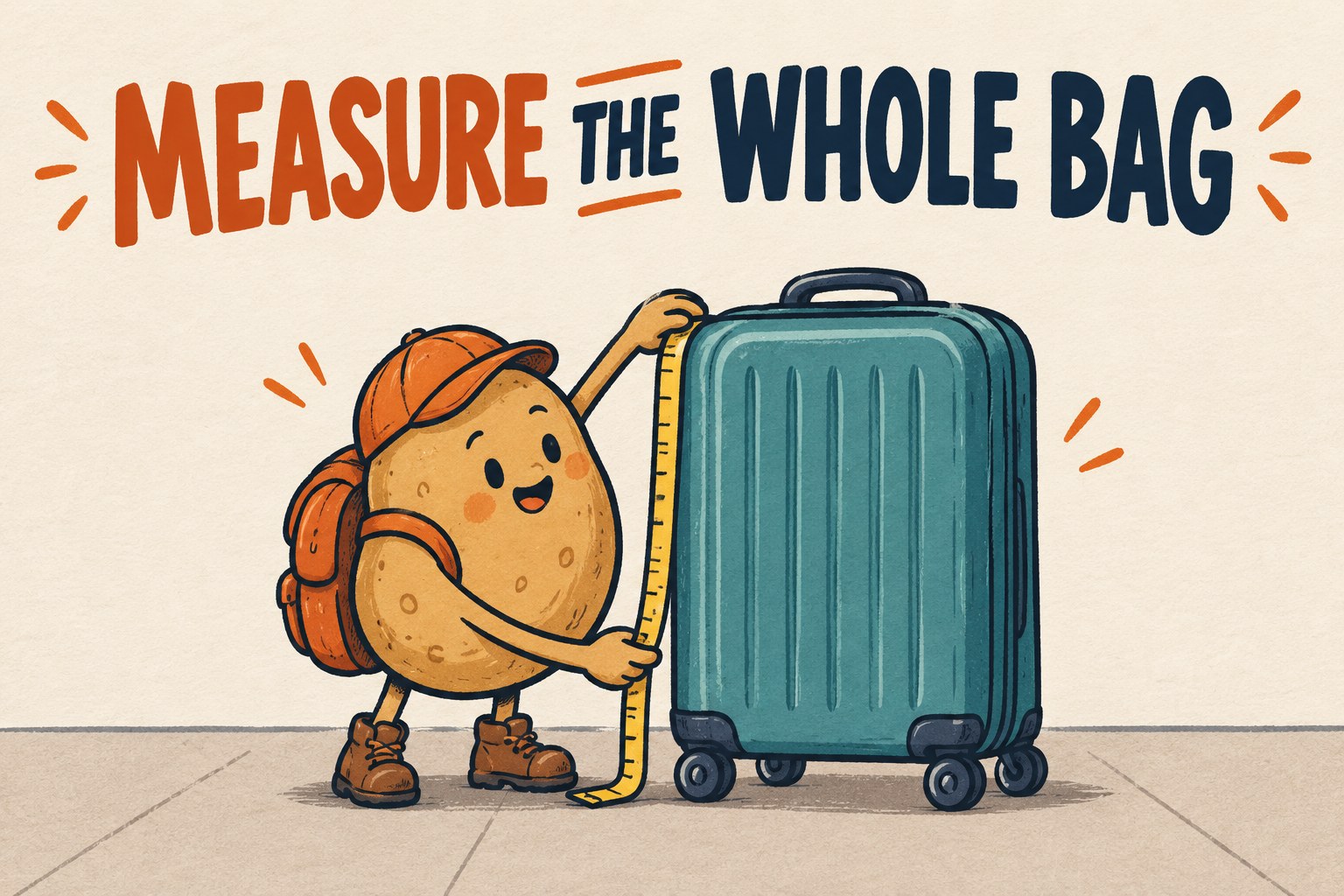
Start with the flight, not the suitcase label
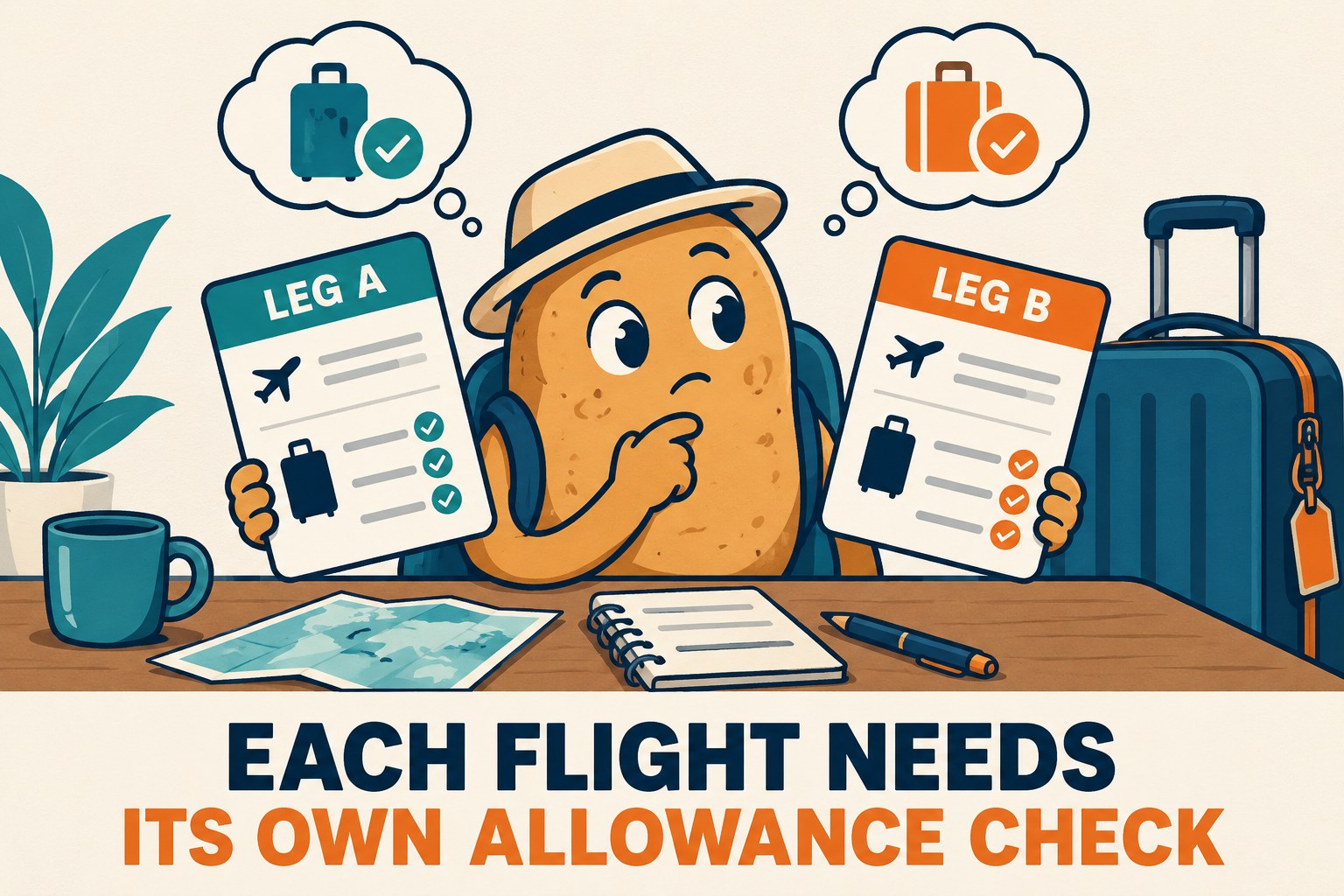
Open your booking and the operating airline's official baggage page. Record the permitted bag type, number of pieces, individual dimension limits and any weight limit. Check the return journey and connecting flights separately. Do not assume that an overhead bag is included just because a small under-seat bag is.
For example, easyJet's cabin-bag page, checked October 6, 2026, lists a free small under-seat bag up to 45 × 36 × 20 cm, including handles and wheels. Its larger cabin-bag allowance has separate booking or fare conditions. The point is to identify your allowance before comparing measurements, not to apply that size to every airline.
Delta's carry-on guidance includes wheels and handles in its size limits and warns that partner flights can have different restrictions. Save the current official link with the date you checked it; a screenshot of an old rule is not a permanent permission slip.
Measure the packed outside envelope
Pack the bag as you intend to travel. Close it normally, set any expansion section to the position you will use, and retract the telescoping pull handle into its stowed position. Fixed handles, wheels, feet and bulging pockets still occupy space.
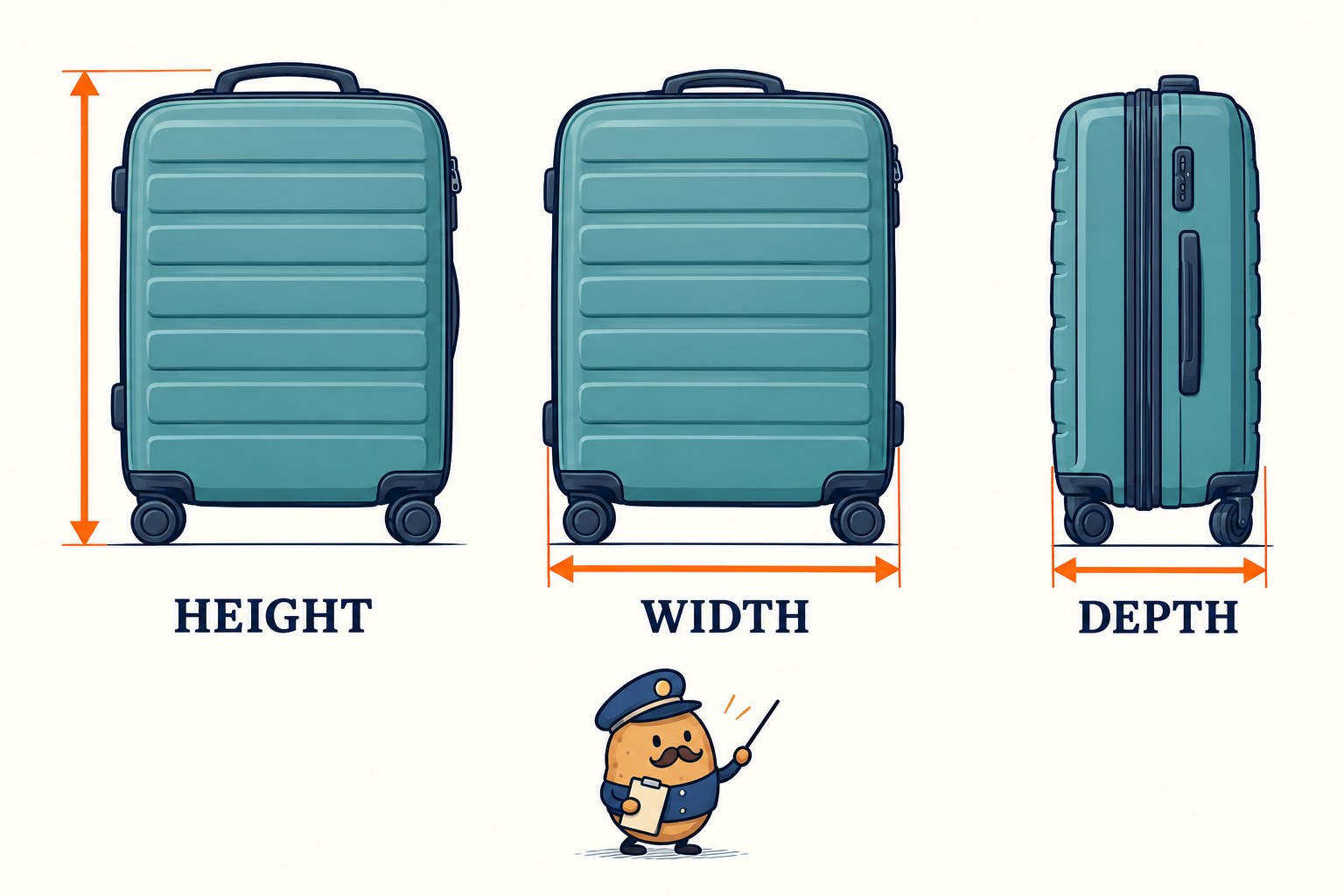
- Stand the bag on a level surface and identify its highest and lowest outer points. Measure the straight height between them, including wheels and fixed handles.
- Measure the widest side-to-side span, including a protruding side handle or filled pocket.
- Measure the greatest front-to-back depth. Check more than one point on a soft bag; the middle may bulge farther than the corners.
- Write down the unit beside every number. Keep the tape straight rather than following the curved fabric surface. A wall or two upright books can help identify the outer planes without compressing the bag.
- Repeat any uncertain measurement. Do not round a value down simply to make the comparison pass.
This is a practical measuring method, not a substitute for the carrier's own sizer instructions. Measure the dimensions of the box the bag occupies, rather than adding up curved lengths along its surface. If you cannot distinguish overall dimensions from a manufacturer's shell-only measurement, ask before buying.
Do not let a total hide one oversized side
Compare each dimension with the corresponding airline limit in the same units. If the carrier also gives a sum-of-dimensions limit, check that separately. A smaller width does not automatically compensate for an excessive height.
Here is an invented example, not an airline policy: suppose a booking allows 55 × 40 × 23 cm, and a packed bag measures 54 × 39 × 25 cm. The first two numbers fit the example limits, but depth exceeds them by 2 cm. Calling the bag “small overall” does not resolve that mismatch.
| Check | Your packed bag | Your booked allowance | Result |
|---|---|---|---|
| Height | ____ | ____ | Within / over / uncertain |
| Width | ____ | ____ | Within / over / uncertain |
| Depth | ____ | ____ | Within / over / uncertain |
| Weight, if limited | ____ | ____ | Within / over / uncertain |
| Number and type of bags | ____ | ____ | Included / added / uncertain |
Use the units published by the airline. If you convert, retain enough precision to avoid creating a false pass and keep the original figures alongside the conversion. Near a limit, remeasure rather than inventing a tolerance. No universal “extra centimeter” allowance is established by this worksheet.
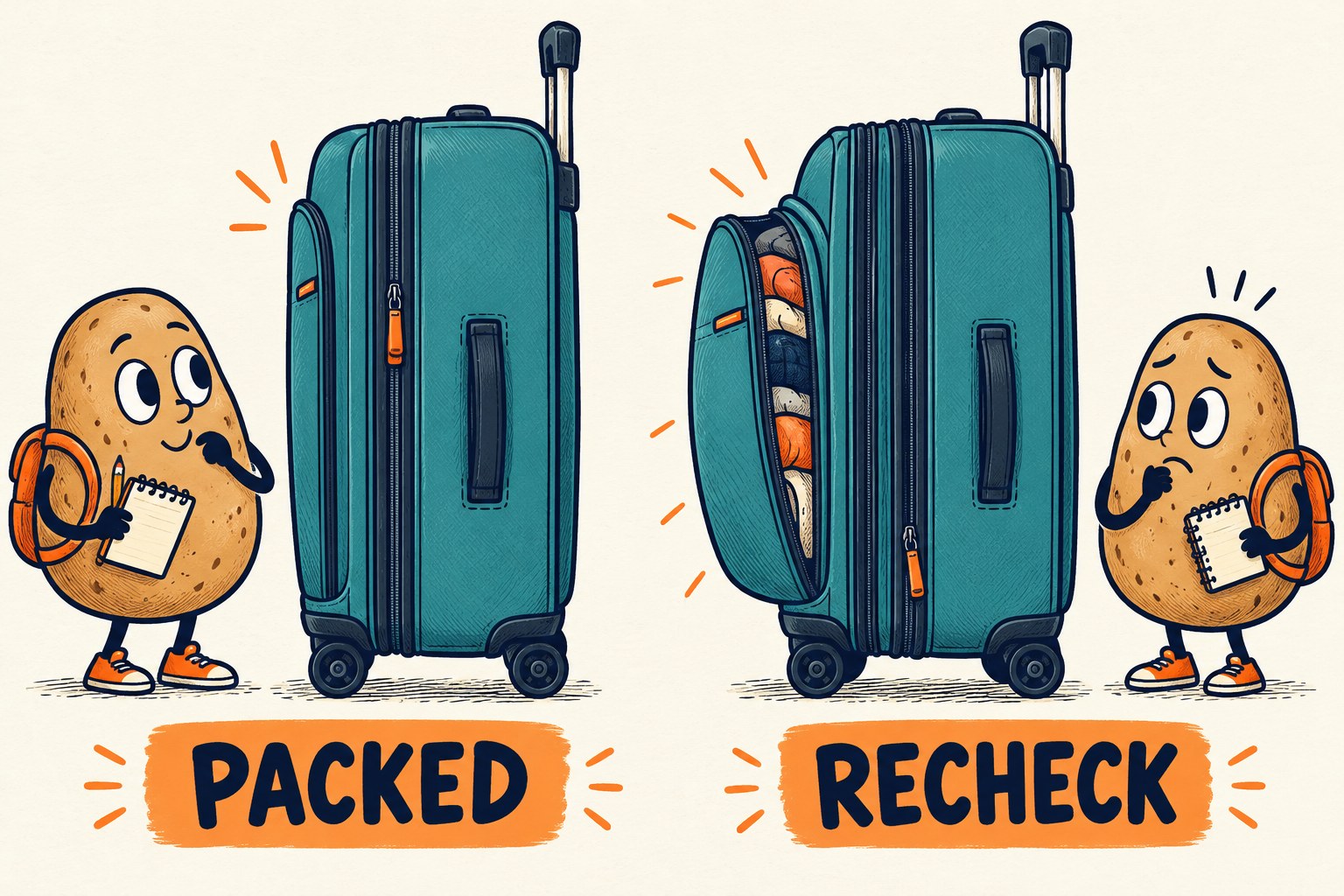
Recheck the parts that change after packing
The bag you measured empty may not be the bag you bring to the airport. Recheck after adding a jacket to an outside pocket, opening an expansion zipper or rearranging rigid items. Weigh the complete travel load if your allowance has a weight limit, including the bag itself.
easyJet describes its phone sizing tool as a guide and recommends a tape measure before travel. Treat retailer dimensions and app estimates as useful starting information; keep your actual packed measurement as a separate field.
- Within the recorded limits: keep the record and check the booking again before departure.
- Over a limit: repack and remeasure, use a smaller suitable bag, or review the airline's baggage options and their costs before travel.
- Uncertain: ask the airline a specific question with the flight, booked allowance and measurements. Do not treat silence as approval.
Even a size-compliant bag can be checked at the gate when cabin space is limited, as Delta's guidance explains. Follow the airline's separate instructions for items that must stay with you. This measurement guide does not cover restricted items or battery rules.
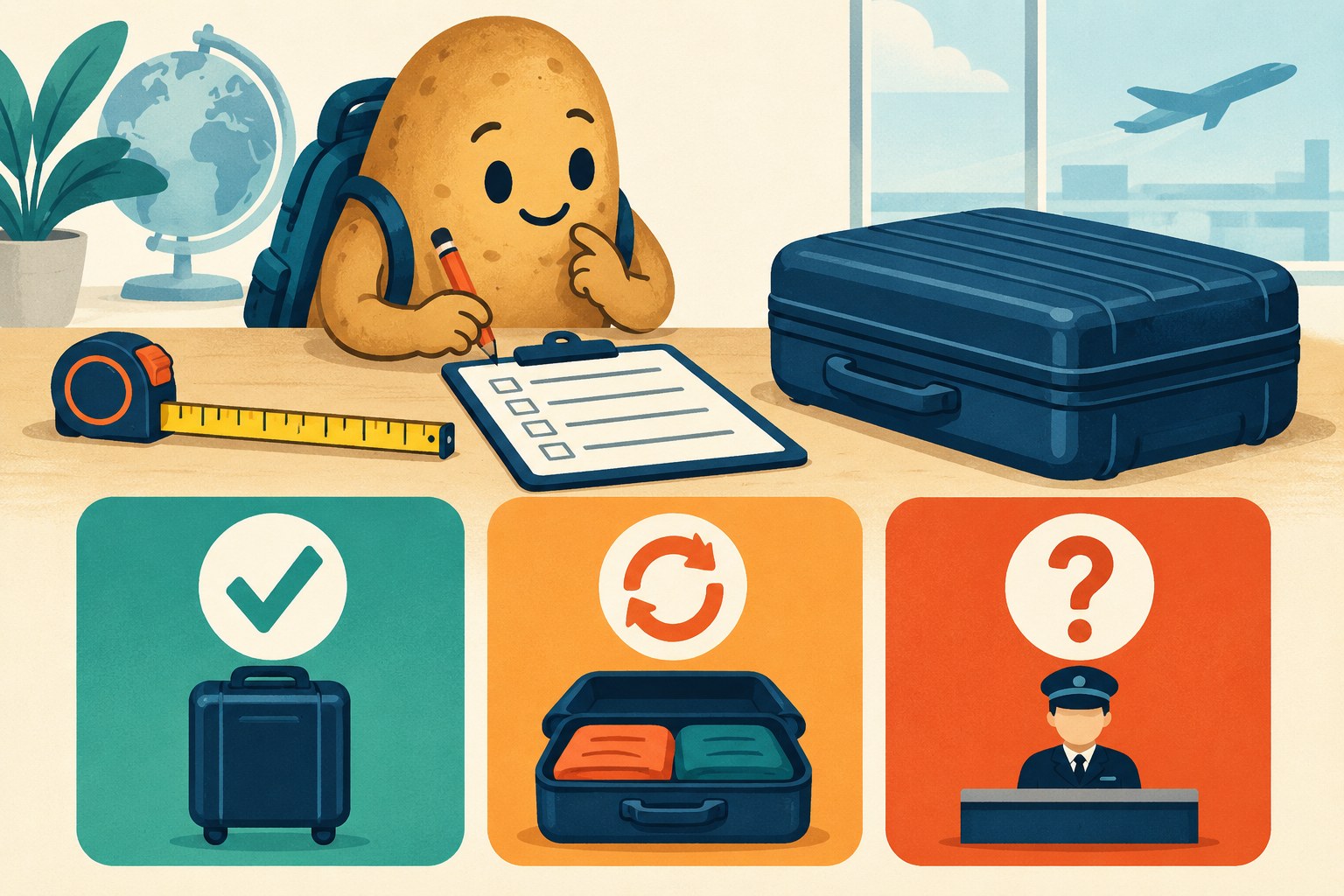
Copy this bag record before the next trip
- Bag model or identifying photo: ____
- Packed configuration: expansion closed/open; outside pockets ____
- Overall height × width × depth, with units: ____
- Packed weight, with units: ____
- Measured on: ____
- Flight leg and operating airline: ____
- Bag type and quantity included in this booking: ____
- Official allowance link and checked date: ____
- Mismatch or question still unresolved: ____
- Action before leaving: ____
For another flight, reuse the bag record but redo the allowance comparison. If your packing changes, redo the measurements too. Once the bag itself is settled, use our three-day carry-on packing list to decide what belongs inside, and the post-trip suitcase reset when you return.
Before closing the door: correct booking, correct bag type, packed dimensions, weight if required, unresolved questions cleared. The suitcase does not need a motivational speech. It needs an honest measurement.