A sofa can be perfect for a room and still be a terrible match for the journey there. Before you click Buy, make a delivery-route record: the exact item, the shape it arrives in, every tight passage, and the questions the seller still needs to answer.
This is a measuring and information-gathering checklist, not a guarantee that furniture will fit. A door measurement alone cannot settle a complicated turn. Leave lifting, tilting and disassembly decisions to the delivery team.
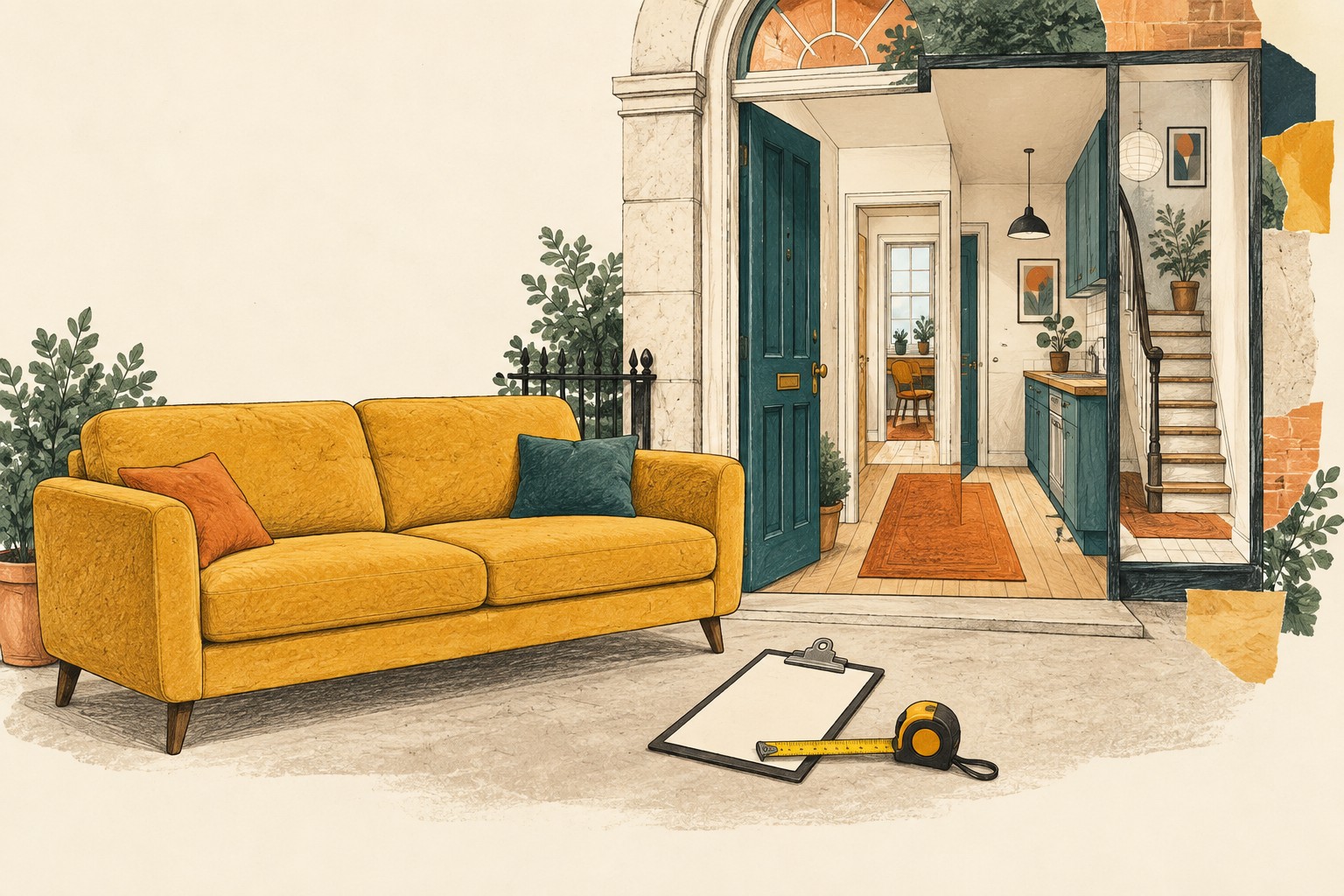
The quick version: collect three kinds of evidence
- Product evidence: the exact model and configuration, assembled dimensions, package dimensions and confirmed delivery form.
- Route evidence: clear openings, turns, obstructions, elevator or stair details, and photographs linked to a simple sketch.
- A decision record: what the seller or delivery provider has reviewed, what remains uncertain, and the service arrangements you have actually confirmed.
Use one unit throughout. Put “cm” or “in” at the top of the page and beside every measurement you send. A number without a unit is an excellent way to create a very boring mystery.
1. Identify what is actually coming through the door
Save the product page for the exact size and configuration you want. “The three-seat version” is not a model identifier, especially when a range has several arm styles or depths.
Make a separate row for each package or module. Do not assume the assembled dimensions describe the box, or that a modular product arrives in conveniently separated pieces. Ask the seller to confirm the delivery form if its specification is unclear. Likewise, do not subtract feet, arms or a backrest unless the supplier confirms they can be removed for this delivery.
| Product record | What to write |
|---|---|
| Identity | Model, size, configuration, product link and date checked |
| Assembled size | Width × depth × height, with units |
| Delivery form | Assembled, boxed, separate modules, or not yet confirmed |
| Packages | Package count and dimensions of each package |
| Removable parts | Supplier-confirmed parts, revised dimensions and who removes them |
| Unanswered question | One specific missing fact and the person or team asked |
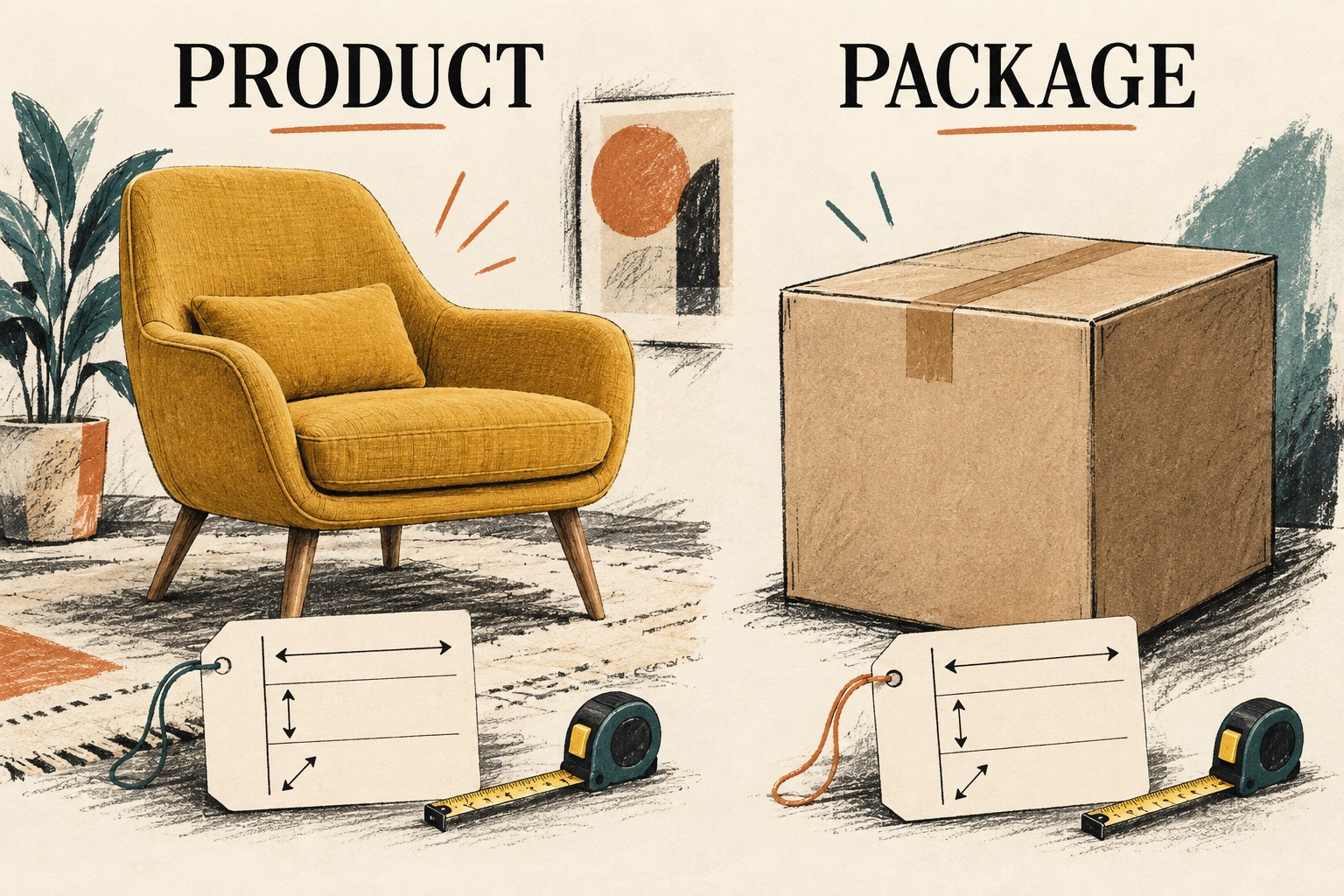
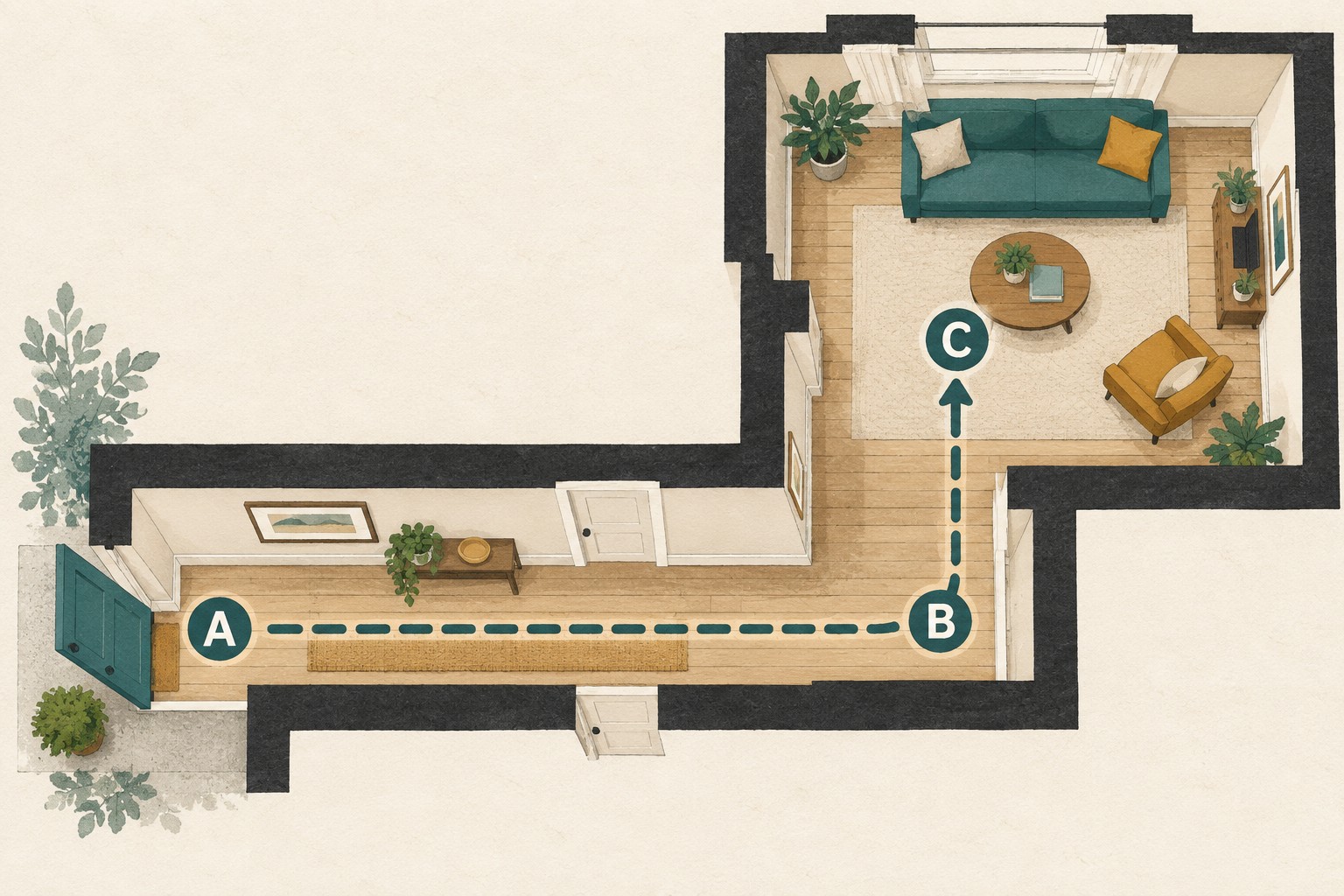
2. Number the route before measuring it
Draw a rough route from the agreed entrance to the final position. Label each checkpoint A, B, C and so on. Photograph each checkpoint from both approach and departure sides where possible, and use the same letter in the photo filename or note. The sketch need not look like an architect drew it. Its job is to stop “that narrow bit” from referring to three different places.
Room & Board’s measuring guide includes entrance alternatives, doorway and hallway dimensions, elevator interiors and stair landings. It also calls attention to protrusions such as handrails and door hardware. Use the available opening, rather than treating the outside of a decorative frame as usable space.
Keep fixed features in your record. Do not remove handrails, fire-safety equipment or building fixtures to improve a number. Ask building management about approved access arrangements instead.
| Checkpoint | Record | Question to resolve |
|---|---|---|
| Entrance and interior doors | Clear width and height with the door in its usable open position; projecting hardware | Is any door removal necessary, permitted and included? |
| Hallway or corner | Narrowest clear width, ceiling height, space on both sides of the turn and fixed obstructions | Has the provider reviewed the turn, not only the straight section? |
| Elevator, if used | Door opening and cabin dimensions; projections; provider-requested extra measurements | Is this the approved delivery elevator and does it need a reservation? |
| Stairs, if used | Clear stair width, landing dimensions, overhead clearance and facing walls | Does the provider need a site assessment? |
| Final room | Last doorway, approach space and intended footprint | Can the item reach its position without blocking normal access? |
Measure only places you can reach safely from a stable position. An inaccessible height becomes a question for the provider, not a reason to balance on furniture.
3. Keep “fits in the room” separate from “gets to the room”
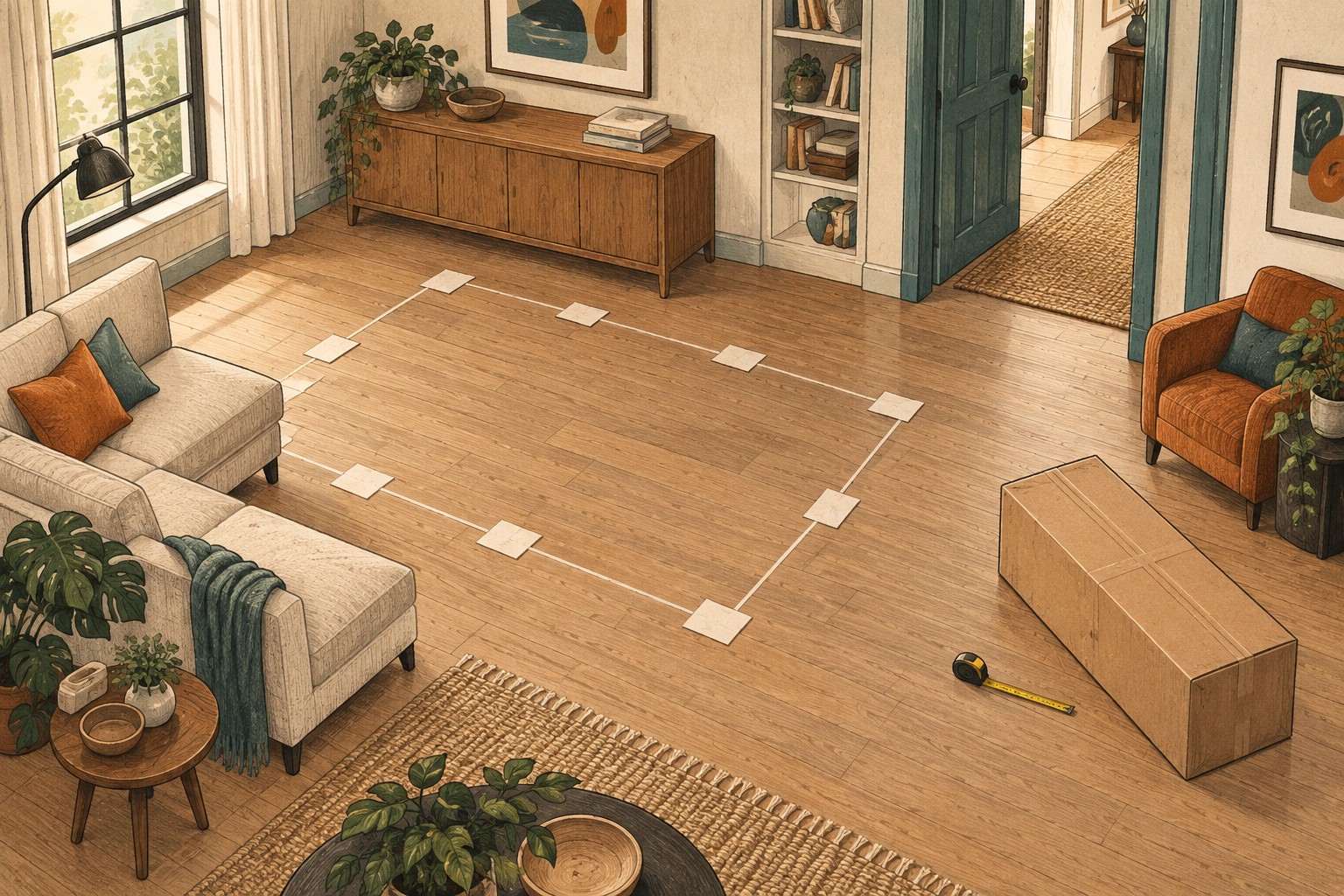
Pottery Barn’s guide suggests marking the furniture footprint on the floor and measuring the passages along the delivery route. Those checks answer different questions. A floor outline helps you judge the intended position; it does not prove a large object can rotate around the hallway corner.
If your floor finish permits removable marking tape, test it discreetly and follow its instructions. Otherwise, use a sketch. Include usable space around the outline: opening a nearby cupboard, moving a chair, or reaching the window. Keep routes and doors clear while you assess it.
Then ask whether the arrival form changes the problem. A flat-packed item may need assembly room. A large assembled item may need maneuvering space. A modular sofa may have one section larger than the others. Put those facts in the record instead of relying on a photograph of the finished room.
4. Treat close calls as questions, not clever arithmetic
A proposed orientation, an opening and the space to turn have to work together. Comparing the shortest furniture dimension with the narrowest door gives only part of the picture. Do not convert a diagonal measurement into a universal “it fits” rule.
For example, imagine a fictional boxed chair with a listed width of 76 cm and a clear entrance of 78 cm. The 2 cm difference is not a delivery approval. It says nothing about the package’s other dimensions, protective handling, the next turn, or whether the opening was measured accurately. Record the numbers and ask the provider to assess the actual route. Do not round a tight opening up.
Use these three status labels:
- Recorded: you have the measurement or product specification, with its source.
- Needs review: a missing specification, tight turn or ambiguous access detail remains.
- Provider response saved: you have the provider’s answer for this exact item and route, including any conditions.
Even the last label is a record of an answer, not a promise from this guide. Keep the actual wording and date so you can see whether it covers the model and configuration you ultimately order.
5. Send a compact delivery question
Copy this template into a message to the seller before ordering. Attach only the route photos and details needed for the assessment; crop out personal paperwork or unrelated rooms.
I am considering [exact model/configuration and product link]. The listed assembled dimensions are [W × D × H, units]. Please confirm the delivery form, package count and package dimensions, and any parts your team can remove.
The route is [entrance → checkpoint letters → final room]. I have attached the matching measurements, sketch and photos. Checkpoints [letters] need review because [specific issue]. Can your delivery team assess this route, or is an in-person check needed?
Please also confirm delivery scope, any access or assembly arrangements, and what happens if the item cannot be brought in. I have not assumed door removal, unpacking or stair delivery is included.

Your before-order checkpoint
- The specification matches the exact item in the basket.
- Every figure has a unit and says whether it describes the product, package or clear passage.
- The route covers the whole trip, including the final turn.
- Unknowns have an owner: seller, delivery team or building management.
- You have reviewed the current delivery terms, service scope and failed-delivery or return conditions.
- The final-room layout leaves the access you need.
If one important answer is missing, keep the item on a shortlist rather than treating the order button as a measuring tool. The useful outcome is a decision you can explain, even when that decision is to choose a smaller or differently packaged option.
For another check-before-buying routine, try our container-and-lid audit. The scale is smaller, but the habit is the same: verify the fit before adding another object to the house.