The food-container drawer has an unusual talent: it can hold twelve lids and still have nothing that fits. Before buying another organizer, count usable pairs rather than loose pieces. A neat stack of incompatible lids is still a small administrative crisis.
This guide is an inventory and storage routine for empty containers. It does not determine whether an unknown container is suitable for food, heat or a dishwasher. Keep the manufacturer's instructions with the exact product, and set uncertain items aside instead of guessing.
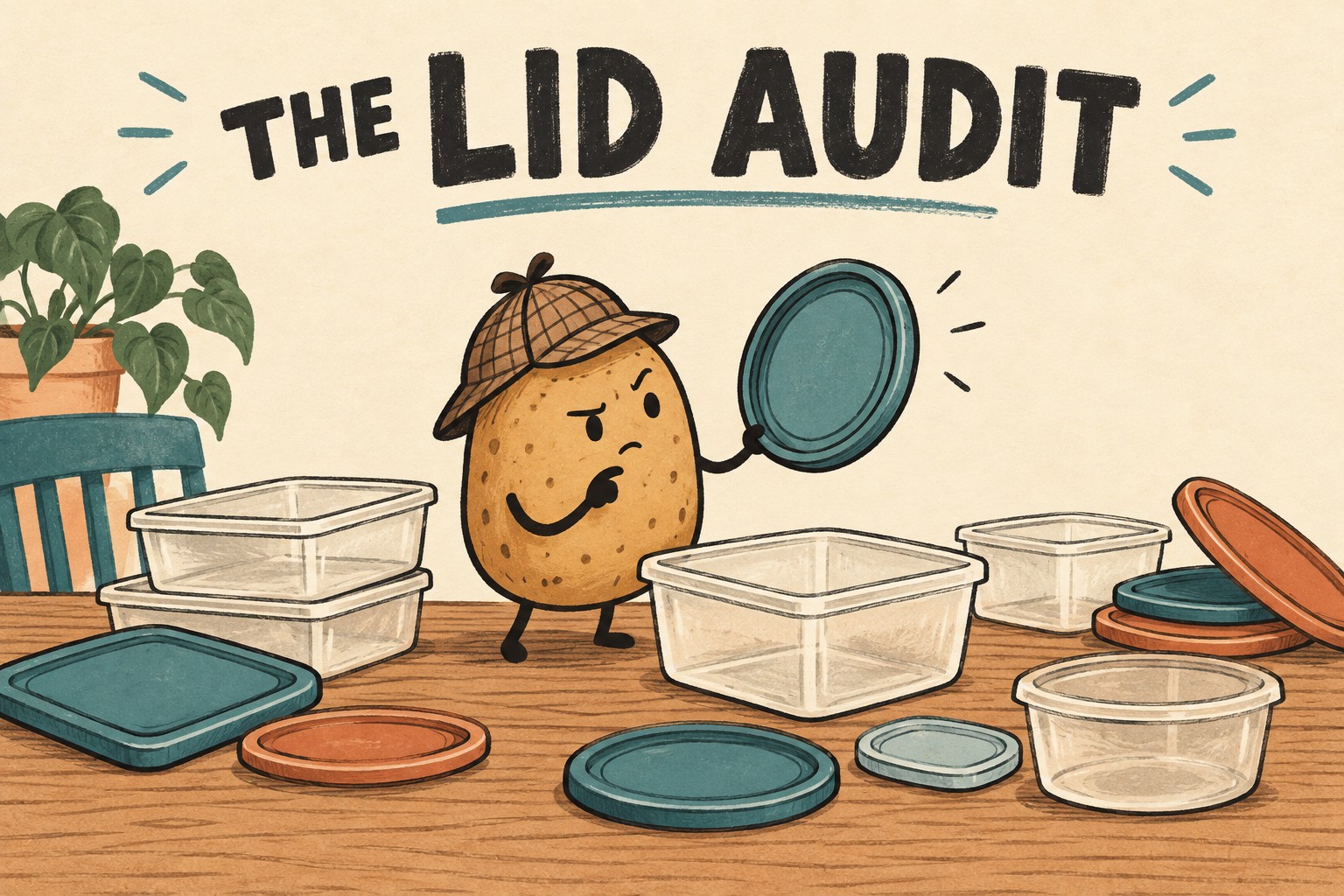
The quick version: match, identify, assign
- Gather empty containers and lids from one cupboard or drawer.
- Look for missing partners in the dishwasher, drying rack and other usual storage places before declaring them lost.
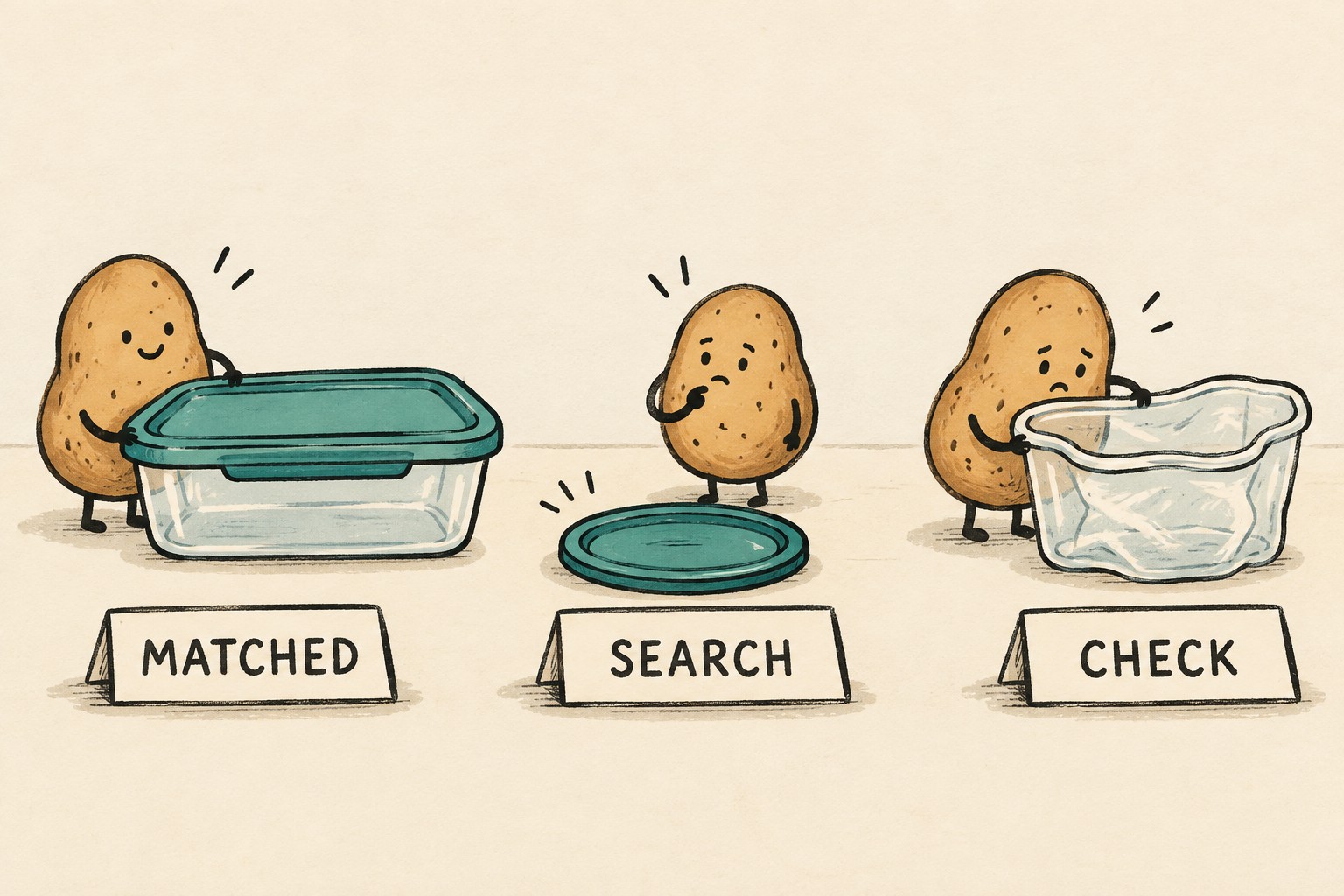
- Make three groups: matched pairs, pieces still needing a partner, and items needing a condition or product check.
- Give each retained pair a real job and an accessible home.
- Write down any genuine replacement need before shopping.
Do not empty every kitchen cupboard if you cannot finish it. Start with the space that causes the daily lid hunt, and leave containers holding food undisturbed. Add those to the inventory when they are empty and cleaned.
1. Separate a missing partner from a questionable container
Use a clear surface and work with empty, clean, dry pieces. Group by shape first, then by apparent product family. Place a candidate lid on its likely base without forcing it. A similar color or matching width is a clue, not proof of compatibility.
| Group | What belongs here | Next action |
|---|---|---|
| Matched | A known compatible lid and base that close as designed | Check condition, product instructions and whether you use the pair |
| Search | A sound-looking piece whose partner is elsewhere or missing | Search usual locations and record its identifying details |
| Check | A cracked, chipped, warped or unidentified item, or one whose closure no longer works | Keep it out of the ready-to-use collection while you decide its appropriate next step |
“Matched” is an organizational label, not a food-safety approval. Do not press on sharp damage or force a resistant lid. If an item is damaged, follow the manufacturer's replacement guidance and local disposal instructions.
2. Record the product, not just the lid color
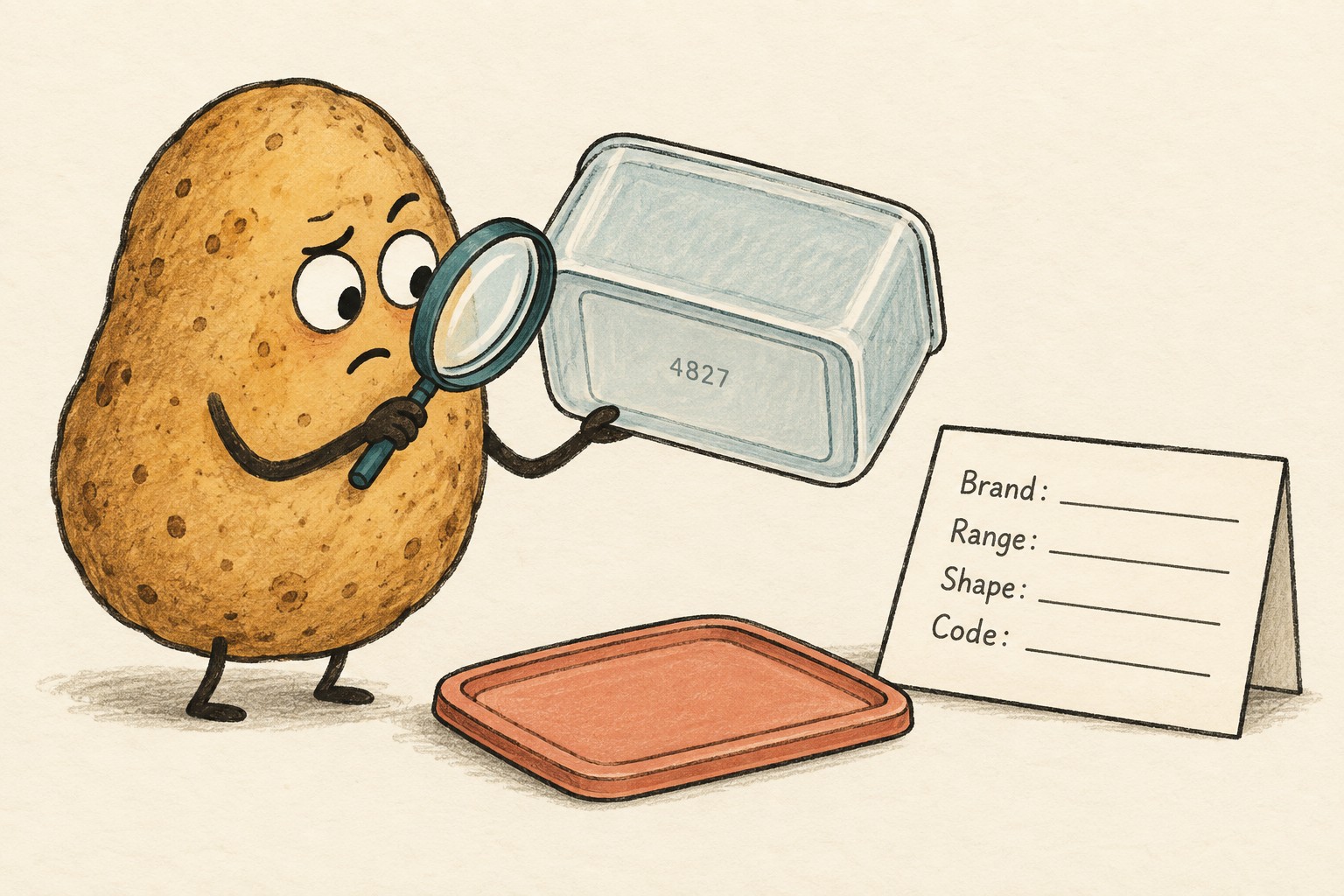
Before looking for a replacement, photograph or note the brand, range, shape, capacity and any molded product code. Compare those details with the manufacturer's stated compatibility. Do not assume lids from the same brand fit every range.
For a concrete example, IKEA identifies its 703.617.86 lid as fitting round IKEA 365+ containers. That is a specific range-and-shape claim, not permission to use it on any round tub. Confirm the listing for your own item rather than choosing by a photo alone.
Care rules are also product-specific. Rubbermaid's dated Easy Find Lids care sheet distinguishes reheating from cooking and gives handling instructions. It is an example of why the matching product instructions matter, not a universal rule for plastic containers. Use the current guidance for the item you own.
3. Give retained pairs jobs before buying more
Make a small job list: lunch, a small leftover portion, a larger leftover portion, or dry ingredients. Choose jobs you actually need, without inventing a universal ideal container count. Several containers may legitimately share a compatible lid design; count both available bases and lids so your list reflects what can be used at the same time.
| Job | Usable bases / lids | What is missing? | Decision |
|---|---|---|---|
| Example: packed lunch | 2 / 2 | Nothing | Keep both; no purchase |
| Example: small portions | 3 / 2 | One confirmed compatible lid, if three are needed | Check replacement availability |
| Example: oversized spare | 1 / 1 | No storage space; rarely used | Review whether it earns its place |
The examples are invented. A replacement lid may solve the problem, but compare the actual item and delivery cost with your need before ordering. There is no saving in buying six new tubs to rescue one spare lid.
4. Choose a layout you can put back
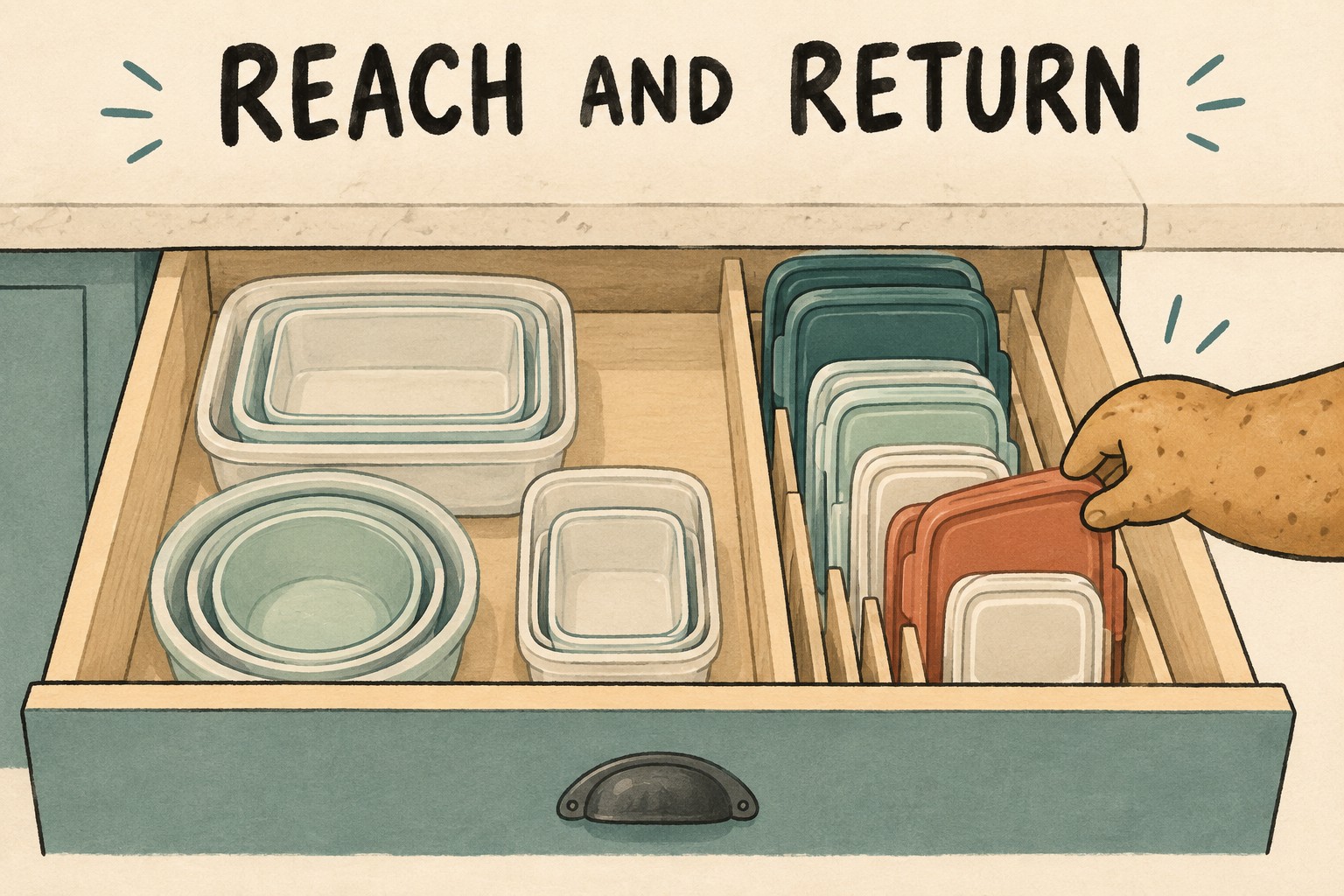
Try either complete pairs stored together or compatible bases nested beside a visible group of lids. The best option is the one your cupboard accommodates and your household can return without dismantling a tower.
- Keep frequently used pairs at the front.
- Group lids by their matching family, not merely from small to large.
- Leave room to lift a base out and return a lid without a balancing act.
- Avoid forcing tight nests or building unstable stacks; follow any product-specific stacking guidance.
- Use an existing divider or small box if it works. Measure the usable drawer space before buying an organizer.
Test the arrangement with one ordinary action: take out a container and its lid, then put both back. If another stack must be removed first, simplify the layout. Finish the cupboard before expanding the project to another one.
5. Close the loop on unmatched pieces
Give the search group one named place and a review date you choose. Check after the current dishwasher and lunch-box cycle has returned its pieces. That avoids discarding a lid just because its partner is out of the house.
If you no longer need an intact pair, confirm a recipient wants it before giving it away. For disposal, check your local program's rules for the actual material and item. The US EPA explains that a plastic resin symbol does not guarantee local recycling acceptance. A lid and base may need separate decisions; do not assume a recycling mark settles both.
Copy this container audit card
- Space checked: __________
- Jobs we need containers for: __________
- Known matched bases / lids: __________
- Missing piece and exact product details: __________
- Care instructions located: __________
- Unmatched review date: __________
- Ready pairs return here: __________
- Only confirmed shopping need: __________
For a wider kitchen reset, use the pantry inventory guide to check what you already have before adding purchases. The container drawer has the same modest goal: make the next useful thing easy to find, and easy to put back.