A cleaning schedule should tell you what to do next, including when Tuesday disappears under work, errands or a very convincing sofa. If missing one evening creates a double-length chore list, the plan needs a recovery rule.
For a small apartment, try two layers: a short daily reset and a movable queue of five cleaning sessions. Give each session a clear finish line. When a planned day falls through, resume the next unfinished session instead of restarting the entire week.
The example below assumes one kitchen, one bathroom and modest living and sleeping areas. It is a planning template, not a tested speed claim or a universal rule about cleaning frequency. Adjust it for how your home is used, visible dirt, household needs and access to laundry.
Keep the daily reset outside the weekly queue
The weekly plan is for recurring upkeep. Fresh spills, food mess and other problems needing prompt attention do not wait for their assigned day. Use a small daily check to keep ordinary clutter from becoming the first half of every cleaning session.
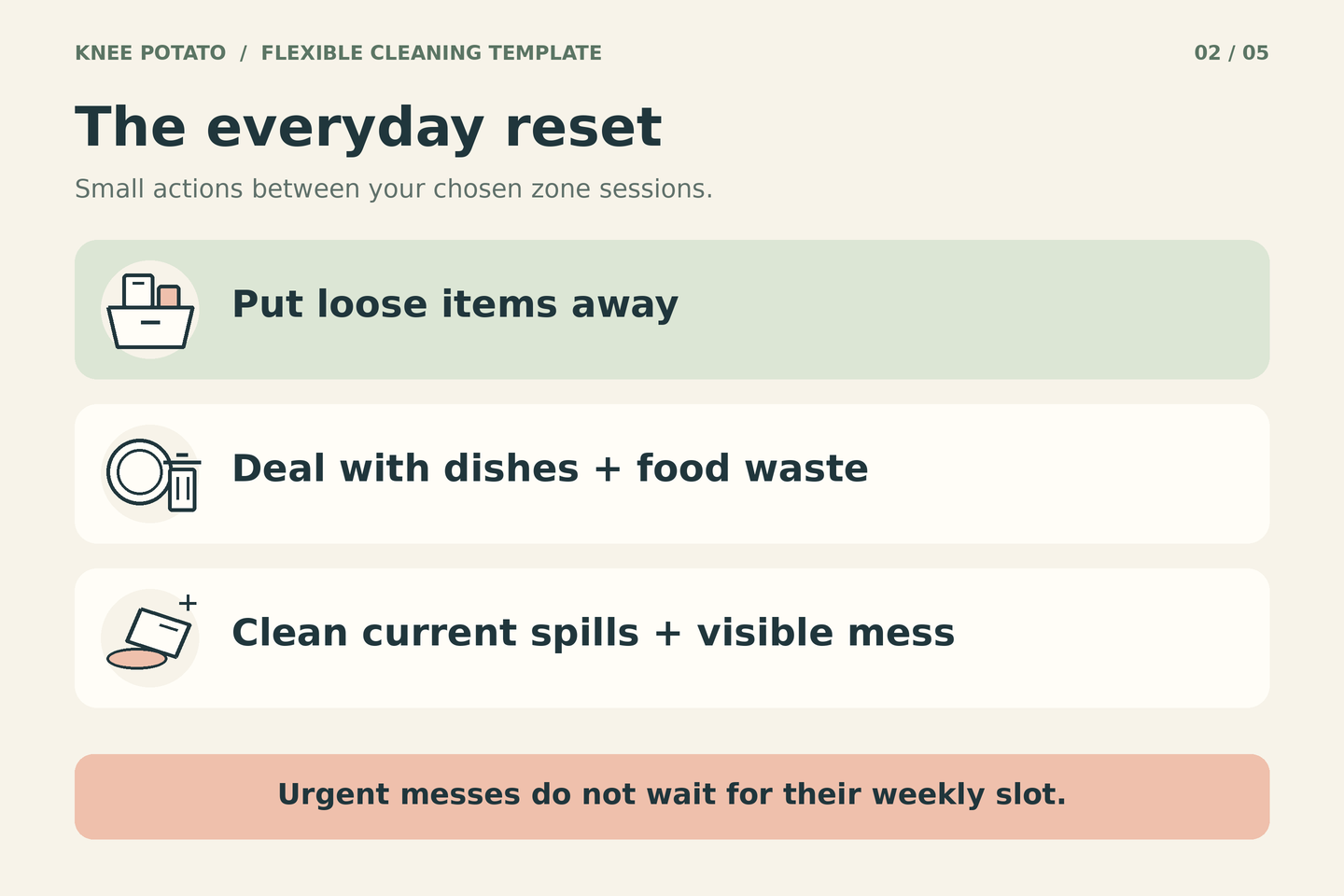
- Return loose items: put shoes, clothes and everyday objects in their places; keep walking routes clear
- Deal with dishes and food waste: wash or load dishes, clear food scraps, and check whether the bin needs emptying
- Clean current mess: address spills and visibly dirty areas using the method appropriate for that surface
Choose a convenient cue, such as finishing dinner, rather than a time you regularly miss. This reset does not include reorganizing a drawer, sorting every paper or cleaning behind an appliance. Those jobs get their own place on the list.
The CDC’s home-cleaning guidance recommends cleaning frequently touched surfaces regularly and cleaning other surfaces when visibly dirty or as needed. A calendar is a reminder; the condition of the surface still matters.
Use five movable sessions with a finish line
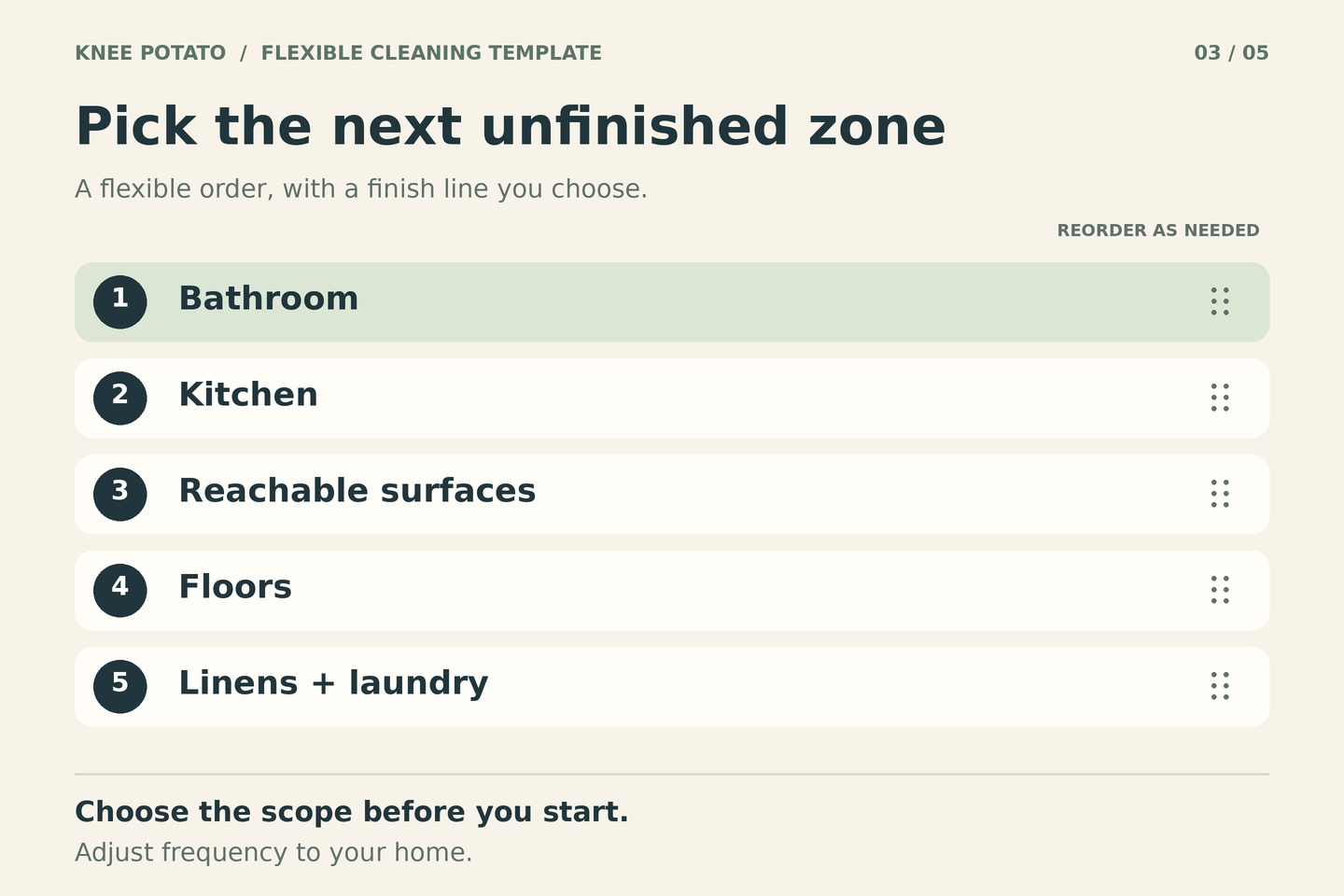
Number the sessions so you can see which one comes next. You can write them on a scrap of paper, use five movable notes, or keep a simple checklist on your phone. The order is a starting point; put your most useful task first.
| Session | Suggested “done for now” | A separate project |
|---|---|---|
| 1. Bathroom | Clean the sink, mirror and toilet; add the shower or tub if it needs attention | Sorting the entire cabinet or replacing storage |
| 2. Kitchen | Clean accessible worktops, sink and appliance exteriors with suitable methods | Emptying and reorganizing every cupboard |
| 3. Reachable surfaces | Clear and dust or wipe the selected shelves, tables and bedside surfaces | A whole-room declutter or high, hard-to-reach areas |
| 4. Floors | Vacuum or sweep accessible floor areas; add appropriate mopping where needed | A separate rug deep clean or furniture rearrangement |
| 5. Linens and laundry | Change the selected linens and complete the planned wash, dry and put-away steps | Sorting the whole wardrobe |
These are examples to edit, not five compulsory room overhauls. A bathroom session that consistently exceeds your available time can become two smaller tasks. If laundry requires a shared machine or a trip outside, book that practical window first and move other sessions around it.
Separate cleaning from organizing. Wiping a shelf does not require deciding the future of every object on it. Put an unrelated organizing job on a later-project list so it does not quietly take over today’s task.
Map the queue onto a week, leaving room to move
This sample uses five planned sessions and two flexible days. “Flex” can be a spare slot or a day with only the daily reset; it is not an invitation to invent more chores.
| Day | Starting plan |
|---|---|
| Monday | Bathroom |
| Tuesday | Kitchen |
| Wednesday | Flex |
| Thursday | Reachable surfaces |
| Friday | Floors |
| Saturday | Linens and laundry |
| Sunday | Flex |
Now suppose Tuesday is missed and Wednesday is unavailable. On Thursday, do the kitchen session you have not completed. Surfaces move to Friday, floors to Saturday, and linens to Sunday if that laundry slot works.
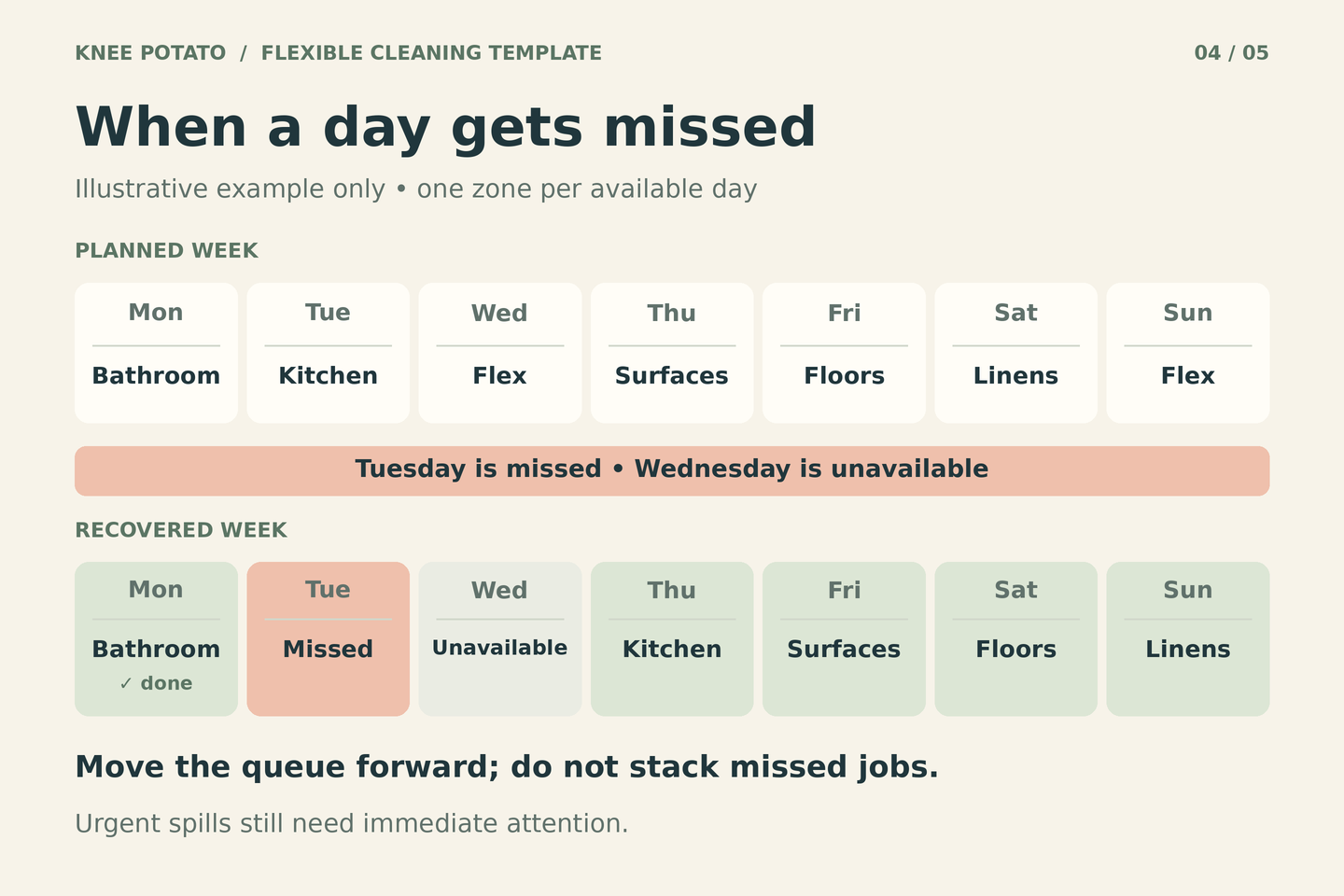
You have changed the calendar without dropping a room or squeezing two complete sessions into Thursday. If Sunday is also unavailable, carry the next unfinished session into the next suitable slot. Keep dealing with urgent messes immediately.
There is a limit to sliding tasks: if a zone repeatedly becomes dirty before its turn, give it more frequent attention or make its session smaller. If the queue keeps growing, reduce optional scope or change the number of sessions you can realistically support. The goal is a workable routine, not an indefinitely postponed bathroom.
Write a session card before you start
“Clean the apartment” is difficult to finish. “Vacuum the accessible floor areas” has a boundary you can check. Before starting, write the zone, the result that counts as done for now, and the first step you would resume if interrupted.
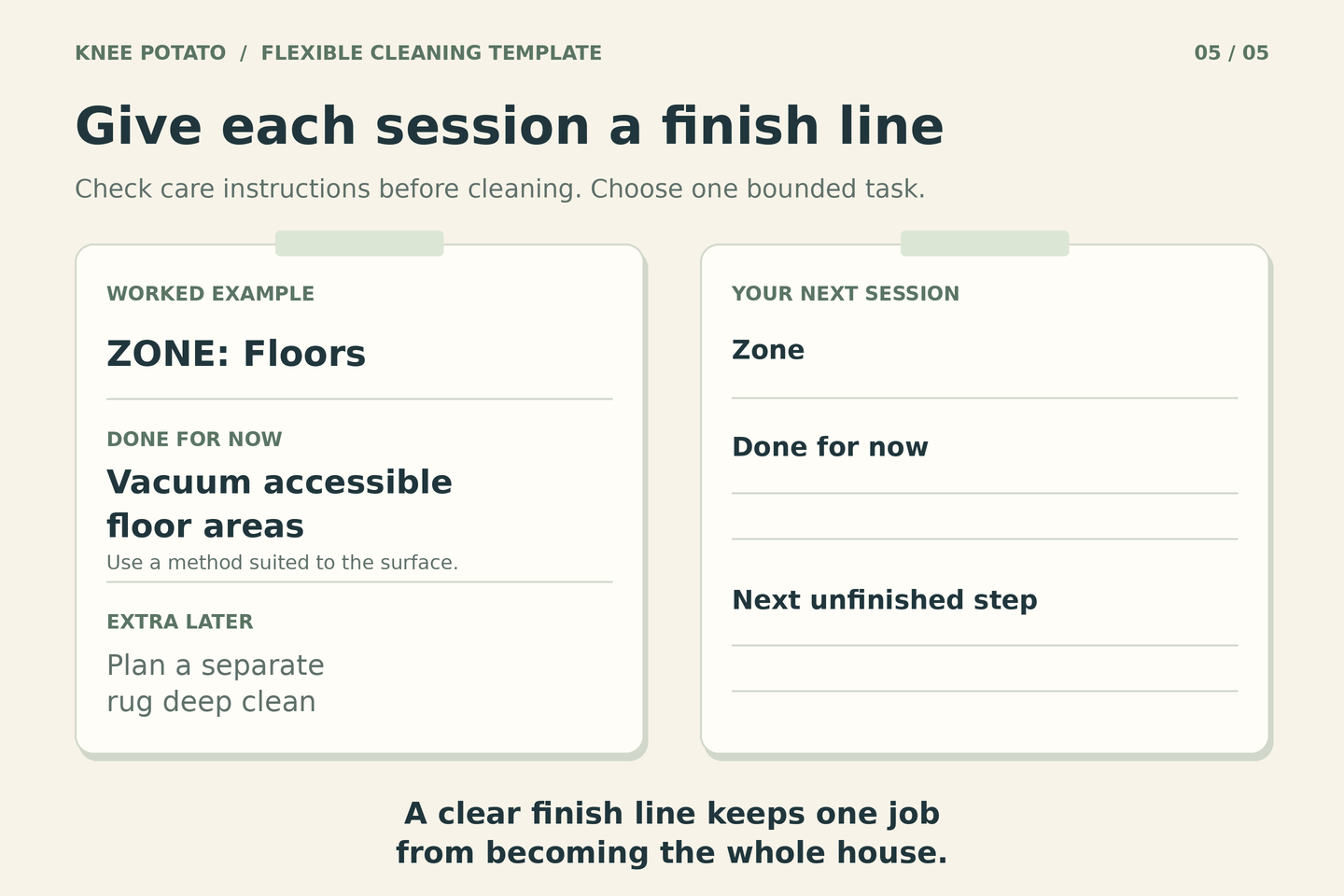
For example, a floors card might say:
- Zone: floors
- Done for now: vacuum accessible floor areas using the equipment and method suitable for the flooring
- Extra later: plan a separate rug deep clean after checking its care instructions
- Next unfinished step: bedroom floor, if that is where the session stopped
For a shared apartment, add one person responsible for each session and a last-completed date. “Someone cleaned recently” is a surprisingly flexible unit of time. A date and a concrete finish line make handoffs easier.
If you choose to use a timer, treat it as a reminder to review the remaining work. It is not a promise that every task fits that duration, and it does not shorten a product’s required process or drying time. Leave the area safe before stopping.
Let product and surface instructions set the method
A schedule tells you when to start; it does not make one spray suitable for every material. Check the surface or appliance care instructions and the cleaning product label before use. The CDC distinguishes cleaning from disinfecting, advises using suitable products, and warns against mixing products or chemicals. Follow laundering and electronics care instructions rather than improvising one method for everything.
If you are using a disinfectant, clean first and follow its directions for the intended surface, ventilation and protective equipment. The EPA explains that disinfectant contact time is product-specific: the surface must remain visibly wet for the full label-specified time. Finishing a calendar box is not a reason to wipe it away early.
At the end of your first week, change one thing that got in the way: shrink an oversized session, move laundry to a realistic day, or add attention to the area that gets dirty fastest. Keep the next unfinished task visible. That is the part of the schedule that helps when real life ignores the timetable.