Your reusable bags have one job: be with you when you need them. A magnificent bag-of-bags collection at home is technically storage, but it is not much help at the checkout.
Make a small ready kit for your next typical trip, give it one return spot, and keep bags needing care out of that kit. The following reset is an organizing method, not a rule about how many bags every household should own. Start with what you have; a new organizer is optional.
Start with the trip, not the total number of bags
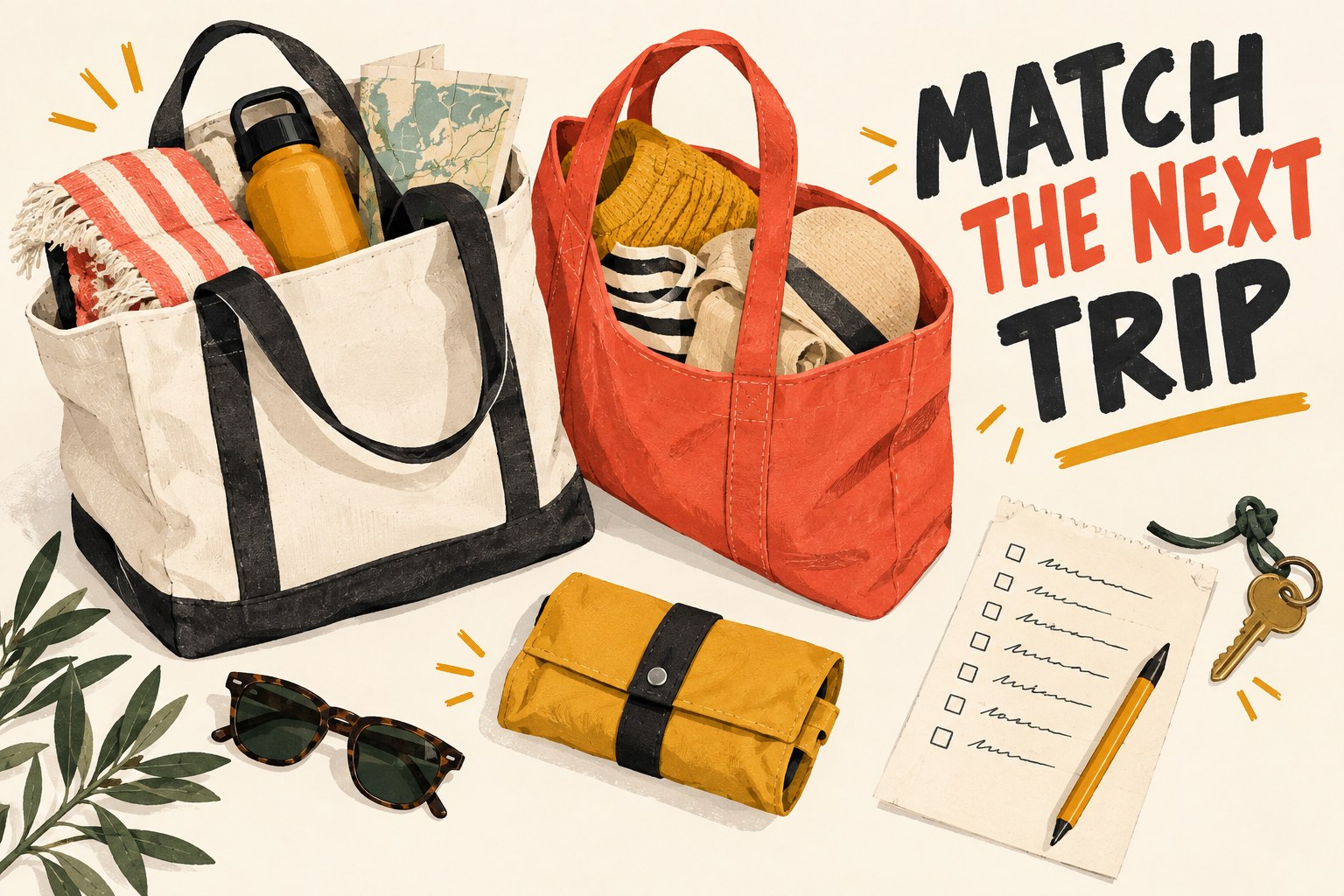
Think about your usual shopping journey. Walking with groceries, carrying bags upstairs and driving to several shops create different carrying needs. Choose bags you can comfortably carry when filled, rather than packing every bag to its maximum capacity.
- Routine shop: choose the bags you actually used on a recent comparable trip.
- Unexpected stop: keep a compact bag in the everyday bag you reliably take out.
- Occasional bulky errand: store a larger suitable carrier separately, rather than stuffing it into every trip kit.
These are suggested roles. A household that shops on foot may use a backpack instead of the same totes as a household shopping by car. Do not make your system depend on someone remembering to retrieve a bag from a vehicle they rarely use.
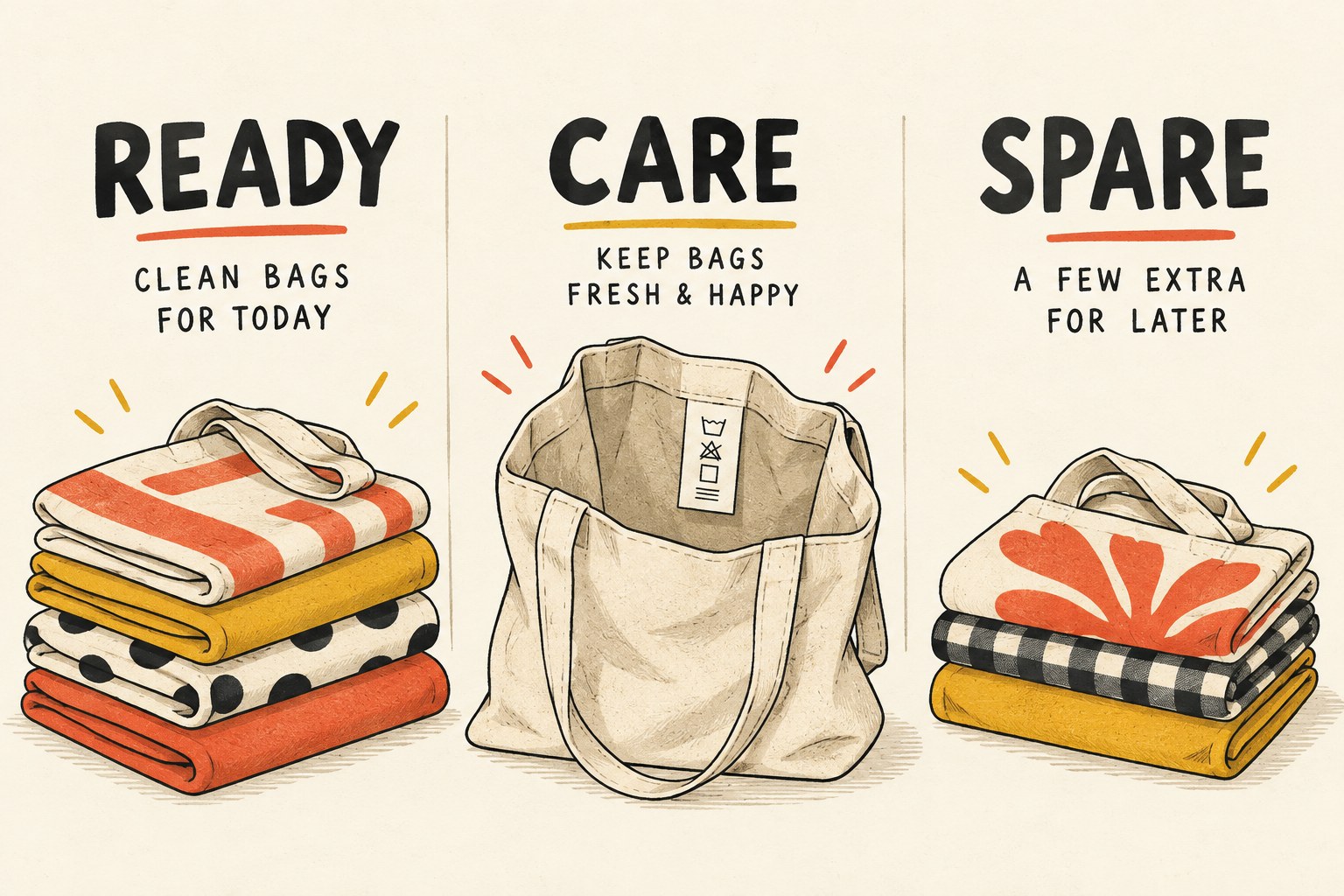
Sort every bag into ready, care or spare
Gather the bags you can find, empty their pockets and bases, and inspect handles, seams and closures. A bag with a torn handle should not go straight back into the ready kit. Decide whether it can be repaired or needs an appropriate local disposal route.
| Group | What belongs here | Next action |
|---|---|---|
| Ready | Empty, dry, suitable bags in usable condition | Choose the next-trip kit and put it in its return spot |
| Care | Bags needing cleaning, drying or a repair decision | Follow the bag's care instructions; return only when ready |
| Spare | Usable bags with a specific occasional purpose | Contain them separately and label the purpose if helpful |
The Food Standards Agency's cross-contamination guidance explains why even a clean-looking carrier used for raw meat may contaminate other food. Do not treat a tidy fold as evidence that a bag is clean. Keep bags used for raw foods separate from bags for other foods, and do not reuse raw-food bags for ready-to-eat food. Keep those groups separate when folding or nesting your kit, too. Keep household-product bags separate from food bags, and use appropriate packaging rather than placing unpackaged food against an unsuitable carrier. Food-handling requirements still apply; this reset is not a food-safety cleaning protocol.
Read the care instructions before washing the whole pile
Reusable does not mean machine-washable. Different fabrics, coatings, insulated linings and handles need different care. Look for the original label or the manufacturer's page for that exact model.
For example, IKEA's current FRAKTA large shopping bag instructions specify wiping with a water-dampened cloth and say not to wash, bleach, iron or dry-clean it. The same page says that model is not approved for food contact. This is one product's routine material-care guidance, not an instruction for every tote or proof that wiping makes a raw-food spill safe. Keep contaminated bags out of the ready kit and follow the linked FSA handling and disposal guidance.
If you cannot identify a safe cleaning method, set the bag aside while you check rather than guessing a hot-wash cycle. Allow cleaned bags to dry before folding and storing them. A bag waiting for care should have a visible next action, so it does not quietly become permanent clutter.
Build one grab-and-go kit
Try a simple starting example: two comfortable everyday totes, plus one compact backup. Put the folded bags inside one of the totes or a container you already own. Adjust that example after a real trip; three is not a target you need to meet.
Choose a return spot on your actual route out: a shelf beside your everyday bag, an existing hook that can safely support the empty kit, or a small basket near the door. Keep it off the walking route and do not block a door, stairs or an exit. A ready kit should be accessible without emptying a storage cupboard.
Fold each bag in a way its construction allows. There is no need to force every bag into an identical tiny triangle. Flat-folding soft totes is fine; rigid inserts or insulated structures may need a different shape. The useful test is whether you can remove one bag without pulling out all the others.
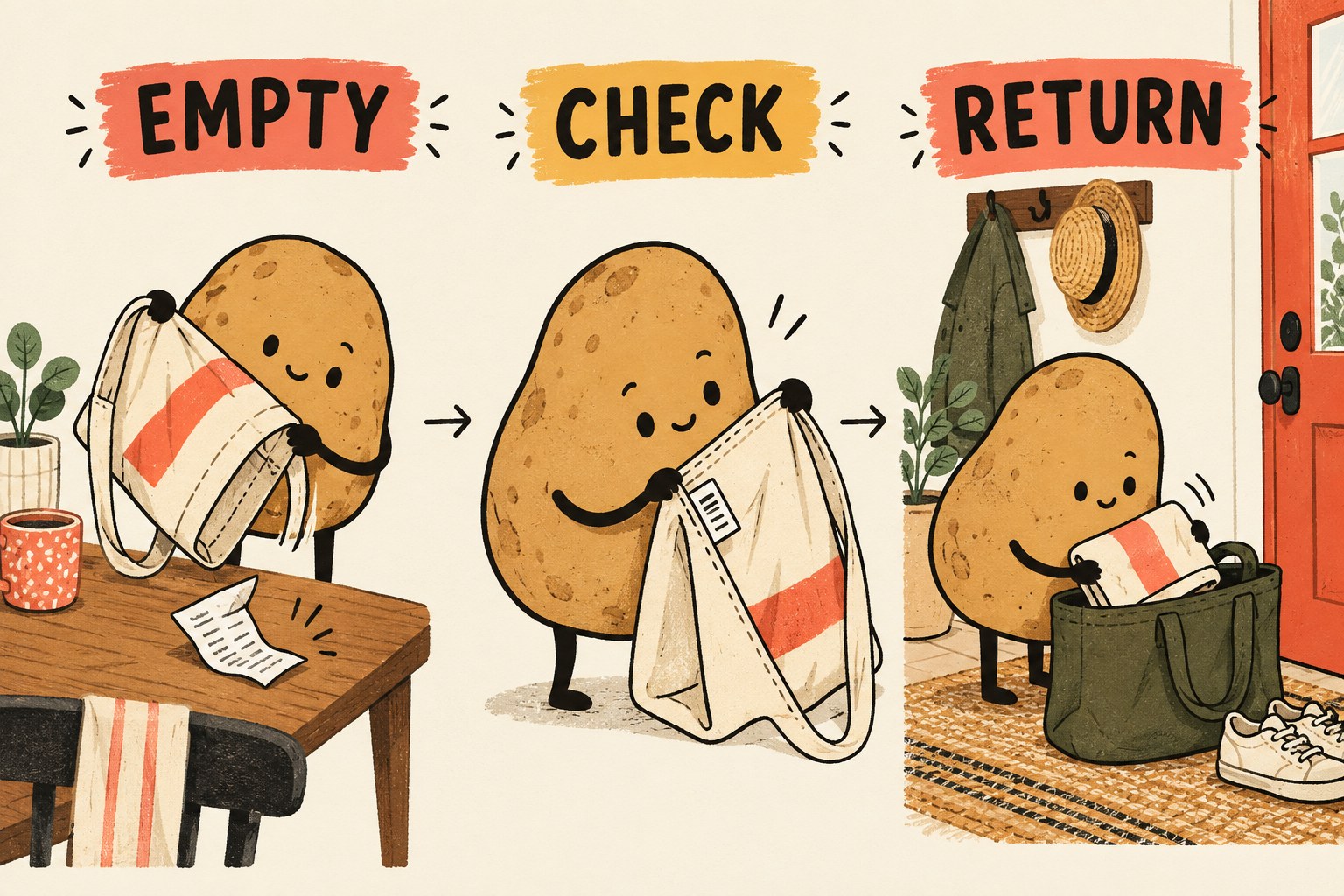
Give the return step an owner
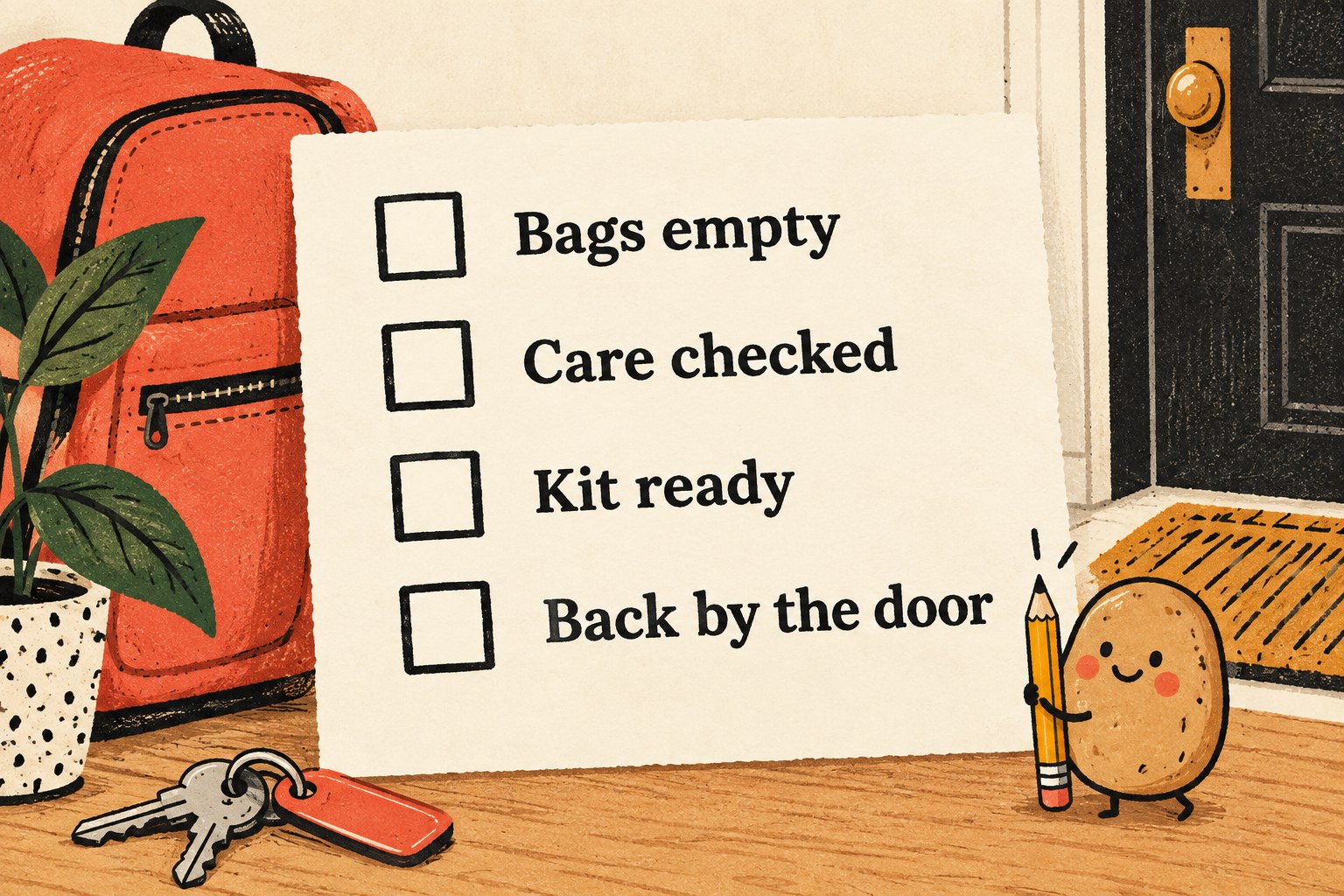
The most important part happens after unloading. Agree who will empty, check and return the kit. In a shared household, that can simply be the person who finishes unpacking. If a bag needs care, replace it from the spare group before calling the kit ready.
- Empty: remove purchases, receipts and anything left in the bottom.
- Check: inspect condition and follow any needed care instructions.
- Return: place ready bags back in the agreed spot; leave a note for unresolved care.
Add “bags” to the shopping-list departure check, next to keys or wallet. If the kit lives in the car, make returning it a named step after it has been emptied and cared for, rather than an indefinite intention.
Use this copyable bag-reset card
| Prompt | Your answer |
|---|---|
| Our usual trip | Where we go and how we carry things home: ______ |
| Ready kit | Bag types and number we intend to take: ______ |
| Return spot | One specific place: ______ |
| After-unpacking owner | Person or household rule: ______ |
| Care pending | Bag, next action and person: ______ |
| Next-trip adjustment | What was missing or unnecessary: ______ |
After your next shop, change just what failed. Forgotten kit? Move it to a more reliable departure cue. Too many bags? Remove an unused one from the everyday kit. Too few? Add a suitable spare. A full storage basket is not the success measure; having useful bags at the right moment is.
Handle the extras without creating another chore
Keep an occasional-use bag only if you can name its job and a reasonable place for it. Before passing bags on, ask whether the recipient actually wants their type and condition. Check local collection guidance for unusable materials; do not assume every reusable bag belongs in curbside recycling.
The EPA's archived reducing and reusing guidance puts using what you already have and preventing unnecessary purchases ahead of creating more waste. Here, the practical application is modest: test the bags and storage you already own before buying another organizing solution. No particular savings or environmental break-even result is promised.
Planning the shopping itself? Pair your ready kit with a gap-only pantry grocery list, then use a unit-price comparison when choosing between pack sizes. The bags get you to the checkout; a good list decides what goes inside.