Home & Cleaning · a kit for one job
A cleaning caddy should save you trips, not become a portable museum of half-used bottles. Start with the task you are about to do, check the surfaces involved, then carry the smallest suitable set. The cupboard can keep the supporting cast.
This guide is an organizing workflow for ordinary household cleaning. It does not prescribe chemical combinations, disinfection procedures or a universal product list. Product directions and surface-care instructions take priority.
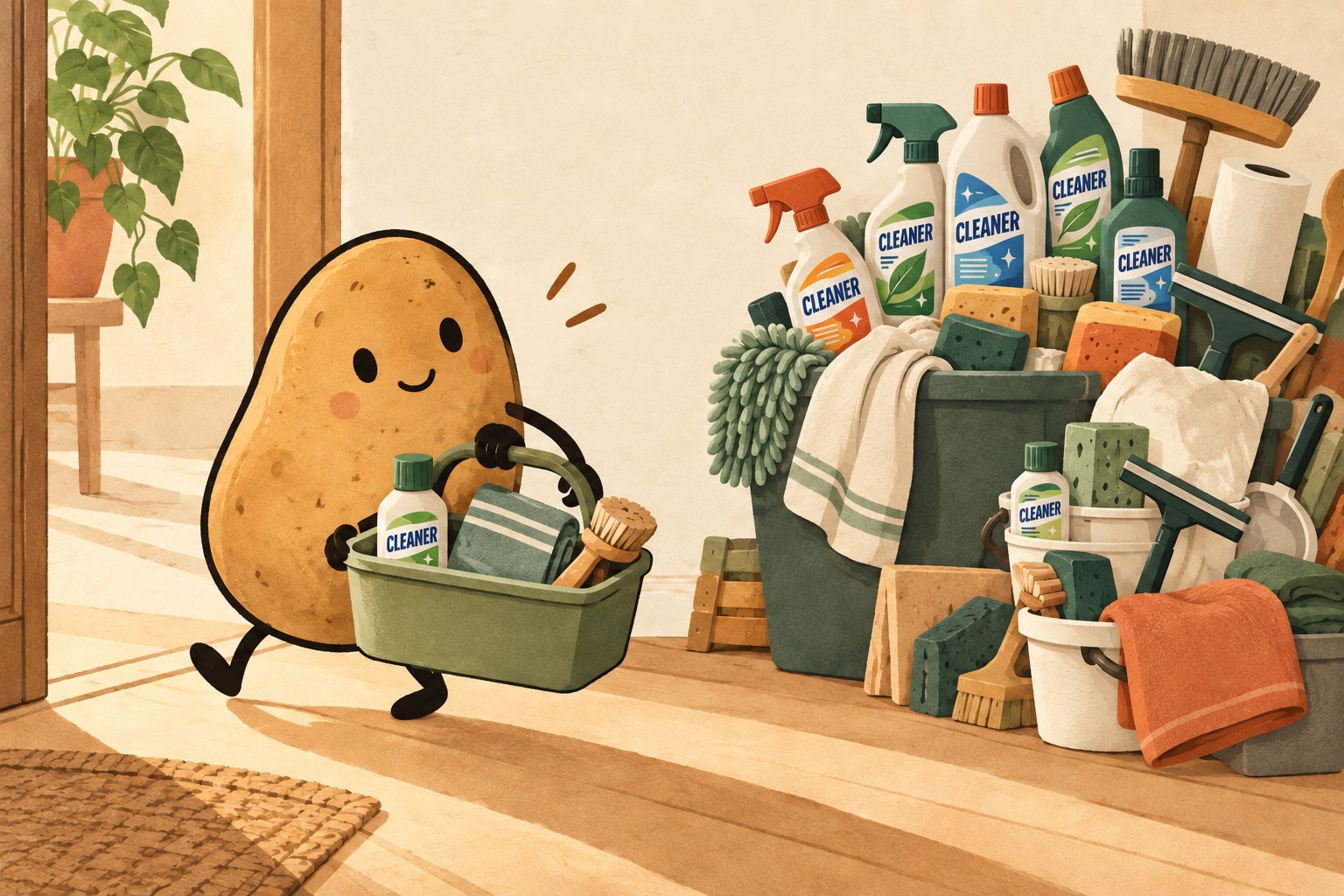
The short version: choose the job before filling the caddy
- Name the job: for example, dust the living-room shelves, rather than “clean everything.”
- Check the surface: note the material and any manufacturer restrictions.
- Select the tools and product, if needed: use what the care instructions permit; do not assume one cleaner suits every finish.
- Check the carry: upright containers, a clear handle and a load you can move comfortably.
- Finish with a reset: return products to suitable storage and deal with used tools before calling the job done.
If your timing is the problem rather than your kit, use our small-apartment cleaning schedule alongside this checklist.
Make a task card, not a shopping list
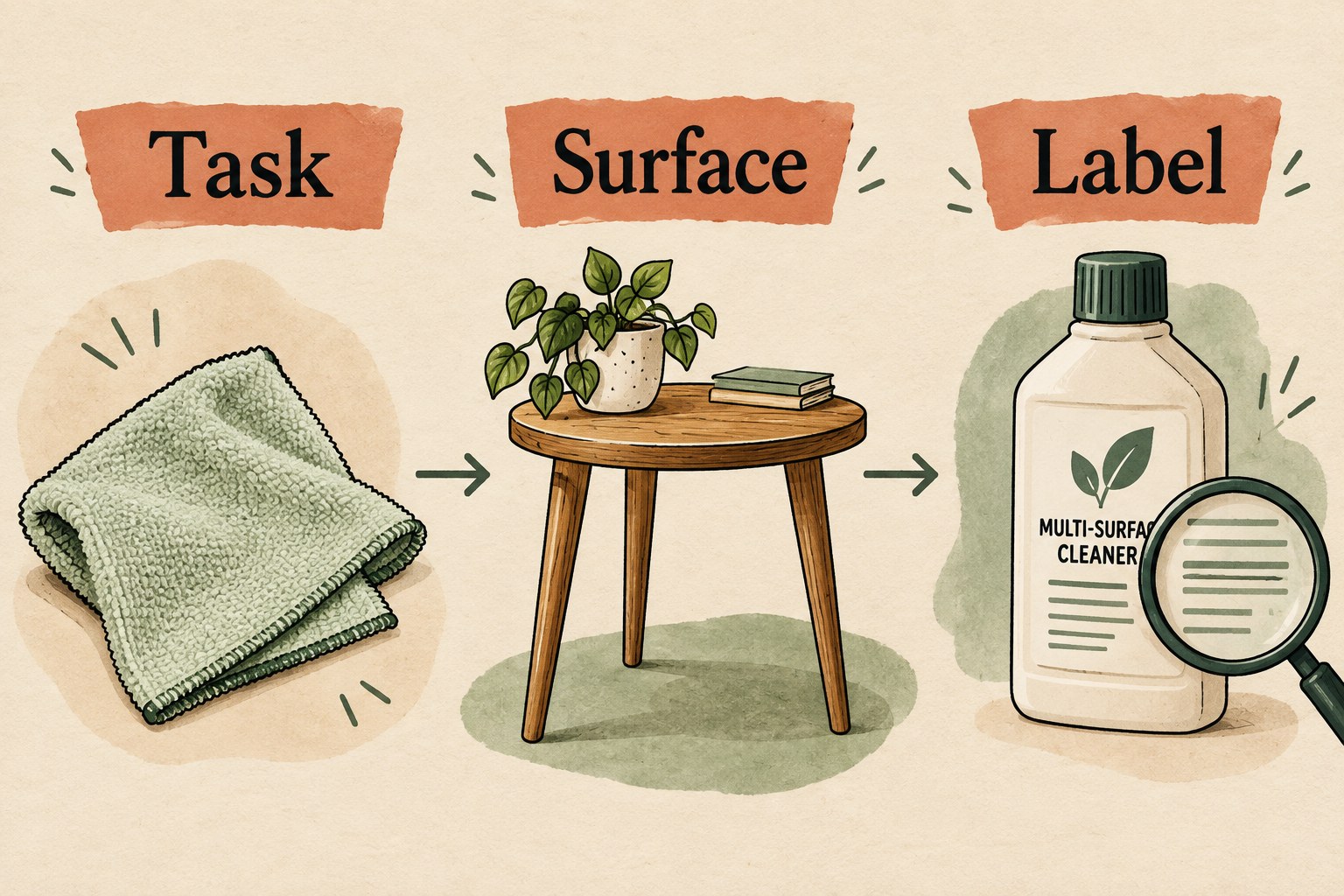
Write three short answers before adding anything. “Bathroom” is too broad: cleaning a mirror and dealing with a toilet involve different surfaces and tools. A narrow job makes it easier to see whether an item has earned its space.
| Question | Example planning note | What it changes |
|---|---|---|
| What am I doing? | Remove dust from the side table | Leave unrelated floor and bathroom products behind |
| What am I touching? | Wood finish; check the maker’s care instructions | Do not choose a product solely because its name says multipurpose |
| What do the instructions require? | Suitable tool, permitted product and any preparation | Pack the actual requirements, not a generic internet kit |
The American Cleaning Institute’s label-reading guide explains that directions identify suitable surfaces, quantities and process timing, while warnings and storage instructions answer different questions. Read those sections rather than relying on the front label.
Build a small working set
Think in roles. You may already own everything you need.
- A working tool: a cloth, brush or other tool appropriate for the chosen surface.
- A clean spare, if the job needs one: keep it separate from tools already used.
- A product only when required: carry it in its original closed container, with its instructions readable.
- Anything required by the product directions: for example, specified protective equipment. A checklist cannot replace the label.
- A route for used tools: decide where they go next, so they do not quietly become tomorrow’s “clean” supplies.
Our suggested arrangement is a clean section plus a separate washable tray, kept outside the clean caddy, for used tools during the reset. This is an organization aid, not a disinfection method. Keep bathroom and kitchen tools identifiable, and do not bundle tools bearing different chemical residues together. Follow their care instructions for washing and drying.
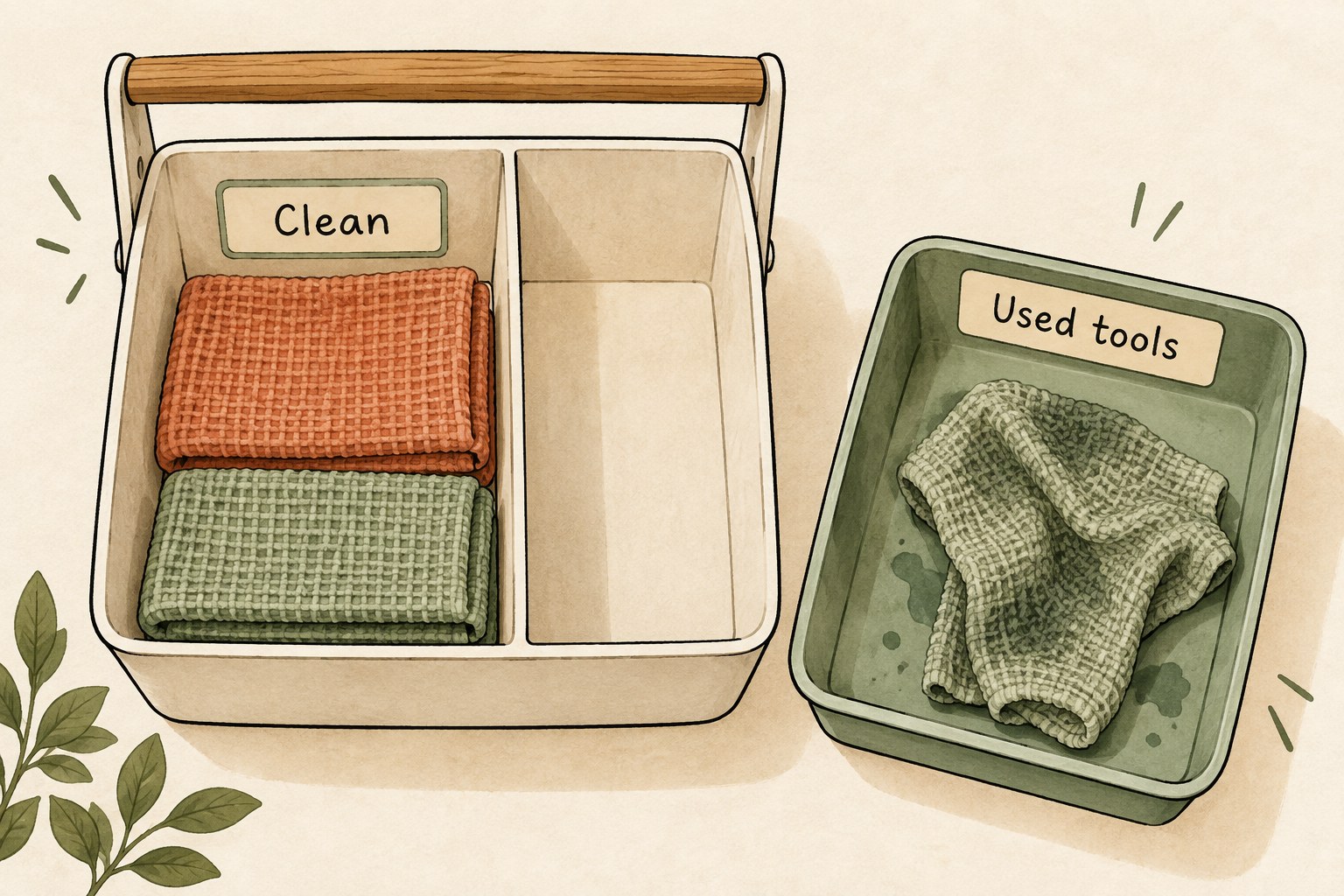
The American Cleaning Institute’s safety guidance advises following labels, never mixing cleaning products, retaining original containers and putting products away after use. A caddy is a carrier during a task; an open caddy on the floor is not secure storage.
Do a carry test before buying a larger organizer
Set your selected items in the carrier while it rests on a stable surface. Can containers stand upright? Can you hold the handle without pushing past bottle tops? Does anything tip when you gently lift it? Stay within the carrier manufacturer’s limits, and reduce the load if it is awkward or heavy for you.
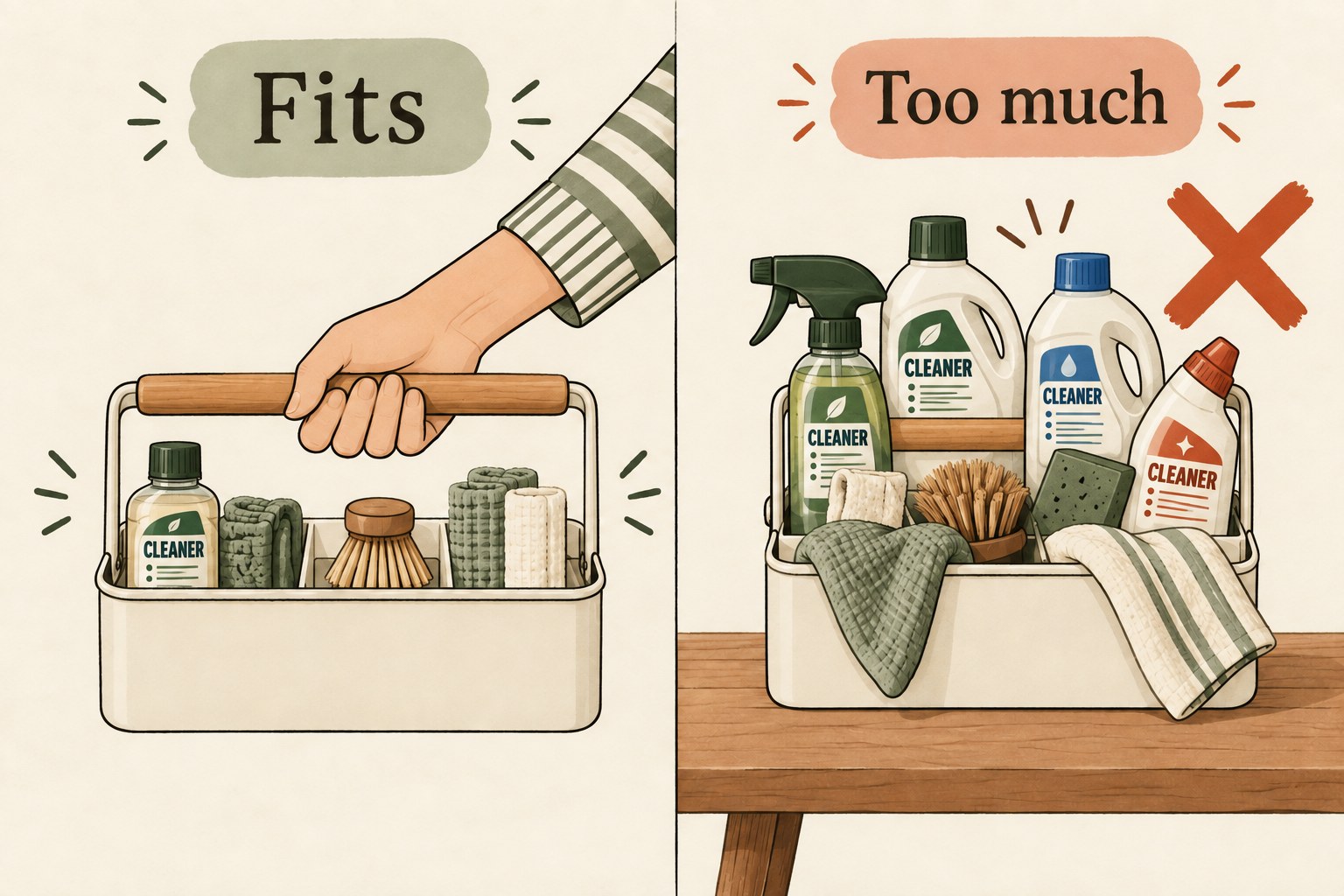
If the set does not fit, first remove supplies unrelated to today’s task. Then consider making separate trips. Buying a bigger caddy can make sense, but “it holds the entire cupboard” is not the same as “it is pleasant to carry.” There is no universal weight target here.
Do not pour products into smaller decorative bottles to solve a space problem. For hazardous household products, EPA guidance says to retain original containers and labels, never use food containers, and follow product instructions for storage and disposal. If a container is deteriorating, seek the local hazardous-materials guidance EPA describes rather than improvising a transfer.
Copy this caddy checklist
| Before starting | Your note |
|---|---|
| Task and surface | ________________________ |
| Care instructions checked | ________________________ |
| Tool and product needed | ________________________ |
| Directions, warnings and storage checked | ________________________ |
| Used-tool destination | ________________________ |
| Upright fit, clear handle, comfortable load | ________________________ |
Example: “Living-room table; maker permits dry dusting; clean suitable cloth; no cleaner required; used cloth goes to its care routine.” This example illustrates the card, not a rule for every wooden table.
End with a reset, not a refill spree
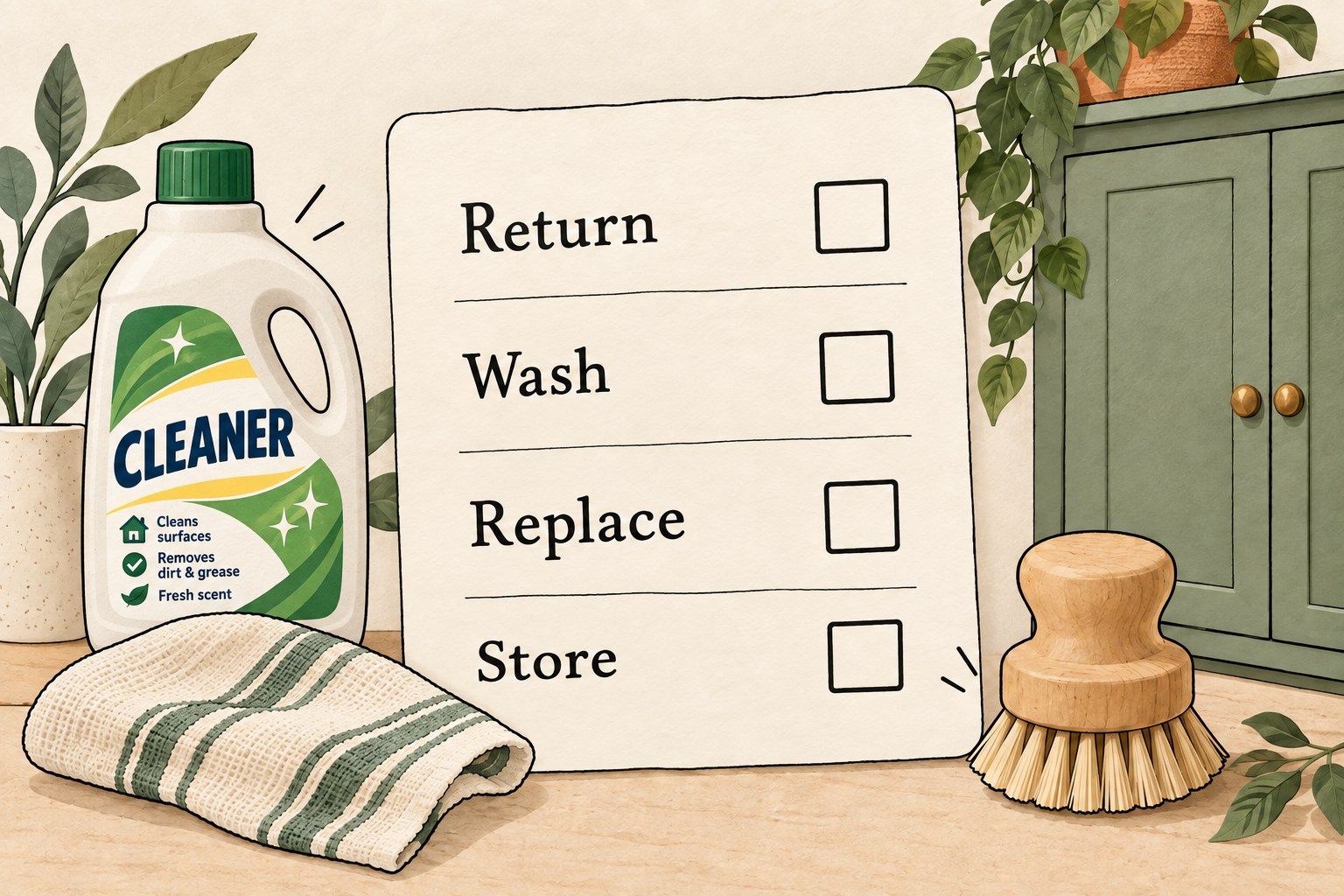
- Return: close containers properly and check that labels remain readable.
- Wash: clean and dry reusable tools according to their instructions before returning them to the clean set.
- Replace: note a genuinely missing or worn item. Check existing supplies before shopping; do not combine leftover products.
- Store: put products away promptly as their labels require, out of children’s and pets’ sight and reach. Use appropriate secured storage; a decorative cupboard or high shelf alone is not a guarantee.
Keep one small “needed next time” note, not a shopping list attached to every bottle. The finish line is simple: the task is done, the used tools have a next step, and the products are back where they belong. Your cleaning caddy can now retire from being a mobile warehouse.