A gift box has one job: look lovely when someone opens it. A shipping box has a less glamorous job: survive the journey. Keep those jobs separate, and packing becomes a short checklist rather than a last-minute wrestling match with tape.
This guide is for a small, ordinary non-fragile gift sent within the United States, such as a notebook and scarf. It is not a packing specification for glass, liquids, batteries, food or international shipments. Check your carrier's current item and service requirements before you pay.
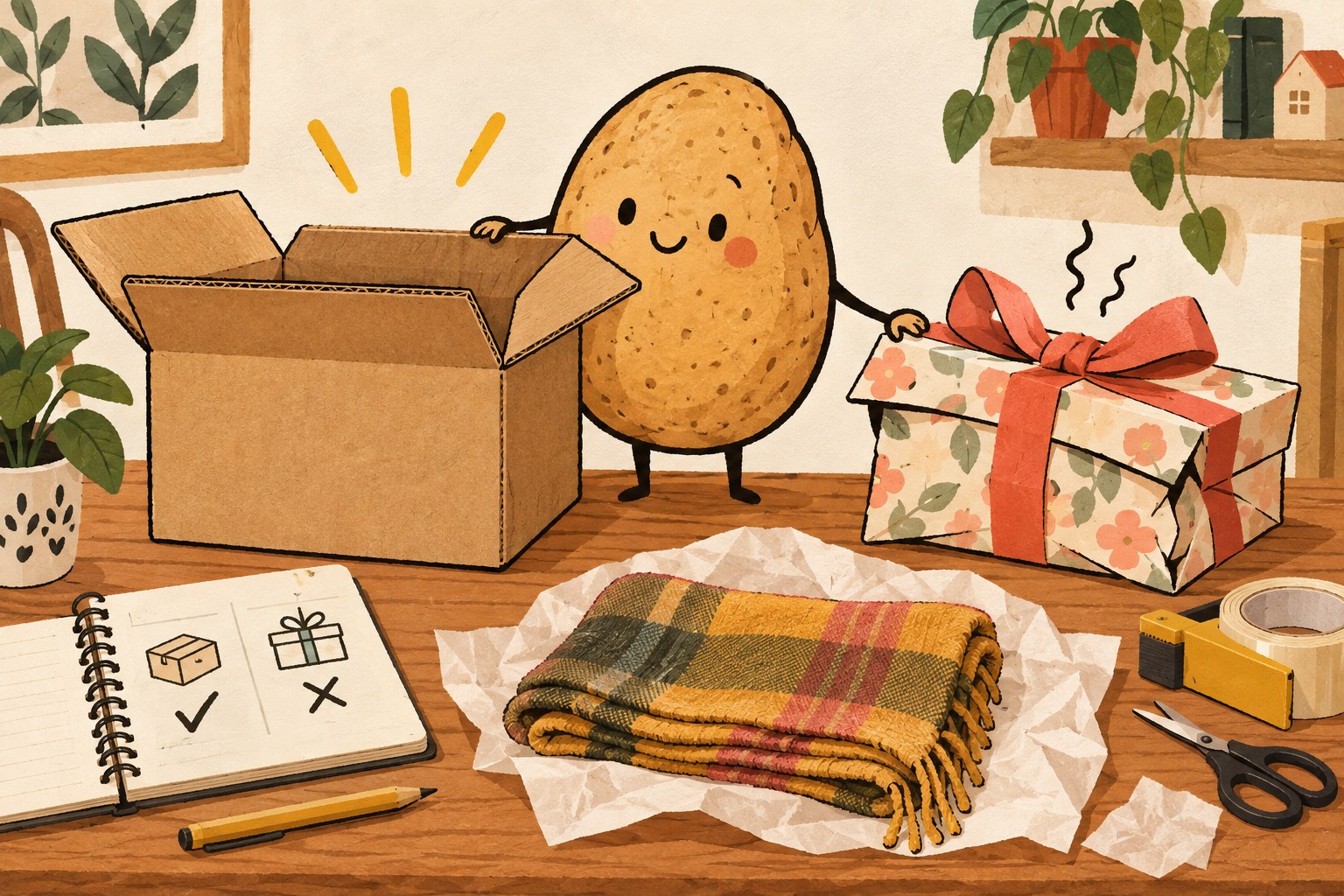
Make a two-minute packing plan
Before touching the tape, write three things on a scrap of paper: what is going in, where it is going, and when it needs to arrive. Then put the actual contents beside the paper. A list saying “birthday present” is less useful than “one notebook, one scarf, one card.” The specific list makes it harder to forget the card or accidentally include something that needs special handling.
- Contents: list each item, including little extras.
- Recipient: confirm the address privately with them, especially after a move.
- Timing: distinguish the celebration date from the date you can hand the parcel to the carrier.
- Supplies: outer box, suitable cushioning, packing tape and label.
Do the contents check first. USPS separates prohibited and restricted items in its domestic shipping guide. If an item needs special handling, stop this ordinary-gift workflow and follow the carrier's instructions for that item. A ribbon does not turn a restricted item into an ordinary parcel.
Decide whether the old box earns another trip
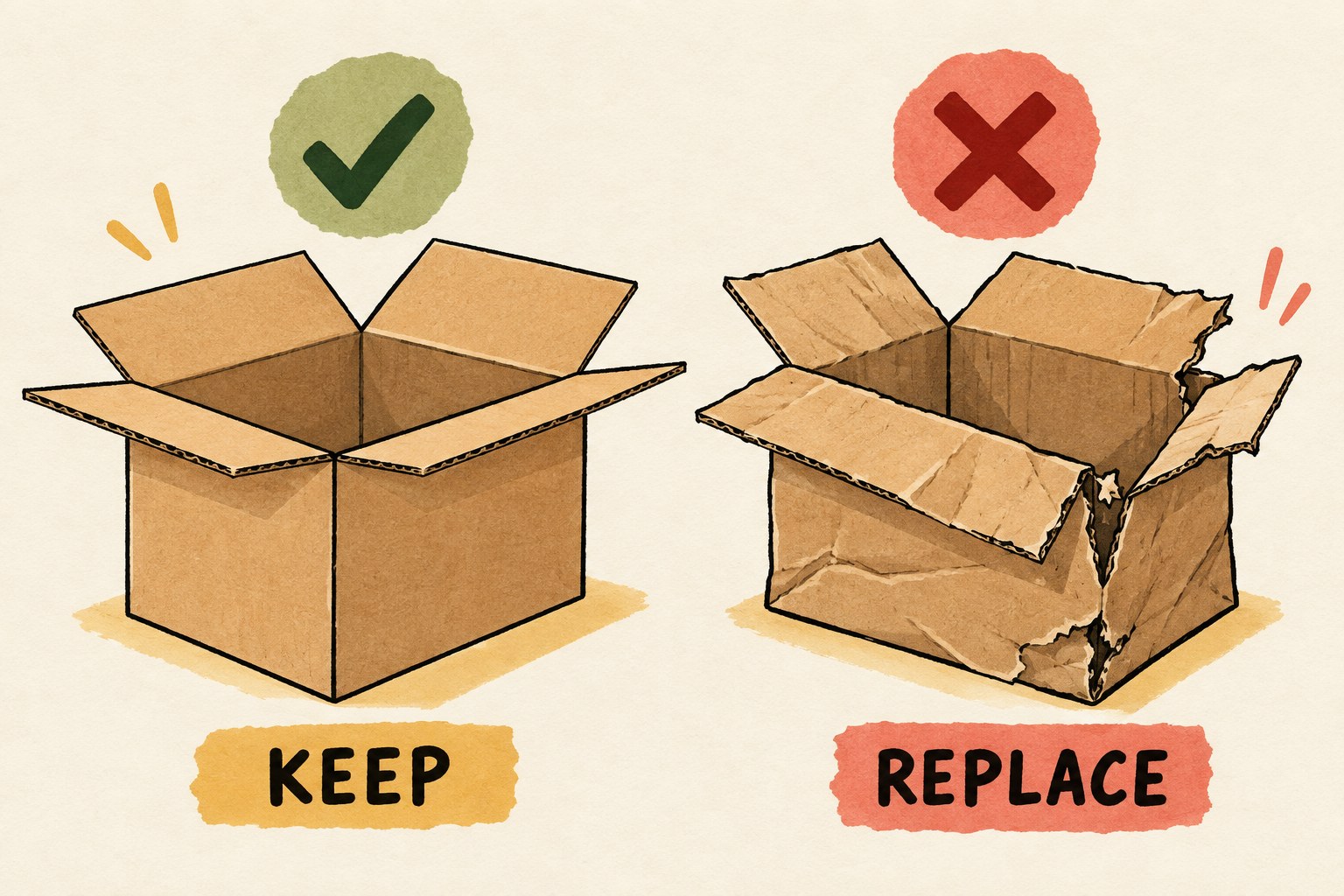
Reusing a box can be practical; reusing a damaged box is a different decision. Inspect the bottom as carefully as the lid. Reject a box with weakened corners, damage or inadequate strength for the contents. USPS's package-preparation guidance calls for sturdy packaging and secure closure. A decorative retail box may need a proper outer shipping box.
| Look at | Ask yourself | Next action |
|---|---|---|
| Structure | Are the walls, corners and seams sound? | Replace a box that cannot protect the contents. |
| Size | Can the gift and suitable cushioning fit without forcing the flaps? | Try the layout before committing to this box. |
| Old information | Is any previous address, barcode or shipping marking still visible? | Remove or fully obscure obsolete markings as the carrier directs. |
| Service branding | Does this box require a particular paid service? | Check before treating it as a free generic box. |
USPS warns that old hazardous-material markings can cause delays, return or removal from the mailstream even when the new contents are different. Its reused-packaging notice explains why a half-peeled label is not good enough. Do not remove a marking that is actually required for the new contents; get carrier guidance instead.
Do a dry run before sealing
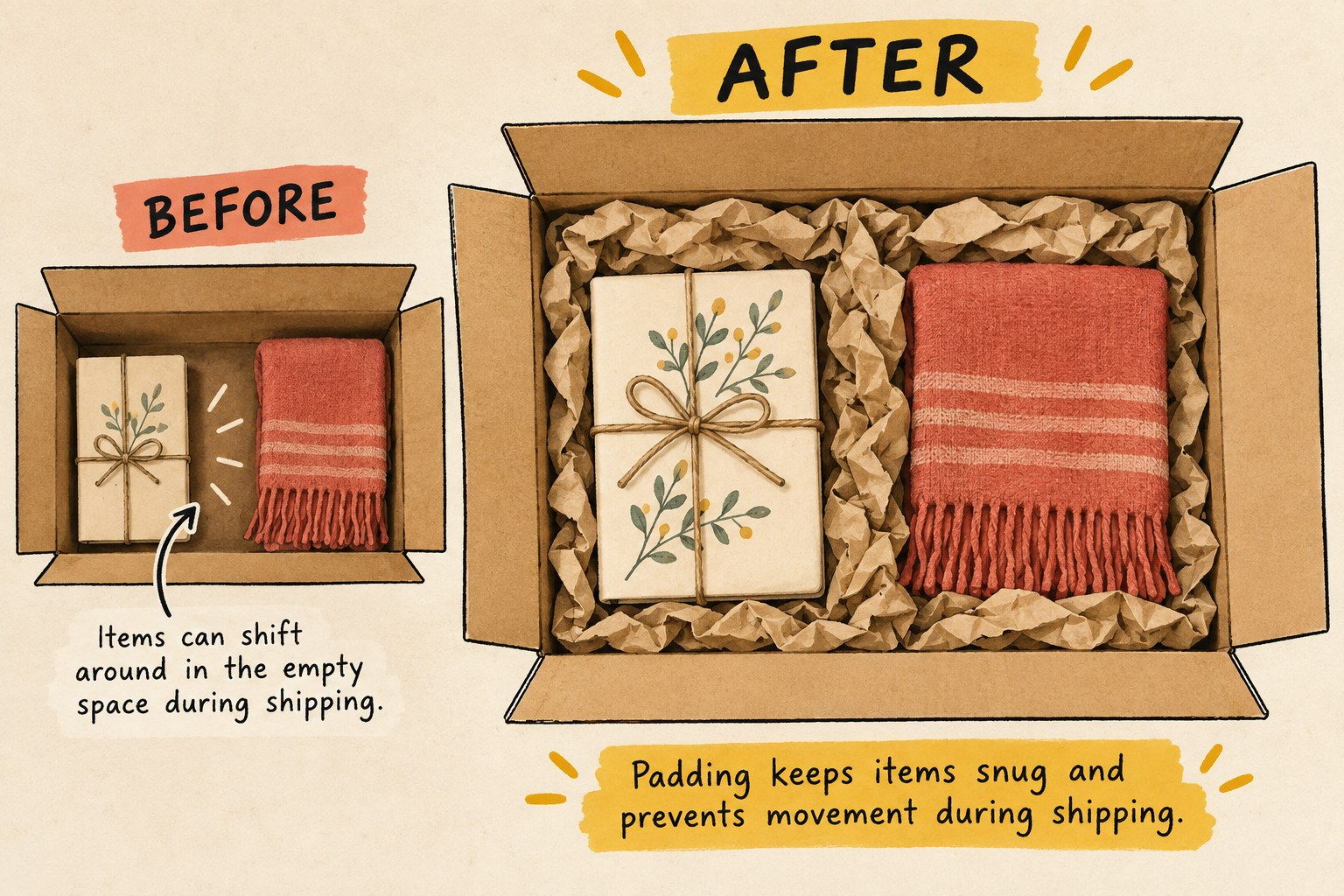
Arrange the gift and card in the open box. Use appropriate cushioning to stop items shifting, and check that the flaps close normally. USPS recommends strong packaging with room for cushioning and no bulging. Our notebook-and-scarf illustration shows the idea of filling gaps; it is not a tested cushioning specification.
Use this simple rehearsal: place the items, close the flaps without tape, reopen, and inspect. Is the notebook pressing on a corner? Is the gift presentation crushed? Did the card slip underneath something? Adjust now, while it is easy. Avoid turning a gentle fit check into a vigorous shake or drop test.
Sending something fragile instead? Switch to an item-specific packing plan. For example, FedEx's breakables guidance recommends double-boxing fragile items with cushioning around the inner box. Do not assume the paper-filled layout here is suitable for ceramics or glass. Ask a packing professional if you cannot confidently protect the item.
Give the parcel a clear destination
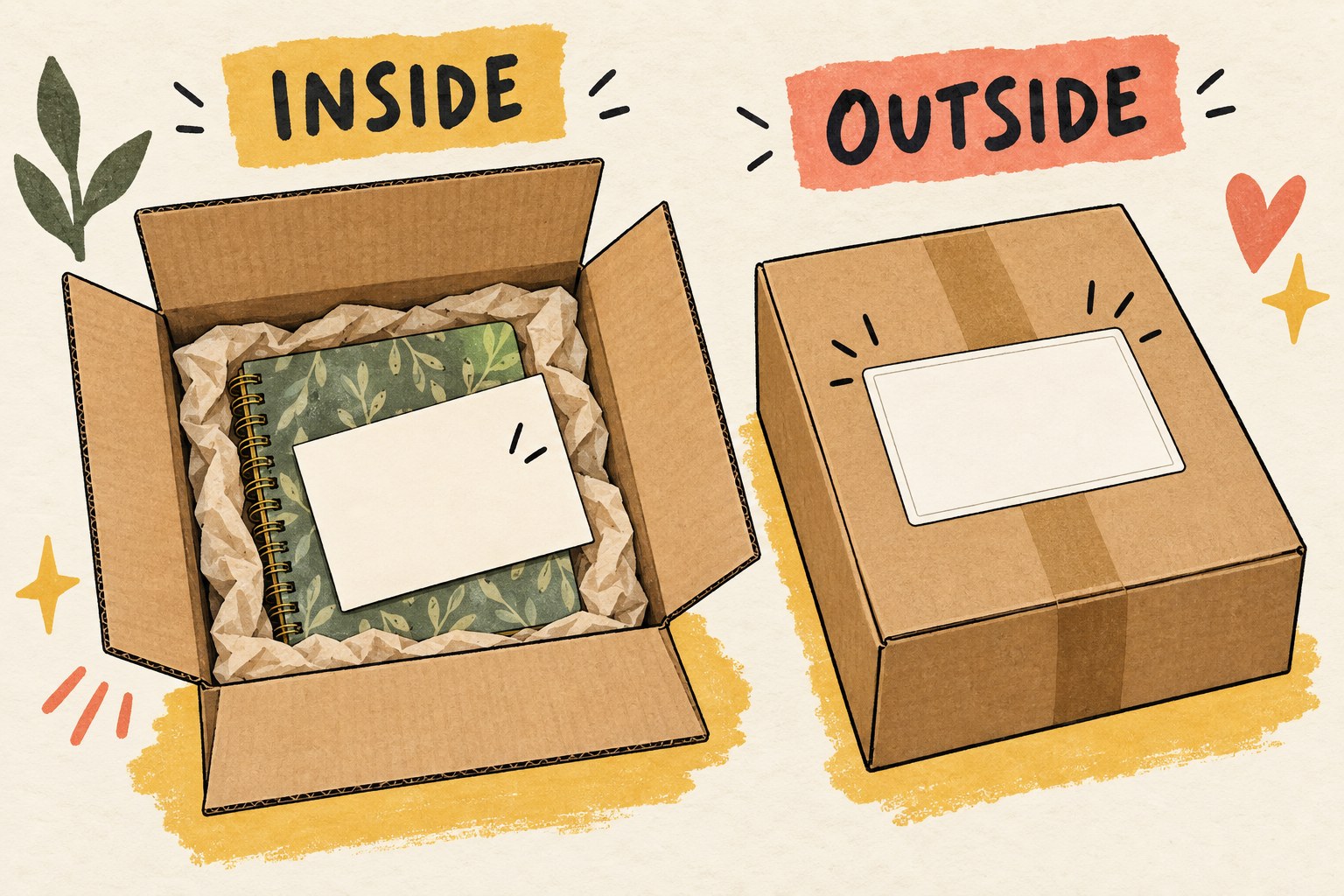
USPS recommends putting destination information inside the package as a backup. On the outside, place labels flat on the same side rather than wrapping them over an edge or overlapping them. Its addressing instructions include the required address fields. The illustration intentionally leaves both cards blank; it is not a ready-to-use shipping label.
Copy the recipient's confirmed address into your label tool, then compare it against the original message line by line. Pay particular attention to apartment or unit details. Check the return address separately. Treat these as two checks, because getting one right does not fix the other.
Put decorative bows, loose ribbon and your gift note inside the shipping box. Close the outer parcel using the carrier's recommended packing tape and seam method; USPS advises against exterior string and twine. Save the dramatic unboxing moment for the recipient.
Measure the finished parcel, then save a receipt
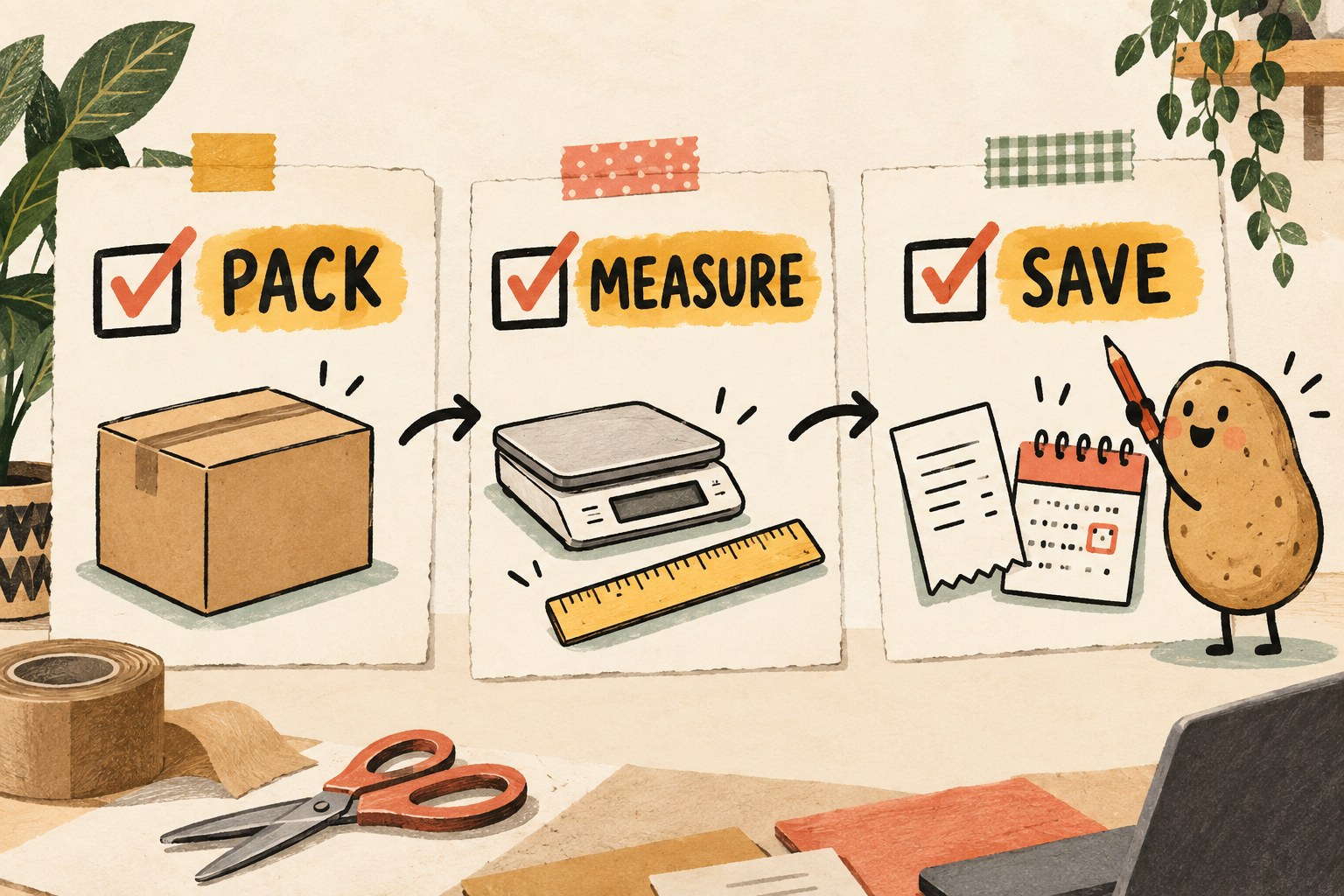
Weigh and measure the packed parcel, including packaging, before buying postage. Box size can affect the price as well as weight. Use the carrier's live quote rather than a remembered price; USPS also requires its service-branded packaging to be used with the corresponding service. See its postage preparation guide.
The following is an original record card you can copy into a note. It is a memory aid, not a carrier form or proof of insurance.
- Gift contents: ______
- Address checked with recipient on: ______
- Carrier and selected service: ______
- Packed weight and dimensions: ______
- Quoted delivery expectation and any guarantee terms: ______
- Handed over on: ______
- Tracking number and receipt location: ______
Keep private address details out of social photos of the finished parcel. If you save packing photos for your own reference, photograph the contents and closure without posting the recipient's label. A photo is a useful reminder of what you packed; it is not a promise that a carrier will approve a claim.
The final doorstep check
Before leaving, read this six-line check once: correct contents, sound box, suitable cushioning, current address, finished weight and dimensions, receipt plan. If something fails, fix that one thing. You do not need a more elaborate wrapping system. You need a parcel whose thoughtful inside and practical outside are both ready.
Carrier guidance checked October 5, 2026. Examples are illustrative, not personal shipping tests. Service conditions and item-specific requirements can change.