A suitcase can be packed while half your belongings are still living in the room. The charger is behind the lamp, the jacket is in the wardrobe, and the small pouch has apparently started a new life in a drawer.
This hotel checkout checklist uses three separate checks: sweep the room, count what leaves, then confirm checkout. It is an organizational routine, not a promise that every hotel offers the same departure services.

Start with the departure plan
Before you begin packing, confirm the checkout time for your booking, how the hotel wants you to check out, and when you need to leave for your next stop. Do not assume that a requested late checkout has been approved. If you want the hotel to store bags, ask about availability, collection hours, charges and items it will not accept.
Keep a small departure note: hotel name, checkout deadline, transport departure, bag-storage arrangement and the place where your receipt will arrive. This is especially useful when one person packs while another handles the front desk.
Hotel apps can make the administrative part easier. Hilton describes digital checkout and access to receipts in its official app guide. That is an example of one provider's service, not a reason to assume every stay has app checkout.
Use a room sweep, not a memory test
Start at one side of the room and move around it in a consistent direction. Check one zone fully before moving on. The route below is a suggested sequence; adapt it to the actual room. With two travelers, give each zone an owner rather than both assuming the other person checked it.

| Zone | Look for | Done means |
|---|---|---|
| Bedside and desk | Your chargers, adapters, earbuds, glasses, stationery and items in drawers | Your devices and their accessories are together in the bag; no personal item remains in the checked drawers or on surfaces |
| Wardrobe and storage | Clothes on hangers, shoes, pockets, shelves and the room safe if you used it | Each used compartment has been opened and visually checked |
| Bathroom | Toiletries, cosmetics, toothbrush, personal towels and hanging items | Your items are packed; wet items are kept separate from dry contents |
| Seating and floor | Items beside or beneath accessible furniture, on chairs and near the luggage rack | You have looked through the places you used without dismantling or moving heavy furniture |
| Fridge and other areas | Your own stored items, balcony belongings or bags elsewhere in the property | Only your belongings are collected, and any off-room items have an explicit collection plan |
Unplug and collect your own charging equipment; leave hotel equipment where it belongs. Do not empty a minibar or assume room furnishings are complimentary. If something is inaccessible, ask staff for help rather than reaching into an unsafe space.
Put essential items through a separate check
After the sweep, physically locate the items you need for the next leg: phone, wallet, home keys, travel documents and any personal essentials. “I remember packing it” is not the same as seeing which pocket it is in.

Move them directly into the day bag or pocket you will keep with you. Avoid spreading them on the reception desk for a public inventory. If something is missing, stop the departure sequence and search the zone where you last used it before closing the door for the final time.
Finish the room check before completing digital checkout. Hilton says its Digital Key works until checkout. Other properties may handle room access differently; ask if you need to return after checkout rather than relying on the key to keep working.
Count bags at each handover
Count separate pieces, including a tote, jacket bag or shopping bag that was not part of your original luggage. A simple note might say “one suitcase, one backpack, one tote.” That is an example, not a recommended luggage allowance.
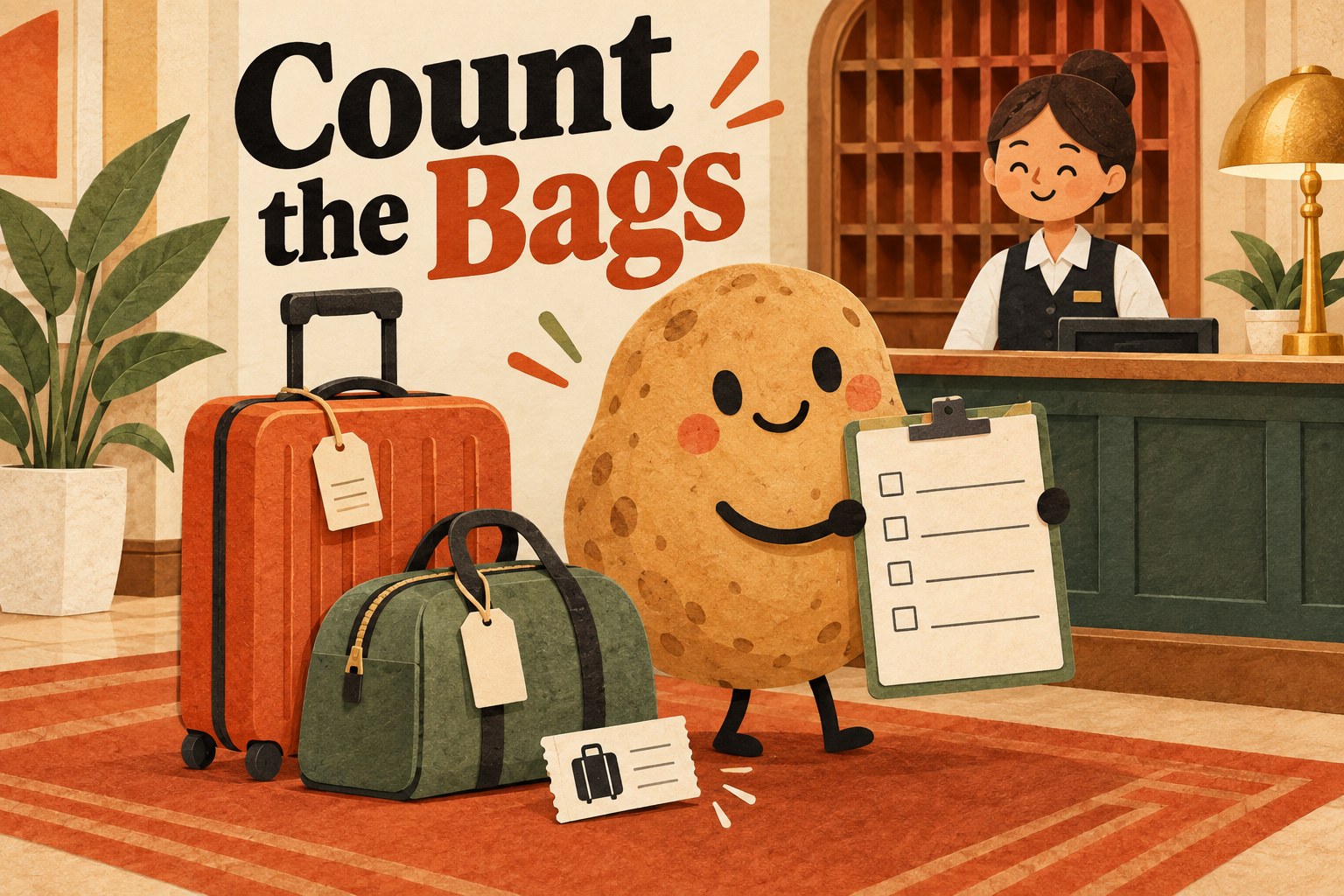
- Leaving the room: compare the actual pieces with your note.
- Using hotel storage: follow the property's process, keep any claim ticket, and confirm where and when to collect. Keep the essentials you need with you.
- Collecting stored bags: match every piece before leaving reception.
- Entering transport: confirm that each piece has moved with you. Do not let a small bag disappear from the count simply because someone else is carrying it.
A bag count does not replace identifying the correct bag. Check distinctive features or your own luggage label when several similar cases are together.
Copy this checkout card
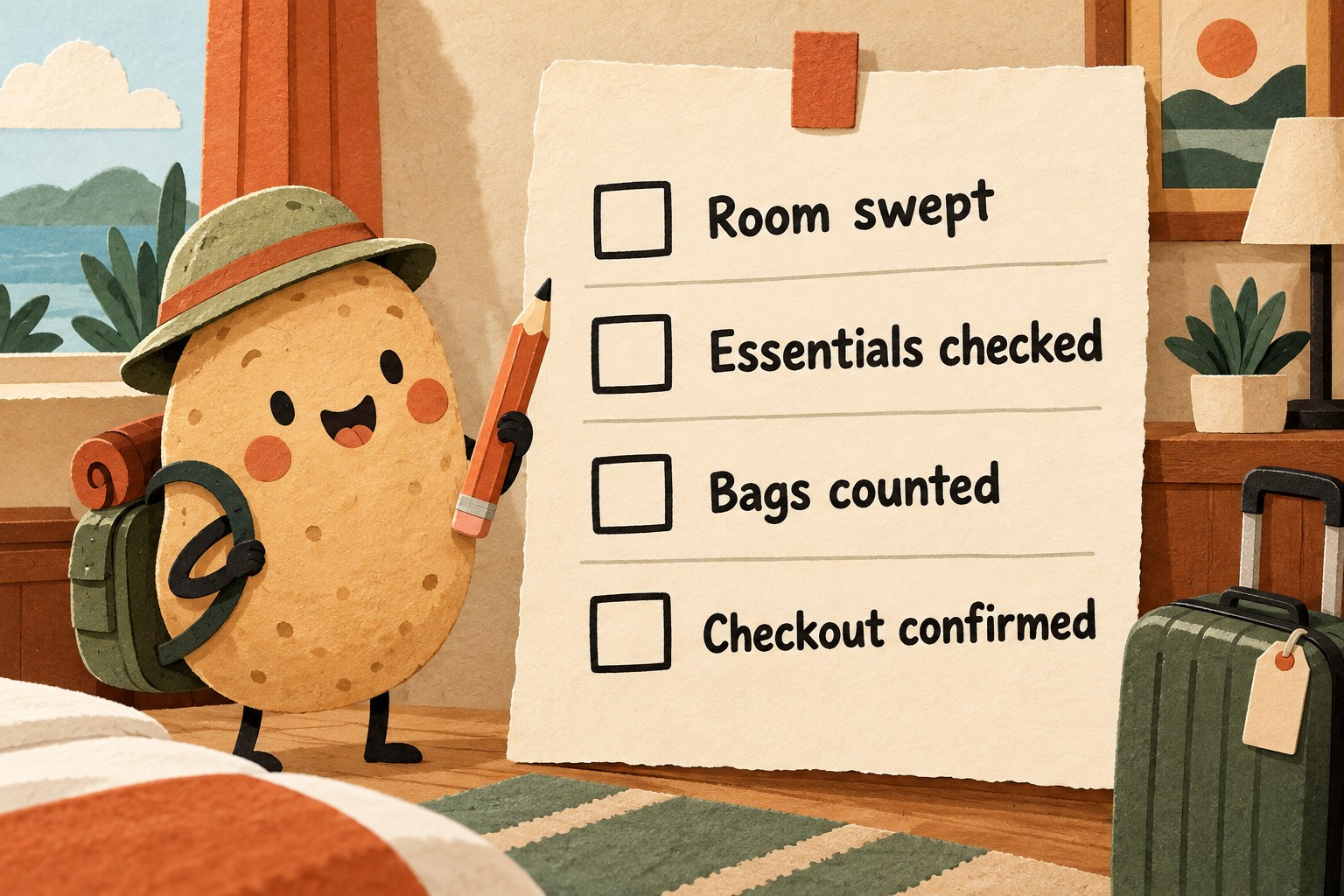
Save the following as a phone note before your next stay. Add only the fields you need; keep booking numbers and identity documents out of any publicly shared version.
| Field | Your note |
|---|---|
| Hotel and checkout deadline | ____________________ |
| Departure transport and time | ____________________ |
| Room sweep owner / zones checked | ____________________ |
| Essentials physically located | ____________________ |
| Bag count and descriptions | ____________________ |
| Stored bags / claim ticket / collection time | ____________________ |
| Bill checked / question resolved or recorded | ____________________ |
| Checkout confirmation / receipt location | ____________________ |
Review the itemized bill and ask the hotel about entries you do not recognize. Keep the receipt where you can find it later. Give the room one final glance before closing the door for departure. Then follow the property's checkout and key-return instructions.
If you notice something missing afterward
Contact the hotel through the number or contact route on your booking or its official website. Give a clear item description, stay dates, where you last saw it and a way to reach you. Ask about the property's lost-property and return process rather than assuming it can ship an item or guarantee recovery. Avoid sending unnecessary identity-document images or payment details in an initial message.
For the other end of the trip, use our suitcase reset checklist. Before departure, the three-day carry-on packing guide helps establish what should be coming home with you.
The final test: your room has been checked, every bag has an owner, essentials are within reach, and checkout is confirmed. Four small checks beat one heroic guess.