Your suitcase can board the ship without being available to you. Your passport should not enjoy that much independence.
A cruise embarkation-day bag is the small bag you keep when larger luggage is handed over for delivery. Pack it around access: what must remain with you, what you want before your room and bags are ready, and what can wait. This guide gives you a sorting method, a copyable handoff card and a short rehearsal. It is not a full-cruise packing list.
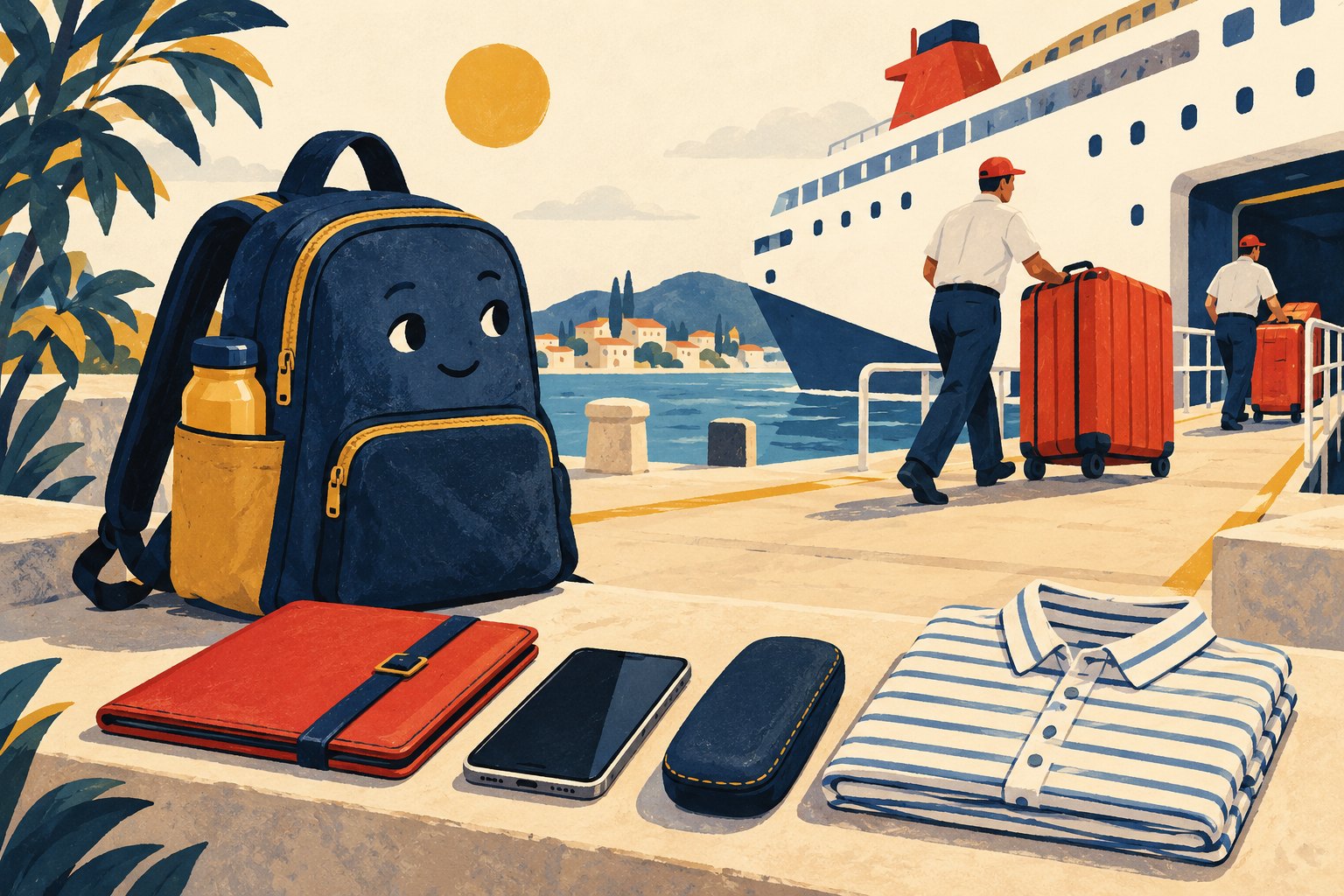
Plan for a gap, not a promised delivery time
Royal Caribbean recommends a small first-day carry-on with travel documents, needed medication and a change of clothes, with activity clothing as appropriate. Disney Adventure's pre-arrival guide also tells guests to keep essentials accessible while waiting for luggage delivery. These operator examples explain the problem; they do not establish one universal delivery hour or bag allowance.
Use your own sailing instructions for baggage limits, required documents, arrival time and boarding procedure. Do not assume your cabin will be available immediately, or that a public area will store your bag. Choose something you can comfortably keep with you until staff say otherwise.
Sort the bag into three jobs
You do not need to buy matching packing cubes. Existing pouches or distinct pockets can do the job. The point is to find one thing without unpacking everything.
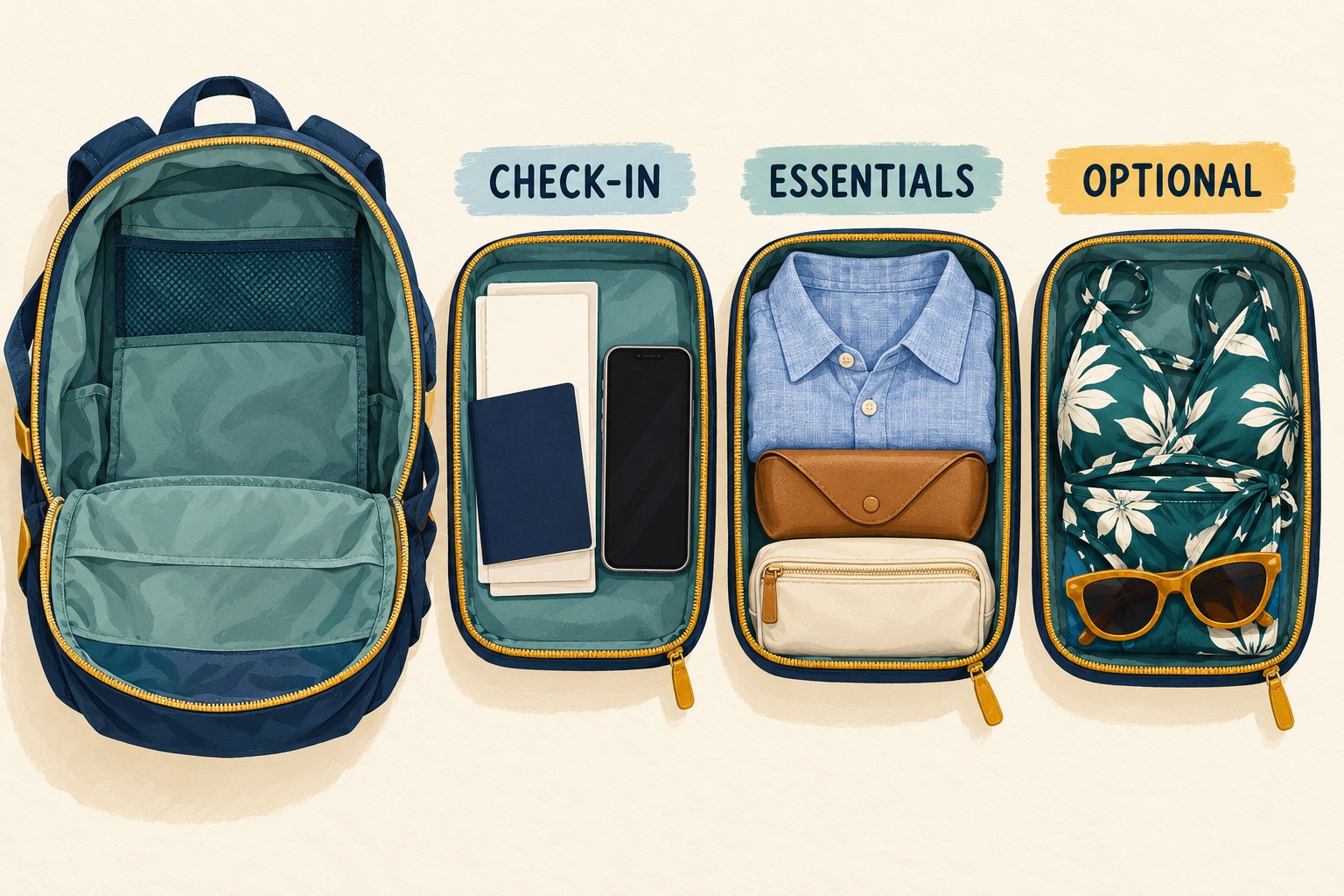
| Job | Put here | Check before closing |
|---|---|---|
| Get through check-in | The original documents your sailing requires, boarding information, wallet and phone | Can you reach them while keeping the rest of the bag closed? |
| Keep ordinary life working | Needed medication and personal supplies, glasses, essential electronics, valuables and a compact change of clothes | Is anything essential still in a hotel drawer or the large suitcase? |
| Enjoy the first few hours | One activity kit, such as swimwear and a cover-up, or a light layer and a small book | Will you realistically use it before the larger bag arrives? |
For medication or equipment with particular transport or storage needs, follow the relevant instructions and arrange requirements with the cruise line before travel. A generic packing checklist cannot settle those needs. Do not remove necessary supplies just to make the bag smaller.
Keep private documents in a closed, accessible pocket rather than displayed on the outside. If you save boarding information offline, confirm which original documents are still required. A screenshot is a convenience, not a substitute for an original document when one is required.
Make a stays-with-me list before a full packing list
Draw three columns. Put each item in one column first, then decide which pocket or bag will hold it. This avoids the familiar mistake of carefully packing an essential item into the bag you are about to surrender.
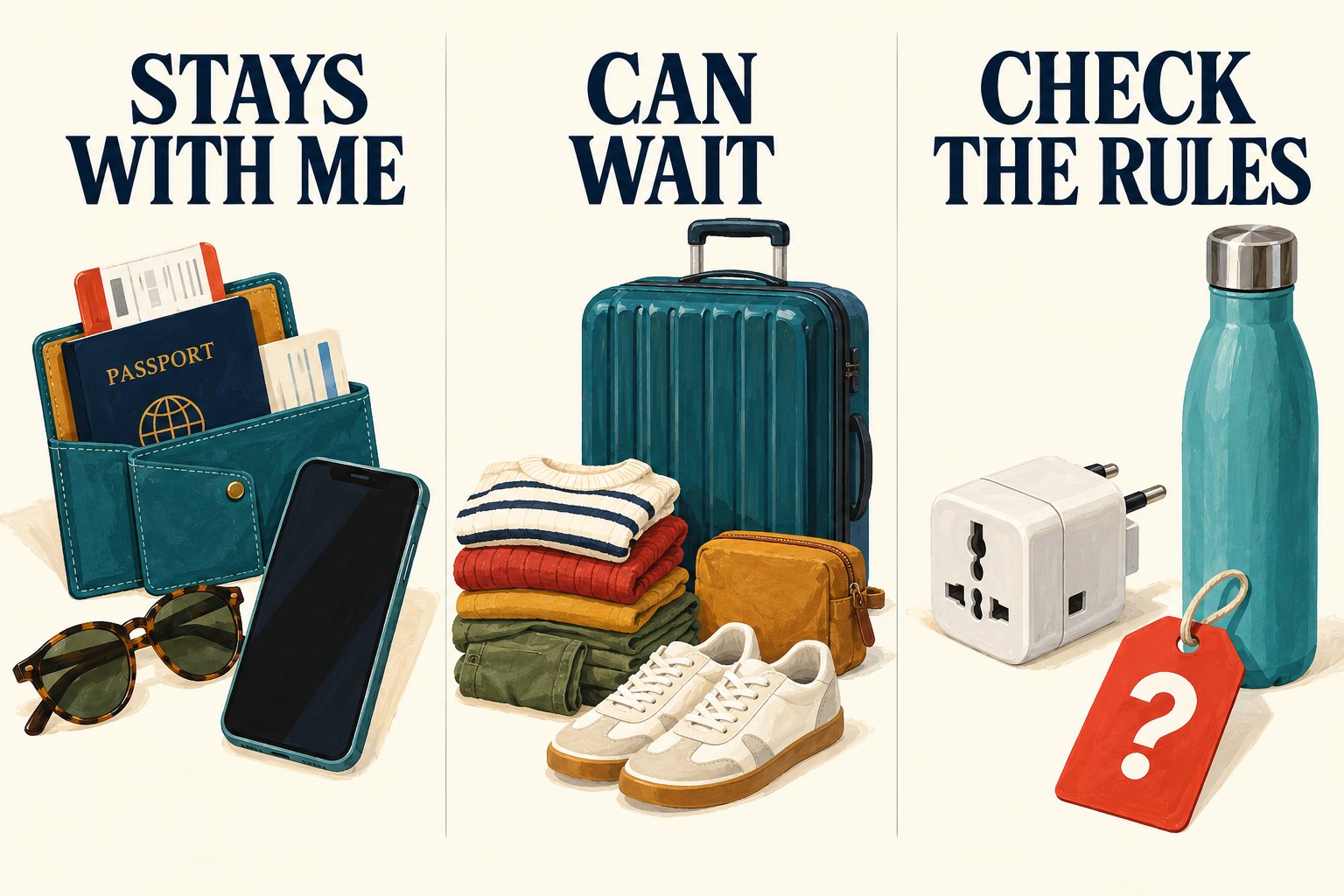
- Stays with me: things needed for boarding, personal essentials, valuables and anything you cannot reasonably be without while luggage is out of reach.
- Can wait: later outfits, spare shoes and other items with no first-day job, provided the applicable baggage rules allow them in that bag.
- Check the rules: anything with uncertain transport restrictions, including electrical accessories, drinks and special equipment. Resolve the question before assigning a bag.
Keep the rules check specific. As checked on October 4, 2026, Royal Caribbean's prohibited-items guidance lists clothing irons and garment steamers as prohibited and includes restrictions and exceptions for electrical items. A product listing that says “cruise friendly” is not your cruise line's approval. Read the actual policy for your operator and sailing, and ask the operator if the item remains unclear.
If you fly to the port, the flight adds a separate baggage check. Something permitted on a ship is not automatically permitted in airline checked or cabin baggage. Repack deliberately between the flight, hotel and terminal rather than treating “carry-on” as one unchanging rule for the entire trip.
Choose one first-day plan
A small bag becomes large when it contains five possible afternoons. Pick the afternoon you are most likely to have, with a simple backup.
| Your likely plan | Optional kit | Leave out unless needed |
|---|---|---|
| Walk around and settle in | A light layer and a compact item to read | A full set of workout clothes for a workout you have not planned |
| Swim if facilities and timing allow | Swimwear, cover-up, sun protection and a small bag for wet items | A bulky towel if you have confirmed that a suitable one is provided |
| Take the day slowly | Comfort items you actually use and a spare shirt | Multiple entertainment devices that duplicate the phone or book already packed |
These are planning examples, not promises about pool opening times, towel provision or cabin access. Keep the optional kit removable. If the bag is too heavy, this is the first section to reconsider; essential personal supplies are not the place to improvise a weight-saving contest.
Do the hallway rehearsal
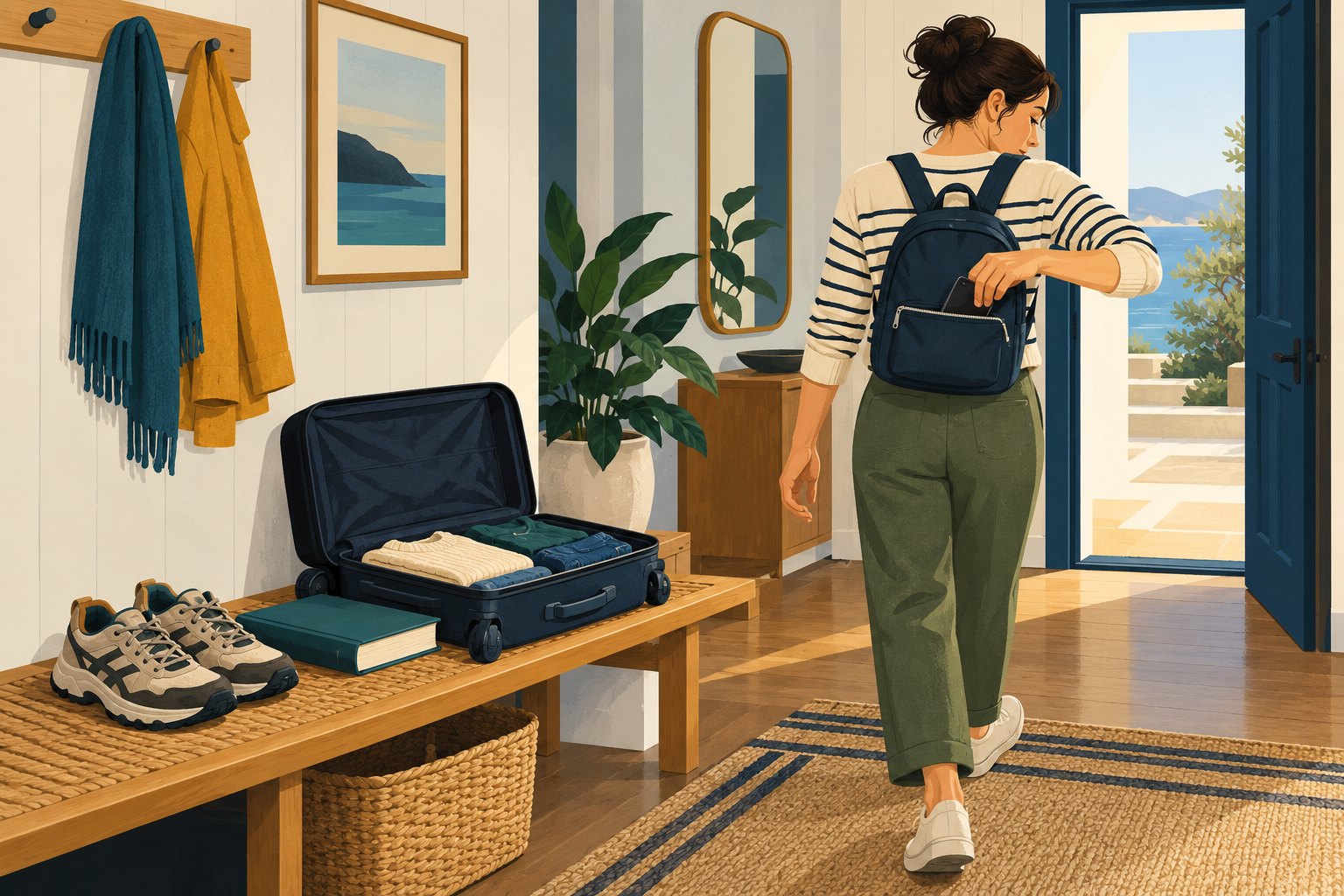
- Pack the actual items, including what you will add on departure morning.
- Carry or roll the bag around your home in the way you will use it. Check that it suits your mobility and does not require an extra hand you will not have.
- Retrieve the document folder and phone without putting loose items on the floor.
- Close everything and identify optional bulk to remove. Do not assume another traveler will carry it unless they have agreed.
For a group, assign responsibility for shared items. “Someone has the charger” is not an assignment. Each person should know where their own essentials are, and the person holding shared documents should be available when they are needed.
Copy this luggage-handoff card
Fill this in at home or at the hotel. At the terminal, use it as a final glance rather than starting a floor-based repacking workshop.
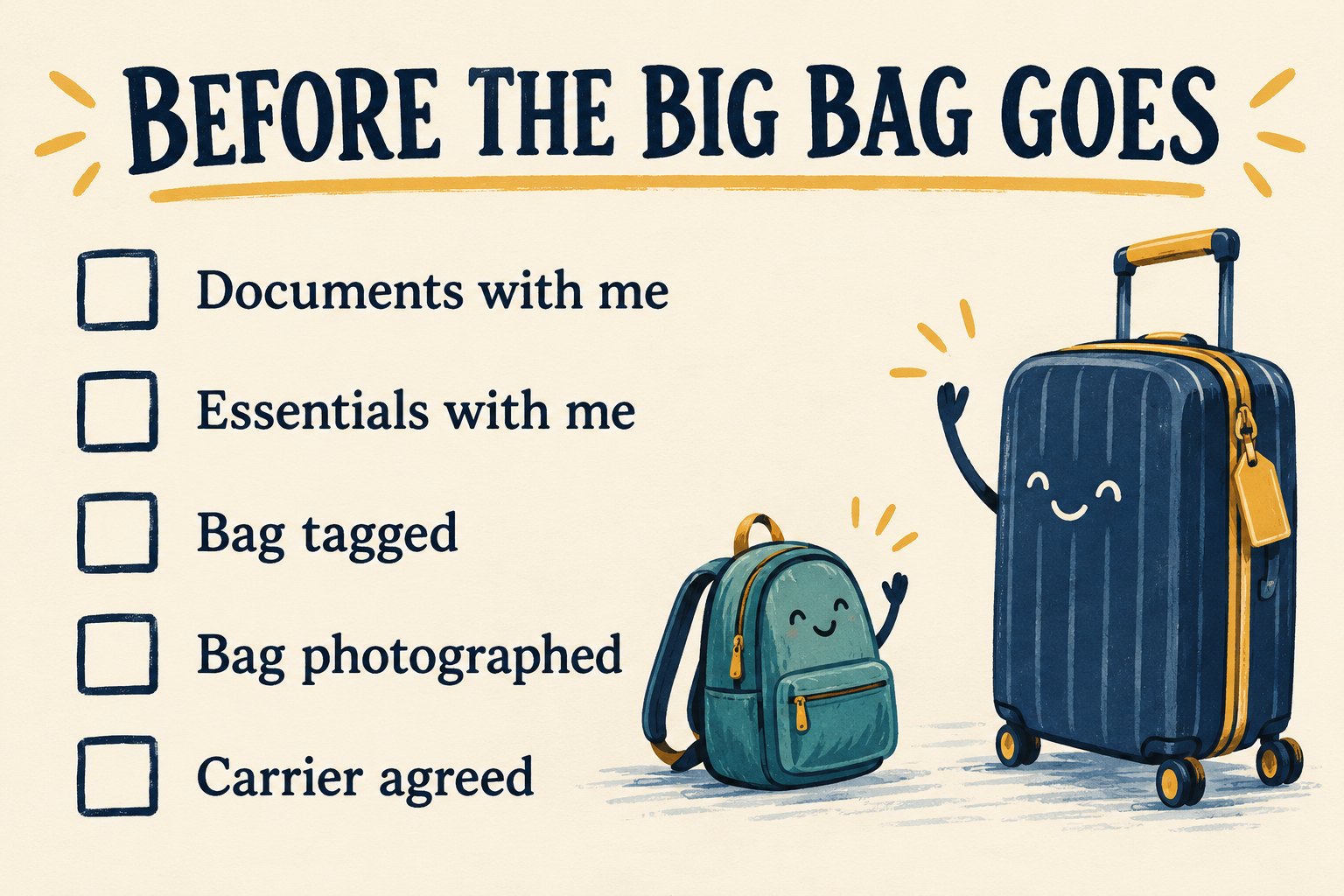
| Handoff check | My answer |
|---|---|
| Travel documents are in | __________ pocket, held by __________ |
| Personal essentials are in | __________ bag; last-minute item to add: __________ |
| Checked luggage tags | Attached according to this sailing's instructions: yes / not yet |
| Luggage identification | Bag photo saved privately; distinctive feature: __________ |
| Day-bag responsibility | __________ will carry it; shared items are in __________ |
| First-day optional kit | __________; remove first if too bulky: __________ |
Follow the operator's luggage-tag instructions; procedures differ. Royal Caribbean's pre-cruise FAQ describes printing tags from the guest ticket booklet, whereas the Disney Adventure guide describes tag distribution at the pier or through its ground transportation. Do not substitute one company's process for another's.
A private photo helps you describe the suitcase if needed. Avoid posting luggage labels or document details publicly. After the handoff, keep the day bag with you and use the cruise line's onboard instructions if luggage does not arrive as expected. Never assume an unattended bag belongs to your party because it looks familiar.
When the main luggage arrives, unpack the optional kit and reset the day bag for your next outing. The successful packing list is the one that lets you start your trip without needing to negotiate with a suitcase that is somewhere else.