A curtain can be the right color and still miss the job by one panel, one heading or one mysterious “width.” Before comparing fabrics, make a small measurement record that distinguishes the room from the product.
This guide is for a straight, already installed pole or track. For bays, curved tracks, overlapping systems or a new mounting position, use the supplier’s dedicated measuring service or instructions. Do not turn a shopping worksheet into a drilling plan.

Make three decisions before taking numbers
- What stays? Write down whether you are keeping the existing pole or track. A proposed replacement position is a plan, not a confirmed measurement.
- What hangs from it? Identify the heading and attachment method, such as eyelets or pleated curtains with compatible hooks, rings or track gliders. Save the exact product guide.
- Where should the fabric stop? Choose the desired endpoint and check what is in its path, including furniture, handles and heating equipment. Follow the equipment manufacturer’s clearance guidance rather than guessing.
John Lewis recommends fitting the pole or track before final measuring. Its guide measures width across that support, excluding decorative finials. Keep the support measurement separate from the window opening: they answer different questions. John Lewis curtain measuring guide.
Record the span, then name the drop’s starting point
Label your first number “pole/track span,” with the unit beside it. Do not put a bare number into a shopping note. Take a photo for your own reference and mark which ends you measured; keep private room photos private.

The vertical measurement needs a named start as well as an end. John Lewis uses the small eye below the curtain ring for pencil pleats on a pole, but the top of the pole for its eyelet measuring method; it adds a heading allowance when making those eyelet curtains. Do not copy that allowance into an unrelated ready-made product. The exact seller’s instructions control the number you enter. Check the heading-specific instructions.
Write “start: ___; finish: ___; measured distance: ___.” If two people cannot point to the same start and finish, remeasure before comparing sizes. Where the floor or support is uneven, record the variation and ask the supplier which dimension it needs rather than silently averaging.
Untangle panel width, pair width and fullness
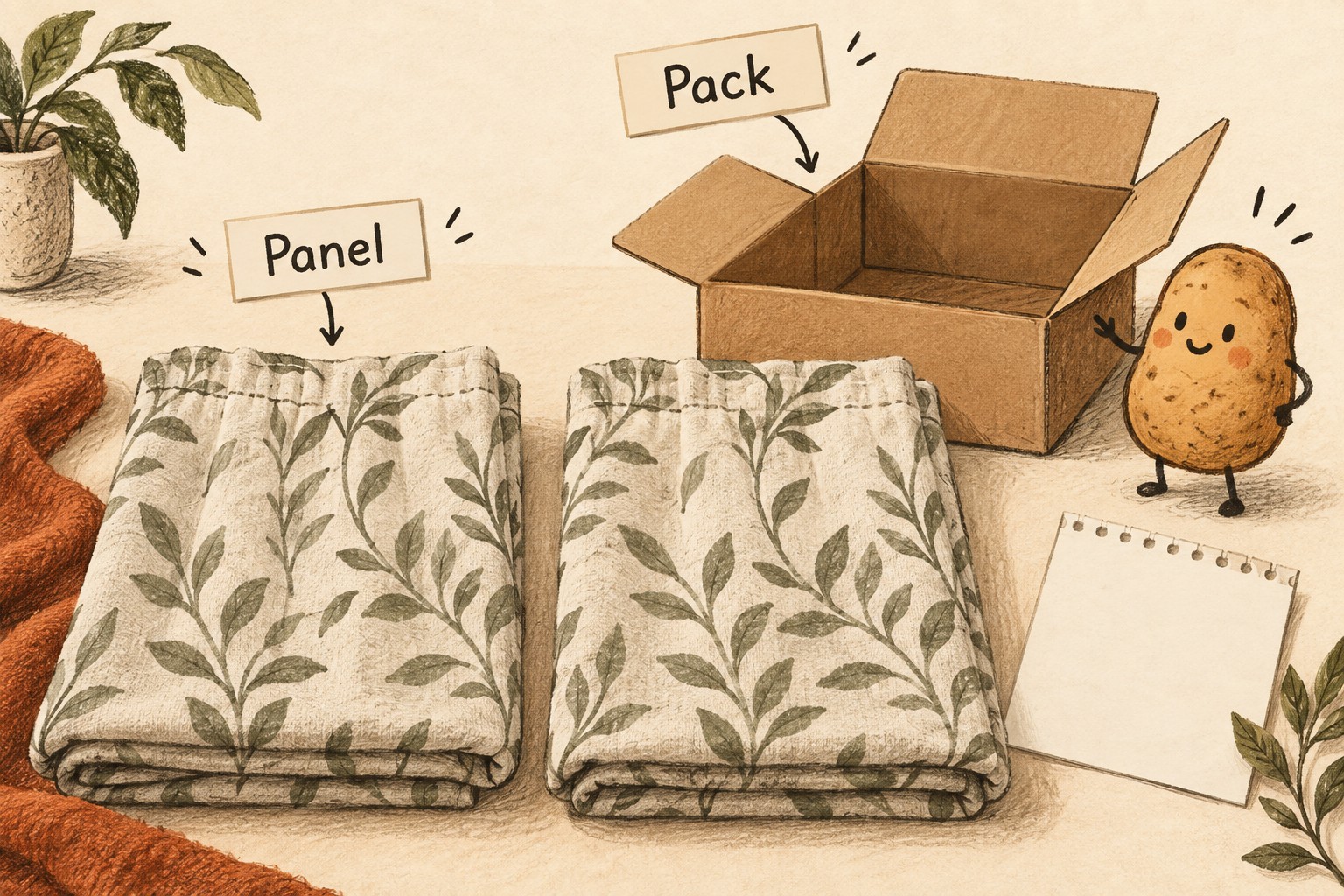
Before calculating quantities, look for three separate facts on the product page: how many panels are in the pack, what one listed width describes, and what coverage the maker recommends. Copy the wording into your record. If it is unclear, pause the order.
Fabric width and support width need not match: folds use fabric. IKEA’s guide gives different fabric-width ranges for different pleated effects, illustrating why a single universal multiplier is a poor shopping shortcut. Use the recommendation for your particular heading and curtain, especially for specialist track systems. IKEA measuring and pleat guidance.
Arithmetic example, not a recommended size: a listing explicitly says “140 cm wide per panel, two panels.” That pack contains 280 cm of flat fabric width. This calculation does not prove it suits a 280 cm pole, or any other pole: the product’s required fullness and finished coverage still need checking. If the listing instead means 140 cm across the pair, the available width is different.
Copy this curtain order worksheet
| Field | Your record |
|---|---|
| Room and window identifier | ___ |
| Existing support and span, with unit | ___ |
| Exact curtain product and heading | ___ |
| Supplier measuring-guide link | ___ |
| Drop start → intended finish | ___ → ___ |
| Measured drop and any variation | ___ |
| Listed width means: panel / pair / other | ___ |
| Panels per pack; packs needed | ___; ___ |
| Product coverage/fullness rule checked | ___ |
| Care, alteration and return conditions checked | ___ |
| Unresolved question before ordering | ___ |
When comparing two candidates, duplicate the product rows rather than changing the room measurements to make one fit. A useful rejection note is specific: “heading incompatible with retained support” or “width meaning unclear,” rather than “probably too small.”
Finish with an order check
- The room, units and measuring endpoints match the saved record.
- The product’s heading works with the retained support.
- Panel count, pack count and the maker’s coverage guidance agree.
- The selected drop follows this seller’s convention.
- Any shortening, washing allowance or alteration follows this product’s guidance, not a remembered rule.
- Return and alteration conditions were checked before cutting, hemming or washing.
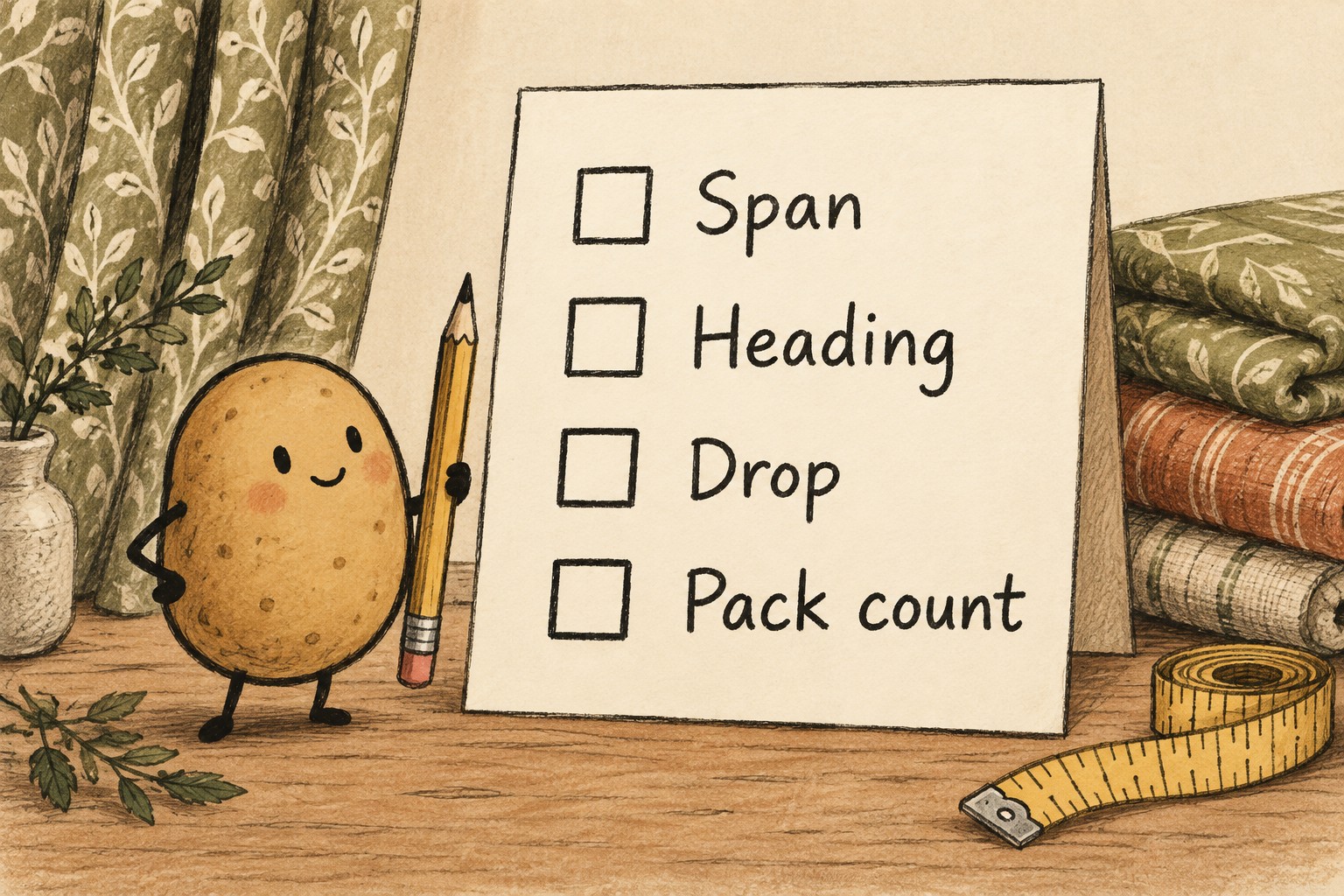
Save the worksheet with the product link. The goal is not a perfectly decorated room on paper. It is an order whose numbers still make sense when the parcel arrives. For the next care step, use our care-label sorting guide, while following the curtain’s own instructions.