A pantry inventory should answer one useful question: what do I actually need to buy for the next shop? It does not need to become a second job in warehouse management. Start with the food connected to your next few meals, then turn the gaps into a short shopping list.
This guide gives you a lightweight inventory, a worked quantity example and a shared-household handoff. You can use paper or an ordinary notes app. No special containers, subscription or barcode-scanning marathon required.
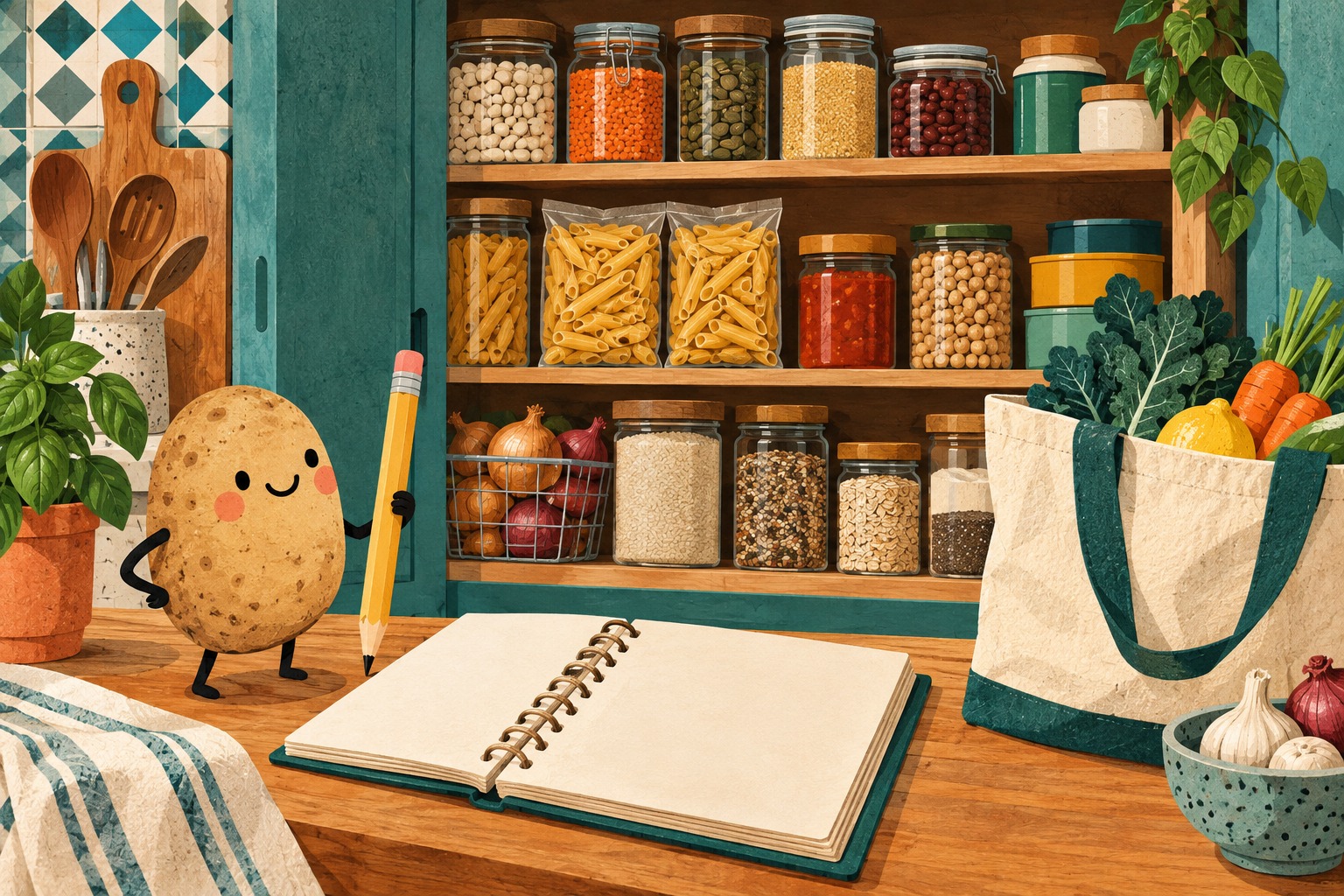
Choose the next shopping trip as your boundary
Write the date of your next planned shop and count the meals you realistically expect to prepare before the following one. Leave out meals away from home. Include a simple fallback for a busy evening rather than assigning yourself an ambitious recipe every day.
The EPA recommends checking the refrigerator, freezer and pantry before shopping, planning around existing food and including quantities on the list. The worksheet below turns those principles into a repeatable routine; it is our suggested format, not an official EPA form.
For the first pass, track only ingredients for the meals you selected and the staples you regularly buy twice by accident. If you keep forgetting whether you own pasta, count pasta. You do not have to document every spice to make that decision.
Check three places without reorganizing them
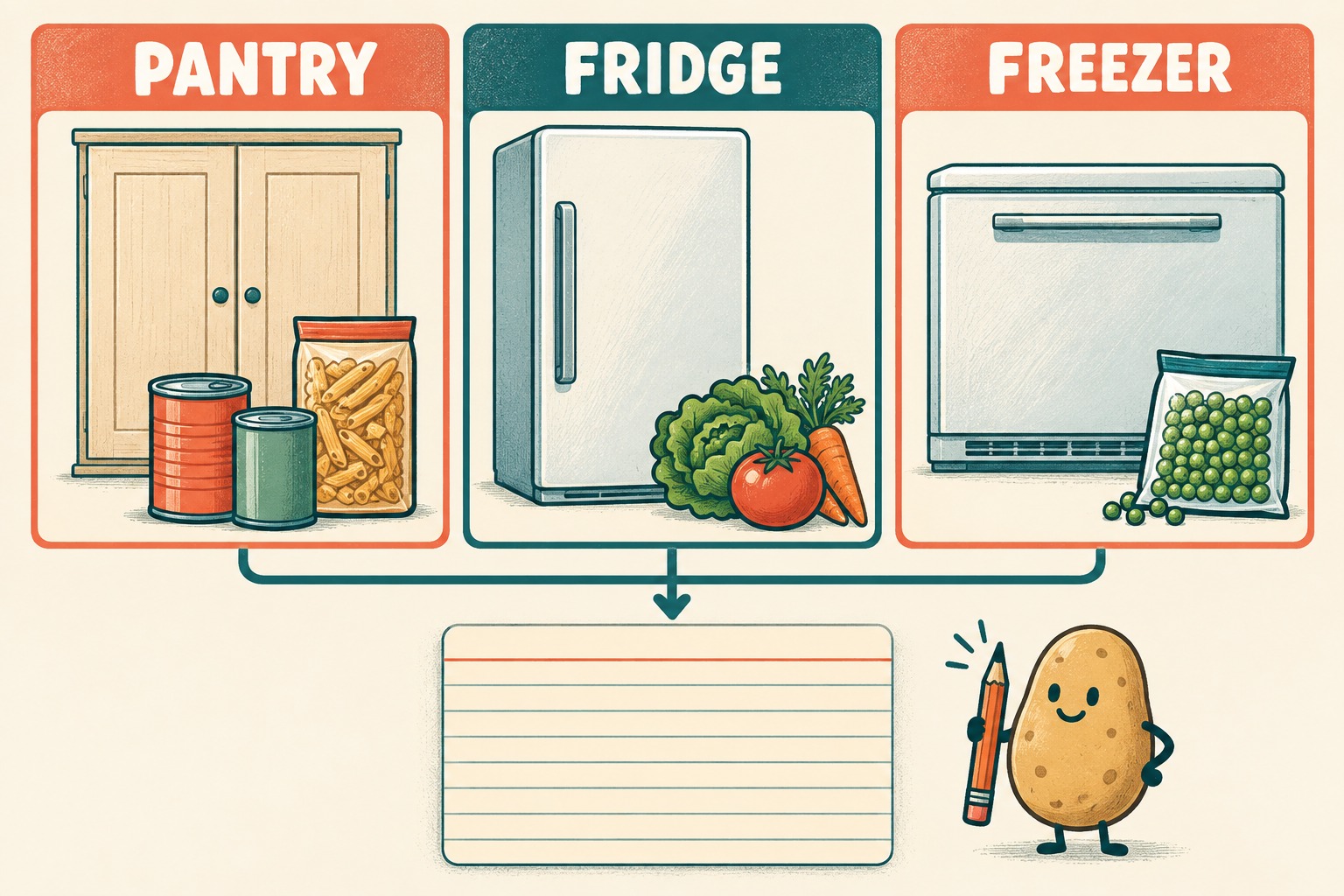
- Pantry: look behind the front row and check any overflow cupboard.
- Fridge: check the ingredients relevant to the meals you chose.
- Freezer: look for clearly identified items you already plan to use.
Record things where they are. A shopping check is not a reason to spread the contents of the fridge across the kitchen or decant food into new containers. If a shelf needs organizing, put that on a separate list. Today’s finish line is a usable grocery list.
| Item | Location | Available amount | Already promised to another meal? | Checked |
|---|---|---|---|---|
| Pasta | Pantry, upper shelf | 1 unopened packet | Yes: Tuesday dinner | Today |
| Canned tomatoes | Pantry, rear row | 1 can | No | Today |
| Frozen peas | Freezer, lower drawer | Partial bag: quantity not checked | Not sure | Today |
| Your item: ______ | ______ | ______ | ______ | ______ |
These are invented inventory entries, not a menu or storage recommendation. “Available” means food you have determined is appropriate to use; this worksheet cannot establish food safety. Follow product instructions and suitable food-safety guidance. Do not treat an uncertain item as usable merely to avoid buying a replacement.
Use matching units before you subtract
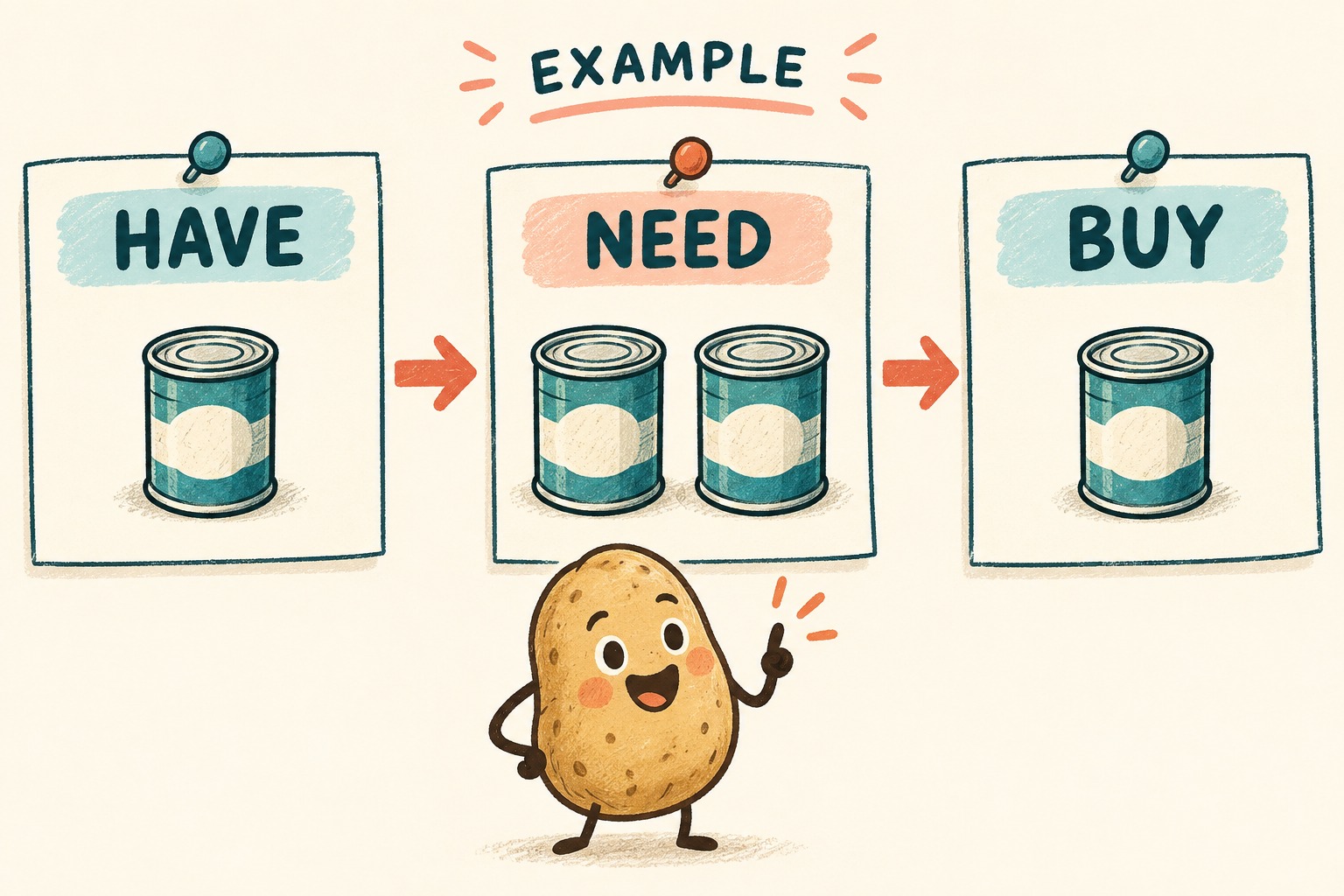
For each planned ingredient, compare the amount required with the usable amount not already assigned elsewhere. Use the same unit on both sides. A packet is only a useful unit when its size matches what the plan requires. “Some rice” and “two cups of rice” are not comparable inventory entries.
| Item | Needed for the plan | Available for that plan | Shopping decision |
|---|---|---|---|
| Canned tomatoes, same can size | 2 cans | 1 can | Buy 1 can |
| Pasta, same packet size | 1 packet | 1 packet reserved for this meal | Buy none |
| Frozen peas | Amount in your chosen recipe | Partial bag, unchecked | Check the amount before deciding |
The arithmetic is simple; the useful part is making uncertainty visible. Write “check” when you cannot verify a quantity instead of silently treating it as zero or enough. If you cannot check before leaving, choose a meal with known ingredients or mark the purchase as an explicit uncertainty. Do not let an old pantry photo pretend to be a live stock count.
When the shop only sells a larger pack, add the actual pack size to the list and decide what will happen to the remainder. A cheaper-looking large pack is not automatically the better choice. University of Tennessee Extension’s grocery-list guide emphasizes household input, quantities and checking existing supplies; it also cautions that promotions are useful only when the purchase fits your needs and will be used.
Give the household one current list
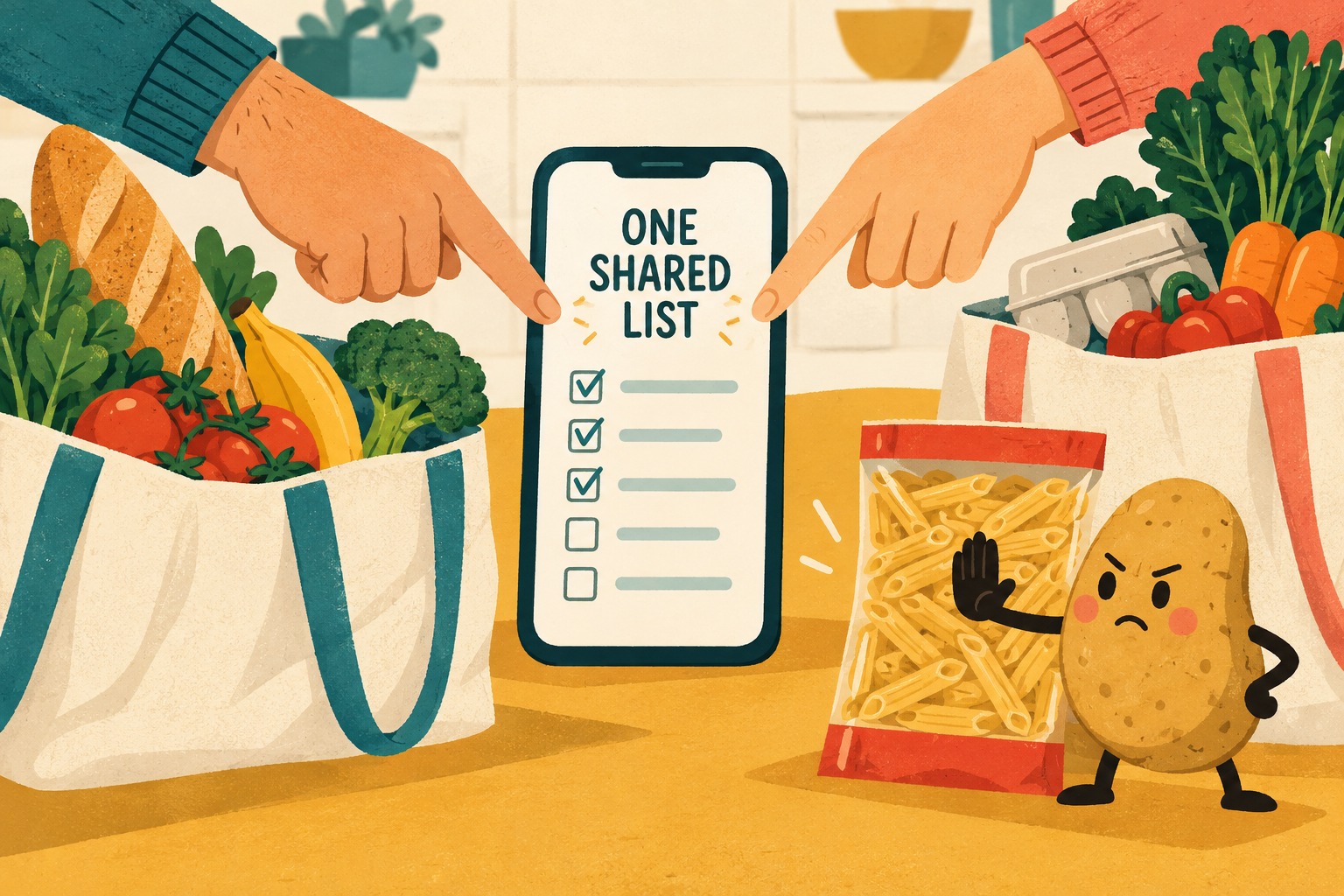
Choose one place for the active list. A shared note works, but a paper list and a quick message can work too. The important detail is agreeing which copy is current.
- Before leaving: one shopper marks the list “shopping now” and the others add late requests there.
- At the shelf: mark an item bought only after choosing the actual quantity. If it is unavailable, leave a clear note rather than silently checking it off.
- For substitutions: specify what is acceptable or ask the person who needs the item. Do not assume two similar packages serve the same purpose.
- If two people shop: split the list explicitly, for example produce for one person and pantry items for the other.
A simple handoff might read: “I checked the kitchen this afternoon. We need one can of tomatoes, not two. I’m buying the pantry items. Please add anything else before I leave.” This is a sample message to adapt, not a message already sent.
Reset the list when the groceries arrive
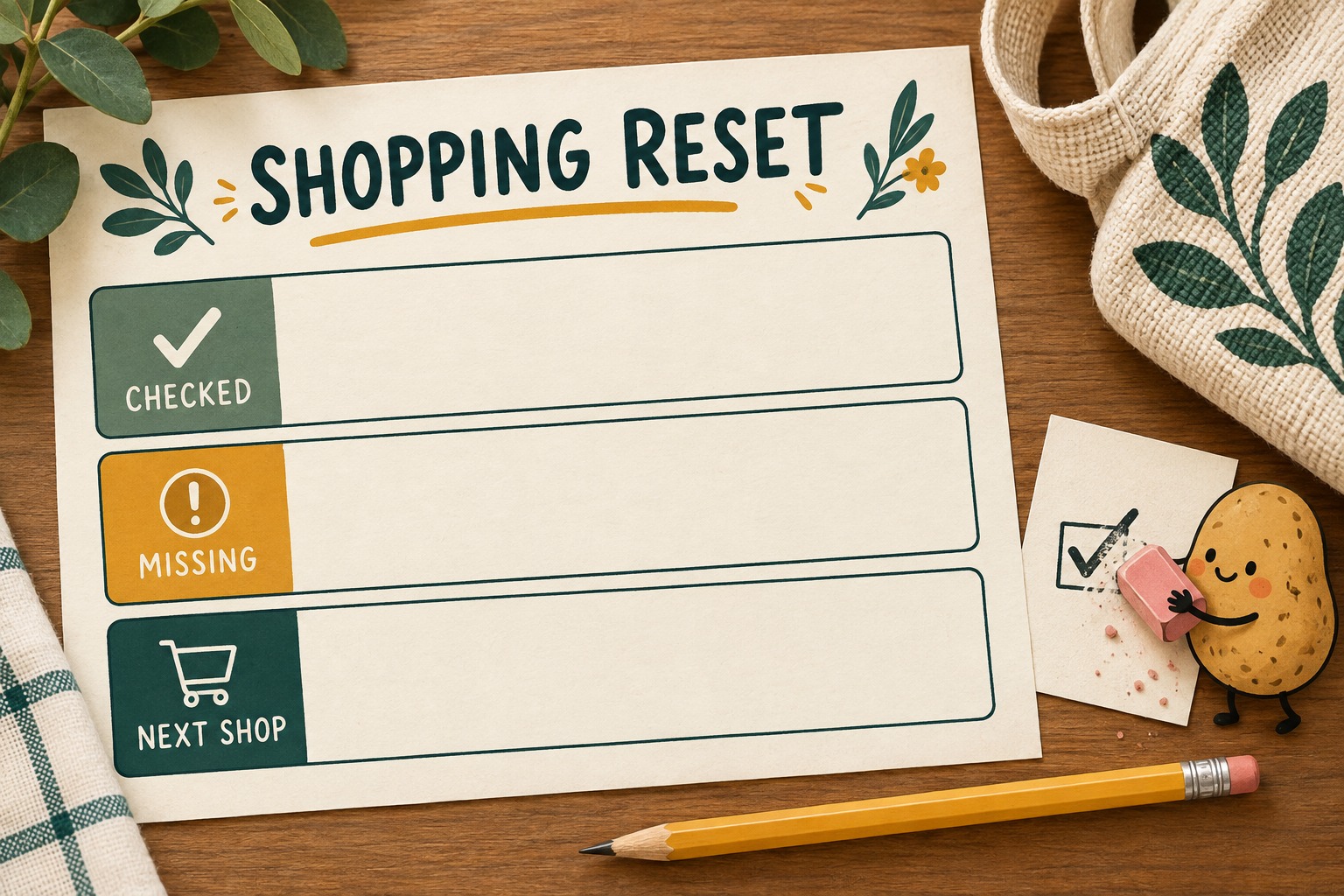
Update only the entries changed by this trip. Record an out-of-stock item as still missing, note an unexpected pack size, and remove completed purchases from the active shopping list. Keep an inventory entry if you need it for the next plan; remove the shopping task once it is done.
If keeping exact quantities becomes tedious, switch to a smaller system. Track only high-repeat staples with states such as “enough for the next plan,” “check” and “buy.” Recheck those states before the next shop. Precision that nobody maintains is less useful than a short list people trust.
Copy this pre-shop card
- Next shop: ______
- Meals I expect to prepare: ______
- Ingredients already available: ______
- Items reserved for another meal: ______
- Quantities still to check: ______
- Missing items and exact purchase amounts: ______
- Who is buying which items: ______
- Acceptable substitutions: ______
- After shopping, update these entries: ______
Try the card for one ordinary shopping trip. At the next check, ask whether you bought a duplicate, missed a needed ingredient or abandoned the tracking. Change the part that caused trouble. There is no promised savings figure here: the useful result is a clearer purchase decision.
For a broader optional-spending experiment, see our no-spend weekend rules and review card. For recurring household chores, use the small-apartment cleaning schedule. Keep those plans separate from your grocery inventory so one small task does not turn into an administrative potato farm.