A no-spend weekend works better when the rules fit on a card than when they require a courtroom. Pause a few optional purchases for two days, keep essentials and existing responsibilities intact, and notice which purchases you actually miss.
This guide is a small household experiment, not a debt plan or a promise of savings. You do not need to buy supplies, prepay a mountain of groceries or cancel your social life. The useful result is a clearer picture of what you wanted, what you used instead and what you still intend to buy.
Set a small, honest boundary
Choose a start and finish, such as Saturday morning through Sunday evening. Then select two or three optional spending categories to pause. Trying to stop every payment makes a simple exercise unnecessarily complicated.
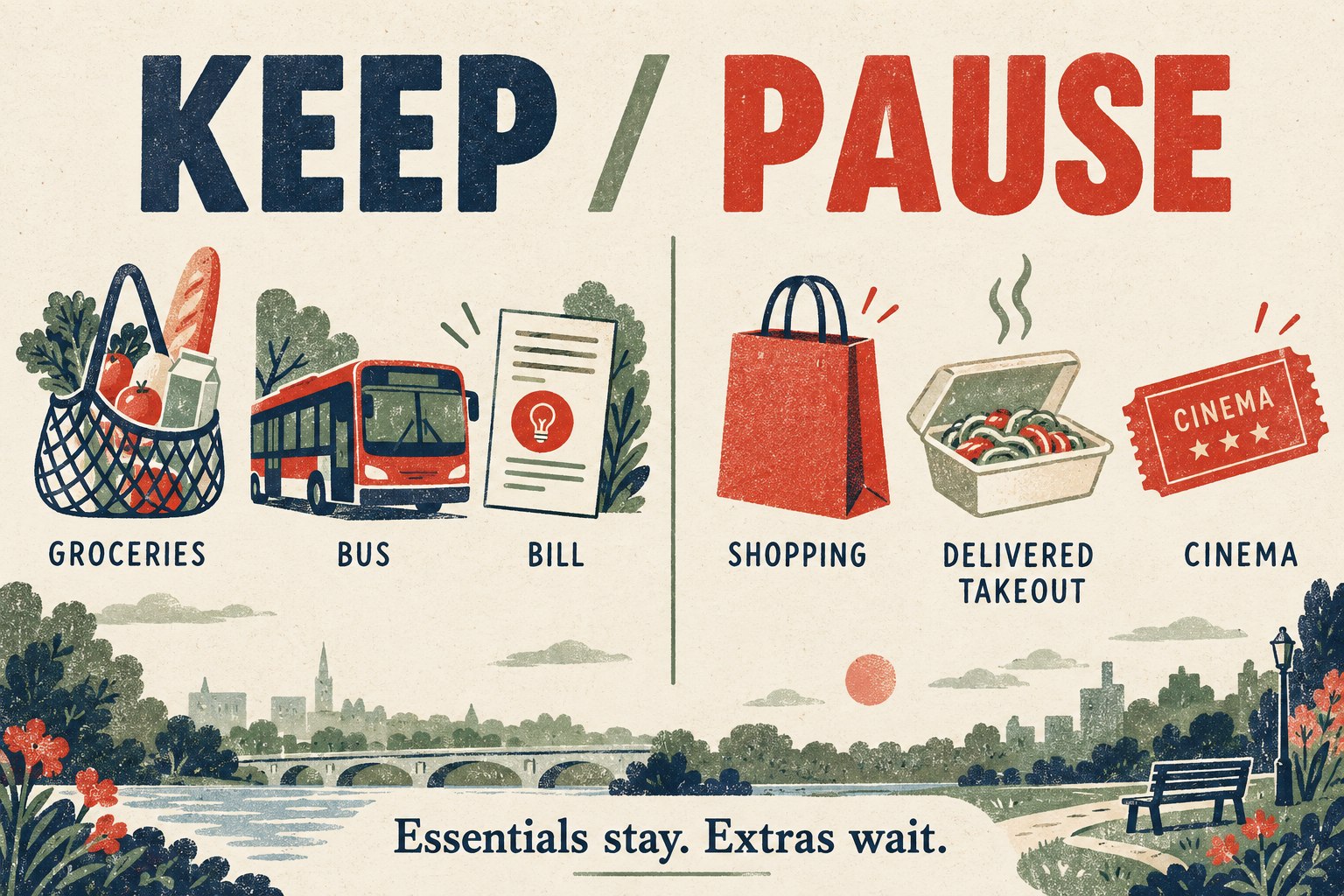
| Keep paying for | Consider pausing | Decide before you start |
|---|---|---|
| Necessary groceries, essential transport and bills due | Browsing-driven shopping and optional paid entertainment | Which outings or commitments are already agreed? |
| Health, safety, care and household necessities | Convenience purchases you can comfortably replace | Is takeout an optional treat this weekend, or a practical need? |
| Unexpected essentials | New hobby supplies when usable supplies are already available | Which categories will you leave completely outside the experiment? |
Do not delay a bill, necessary care, food or safe transport to protect a streak. A subscription that renews during the weekend is still spending; leave existing payments visible rather than pretending they disappeared. You can review a subscription separately later.
Tell anyone whose plans this affects: “I’m pausing optional shopping this weekend. Would you like to walk or play a game at home? Our existing dinner plan can stay.” Other people do not have to join your experiment.
Make a use-what-you-have plan
Before making a shopping list, check what is already available. The EPA recommends checking the refrigerator, freezer and pantry, planning meals around what needs using, and listing quantities based on meals you will actually eat at home.
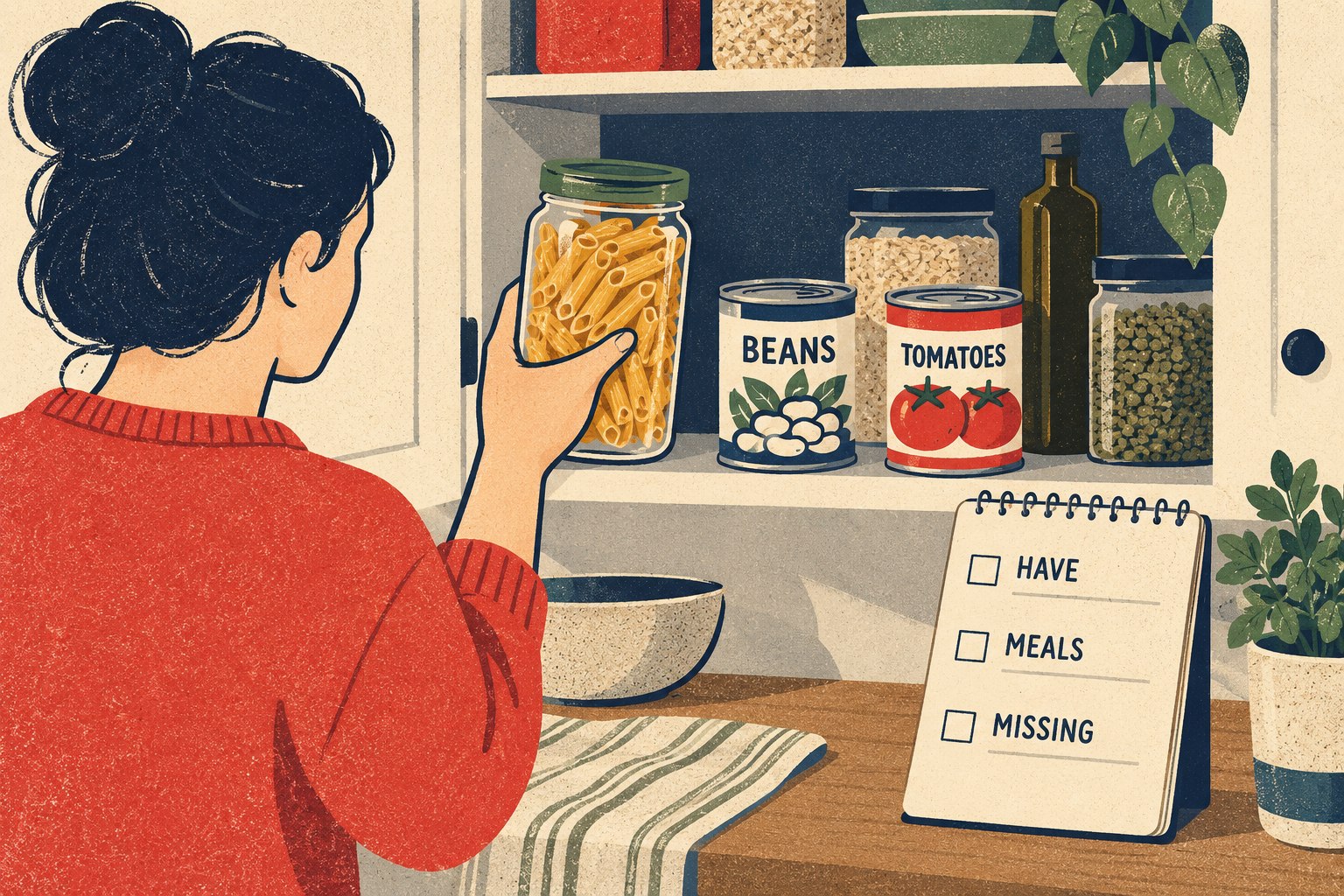
Write three short columns: what you have, the meals it can become and what is genuinely missing. Keep the plan realistic about time and energy. A complicated recipe is not a useful substitute for takeout if you will not feel like cooking it.
- Count the meals you expect to eat at home, rather than planning for an imaginary empty calendar.
- Choose familiar meals using food that is safe to use; the challenge is never a reason to eat questionable food.
- Buy missing essentials normally. A large “last chance” shopping trip shifts costs to Friday instead of reducing them.
- Check books, games, craft materials and other things already available before choosing activities.
For example, pasta and canned tomatoes already in the cupboard can anchor a simple dinner; the missing ingredients belong on a normal grocery list. This is a planning example, not a prescribed menu or a claim that pantry meals cost nothing.
Give each day a plan and a backup
An empty afternoon is an excellent shopping assistant. Put one enjoyable activity on the calendar, plus a low-energy or bad-weather alternative. Use your own supplies, an existing membership or borrowing options you can actually access.

| Time | Main plan | Backup | Check first |
|---|---|---|---|
| Saturday afternoon | A nearby walk with a friend | Tea and a game at home | Travel cost, weather and everyone's availability |
| Saturday evening | Cook a familiar meal together | A simple meal from the planned groceries | Ingredients and realistic energy level |
| Sunday morning | Read a borrowed or already-owned book | Draw with supplies you have | No new supplies required |
| Sunday evening | Review the weekend notes | A brief review the next morning | Keep it observational, not a scorecard |
“Free admission” does not guarantee a free outing. Check transport, parking, food, equipment and booking requirements before committing. If an activity needs a purchase, pick another or record the cost honestly. There is no need to make a long trip to prove you spent nothing.
Park an impulse instead of negotiating with it
When an optional purchase appears, put it on a waiting list. Record the item, what prompted it and a date to reconsider it after the weekend. Writing it down lets you leave the decision unfinished without leaving the checkout open.
| Item or purchase | What prompted it? | What I did instead | Review date |
|---|---|---|---|
| A new notebook | An attractive shop display | Used the partly empty notebook at home | Next Sunday |
| A takeaway drink | Wanted a break during an errand | Took a break without shopping | After the weekend |
| Your entry: ______ | ______ | ______ | ______ |
These are invented examples, not tested outcomes. If you buy something anyway, record it and continue. Restarting the entire challenge turns one purchase into unnecessary drama. If the rules make normal life harder, narrow the paused categories or stop.
Separate skipped purchases from delayed ones
On Sunday, look at the notes and receipts. The Consumer Financial Protection Bureau’s toolkit includes a spending tracker if you want a more structured way to record purchases. For this short experiment, a simple list is enough.
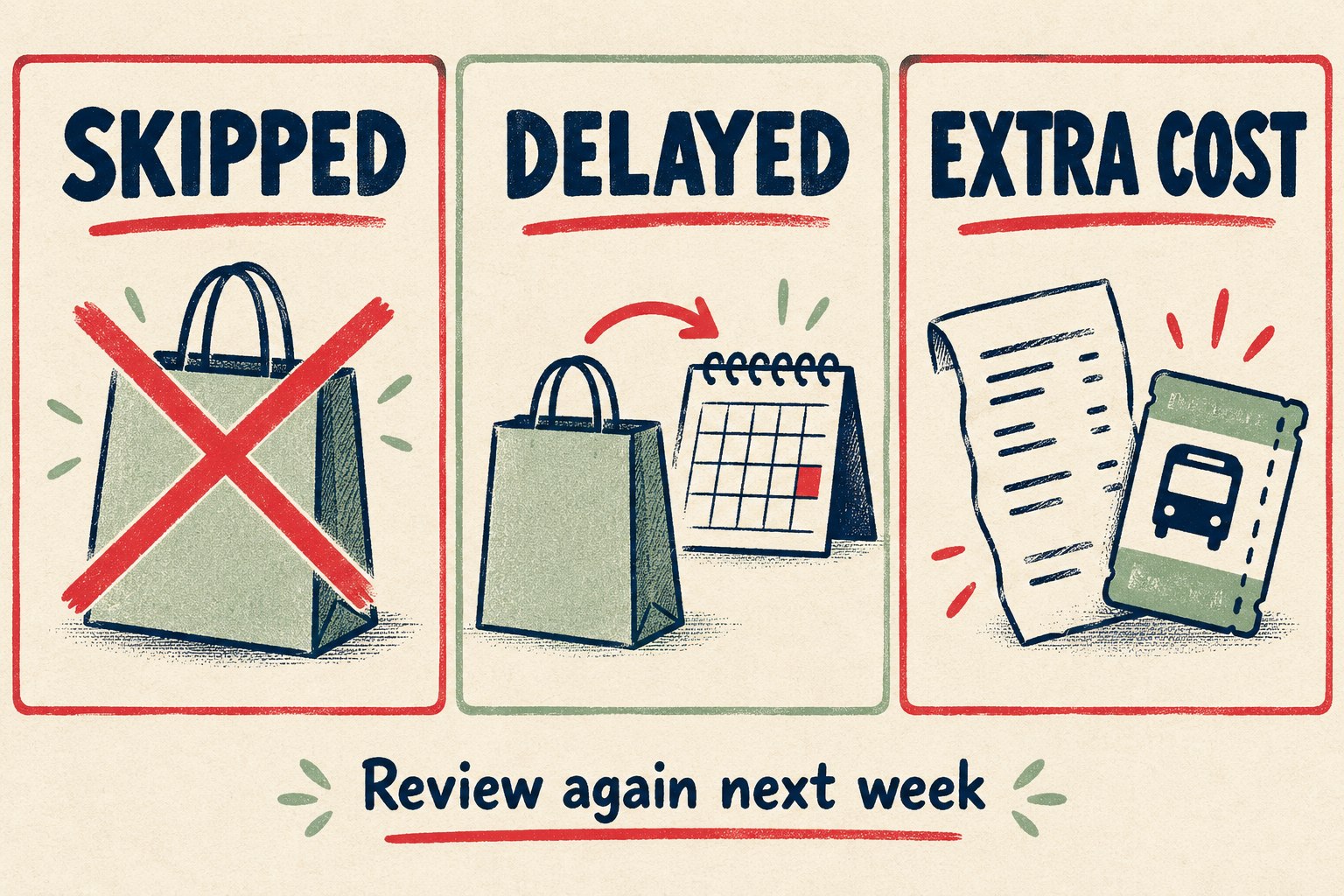
- Skipped: an optional purchase you genuinely would have made and no longer plan to make.
- Delayed: an item you still intend to buy. Moving the purchase to Monday is not the same as avoiding it.
- Extra cost: a new cost caused by the alternative, such as bus fare to a free event.
Revisit the list the following week. Suppose, in a fictional example, you passed on a $20 item, bought it on Tuesday, and spent $4 traveling to a free activity. The $20 was delayed, not saved, and the $4 was a real cost. Do not report “$20 saved” because the weekend checkout total was zero.
Even a genuinely skipped purchase is only an estimate of avoided spending, not a verified increase in savings. Do not count every tempting item you saw, subtract essential groceries or compare against an unusually expensive weekend to manufacture a result. Existing supplies also had a cost when you bought them.
Copy this weekend card
- Start and finish: ______ to ______
- Optional categories I am pausing: ______
- Essentials and existing commitments that continue: ______
- Meals using what I have: ______
- Missing essentials to buy: ______
- One activity and one backup: ______
- Where I will record purchase impulses: ______
- Review dates: after the weekend ______; one week later ______
- One habit worth keeping: ______
The most useful outcome may be small: remembering to check the cupboard, agreeing on a cheaper outing, or noticing that you wanted a break rather than another object. Keep the habit that helped. Your wallet can wake up on Monday without a revenge-shopping itinerary.