A model announcement can arrive before the model does. The useful move is to prepare an evidence packet, not to turn a launch headline into an installation plan.
Reflection announced Beam on October 5, 2026. Its announcement describes a text-only mixture-of-experts model with 501 billion total parameters and 23 billion active. It offers selective early access and says the weights, technical report, model card and developer artifacts will follow later in October, with Apache 2.0 planned for the weights. Those are the publisher's stated plans, not a completed public release verified by this guide. Read Reflection's dated announcement.
Checked October 6, 2026: this is a preparation guide, not a hands-on Beam review. We have not run the model, verified a downloadable checkpoint or measured its cost. Use the following original checklist to decide what evidence you need before a trial.
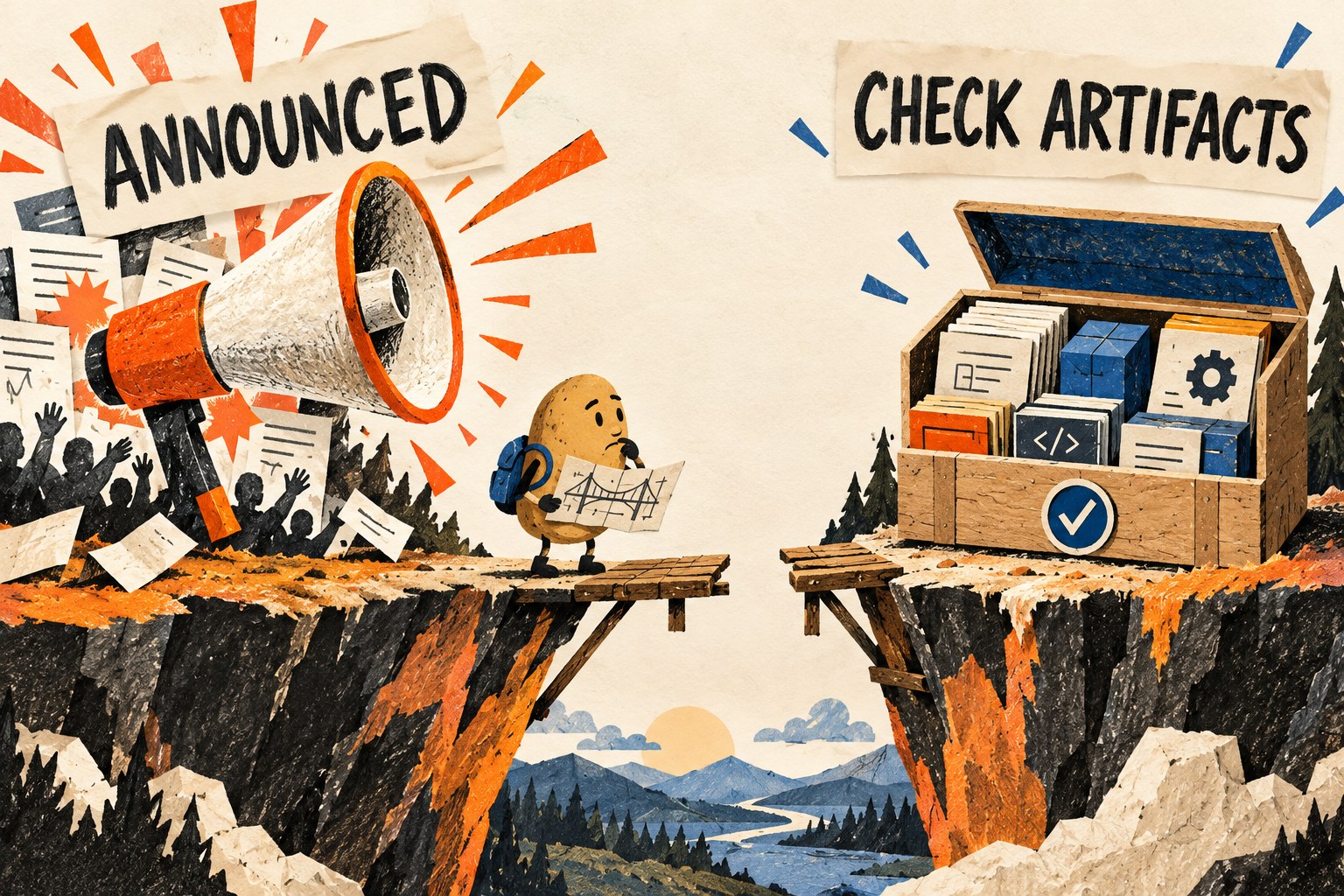
Separate an announcement from a usable release
Create one row per artifact. Do not let a working signup page stand in for a download, or a repository name stand in for complete runtime instructions. Use three status words: observed, announced and not checked. Add the date and exact official link beside each observation.
| Evidence to collect | What to record | Question it answers |
|---|---|---|
| Checkpoint or hosted access | Official location, version and access conditions | Can I actually use this specific version? |
| License and associated terms | Documents attached to that version and intended route | What must I review before this use? |
| Model card and technical report | Intended uses, limitations and evaluation details | What claims can I examine? |
| Runtime instructions | Supported software, configuration and hardware requirements | Can my setup support a controlled trial? |
| Input and output interface | Documented model identifier, format and limits | Can I reproduce the request later? |
Leave unknown cells blank. A planned license is not a substitute for checking the documents that arrive with the actual release. This is a recordkeeping step, not a legal interpretation.
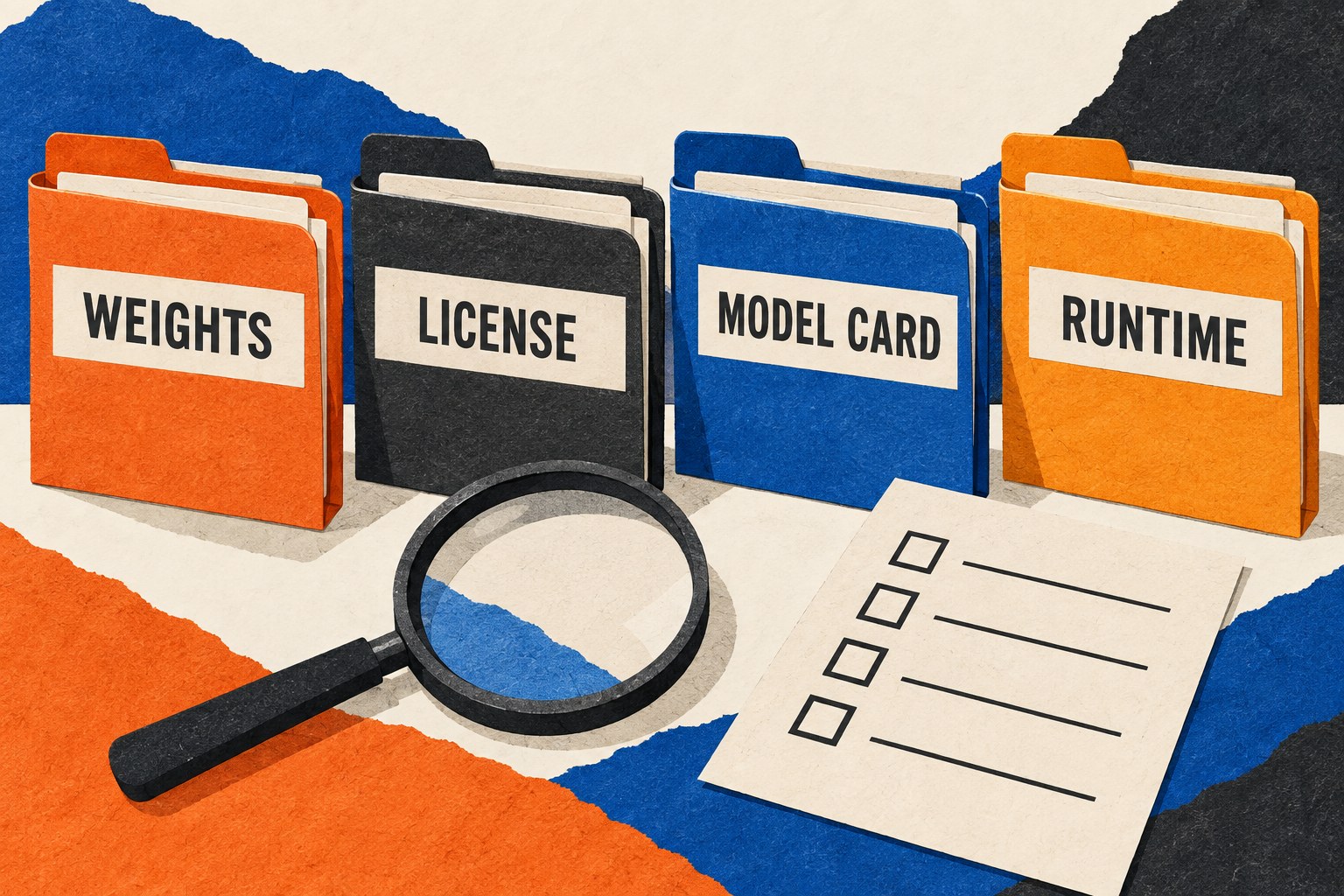
Hugging Face's model-card documentation describes cards as a place for intended use, limitations, training information and evaluation results. That makes a card useful evidence to read, not a certificate that every possible use will work. For your packet, note missing information as a question rather than filling it with assumptions.
Write the job before choosing the winner
Pick a small task with an answer you can check. “Be a better coding assistant” is too elastic: an impressive explanation can hide the fact that the output did not meet your requirement. A more useful trial might be “extract three fields from these invented support notes and return valid JSON, leaving an absent field null.”
Define the input, expected output and failure conditions before seeing either model's answer. Keep the sample harmless: synthetic records, public examples or material you have permission to use. Do not send private documents merely because a model's weights are described as open; the data destination depends on the route you actually use.
- Task: extract item, date and quantity from each sample note.
- Output contract: one JSON object with exactly those keys.
- Missing information: null, without guessing.
- Failure: an invented value, invalid format or extra unsupported claim.
- Review method: compare the fields against a small answer sheet prepared first.
This example is a proposed test design. It is not a Beam result, a benchmark or a statistically representative evaluation.
Make a five-case packet that can disappoint you
A demo case asks whether something can work. A useful first packet also asks where it stops working. Start with the following case types and write the answer key yourself. Five cases can reveal a mistake; they cannot establish general reliability.
| Case | Invented input idea | Check |
|---|---|---|
| Normal | One note contains all three fields clearly | All fields match the answer key |
| Edge | Quantity is explicitly zero | Zero stays zero rather than becoming absent |
| Missing | The note contains no date | Date becomes null without invention |
| Format | An item name contains quotation marks | The returned JSON remains valid |
| Repeat | The same normal note is submitted again under the same settings | Record any difference; do not quietly keep only the nicer answer |
If your real job is different, keep the structure and change the fixtures. For summarization, define which source facts must survive. For code changes, provide a disposable project and explicit tests. Avoid running generated commands against valuable data during a first comparison.

Compare a whole attempt, not a headline number
Reflection's announcement distinguishes estimated inference compute from measured inference cost and notes excluded serving components. Its published benchmark figures are provider-reported. Do not translate those figures into a promised bill or response time for your own application. See the explanation accompanying its compute comparison.
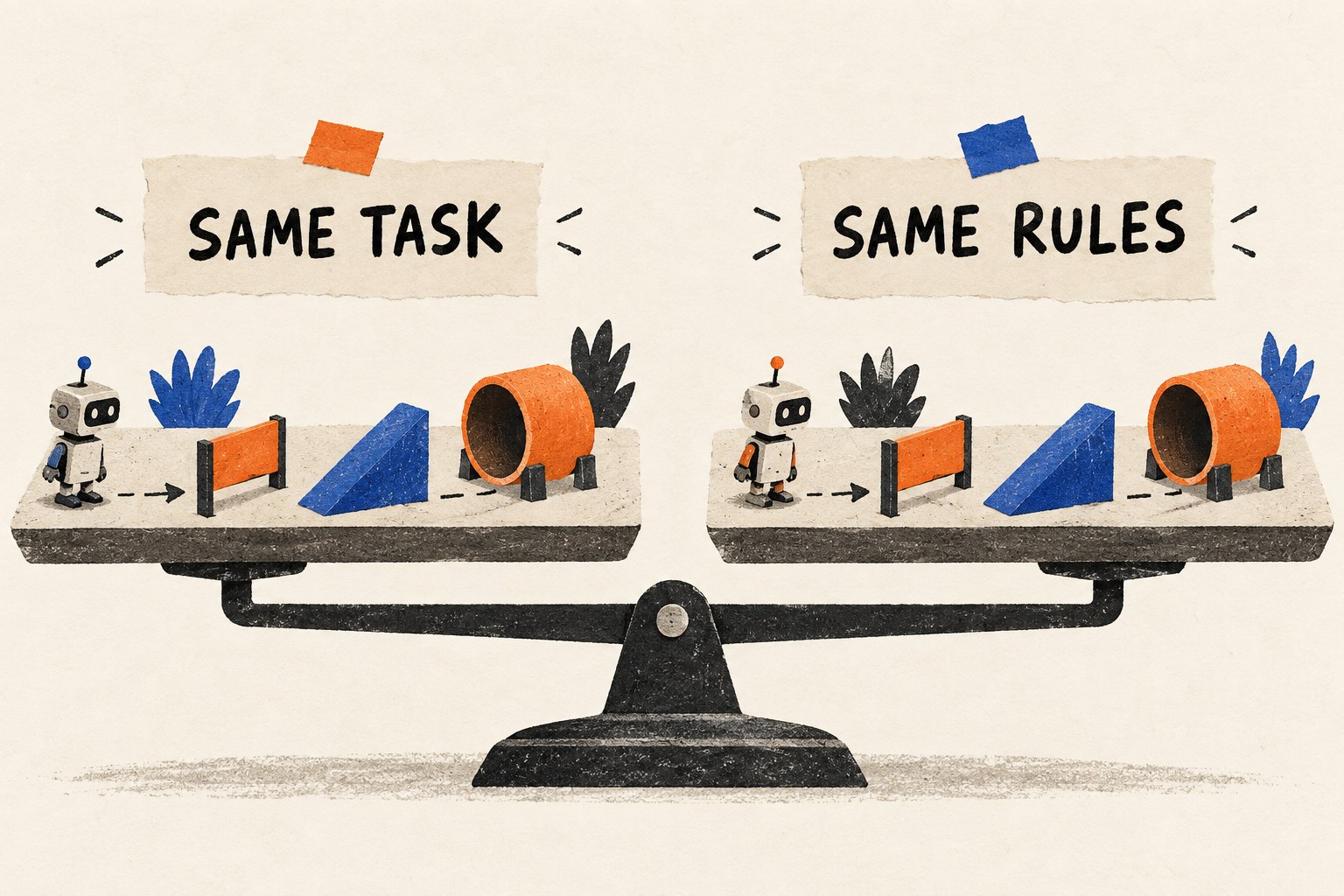
For your own eventual trial, keep the task, input, allowed tools and output requirement fixed. Record the exact model version, access route and settings. If one system gets a browser, retries or extra context and the other does not, label that difference. You may want to compare whole systems, but it is a different question from comparing two models under matching conditions.
Count correction effort too. A quick first answer that needs three repairs can be less useful than a slower answer that meets the contract. Record failed attempts alongside successful ones. If you change a prompt after seeing a result, give the revision a new identifier and rerun both sides rather than combining old and new results.
Copy this release-and-trial receipt
- Observation date and official source: __________
- Artifact status, version and access route: __________
- Model card, license and runtime links checked: __________
- Unanswered prerequisites: __________
- Task and fixture version: __________
- Expected answers and failure conditions: __________
- Settings, tool access and attempt count: __________
- Accepted outputs / total attempts: __________
- Corrections, elapsed time and observed charge if applicable: __________
- Decision and evidence that would change it: __________
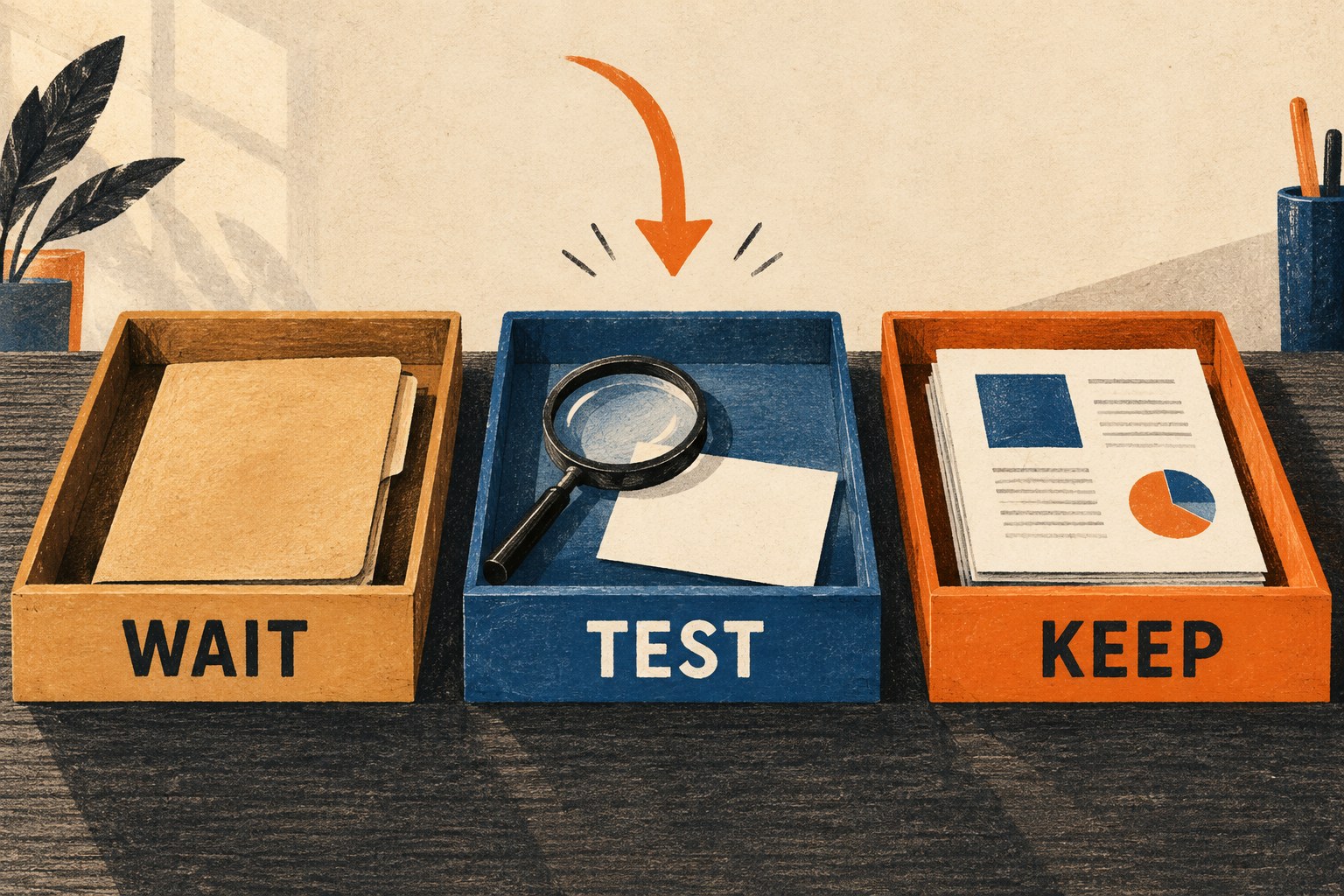
Choose wait when prerequisites are missing, test when a bounded trial is possible, and keep only for the particular use your evidence supports. “Keep” does not mean granting a model broader access or replacing every workflow. A failed or unavailable trial can still produce a useful receipt: it tells you exactly what needs to change before another attempt is worthwhile.
If you already have access to a suitable tool, the one-task experiment is a companion planning exercise. For a coding task, the one-rule boundary brief helps make the expected behavior concrete. A model announcement can start your reading list; your evidence packet should decide the next step.