Keep clean, dry worn and damp clothing in clearly separate places, and pack enough changes to reach your next reliable ready-to-wear laundry opportunity. A washing machine on the hotel amenities list is not yet a plan: you also need access, a suitable drying route and time before departure.
A short trip does not automatically need a travelling laundry department. Sometimes the simplest plan is to bring the changes you need and wash at home. This guide helps you decide that first, then give used clothing somewhere to go without turning the suitcase into a guessing game.
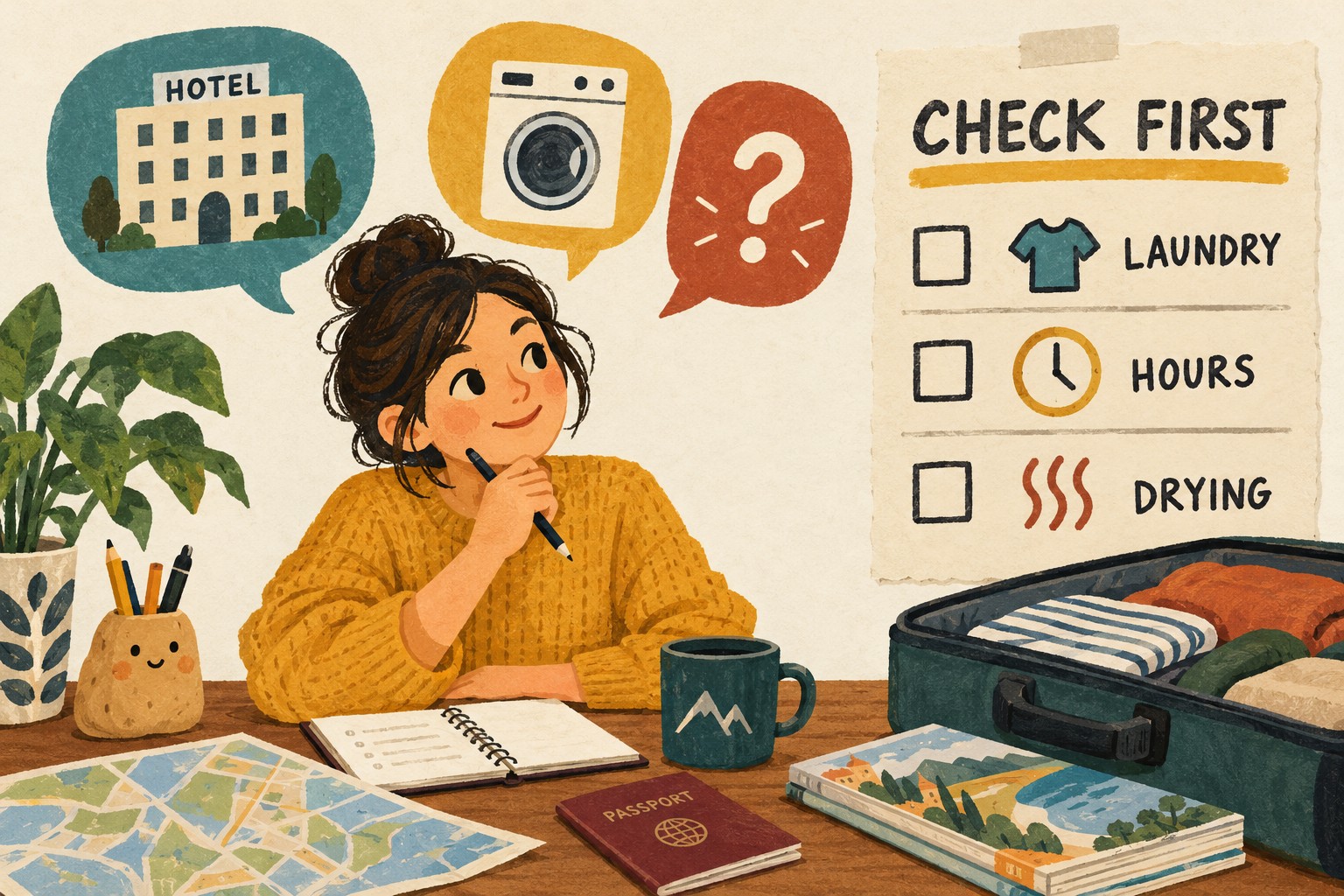
Find the next dry-clothes checkpoint
Start with the moment you can wear the clothes again, not the moment you can put them into water. If a service returns clothing after you check out, it does not solve this trip's packing problem.
Marriott's laundry guidance says amenities vary by property and directs guests to the individual hotel's facilities. Use that as a reason to check your actual booking, rather than infer access from the hotel brand.
| Possible plan | What to establish before relying on it | Fallback to write down |
|---|---|---|
| No laundry during the trip | The changes and activity-specific clothes you expect to use through the stay. | A spare change you choose for your plans, weather or delays. |
| Self-service machines | Location, opening hours, payment, detergent availability and a drying method suitable for your garments. | What you will wear if the machines are unavailable. |
| Hotel or local service | Collection cutoff, cost, accepted items and the actual return time. | A departure outfit that is not in the service bag. |
| Hand washing | Property permission, garment suitability, an allowed drying location and enough time. | Skip the wash if any of those conditions is uncertain. |
Do not assume the bathroom sink is an available laundry facility. For example, Vincci's published hotel rules prohibit washing clothes in rooms and hanging them from windows, balcony railings or balcony ropes, or in hallways. That is one operator's policy, not a universal hotel rule; ask your property.
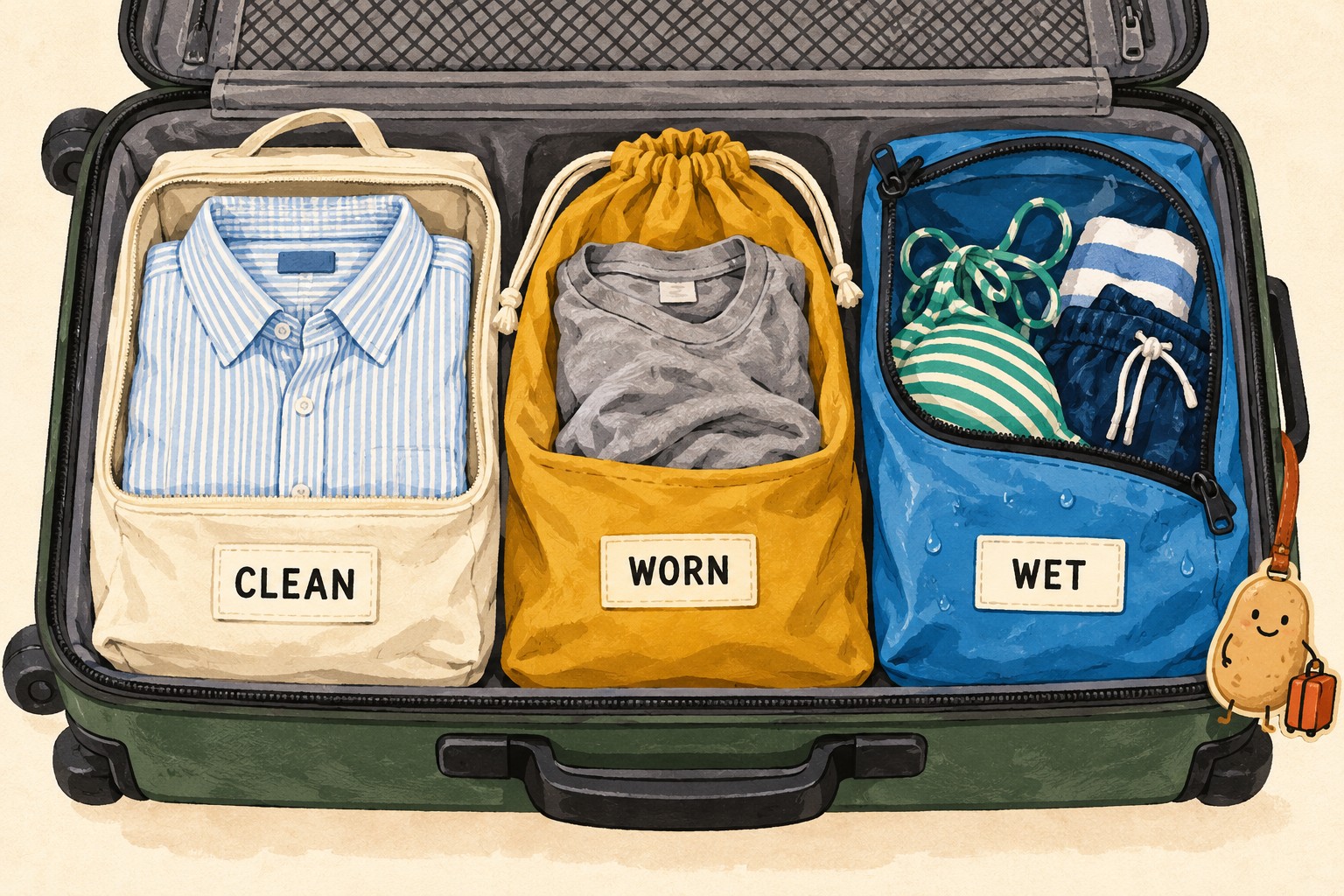
Assign three categories, not three compulsory purchases
You can use bags you already own or separate suitcase sections. The important part is that the categories remain unmistakable when you are tired and repacking quickly.
- Clean: dry clothing that is unworn or freshly washed and fully dry. Keep the departure outfit easy to find.
- Worn: dry used clothing awaiting laundry. If you intend to rewear a particular item, give it a separate, identified position rather than quietly returning it to the clean pile.
- Wet: anything still damp, including something freshly washed. A clean-but-damp shirt is still a wet-packing problem.
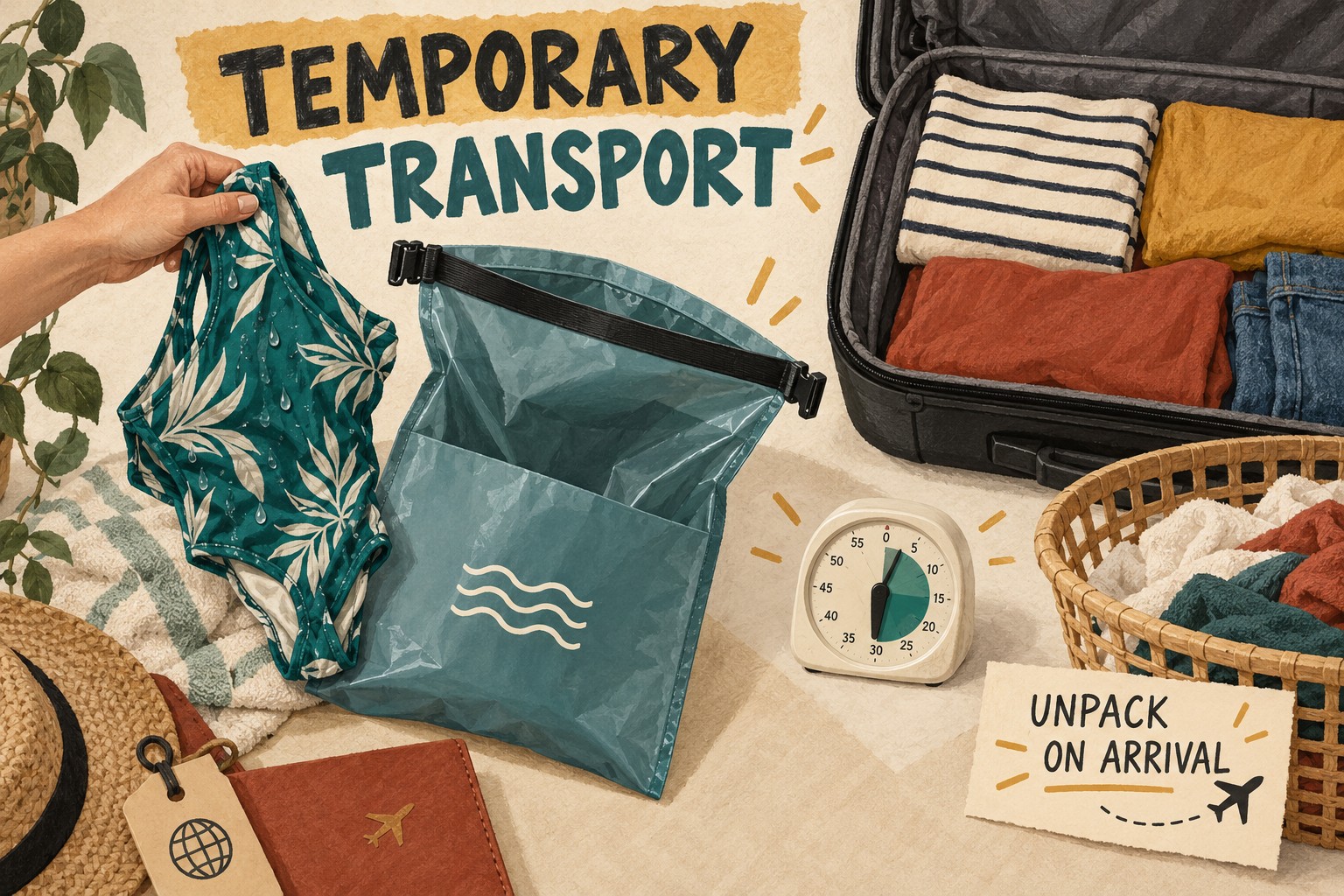
GINETEX's textile-care guidance advises keeping dirty laundry dry and aired. For necessary transit, choose a wet-item container designed to contain moisture, check its closure and remove the contents at the next suitable place. A pouch is transport, not a drying method.
Check that your largest likely wet item fits before leaving. A swimsuit-sized pouch may not accommodate a damp exercise outfit. Do not assume an unspecified bag is leakproof, odor-proof or suitable for long-term storage.
Pack only the kit your plan will use
Use this as a conditional list, not an invitation to buy another set of pouches:
- A designated sack or section for dry worn clothes.
- A separate wet-item pouch if swimming, workouts or other planned activities make it useful.
- Suitable detergent only if washing is part of the plan. Check transport rules and the product instructions rather than packing an unlabelled mystery liquid.
- A garment-specific mesh bag or a permitted drying accessory only if your chosen washing and drying method needs it.
- A clearly accessible departure outfit and any backup change you decide to carry.
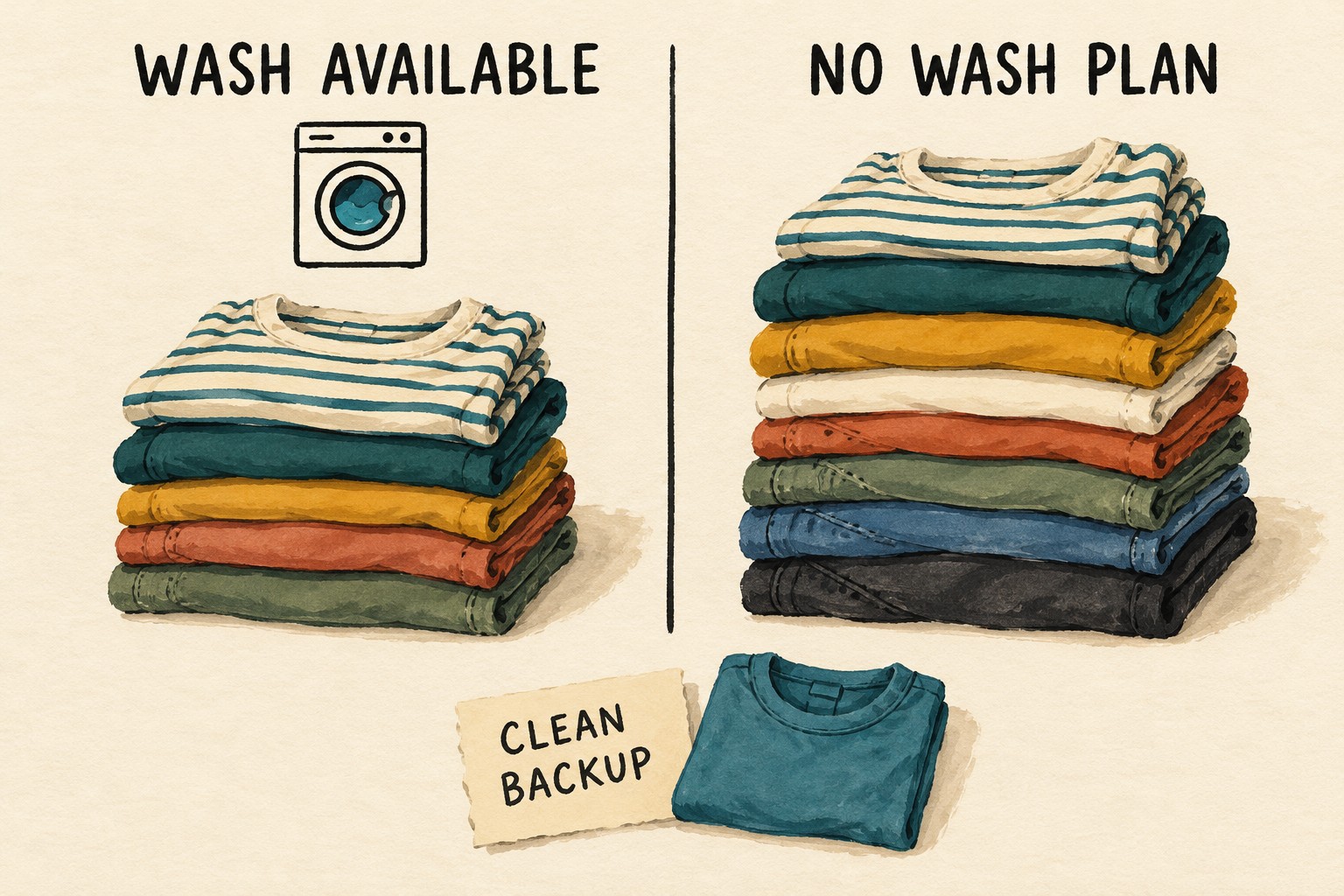
The comparison below is conceptual: it does not prescribe a number of shirts or guarantee that washing lets everyone pack less. Clothes that cannot use your planned wash-and-dry method still need their own solution.
Make the evening check about moisture and tomorrow
Before closing the suitcase, ask two questions: “Is anything damp?” and “What will I need before laundry is ready?” Move dry worn items to their assigned place, keep damp pieces away from clean clothing and leave tomorrow's clothes accessible.
If washing is permitted, follow the garment's label and the detergent directions. The American Cleaning Institute's laundry basics recommends sorting by color, fabric and washing instructions, and storing clothing only once fully dry. Your travel bag categories do not replace that sorting.
Care symbols also distinguish whether hand washing, tumble drying or particular natural-drying methods are allowed. Check the GINETEX symbol guide if a label is unclear. Do not turn “there is a dryer downstairs” into permission to tumble-dry every garment.
Leave optional washing alone when you cannot establish a suitable drying place and enough time. This guide does not promise overnight drying or recommend improvised heat from a room heater or hairdryer.
Set the checkout deadline before starting a wash
Write down when the clothes must be dry, returned and packed. Work backward using the actual service timing or the laundry conditions you have confirmed. If you cannot make a dependable plan, preserve the clean outfit and take the worn clothes home.
A last-day pool visit is a useful test case. Speedo's swim-bag guidance describes a waterproof compartment for wet gear and advises rinsing swimwear after pool use and drying it properly before storage. Follow your swimwear's own care directions; the travel pouch does not perform those steps.
If an item is still damp at departure, keep it separate for the journey and attach a next action: where will you remove it, and will you wash it or finish drying it there? There is no universal “safe number of hours” supplied here.
Copy this dry-clothes checkpoint worksheet
Fill this in before final packing. “Not confirmed” is a useful answer: it tells you not to base your clothing supply on that laundry option.
| Checkpoint | Your note |
|---|---|
| Trip length and activities | ____ nights; clothing changes or special items needed: ____ |
| Next reliable ready-to-wear laundry | Place: ____; wash or collection time: ____; dry or returned time: ____ |
| Access confirmed | Who or what confirmed it: ____; hours, supplies, cost and drying route: ____ |
| Fallback if unavailable | ____ |
| Clothes until that checkpoint | Planned changes: ____; chosen backup: ____; unsuitable garments: ____ |
| Bag map | Clean: ____; dry worn: ____; rewear item: ____; wet: ____ |
| Fit check | Largest expected wet item fits its container: ____ |
| Departure boundary | Checkout: ____; last practical laundry start/drop-off: ____; outfit location: ____ |
| Still-damp item | Item: ____; transport container: ____; unpack location: ____; next action: ____ |
Hypothetical example: You are staying three nights, have no confirmed laundry access and plan to swim before checkout. Pack the changes you expect to need for the whole stay instead of relying on a sink wash. Set aside the departure outfit. If the swimsuit is still damp, use its designated transport pouch and remove it at home before dealing with the rest of the suitcase. This is a planning example, not a tested packing quantity.
At home, unpack by next action
- Wet pouch first: remove its contents and follow the item's washing or drying instructions.
- Dry worn clothes next: sort by care needs before washing. Do not tip a mixed travel sack straight into one load.
- Dry unused clothing: decide what is ready to put away; do not assume every suitcase item needs the same treatment.
- Reset the containers: empty them, clean them according to their own instructions when needed and let them dry before storage.
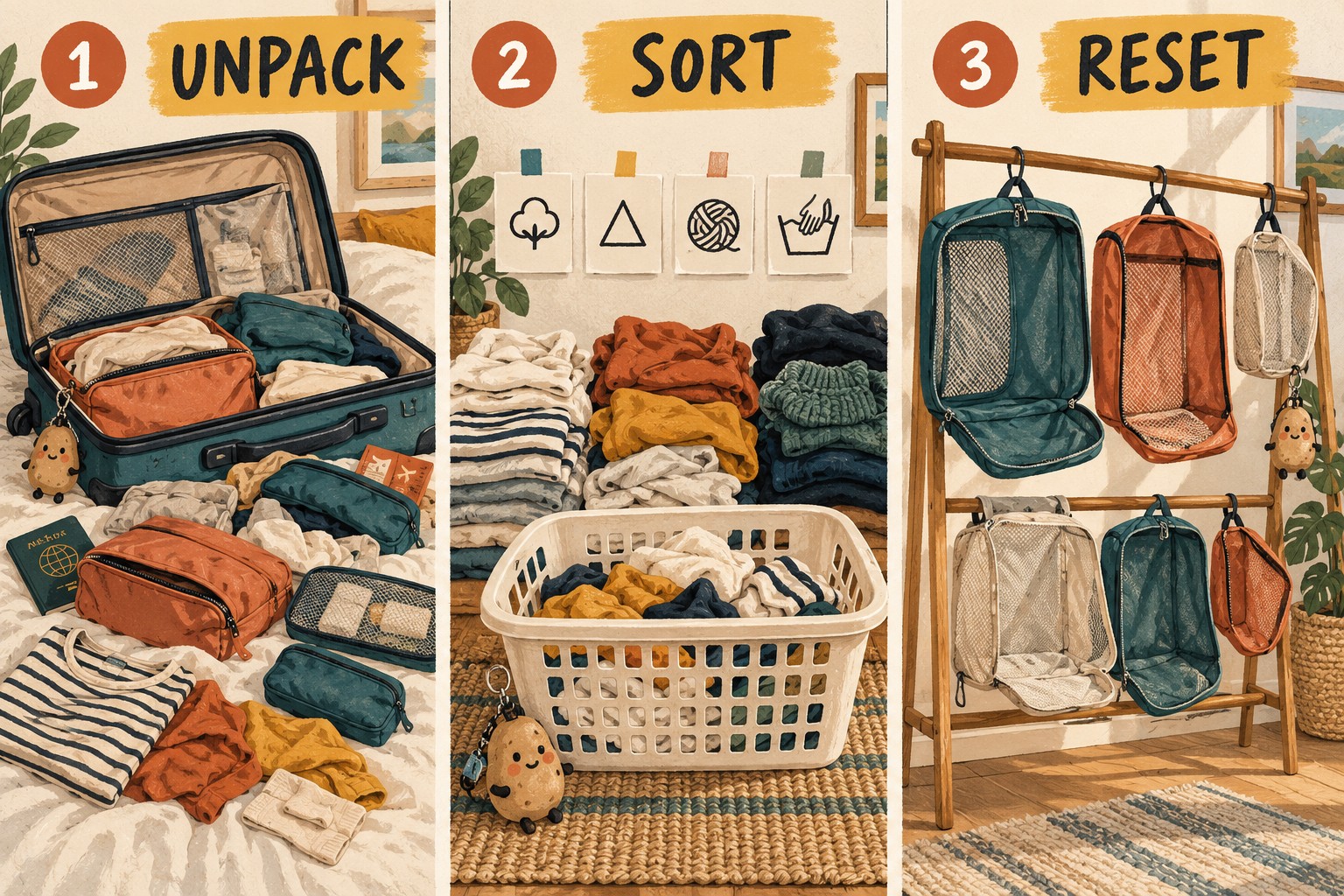
For the rest of the return-home job, use the suitcase reset checklist. If the laundry pile is the next obstacle, the care-label sorting guide handles that separate task.
The goal is not a perfectly color-coded suitcase. It is knowing which clothes you can wear next, which need attention and which should not spend another forgotten night inside a bag.