Pack a hat according to the instructions for its exact model, not the word “packable” alone. Confirm whether it may roll, fold or only travel in its original shape; then give it a trial fit in the packed bag without forcing the lid. If the method is unknown or the bag changes the hat’s shape, carry it differently or leave it out.

A suitcase is very good at making space disappear. A hat is very good at remembering where that space went. Before adding yours to the final gap, make a short packing record: permitted method, chosen location, closure check and arrival check. This is a planning method, not a promise that luggage handlers will treat the bag gently.
“Packable” is not one folding instruction
Look up the model name on the inside label, order record or maker’s product page. Save the relevant care and packing instructions so you can read them during the trip. A photo of the hat before packing gives you a useful reference for its crown and brim, but cannot prove how it will tolerate pressure.
Avenue the Label’s model-by-model packing guide illustrates why the distinction matters: some named styles allow rolling or flattening, some allow folding while discouraging rolling, and its rigid styles allow neither. These are instructions for those products, not permission to roll every fabric or straw-looking hat.
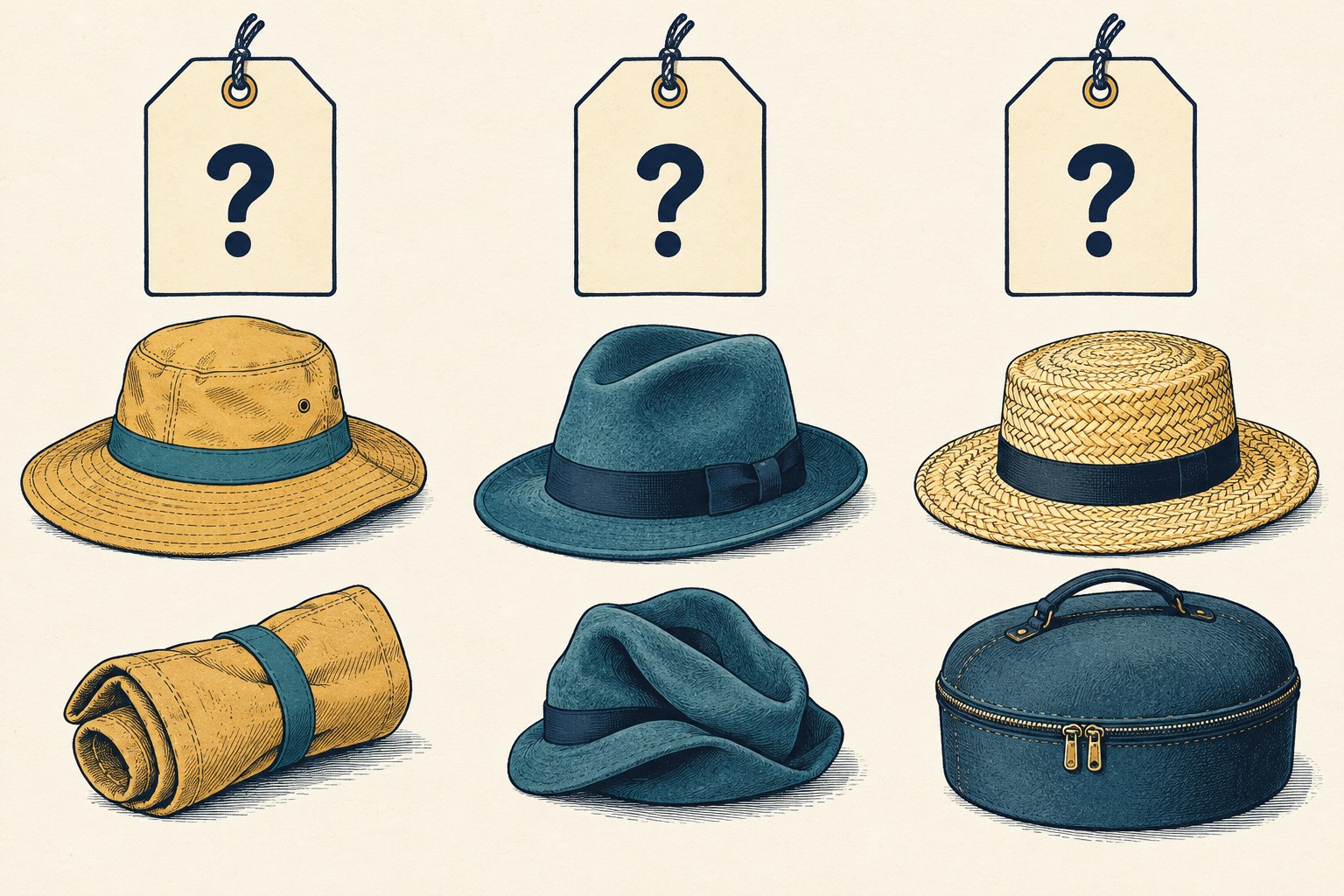
| What you can confirm | Packing decision | What to record |
|---|---|---|
| The maker specifies a rolling method | Use that method only for the identified model. | Direction, preparation and any time limit. |
| Folding or flattening is allowed, rolling is not | Keep the approved fold distinct from a roll. | Which parts may move and which keep their shape. |
| The hat must retain its shape | Plan protected space or a suitable case, rather than compression. | Crown and brim support instructions. |
| The model or method is uncertain | Do not experiment by bending it harder. | The unanswered question for the maker, or an alternative travel plan. |
Care permission is separate from packing permission. For example, Tilley distinguishes washable, hand-wash and spot-clean care and directs owners to the label. A wash symbol is not a rolling diagram. If the hat needs cleaning before departure, allow time for its specified care and drying process rather than inventing a last-minute shortcut.
Give the crown and brim a planned location
For its rigid-hat suitcase method, Avenue describes crown-down placement, soft clothing inside the crown, soft surrounding items and no heavy load above. It also says to unpack on arrival. Use this only where it agrees with your own hat’s instructions; it is not a universal technique for fragile, vintage or unusually shaped headwear.
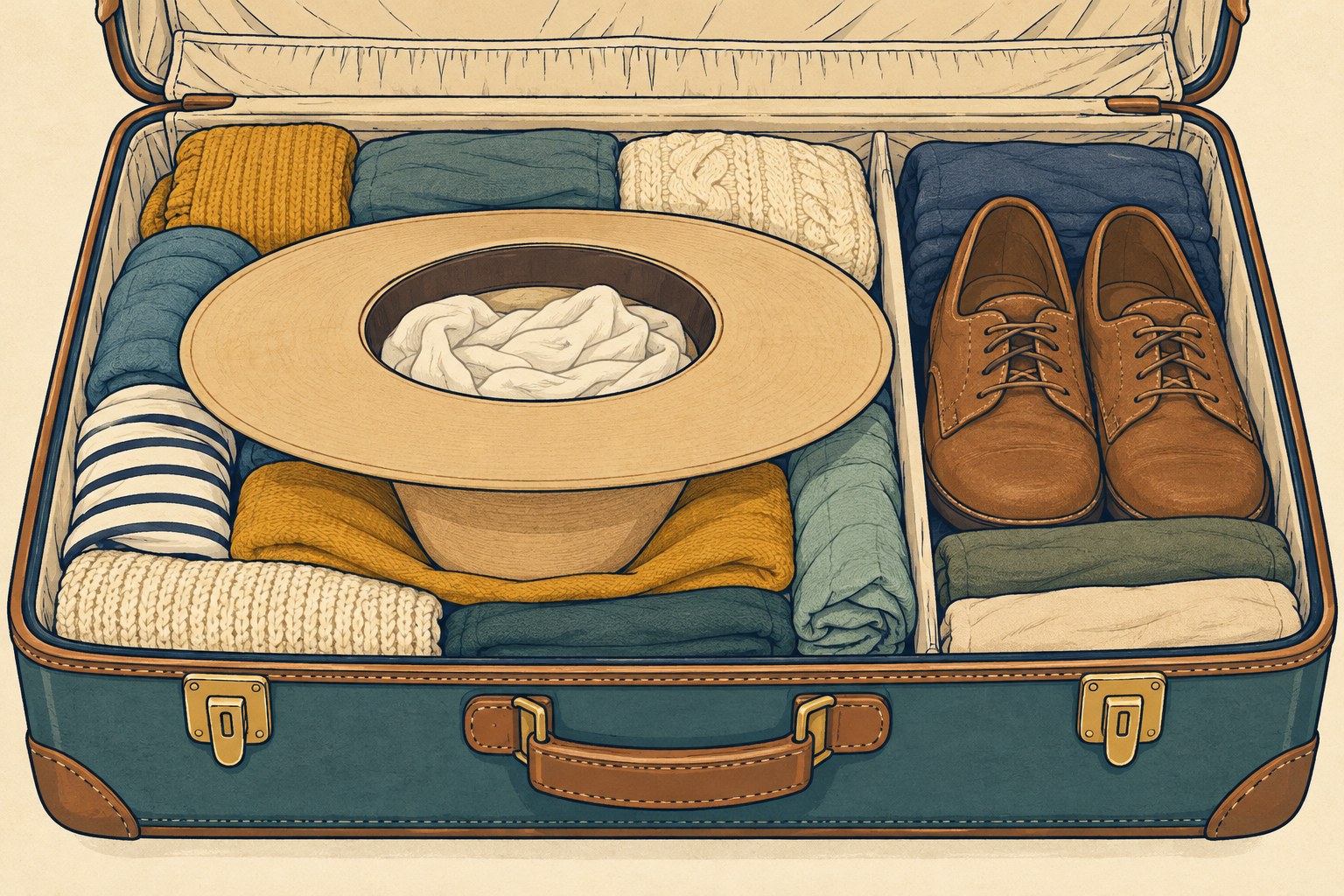
Make the location visible in your packing record. “Left half of blue case, away from the shoe pouch” is more useful than “somewhere near the top.” Note what provides support and what must not move into that space. You are reserving a shape, not merely fitting one more item.
If a separate case is the better option, check its internal fit as well as its outside dimensions. Stetson’s hat-care guidance recommends crown-down storage for felt hats or a hat box to avoid flattening the brim, and points to its travel cases. A box that is too shallow still leaves a fit problem. Do not assume any extra case is outside your carrier’s baggage allowance; check the allowance for your actual journey.
Do a no-force closure check
This is our proposed packing check, not a manufacturer pressure test or damage guarantee:
- Finish the rest of the bag first. Include the pouches and clothes that will really travel. An empty-case demonstration misses the problem.
- Look from the side. Check whether a divider, strap, rigid pouch or lid will press into the crown or push a brim edge out of position.
- Lower the lid gently. Stop before applying pressure if the fit is uncertain. Do not use the zipper, a compression strap or your body weight to persuade it.
- Reopen and inspect. If the hat or its support has shifted, move the interfering item and reconsider the arrangement. Repeat after any last-minute addition.
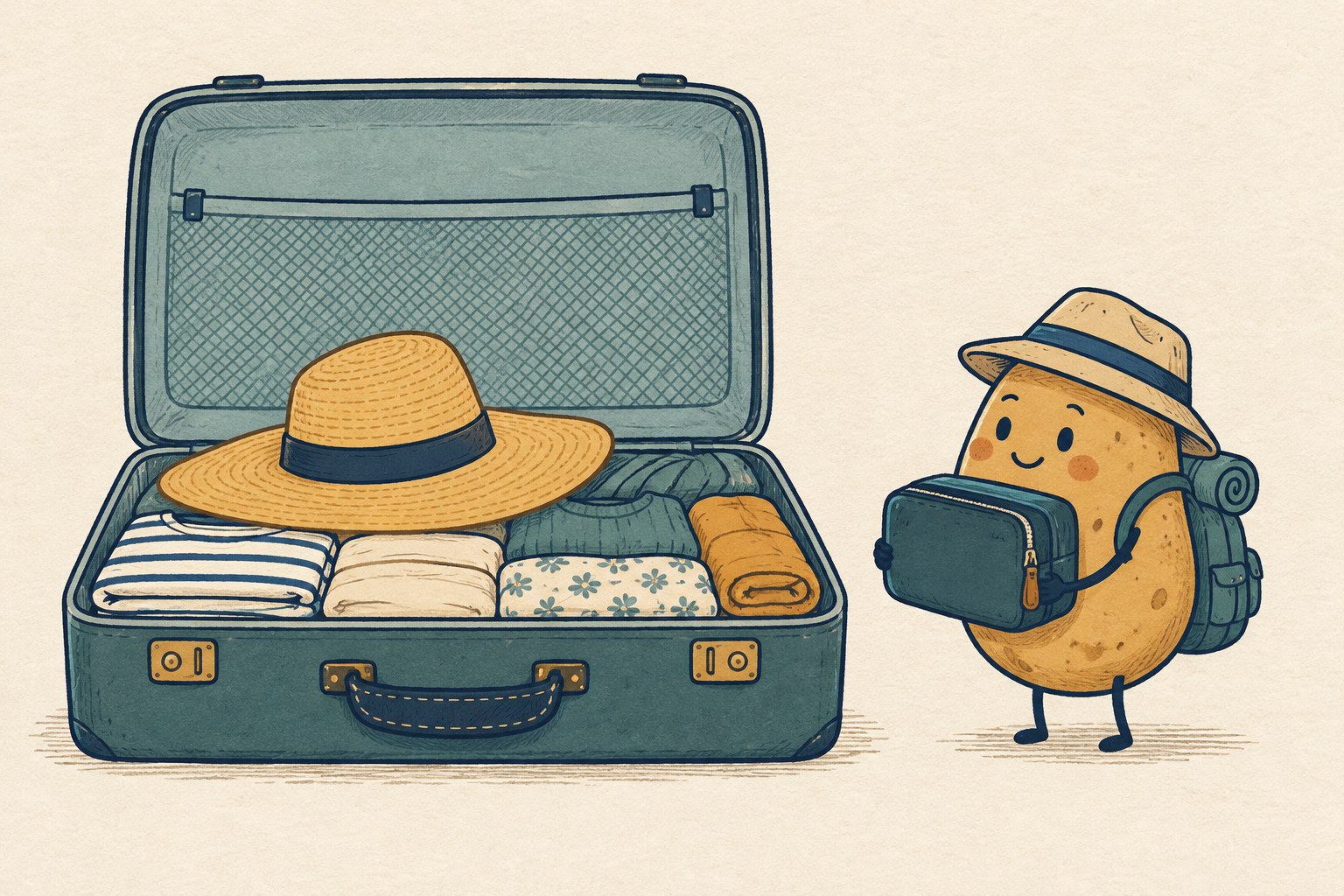
Passing this check only describes the arrangement you inspected. It does not simulate stacking, impact or baggage handling. If there is no convincing protected fit, choose another hat, a suitable carrying arrangement or no hat in that bag. Wearing it in transit can avoid suitcase compression, but still leaves a plan to make when you need to take it off.
Copy this hat travel card
Keep one card per hat. The blanks are deliberately practical; “probably fine” is not a packing method.
| Field | Your note |
|---|---|
| Hat and exact model | ________ |
| Maker’s instruction link or saved page | ________ |
| Allowed method and prohibited movement | ________ |
| Preparation and any model-specific packing time limit | ________ |
| Bag location or separate carrying plan | ________ |
| Support items; nearby items to keep away | ________ |
| Closure checked with final contents | Not yet / fits without pressure / change the plan |
| Arrival reminder and observed condition | ________ |
Hypothetical example: the saved instructions permit folding a particular hat but exclude rolling. The traveler records the allowed fold, places it in the agreed location, then removes a toiletry pouch that would press against it when the divider closes. The lesson is not “this packing method works”; it is that the final contents changed the decision.
Unpack the hat, not just the suitcase

Take the hat out when you arrive, follow its maker’s resting or storage instructions, and compare its shape with your reference. Record any change before repacking for the return journey. Do not jump from “creased” to steam, heat, soaking or forceful reshaping without model-specific guidance. Stetson’s felt-hat guidance warns against heat exposure; a generic repair hack is not a substitute for the correct care advice.
If your travel bag layout is still changing, use the packed carry-on measurement checklist after the hat is in place. For the return home, the suitcase reset checklist helps keep unpacking from becoming next week’s task. The aim is simple: know which hat you packed, which movement was permitted, and where its space went.