A necklace is one item. A pair of stud earrings may be four loose parts. That small difference is why a jewelry packing list should describe what must come home, not simply say “accessories.”
Start with a small selection, give each piece a suitable separate place, and record the earrings and backs explicitly. This guide provides a piece-and-pocket inventory and a departure check. It is an organizing routine, not a tested protective case specification or a substitute for the care instructions for your exact jewelry.
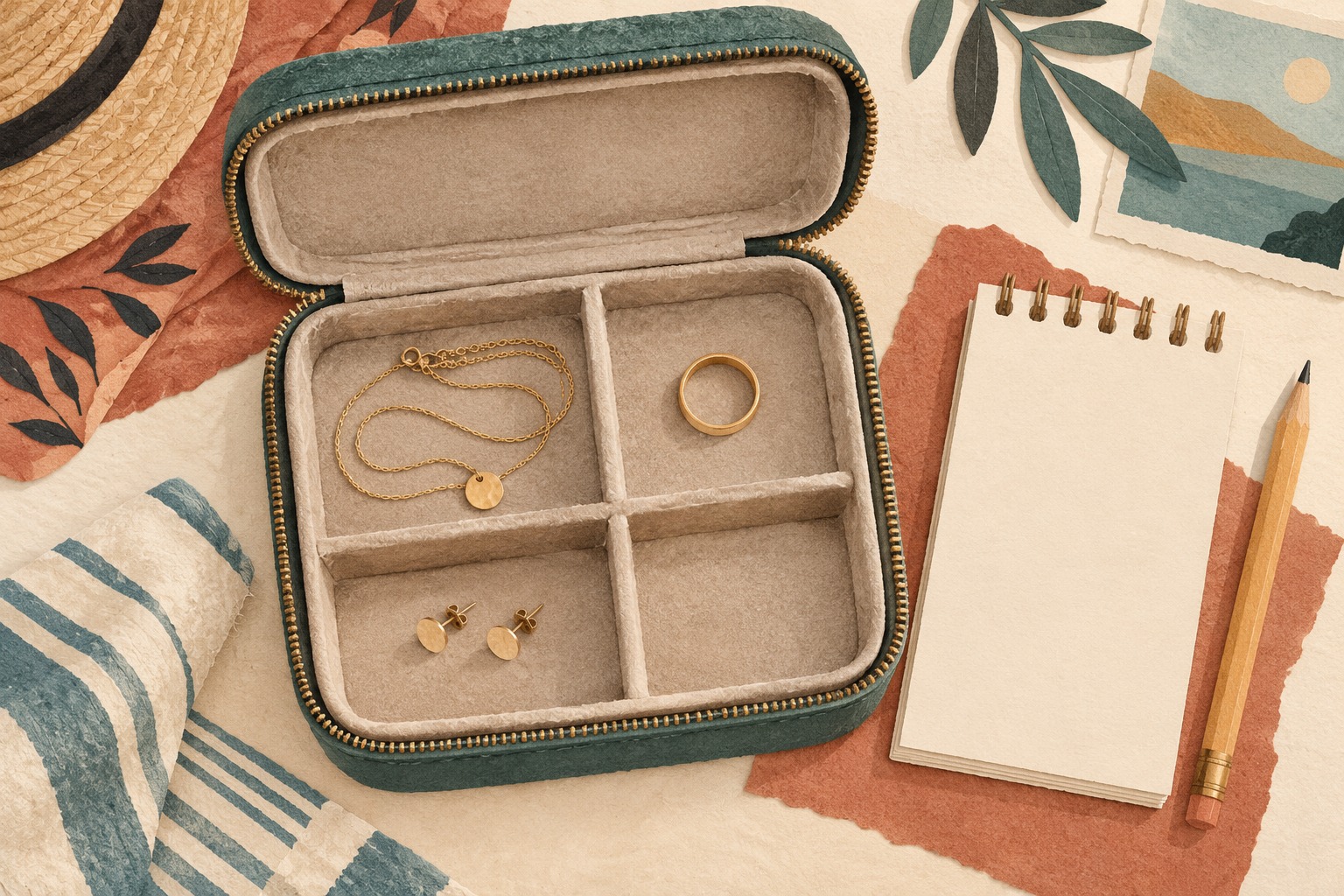
Start with the pieces, not the case
Lay your selection on a clean, soft surface where small parts are easy to see. Keep the work area away from a sink or an open bag. Remove anything you do not expect to wear. An empty compartment is allowed; it is not an invitation to recruit another necklace.
Give each selected item a short description that distinguishes it from the others: “plain silver band” is better than “ring,” and “blue studs” is better than “earrings.” Note detachable components separately. If a pendant stays on its chain, record that relationship instead of counting it as an independently packed item.
- Necklace: chain and pendant together, or genuinely separate pieces?
- Earrings: two earrings, plus the correct number and type of removable backs. Do not assume every design has backs.
- Bracelet: one assembled bracelet; note any component intentionally removed for travel.
- Ring: one ring, described well enough to distinguish it from another.
Before packing, look for an obviously damaged clasp, bent post or loose-looking setting. Do not pull, bend or shake a piece to test it. Set a questionable item aside for a jeweler rather than hoping the case will solve it. GIA's travel guidance recommends checking jewelry condition before a trip.
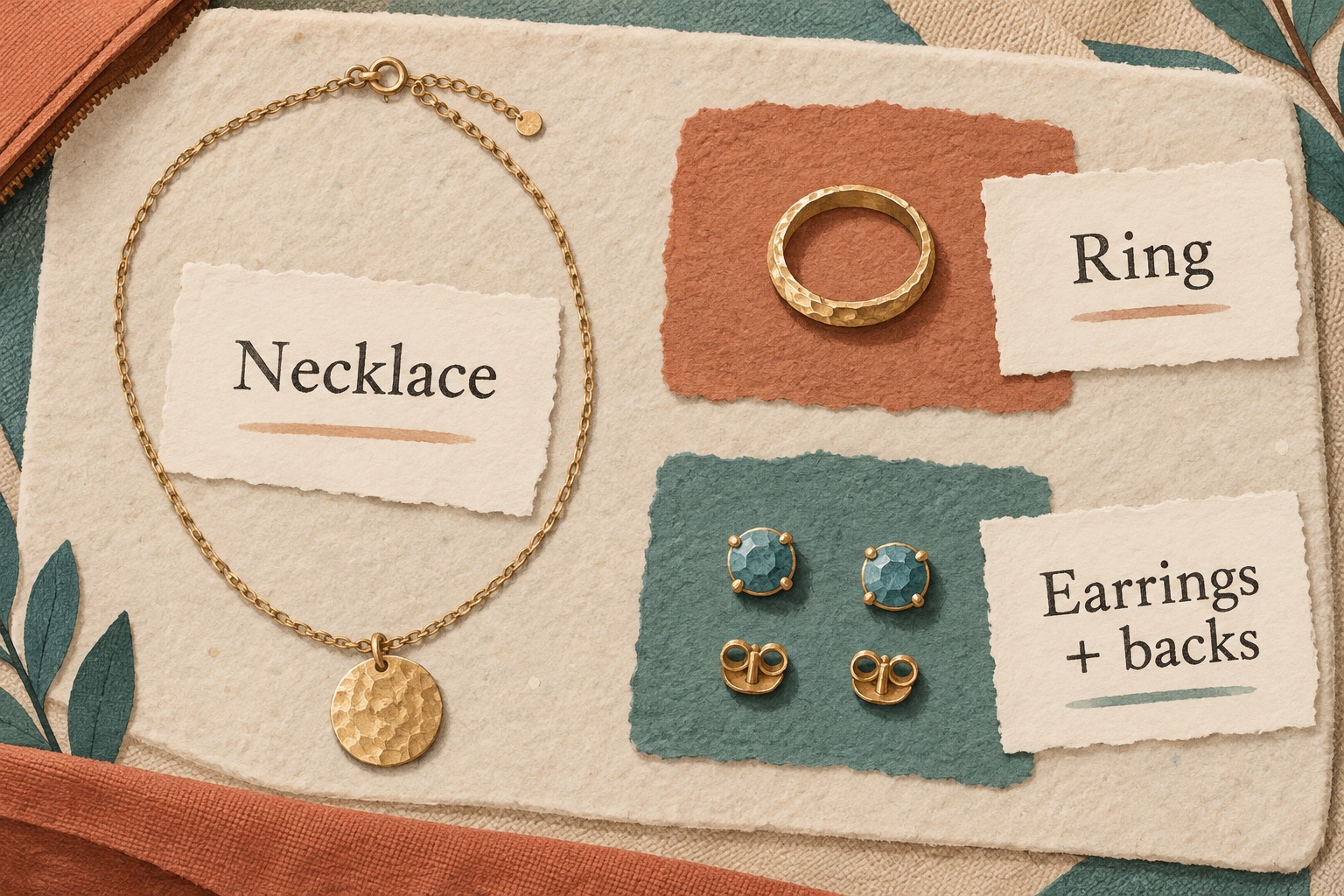
Separate contact, not just categories
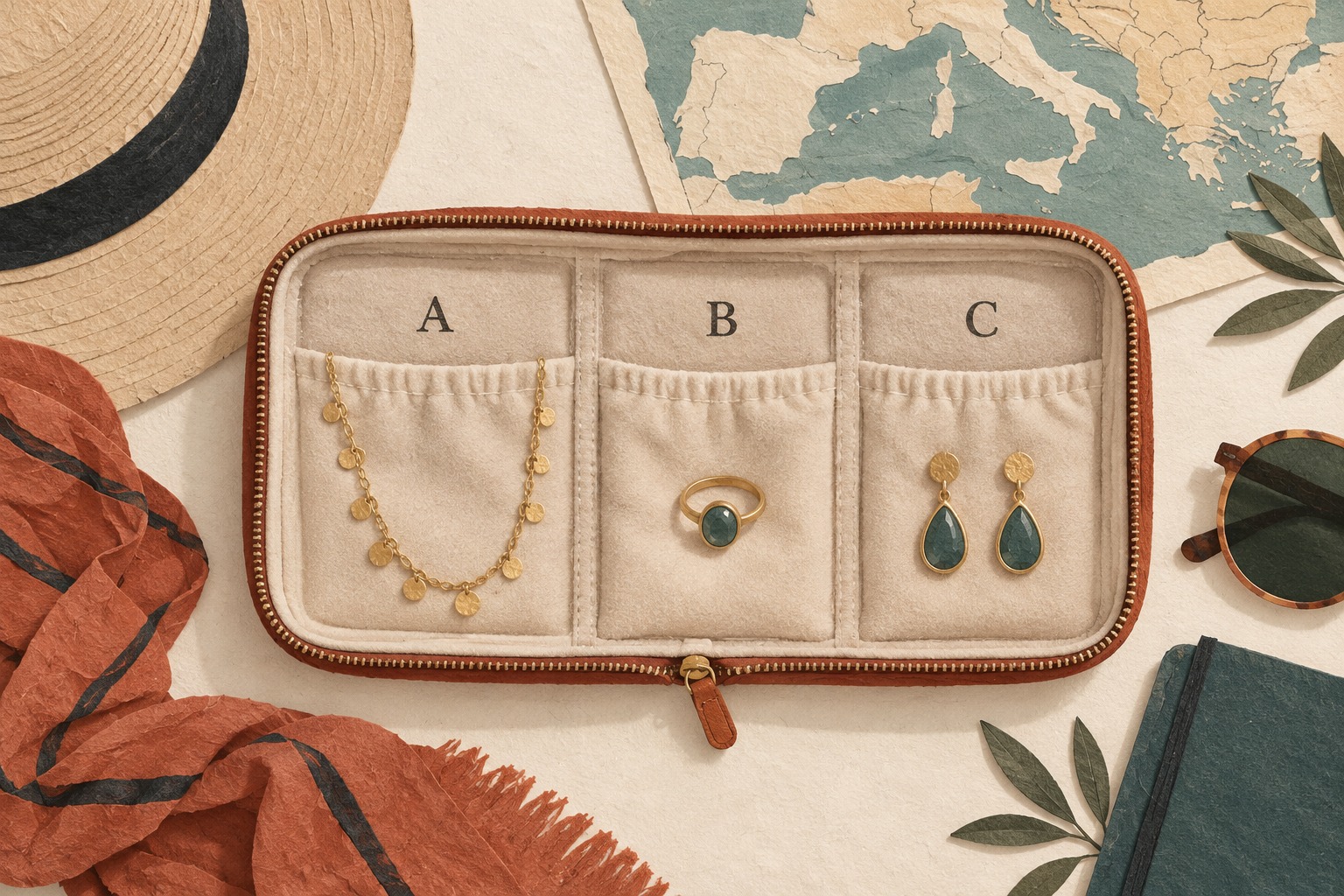
A “necklace compartment” containing three loose chains is still a small tangle factory. Tiffany recommends separate compartments for travel and keeping jewelry away from clothing that it could snag. Use a suitable individual lined pocket, pouch or dedicated holder for each piece.
Keep earring partners recognizable as a pair while preventing them from rubbing freely against one another. A holder with a separate position for each earring can do both. If the design requires removable backs to be stored separately, give those backs a contained location associated with the pair; do not leave them loose in a large outer pocket. Follow the holder's intended use and do not force posts through unsuitable fabric.
Pandora's storage guidance also supports separating travel pieces in pouches and keeping pairs organized. The purpose is less uncontrolled contact, not a promise that any soft bag prevents damage.
| Piece | Check before assigning a home | Record |
|---|---|---|
| Fine chain | Its own space; no other chain passing through it | Chain and attached pendant, pocket A |
| Stud pair | Separate supported positions; backs accounted for | Two studs plus two removable backs, holder C |
| Bulky pendant or projecting setting | Enough space without pressure from the lid | Separate suitable pouch or compartment D |
| Piece with special care instructions | The maker's storage method fits this particular material | Care note and chosen location |
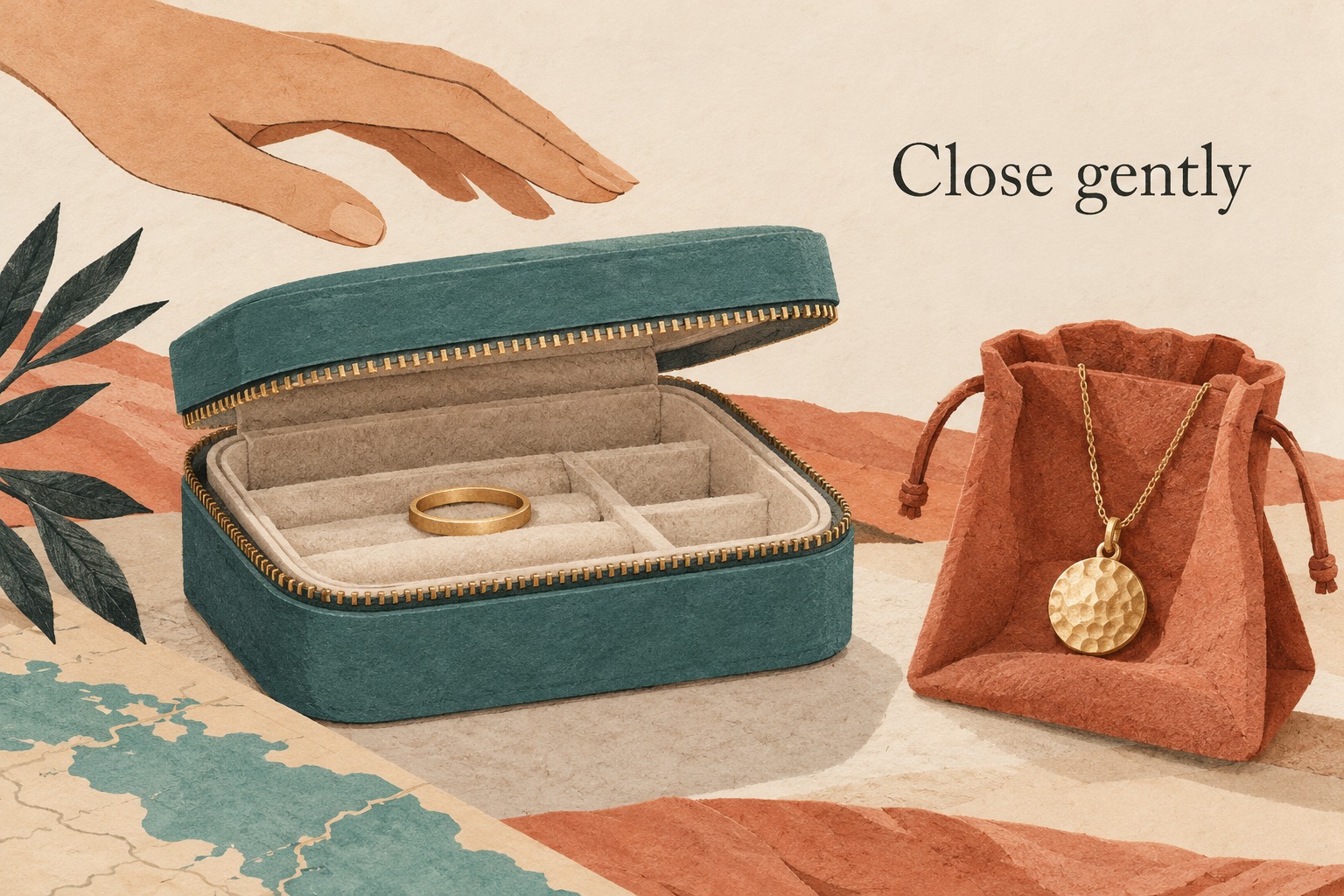
Check the closure without making it a strength test
With the pieces in their intended holders, bring the case lid toward its normal closed position gently. Stop if it meets a raised setting, bends a post, traps a chain across the edge, or needs pressure to close. Move that piece to a better-fitting home or leave it out. Do not use the zipper as a compression strap.
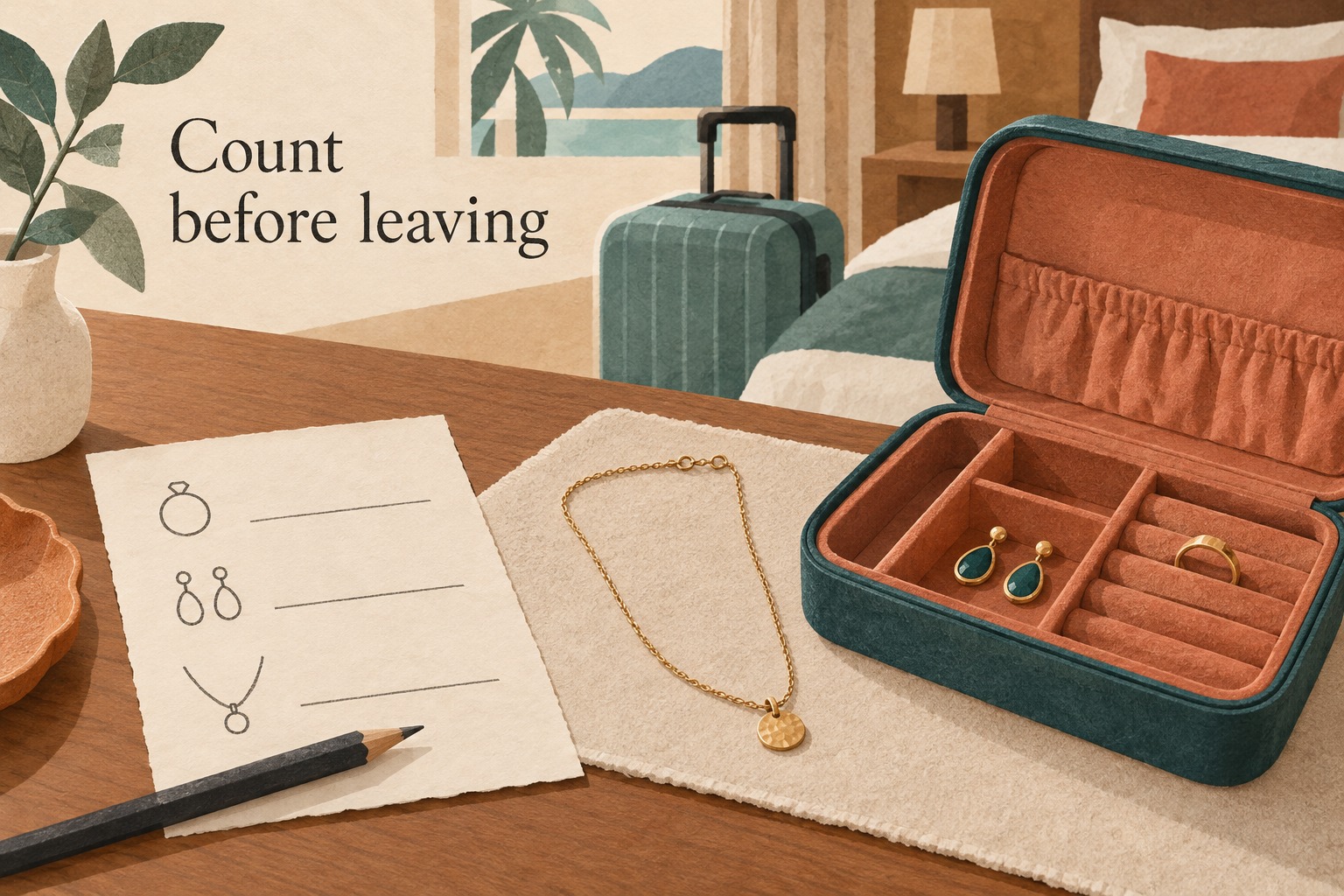
Check the entire closure path before closing: a chain can fit inside the case yet still cross the hinge or zipper. Close individual pockets as designed. The illustrations show open arrangements so the objects are visible; they are not instructions to travel with jewelry draped outside a pouch or loose on top of a holder.
This is a simple fit check, not a drop, crush or shake test. It cannot establish how a case performs inside a heavily packed bag. Avoid putting heavy items directly on a soft jewelry pouch.
Keep material-specific instructions with the inventory
Do not apply one storage trick to every metal, stone and finish. GIA's jewelry-care advice notes that excessively dry storage can harm materials such as pearls and opals, and recommends padded, separated travel storage. That is a reason to check the piece's instructions, not a reason to add water or improvise a humidity treatment.
If you do not know the material or its storage needs, consult the maker or a qualified jeweler before choosing a travel method. This guide does not recommend universal airtight bags, drying packets, cleaning liquids or household polishing recipes. Pack a piece only when you have a suitable way to contain it.
Copy this piece-and-pocket inventory
Use one row per identifiable piece or pair. Write the number of actual components, not just a grand total. “Worn” is a location to verify, not an automatic tick.
| Description | Components expected | Packed location | Departure check | Return check |
|---|---|---|---|---|
| Example: round pendant necklace | One chain with pendant attached | A: separate lined pocket | Present / unresolved | Present / unresolved |
| Example: blue stud pair | Two studs and two removable backs | C: paired holder and contained backs | Present / unresolved | Present / unresolved |
| Example: plain band | One ring | B: ring holder, or worn | Present / unresolved | Present / unresolved |
| Your piece: ______ | ______ | ______ | ______ | ______ |
In this fictional example, there are three inventory rows but six components if the necklace and attached pendant are treated as one assembled item: one necklace, two studs, two backs and one ring. You do not need to dismantle anything to make the arithmetic work. The row descriptions define what you will look for.
Optional: take a private reference photo of the laid-out selection beside the inventory. Do not put personal details, accommodation information or valuables on public display. The useful record is the one you can check yourself.
Do the return count before leaving
- Open the case on one clear surface and compare each row with the actual piece or pair.
- Count removable backs explicitly. Check worn items directly rather than assuming they are on you.
- If something is missing, mark its row unresolved and check its last known location before closing the case. Do not erase the row to make the list look complete.
- Return each confirmed piece to its assigned holder, check the closure path and close the case.
GIA advises carrying travel jewelry with you rather than putting it in checked luggage. Keep the small case inside a bag you retain, and account for it if that bag must be handed over. This is not a guarantee against loss or a statement about any airline's liability.
For the rest of the room, use the hotel checkout checklist. Keep the jewelry inventory narrow: which pieces, which components, which homes, and which ones are still unresolved. The goal is to notice a missing earring back while you are still at the table, not halfway to the airport.