Before buying a storage bin, check four things separately: the space where it will sit, the opening it must pass through, the movement needed to use its lid, and the usable space inside. A bin can pass the shelf-size check and still fail the other three.
Use the worksheet below for one shelf and one candidate bin. It is a fit-and-access planning aid, not a load-rating calculation or a recommendation to modify furniture.
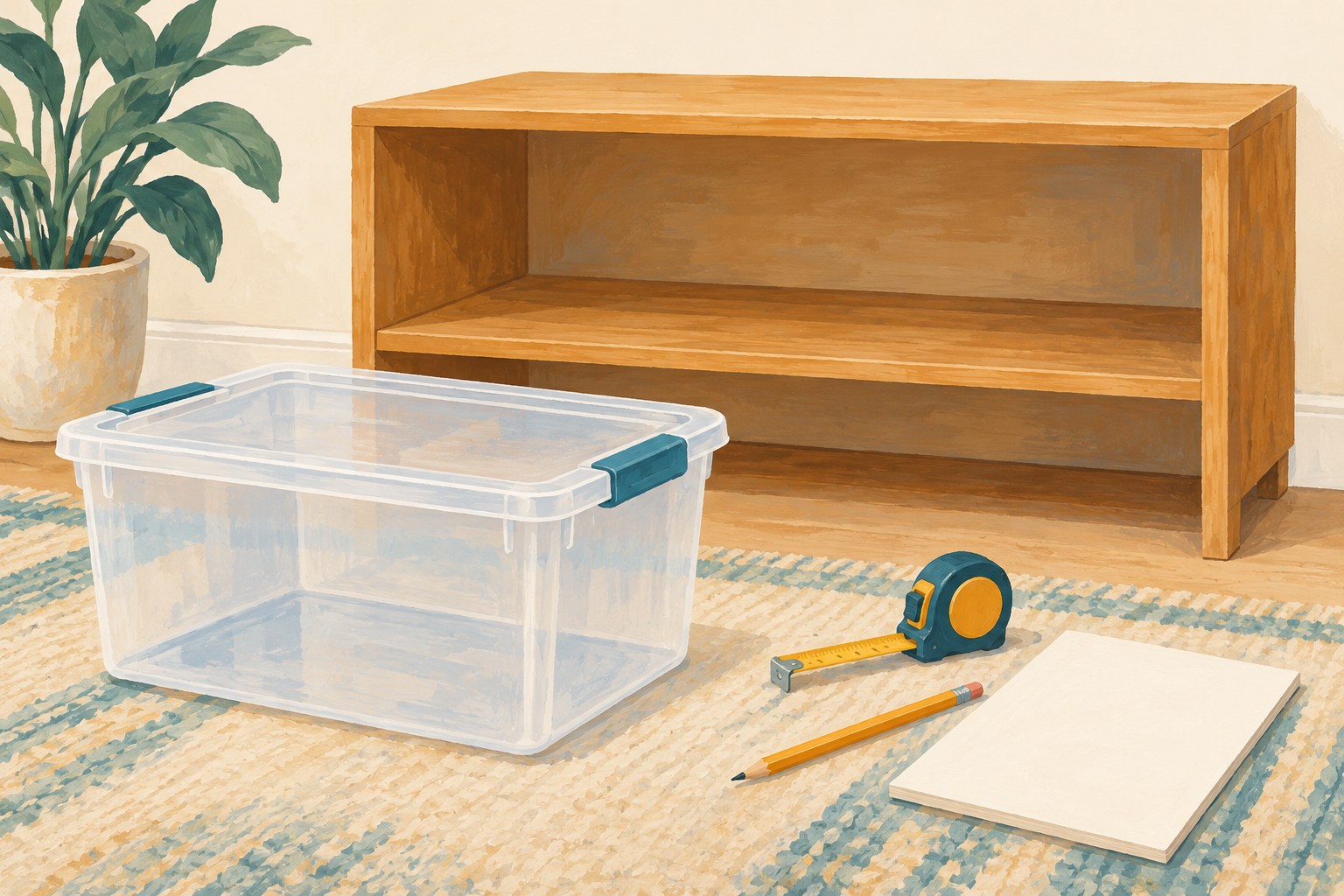
Choose the job before measuring
Write down what belongs in the bin and how often you need it. A container for spare table linens can come out occasionally; a box of daily craft supplies needs a convenient opening every time. Decide whether you intend to lift off the lid on the shelf, remove the whole bin first, or use a front or folding opening.
Measure the largest rigid item you need to store in its intended position. Do not start with the number of liters or quarts. Volume does not tell you whether a particular flat box, folder or tool will fit through the opening or rest on the bottom.
Measure the space and the entrance separately
For your notes, use across for side-to-side, front-to-back for depth and vertical for height. Keep the bin upright in the orientation you plan to use. Product pages may label these directions differently, so map the maker's measurements to your sketch rather than comparing the first number with the first number.
- Shelf: record the narrowest usable width, supported depth and clear height in the intended location.
- Opening: record the narrowest route into that location with the door in its normal open position. Include the frame, hinges, shelf lip and any fixed obstruction.
- Room in front: check whether you can withdraw the bin without another cabinet, wall or piece of furniture blocking the movement.
- Door closure: check that the closed door will clear the lid, handle and front edge of the bin.
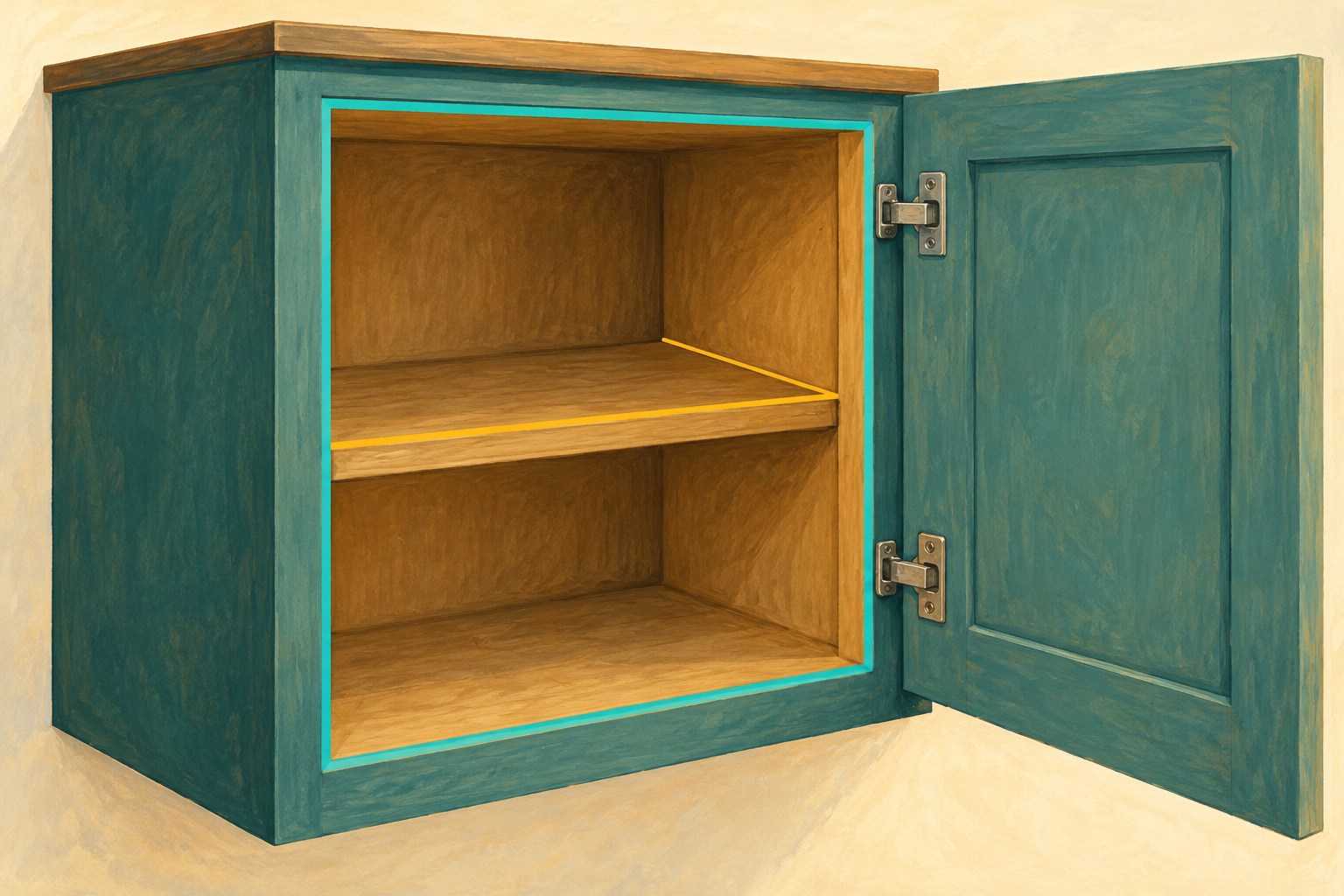
Do not use the cabinet's advertised overall width as the shelf width. Likewise, a deep shelf behind a narrow frame is not a wide entrance. If a straight, upright route does not work, mark the candidate unresolved or unsuitable for that plan; do not assume you will be able to tilt a loaded bin through it.
Find the maximum outside size and the useful inside size
Look for dimensions of the exact size and lid combination you would buy. Ask whether the stated exterior includes the handles, clips and lid, and whether the interior is measured at the top or bottom.
Really Useful Products explains its convention: exterior figures cover the maximum size with lid and handles in place, while interior figures use the minimum dimensions. It also says its dimensions are approximate. Treat that as this maker's convention, not a rule followed by every seller.
A second example is Sterilite's 20 Quart Storage Box, which lists exterior dimensions separately from interior dimensions at the bottom. These are different questions: “Will the bin fit?” and “Will the object fit inside?”
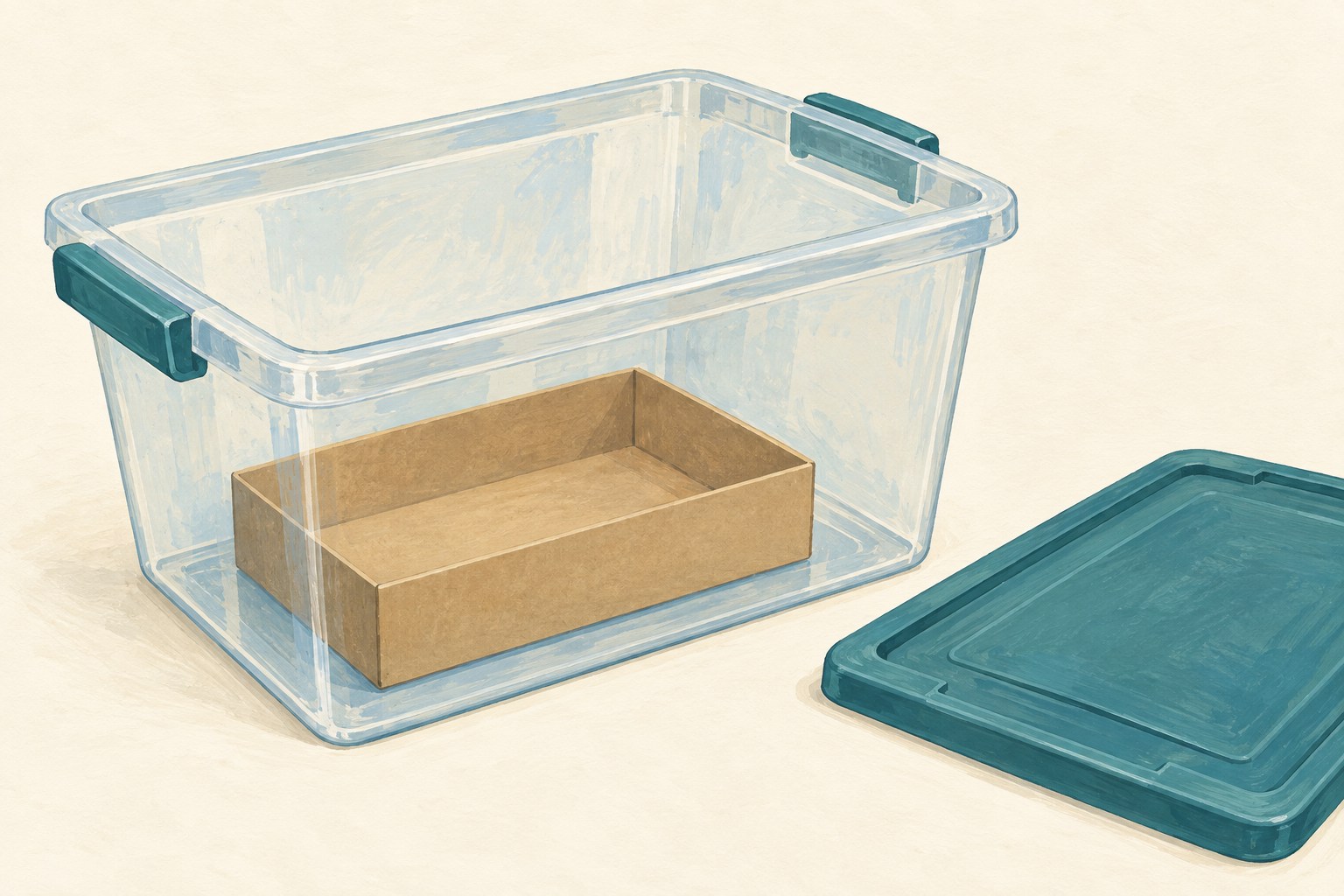
For a rigid item, check the usable floor, vertical space below the closed lid, opening and rounded corners. A narrower base or inward-projecting lid can matter even when the top rim looks roomy. If the seller supplies only an exterior measurement, record the interior as unknown instead of subtracting an invented wall thickness.
Check the lid's working space
The height of a closed bin is not its height while being opened. A lift-off lid needs room to release and somewhere to go; a hinged lid needs space along its movement. Handles must remain reachable in the orientation you choose.
Lid design can change the routine. For example, IKEA describes TRÖSKNING's folding lid as allowing access while bins are stacked. That product-specific feature does not establish a universal opening gap or prove that the lid will work inside your cabinet. Check the actual instructions and arrangement.
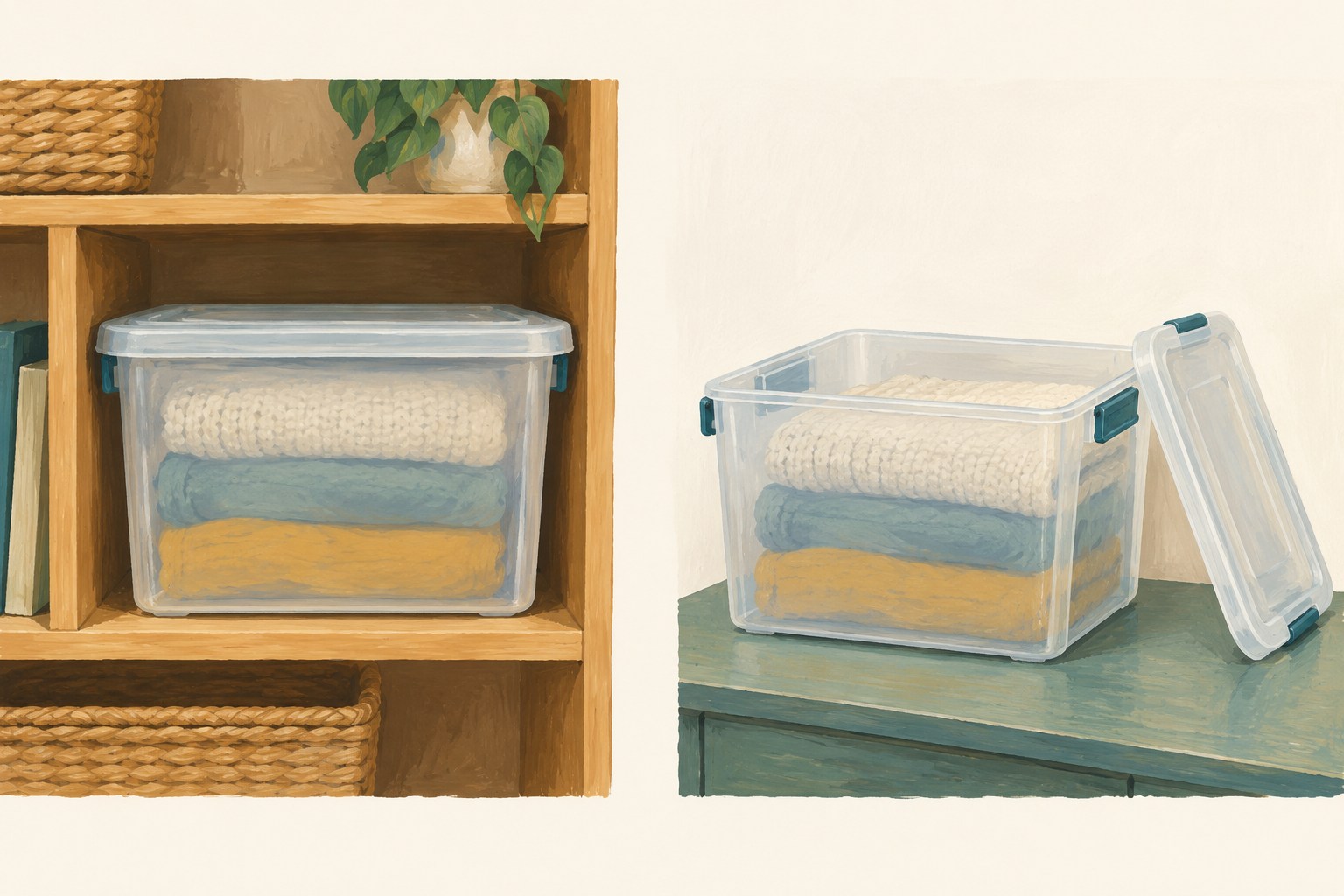
Write a short operation sentence: “Pull the bin fully onto the clear table, remove the lid, take the item, replace the lid, return the bin.” If there is no convenient surface or withdrawal route, reconsider that choice. For an open-in-place plan, confirm the whole lid movement and that your hand and the intended item can pass through the usable opening.
A worked example: three numbers that look right
Here is a fictional cabinet and contents example using the manufacturer's published 10-liter box dimensions. The shelf and item measurements are invented for teaching; this is not a tested product fit. All measurements are in millimeters.
| Check | Available space | Candidate or item | Decision |
|---|---|---|---|
| Closed bin on shelf: across × front-to-back × vertical | 360 × 540 × 110 | 340 × 520 × 85 | Smaller in all three directions on paper |
| Straight-through opening width | 330 | 340 across | Fails this route by 10 |
| Rigid item laid flat: long side × short side × height | Minimum interior 460 × 298 × 70 | 470 × 280 × 50 | Long side exceeds the stated minimum interior by 10; do not mark it confirmed |
| Space above the closed lid | 110 − 85 = 25 | Opening movement not provided | Unknown; 25 does not prove the lid can be used there |
The exterior values above are the published 520 × 340 × 85 dimensions, rearranged to the chosen shelf orientation. The interior values are the published 460 × 298 × 70 dimensions. Recheck the exact current model before using them for a purchase.
The outcome is not “buy it because the shelf is bigger.” This candidate fails the planned entrance, and the rigid item's fit is not established in the intended flat orientation. The numbers do not prove that rotating the item diagonally or tipping the bin will solve either problem.
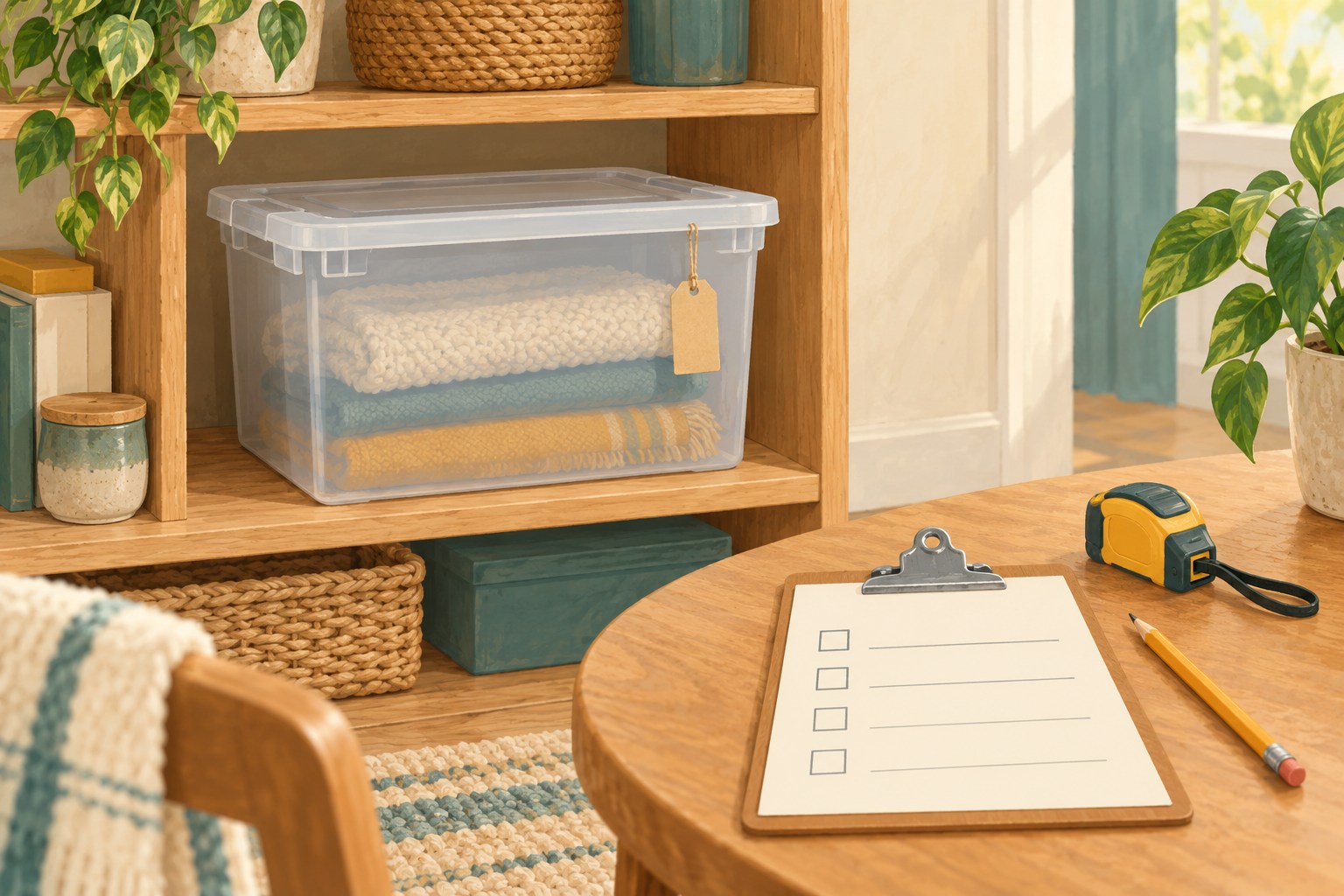
Copy a one-bin fit worksheet
- Location and contents: ______
- Largest rigid item and its intended orientation: ______
- Usable shelf across / front-to-back / vertical: ______
- Narrowest entrance and obstructions: ______
- Exact bin model, size, lid and source link: ______
- Maximum exterior in my chosen orientation: ______
- Minimum interior and any missing measurements: ______
- How I will remove, open and return it: ______
- Decision: fails a dimension / missing information / fits on paper / physically checked
Keep units consistent throughout the sheet. If two bins will sit side by side, compare their combined maximum widths with the usable shelf width, then check access to each handle and lid. An exact sum with no remaining space is not a verified arrangement.
Verify one before buying a matching set
Where practical, try one actual bin in the intended location before committing to multiples. Check it with the correct lid and representative contents, within the maker's use instructions. Open and close the cabinet, remove and return the bin, and take out the largest item. Follow both furniture and container load limits; this worksheet does not assess them.
A cardboard footprint can help you compare side-by-side layouts, but it cannot establish three-dimensional entry, lid movement or interior fit. Keep “fits on paper” separate from “physically checked,” especially when a manufacturer calls its dimensions approximate.
Record the final orientation and any remaining uncertainty. A short note such as “lid comes off only after removal; table must stay clear” is more useful than a vague “fits.” If you are also choosing new furniture, use the separate furniture delivery route checklist for getting that larger item into the room.
This guide combines manufacturer measurement conventions with an original worksheet and hypothetical comparison. We have not tested the featured products or claimed a universal clearance allowance.