Clean a silicone baking mat using the instructions for its exact make and model, then check both sides are dry before putting it away. Do not treat every stain as a reason to scrub harder: the next decision depends on whether you are seeing residue, a cosmetic change or actual damage.
A baking mat has a surprisingly demanding second job: fitting back into the cupboard. This guide gives it a short care record so the washing method and storage spot do not have to be reinvented after every batch. It is a planning aid, not a hands-on product test.
Match the instructions to the mat in front of you
Find the maker, model or packaging before choosing a cleaning shortcut. For example, Fat Daddio’s silicone care page permits handwashing with warm soapy water or the dishwasher’s top rack, and calls for drying before storage. That permission applies to its products; it does not establish dishwasher suitability for an unidentified mat.
The Silpat care sheet hosted by WebstaurantStore describes a soft damp sponge, a clean-water rinse and air drying, with dilute detergent if needed. It also notes that an oily feel and discoloration can be normal. This undated sheet is a reference, not proof that it is the latest instruction for your particular purchase. Use the instructions supplied with your mat and ask its maker if documents disagree.

Make a wash-and-storage record once
Copy this table into a note. Give similar-looking mats their own entries, using a photograph or a description such as “large red border” rather than writing on the food-contact surface. Leave an unknown field marked unknown. An empty box is not permission.
| Record field | What to write |
|---|---|
| Mat identity | Maker, model, size and a distinguishing photo |
| Instruction source | Packaging or exact official link, plus the date you checked it |
| Routine wash | Permitted cleaner, tool and method |
| Dishwasher | Explicitly permitted, prohibited or not established; record rack instructions if given |
| Drying and storage | Approved method and a real cupboard location where the mat fits |
| Unresolved issue | What remains after the approved wash, and the question to send the maker |
Keep the ordinary wash separate from troubleshooting
- Let the mat cool enough to handle comfortably and clear a space for washing and drying.
- Use the routine method recorded for that mat. Keep the cleaning tool’s soft, non-abrasive face against the surface.
- Work across the whole mat rather than repeatedly attacking one colored patch. Turn it over so the underside is not forgotten.
- Rinse as its instructions direct. Keep the rinsed mat away from loose crumbs or the dirty side of the sink.
- Move it to the chosen drying space. Check the underside as well as the top before storage.
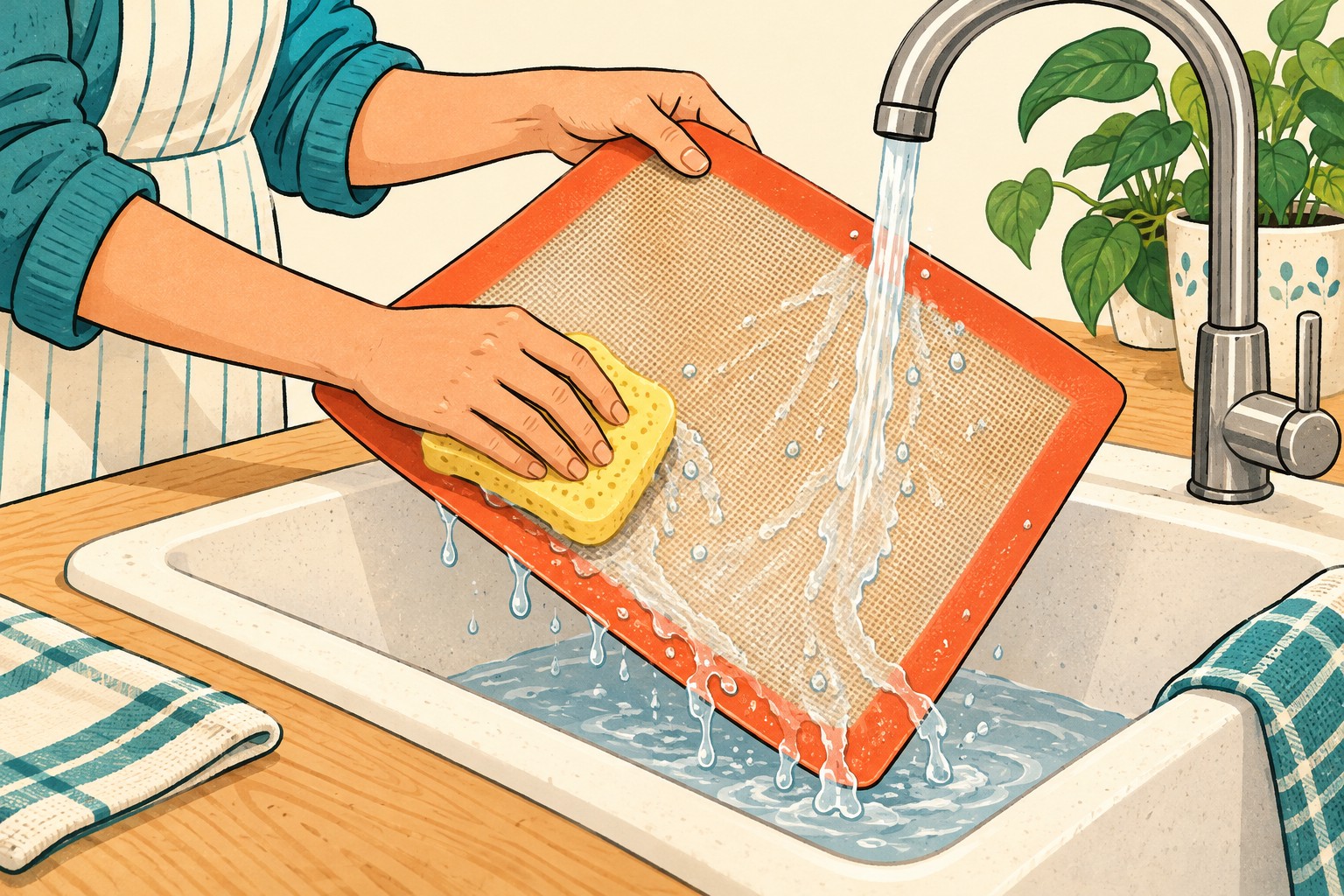
Do not combine several internet cleaning recipes into one stronger treatment. Fat Daddio’s publishes specific deeper-cleaning methods for its mats; those are not a universal recipe. It also warns against abrasive pads, sharp utensils and folding. Its replacement signs include tears, exposed mesh and a persistently sticky or matte surface that no longer releases food properly. Refer to the maker’s full care guidance rather than using appearance alone as a diagnosis.
Use a clear next-action test
- Visible food remains: the routine wash is unfinished. Revisit the approved instructions rather than escalating to a sharp scraper.
- A mark remains, but its meaning is unclear: photograph the mark and describe the method already used. Ask the maker whether that condition is expected.
- A tear or exposed reinforcing mesh is visible: set the mat aside from cooking and follow the maker’s replacement guidance.
- Clean but still wet: leave it in the drying stage. “Washed” and “ready to store” are separate checkboxes.
Give the dry mat a home it actually fits
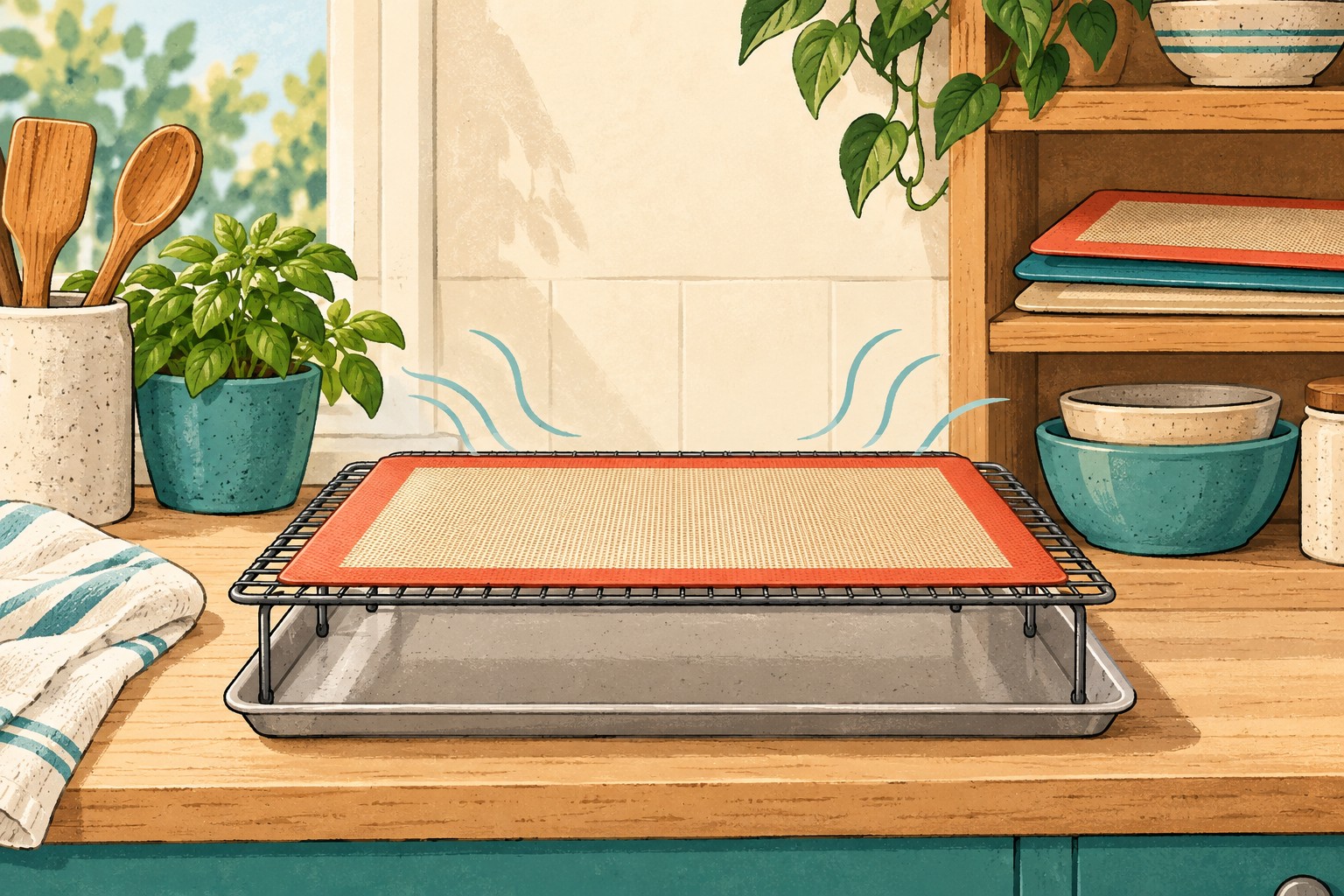
Measure the available flat shelf or tray space before choosing it as the storage spot. Move sharp tools out of that space. If rolling is allowed for your mat, use the maker’s instructions; do not assume a tight fold is equivalent. The illustration shows one possible open-air arrangement, not a required rack or a measured drying time.
For example, a hypothetical household with two mats could label its note “A: handwash, flat tray slot” and “B: method awaiting confirmation.” Mat B stays out of the dishwasher until that field is resolved. These are example records, not product recommendations.
A short reset checklist for next time
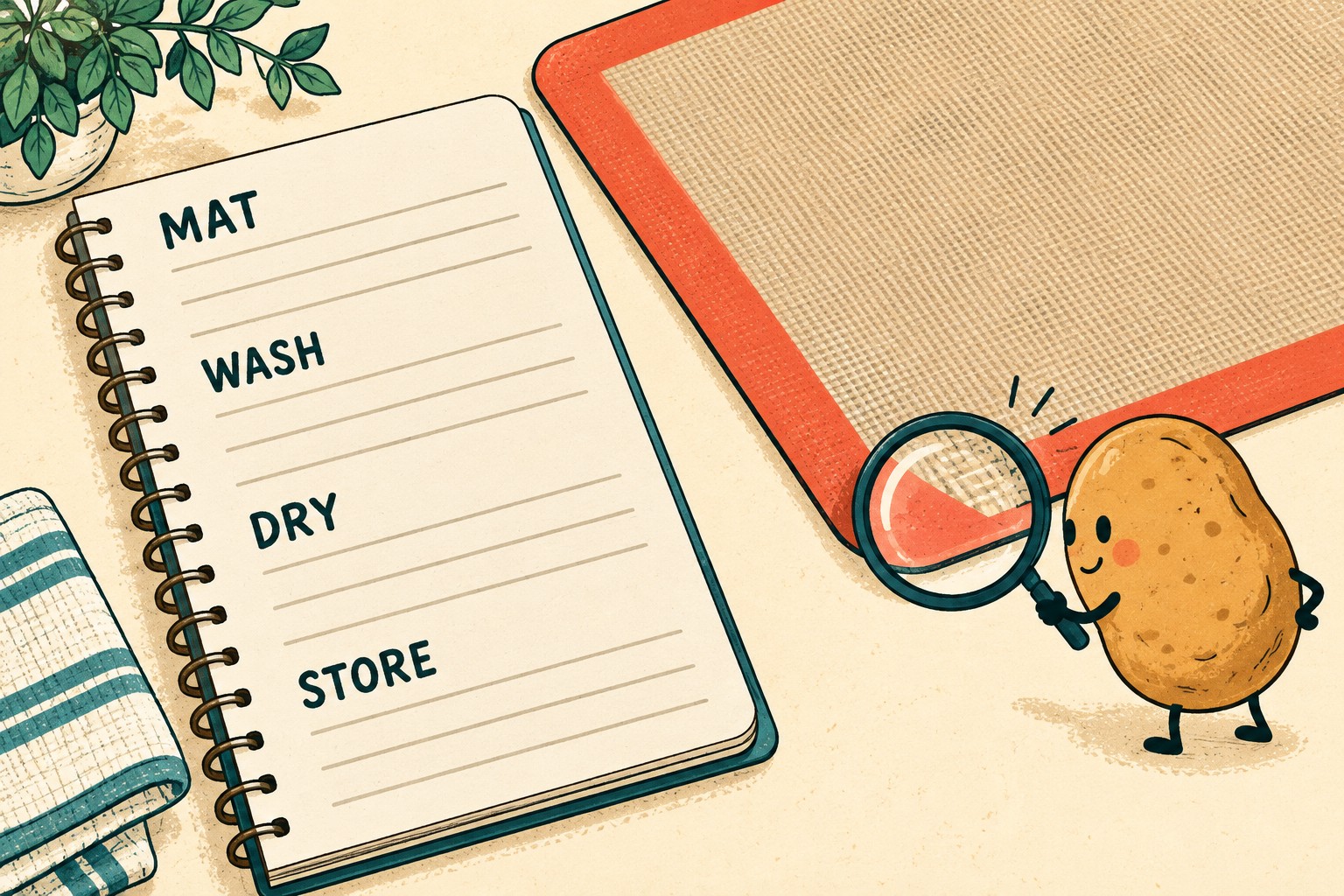
- Correct mat and matching instructions identified
- Approved wash completed on both sides
- Remaining residue or damage given a next action
- Both sides dry before storage
- Stored without an unapproved fold or contact with sharp tools
If the kitchen storage space itself is the obstacle, use our storage-bin fit worksheet before buying another container. The goal is a mat you can find and care for consistently, not a cupboard full of special equipment.