A backpack is excellent at collecting things you did not mean to keep: biscuit crumbs, pencil shavings and the receipt from a very optimistic lunch. Before adding water, give every pocket an exit interview.
This guide is for ordinary daypacks and travel backpacks. The practical tool is a pocket-and-care record: first decide which parts may get wet, then track the pockets through cleaning and drying. It is an editorial checklist, not a tested cleaning treatment. For wheeled luggage, child carriers, avalanche packs, running vests or unusual coated materials, use the exact product instructions instead.
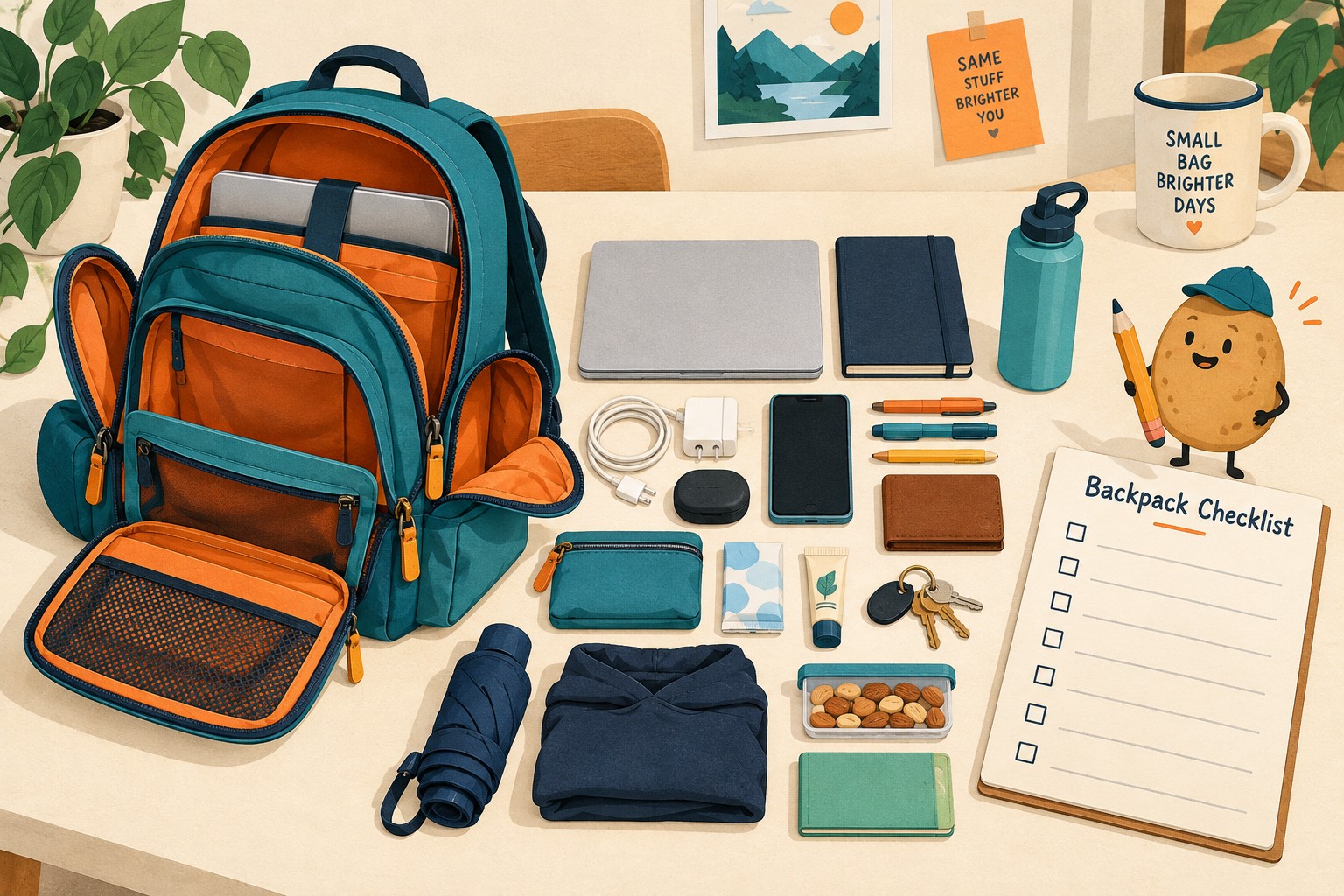
Start with permission, not a bathtub
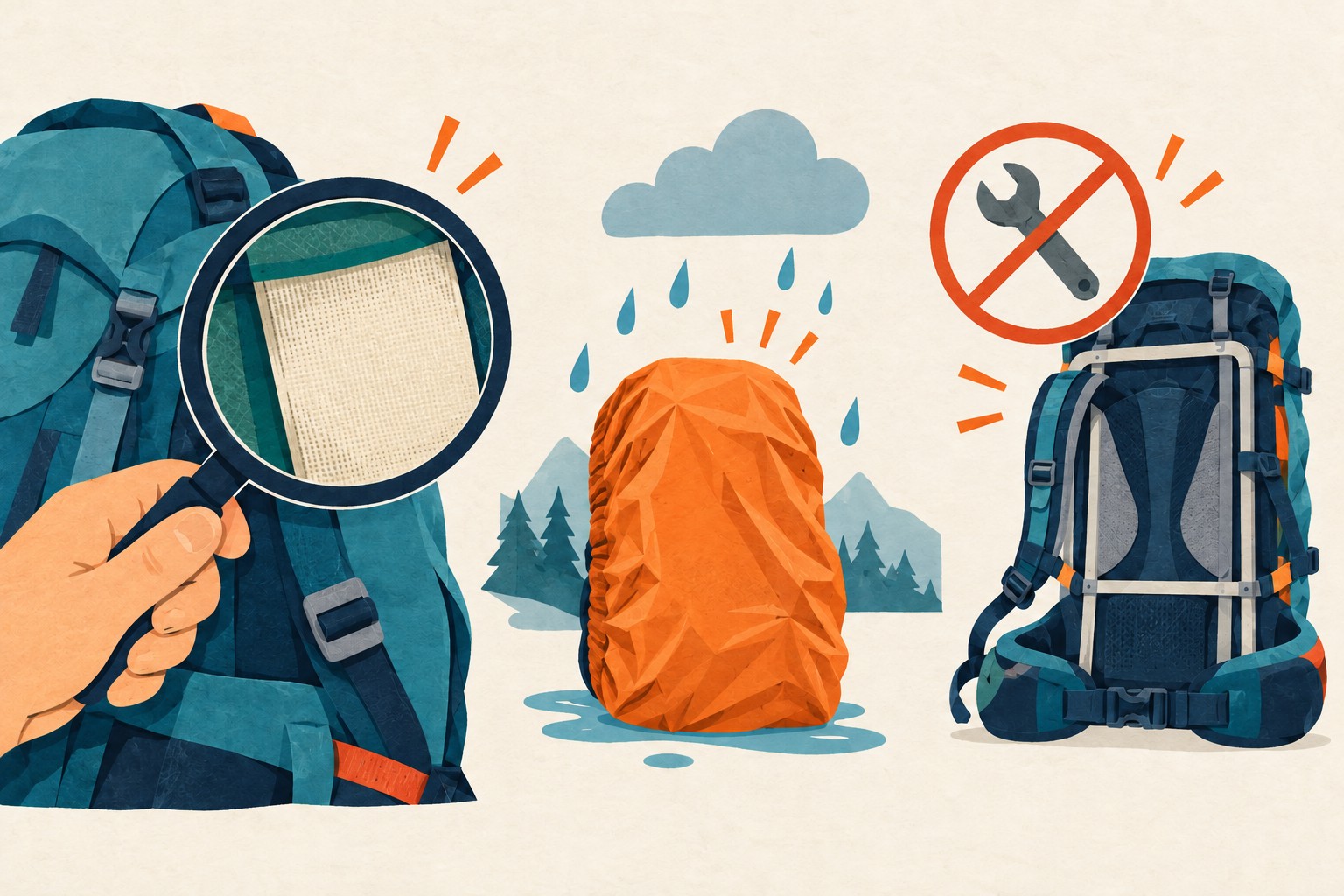
Find the care label and the manufacturer's instructions for your make and model. A fabric-looking bag may contain a frame, coating, back panel or removable accessory with different requirements. If the instructions do not clearly allow immersion, choose a light wipe-down rather than interpreting silence as permission to soak.
The differences are real. Deuter's backpack care guide says not to remove its frame or rods, and to spot-clean its rain cover separately without submerging it. Osprey's care guide allows removal of detachable harnesses and hipbelts but says not to immerse travel packs with its High Road wheeled chassis. These are examples of product-specific rules, not interchangeable instructions.
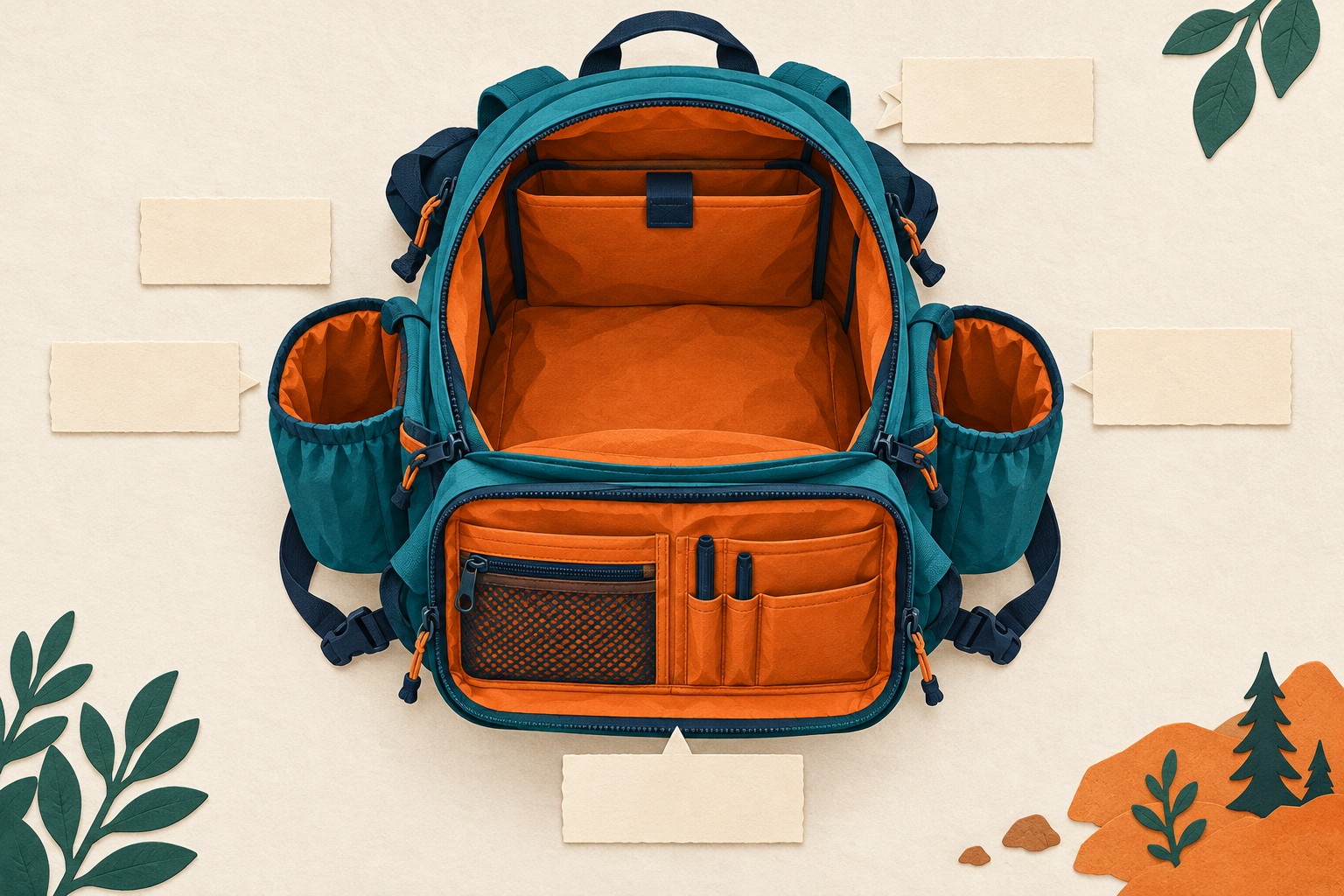
Make a pocket map before cleaning
- Empty the main compartment, then work around the bag in one direction.
- Check the front organizer, side pockets, lid, hipbelt pockets and any laptop, hydration or rain-cover compartment your pack actually has.
- Remove loose contents, including papers and small electronics. Put detachable accessories beside the bag only if the care instructions permit removal.
- Shake out loose debris. REI's cleaning guide also suggests gently vacuuming seams and recesses when needed.
- Write down each compartment. A pocket you cannot see is still a pocket that can hold crumbs or moisture.
Do not pull out structural pieces simply because they look removable. Here, “separate” means separate the care decisions first.
Choose the least involved approved clean
| What you find | Next step | Check before continuing |
|---|---|---|
| Loose debris only | Empty and gently remove the debris. | Look into seams and pocket corners. |
| Small surface marks | Use the label-approved light-cleaning method. | Remove any cleaner as directed; do not leave a soapy patch. |
| A deeper clean is needed | Confirm the model's washing and immersion instructions. | Identify components that need separate treatment. |
| Instructions are missing or conflict | Pause the wet-cleaning step and find the exact model guidance. | Do not substitute another brand's procedure. |
For a light clean, REI describes wiping the inside, spot-cleaning exterior marks and wiping away soap with a clean damp cloth. For a deeper hand-clean, its guide uses lukewarm water, mild soap and gentle tools, while deferring to the manufacturer's immersion rules. Avoid aggressive scrubbing of mesh.
Osprey and Deuter both advise against machine washing ordinary backpacks in the cited guides. Do not turn that into a universal rule for every wearable pack: Deuter gives different instructions for some running vests. The exact product category matters more than a generic washing shortcut.

Dry the hidden areas, not just the front panel
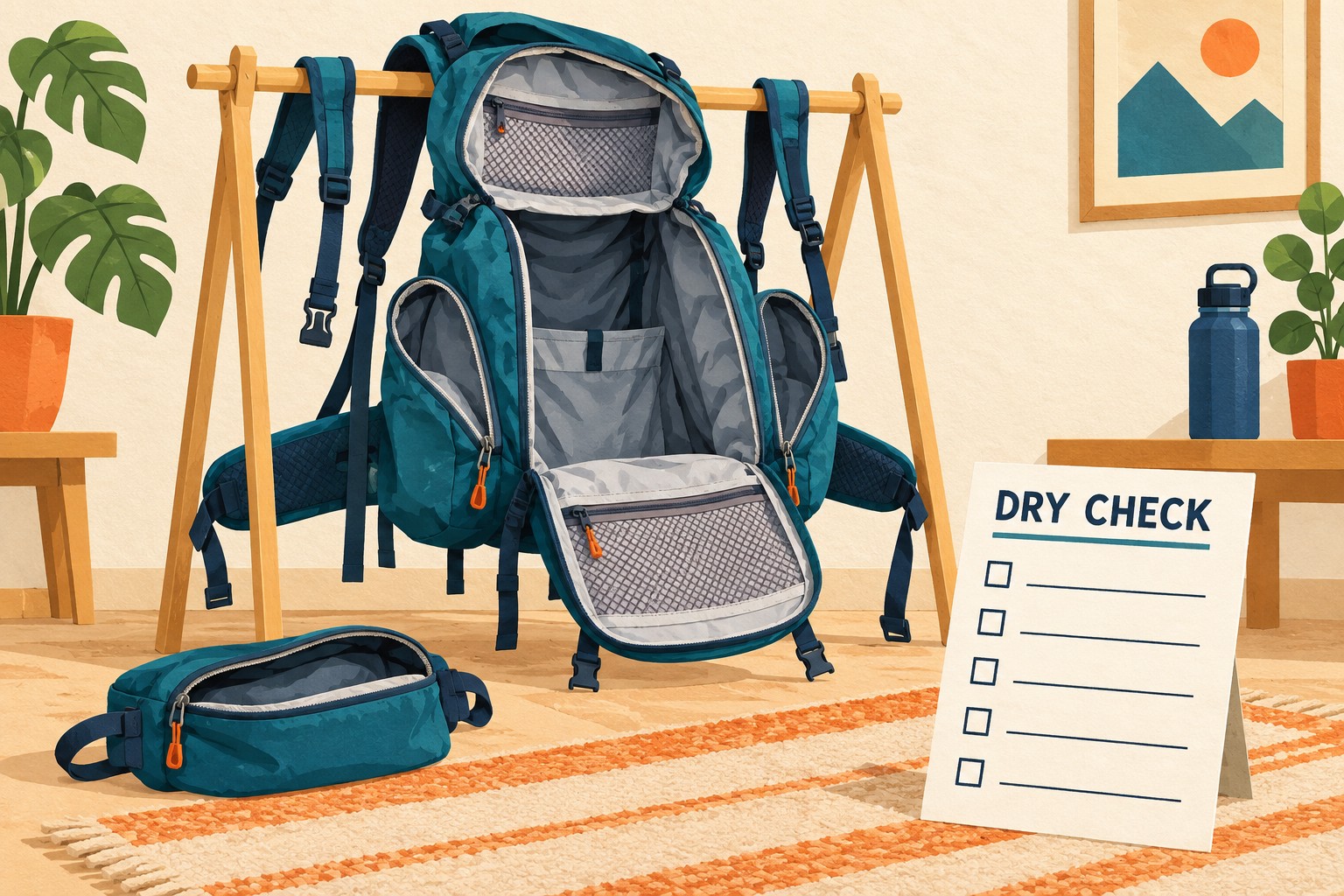
Follow the manufacturer's drying arrangement. Deuter advises opening zippers and drying away from direct sunlight and heat, completely before storage. Osprey likewise recommends ventilated air-drying away from direct sun. Neither instruction is a promise that every pack will be ready after a fixed number of hours.
Check the bottom of each pocket, folds, padded straps and any separately cleaned piece before repacking. If an area is still damp, leave that line unfinished and continue drying in the approved position. Do not close everything up because the outer panel feels dry.
Copy this pocket-and-care record
Use one record per bag. Cross out compartments your model does not have; add ones it does.
| Bag record | Fill in |
|---|---|
| Make and model | ________________ |
| Care label photo / official instructions | ________________ |
| Allowed method and cleaner | ________________ |
| Immersion permitted? | Yes / No / Not confirmed |
| Parts allowed to be removed | ________________ |
| Parts needing separate care | ________________ |
| Compartment or part | Emptied and debris removed | Cleaned / cleaner removed as directed | Dry checked |
|---|---|---|---|
| Main compartment | ___ | ___ | ___ |
| Front organizer | ___ | ___ | ___ |
| Side pockets | ___ | ___ | ___ |
| Inner sleeve | ___ | ___ | ___ |
| Other pocket / accessory | ___ | ___ | ___ |
Mark a step “not needed” when appropriate rather than pretending every compartment was washed. For example, a wiped front pocket and a dry-brushed side pocket can share one record without sharing one method.
Close the loop before the next outing
- All compartments and separately cleaned parts have been checked dry.
- Permitted removable parts are reattached according to the product instructions.
- Papers and devices go back only after the bag is ready.
- Items you no longer need stay out. The receipt has had its hearing.
Once your pack is ready, use the travel electronics pouch checklist to match devices with their cables before loading them.