To clean a yoga mat, first match its exact model to the maker’s care instructions, then use that approved method and let the mat dry before rolling it. Do not assume that dish soap, a homemade spray or a bathtub soak is suitable just because another mat can tolerate it. If you cannot identify the mat, pause the wet-cleaning step rather than guessing.
A mat can look like one simple sheet while having several materials and surfaces to care for. The useful question is not “Which cleaner works on yoga mats?” It is “What does this particular mat allow?” This guide turns that answer into a small, repeatable routine, with a copyable care card and a clear handoff for a mat that is still drying.
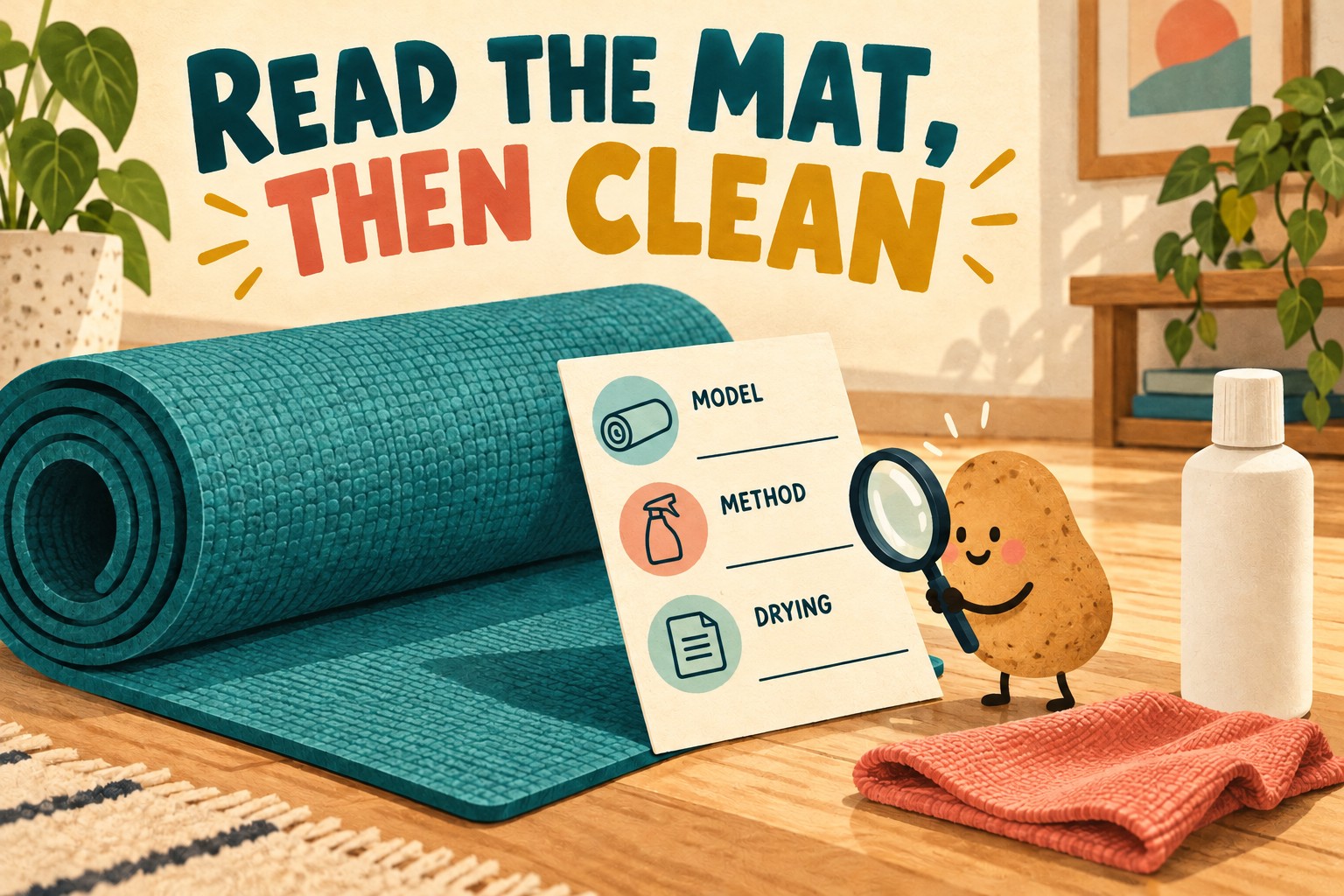
Find the model before choosing the bottle
Look for the product name on your order record, packaging or the manufacturer’s site. A logo alone may identify the brand but not the mat series. Record the model, thickness or version if those distinguish the product, and the link to its care page. If a mat has a separate towel, carry strap or sleeve, set those aside: its instructions do not automatically cover the accessories.
Why be this specific? Manduka’s care guide, updated June 23, 2026, gives different instructions for its PRO, eKO and GRP series. It rules out soaking PRO mats, prohibits soap on eKO mats, and says its moisture-absorbing GRP mats should not be treated with disinfectant. These are product-family instructions, not rules for every mat made from a similar-looking material.
Keep “cleaning” and “disinfecting” as separate decisions. This article is an ordinary equipment-care guide; it does not establish a disinfection method or a health-protection result. A studio-owned mat should follow the studio’s approved care procedure.
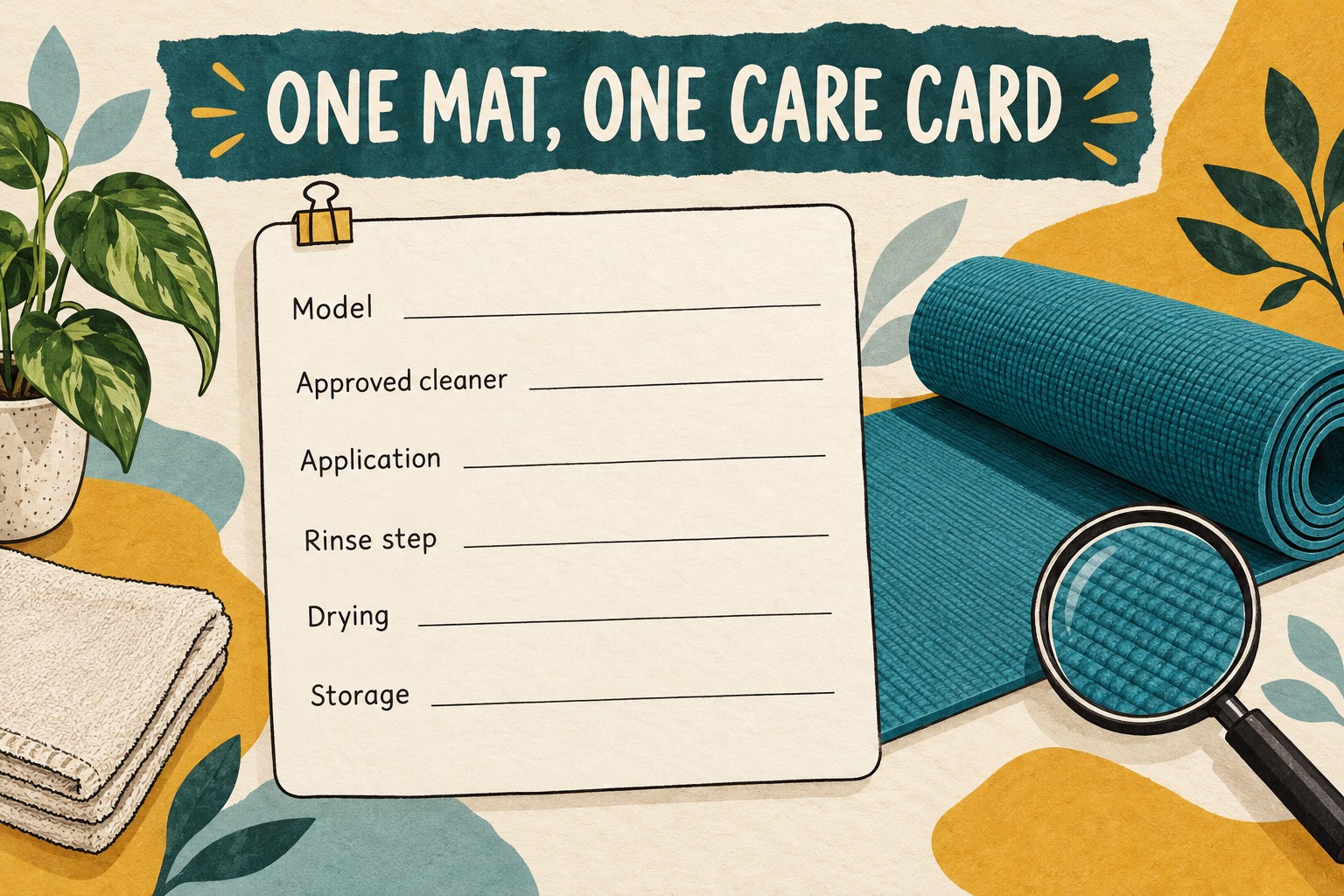
Make a six-line care card
Copy this into a note and fill it from the exact product instructions. Write “not found” when something is missing. A blank field is a question to resolve, not permission to improvise.
- Mat: brand, model and identifying version; care-page link and date checked.
- Approved cleaner: exact product or permitted liquid; dilution only if the maker supplies one.
- Application: cloth or direct application; how wet; any stated contact time.
- Removal: wipe, rinse or other instructed finish; do not add a rinse by habit.
- Drying: permitted position and location; what must be dry before the next step.
- Storage: rolled or otherwise; storage location; any explicit restrictions.
For example, lululemon’s Reversible Mat 5mm Logo page specifies wiping with a damp cloth, air drying before rolling and storage away from direct sunlight. A short card for that named product can preserve those instructions without adding a detergent recipe. It would not establish the method for a different model.
Do not turn “natural” into a compatibility test
The label on a spray bottle cannot replace the mat’s instructions. JadeYoga’s FAQ recommends a damp cloth for routine cleaning and its own mat wash, while warning against other cleaners, including soaps and high concentrations of essential oils. It also notes that essential oils can make the mat slippery. That is a good reason not to copy a generic vinegar-and-oil recipe onto every rubber mat.
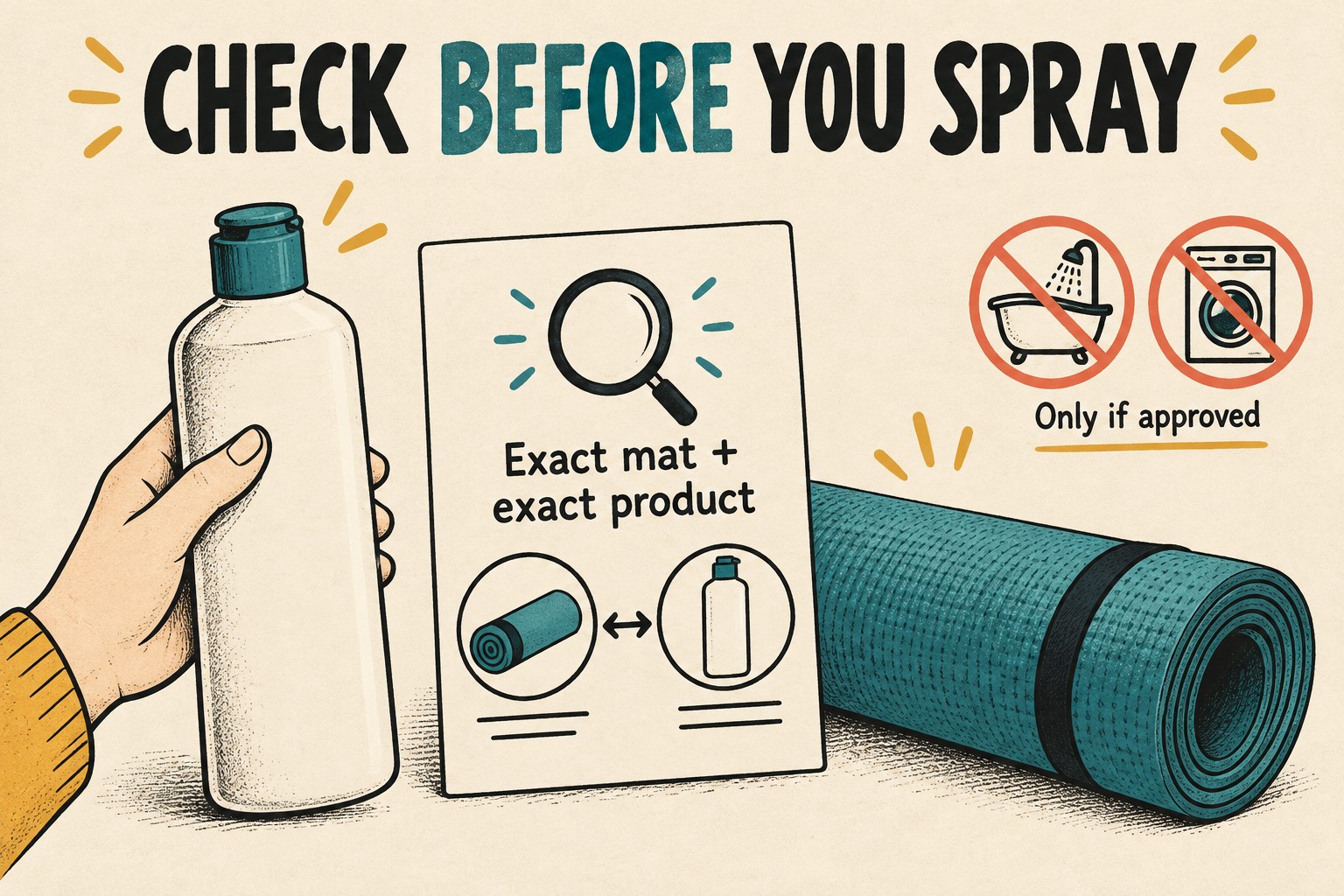
A practical bottle check has three questions:
- Does the mat maker permit this exact cleaner or type of liquid?
- Do I have the application and removal instructions, rather than only the product name?
- Can I finish the drying step before I need to roll, bag or use the mat?
If the answer to the first two is unclear, keep the bottle closed and find the missing instruction. If drying space is the problem, arrange the space before starting. More cleaner is not a substitute for a complete process.
Run one care cycle, from an open mat to a stored mat
The steps below are an organizing sequence, not an alternative cleaning recipe.
- Clear the space. Unroll the mat in a suitable indoor area. Move accessories out of the way and have the permitted cleaning materials ready.
- Inspect before applying anything. Note existing marks, peeling or damage so you do not confuse them with a change caused by cleaning. If the surface is deteriorating, ask the maker about the next step instead of scrubbing harder.
- Follow the care card. Use the instructed amount and method. Follow any stated removal step. Avoid borrowing a timing, dilution or tool from another mat’s routine.
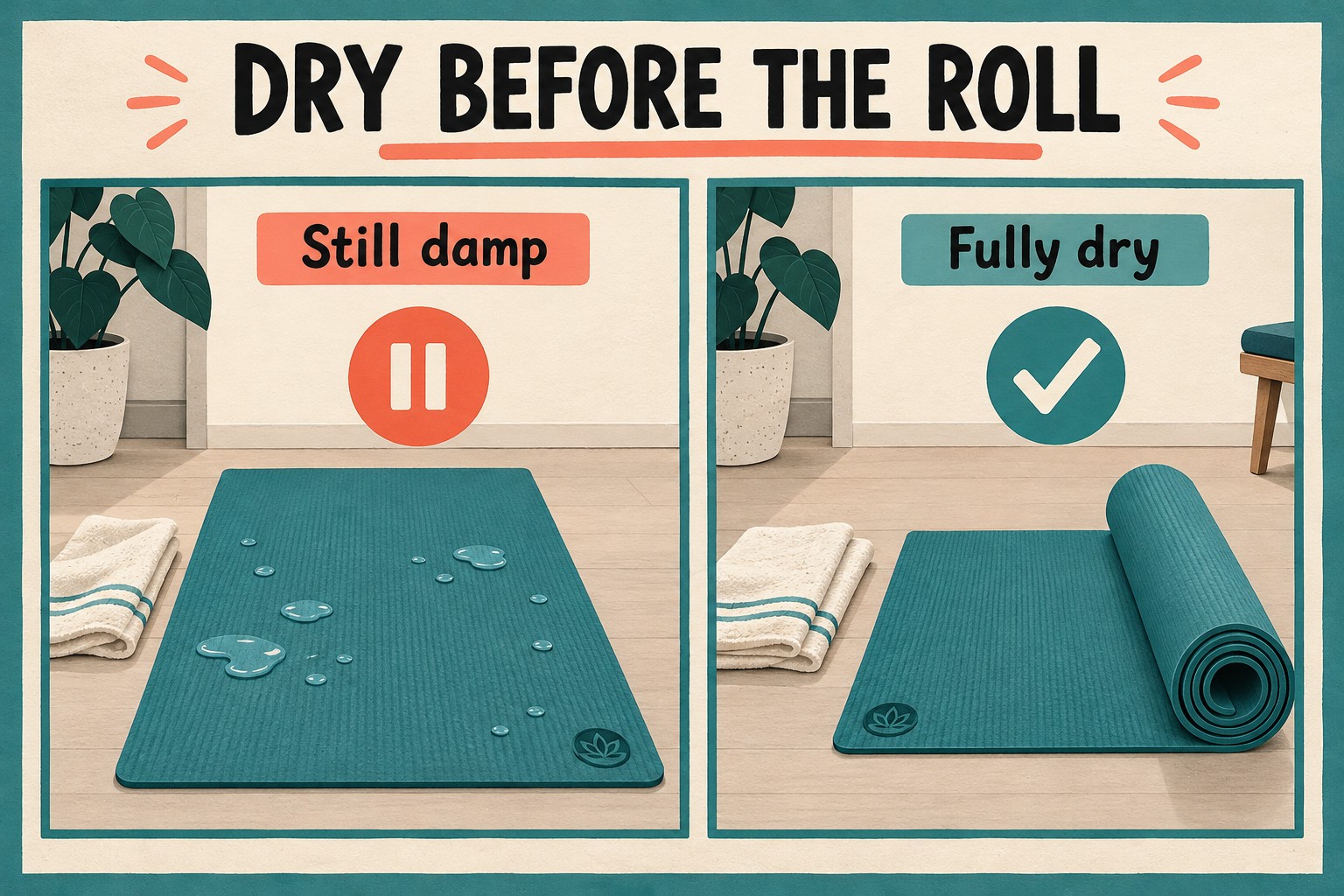
- Leave it open for the specified drying process. Do not put it straight back into a tight roll or sleeve to tidy the room.
- Check before storing. Inspect both accessible sides and edges for remaining moisture. If still damp, continue the permitted drying method and check again. An illustration or elapsed timer cannot prove the real mat is dry.
Do not invent a universal drying time: the product, the cleaning method and the room differ. JadeYoga also cautions against direct sunlight; its advice about airing out natural rubber is another reminder that “put it outside” is not a universal shortcut.
Use a status note when someone else might roll it up
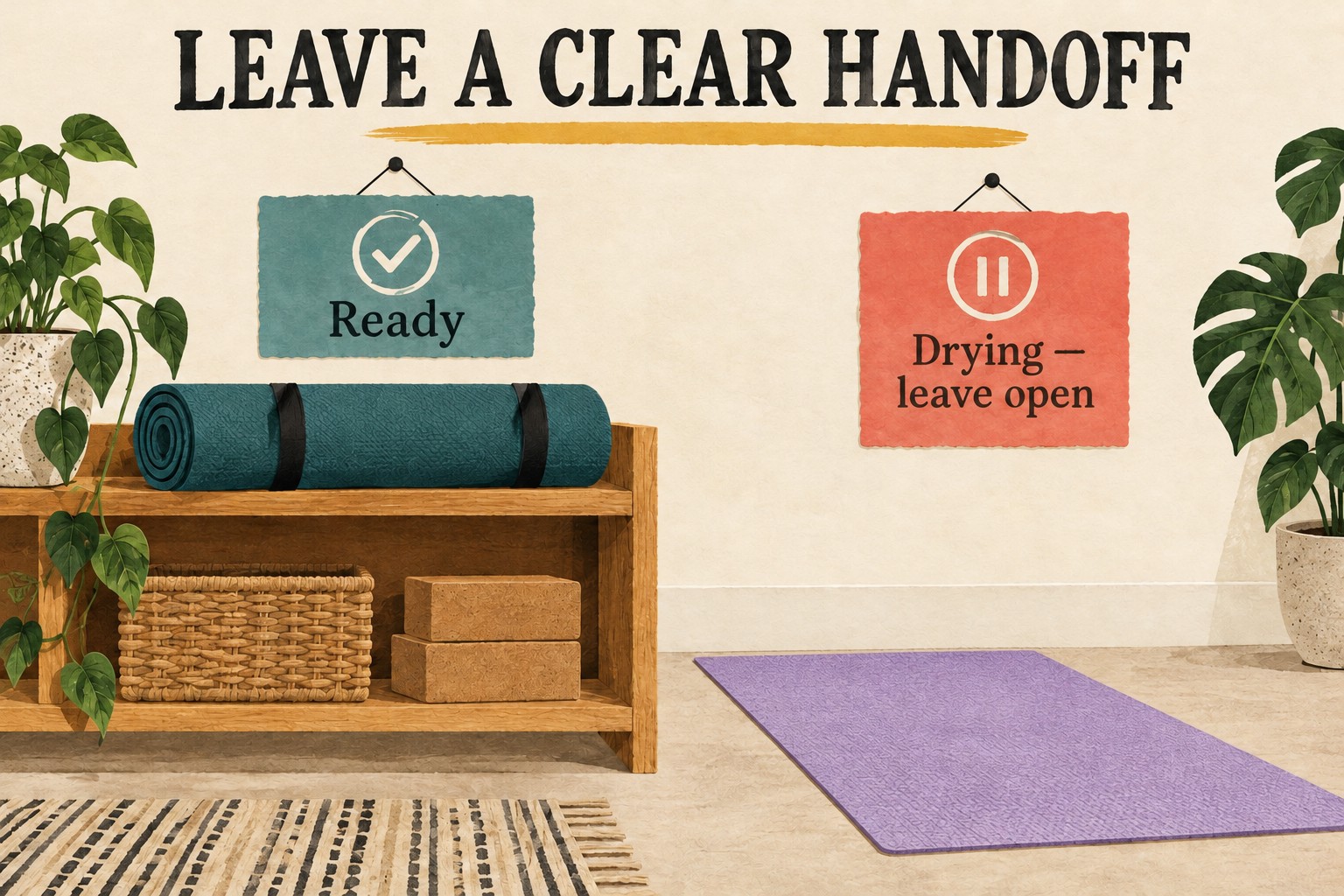
For a shared home, the most useful note may be only two words: “Still drying.” Put it near the mat without attaching adhesive to its surface. Use this simple handoff:
| State | What to write | Next action |
|---|---|---|
| Method unresolved | Model or care instruction still needed | Keep cleaning products off the mat until clarified |
| Drying | Care step finished; leave open | Recheck moisture before rolling or bagging |
| Ready to store | Dryness checked; storage instructions followed | Return the mat and its separately cared-for accessories |
This is a household reminder, not a cleanliness certificate. If a mark remains, record it and check the maker’s guidance instead of running through stronger products. A completed routine does not promise a like-new finish.
The next-use check
Before the next session, check that the mat is dry, lies as expected and has no unexplained slippery residue or new surface damage. If something changed, stop using it and resolve the care question with the manufacturer. Keep the card with the product link so the next cleaning starts with instructions rather than another search for a recipe.
If you are organizing the cloths and supplies around this routine, the cleaning-caddy checklist can help you assemble only what the task requires. Keep mat-specific instructions with the mat, even when the supplies share a shelf.