To choose a rug size, decide which furniture feet should sit on it, measure that footprint, and compare it with the product’s stated dimensions. Then check the room in use: pulled-out chairs, opening doors and your normal walking route. A rectangle that fits on the floor can still be the wrong rug.
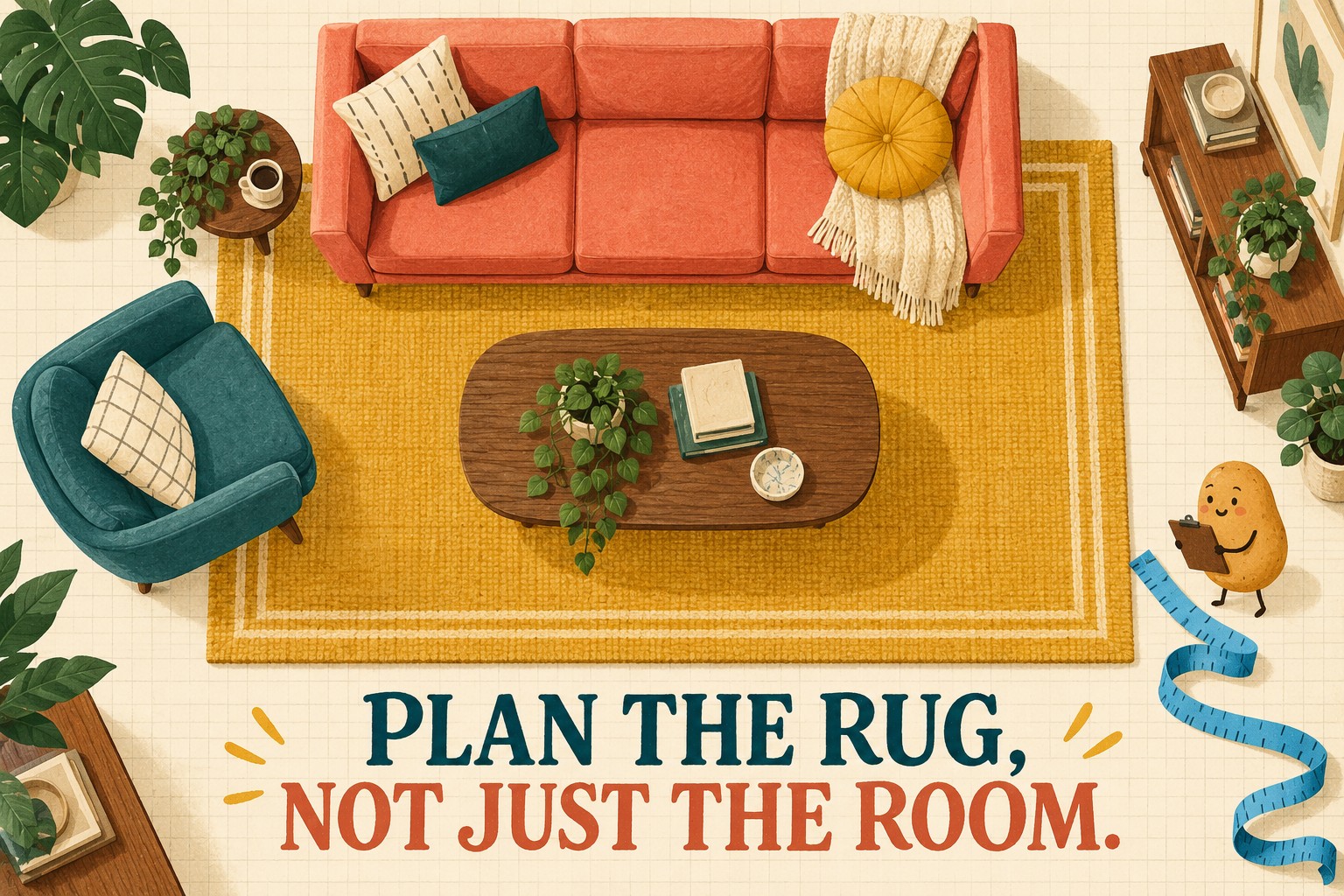
A room photo sells the mood. It does not tell you whether your dining chair will perform a tiny cliff dive every time you stand up. Use this planning record before ordering, especially when two neighboring sizes both look plausible.
Choose the job before choosing the rectangle
Write one sentence describing what the rug must do: “connect the sofa and two armchairs,” “stay beneath the dining chairs while people get up,” or “cover the bedside landing area without blocking the storage drawer.” This is your acceptance condition, not a universal decorating rule.
IKEA’s size guide relates living-room rug placement to the furniture arrangement, and calls for enough dining coverage that pulled-out chairs do not catch the edges. Ruggable’s guide likewise starts living-room placement from the furniture rather than assuming the room’s center is the right location. Treat their example layouts as starting points, not measurements of your home.
- Seating area: choose front-feet overlap or full-furniture coverage, then include the chairs you actually use.
- Dining area: plan for the table configuration and chair positions you intend to use, including an extension if that matters.
- Bedside or hallway: name the uncovered floor you want to improve, then list nearby doors, drawers and thresholds.
Measure a candidate footprint, not just the room
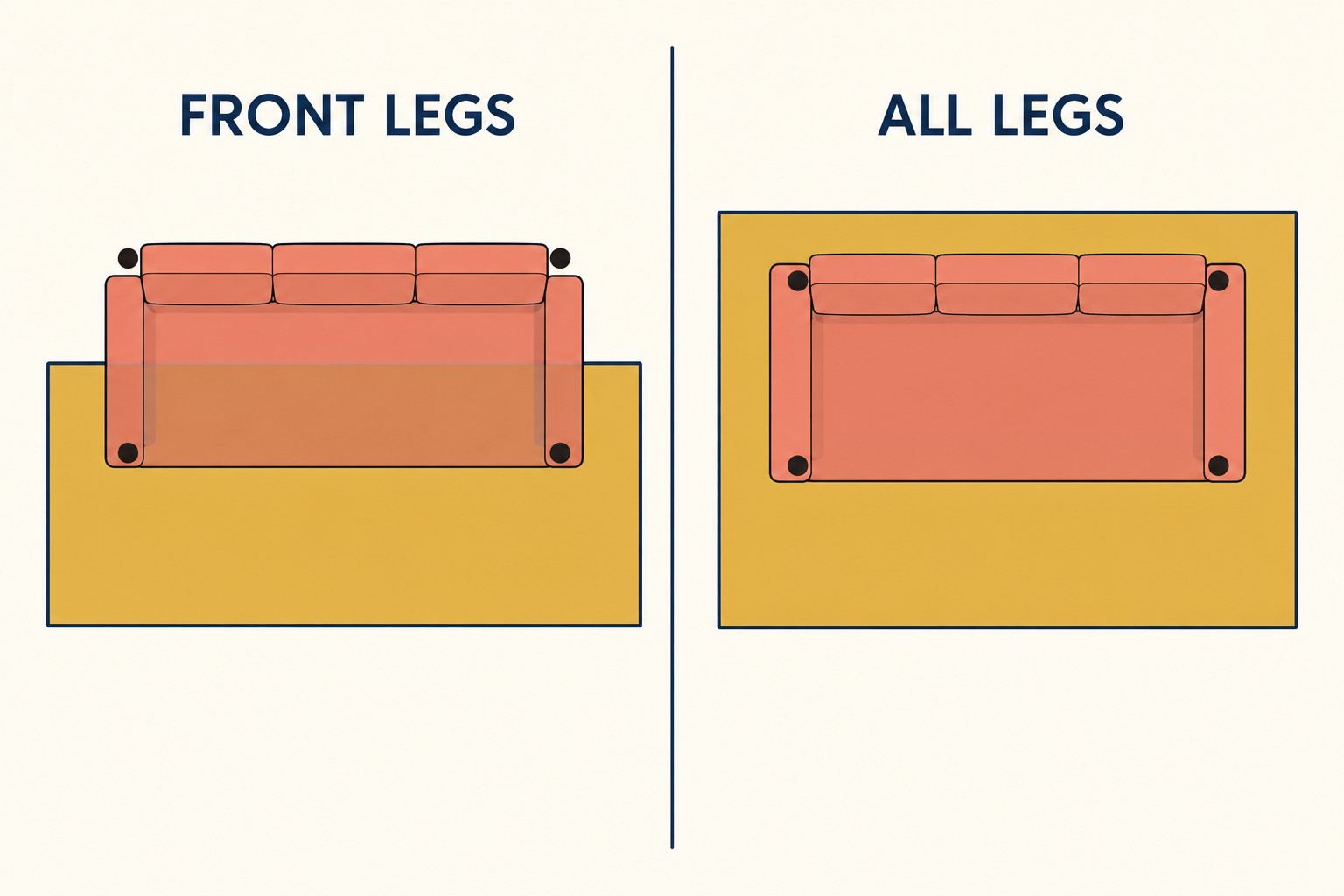
- Set the furniture first. Use the arrangement you plan to keep. A rug chosen around a temporary sofa position inherits that temporary decision.
- Choose an orientation. Mark which rug dimension runs along the sofa or table. “Long side along the window” is clearer than an unlabeled pair of numbers.
- Record two dimensions in one unit. Use centimeters throughout or inches throughout. Copy the actual listed dimensions of each candidate; a size-family label is not a substitute for the specification.
- Check each edge. Record what happens at the left, right, near and far edges: furniture feet, wall, doorway, cabinet or open floor.
- Sketch before buying. A rough plan with furniture blocks and dimensions is enough. It does not need to win an architecture prize.
For a floor preview, use only a removable marking method suitable for your floor finish. Test any tape in an inconspicuous place according to its instructions, or keep the plan on paper if marking the floor is unsuitable. Remove loose markers after the check; do not leave paper or cords across a walking route. Ruggable’s runner guide suggests previewing the intended footprint and separately checking whether doors can clear the combined rug and pad height.
Use the chairs, doors and drawers as the second test
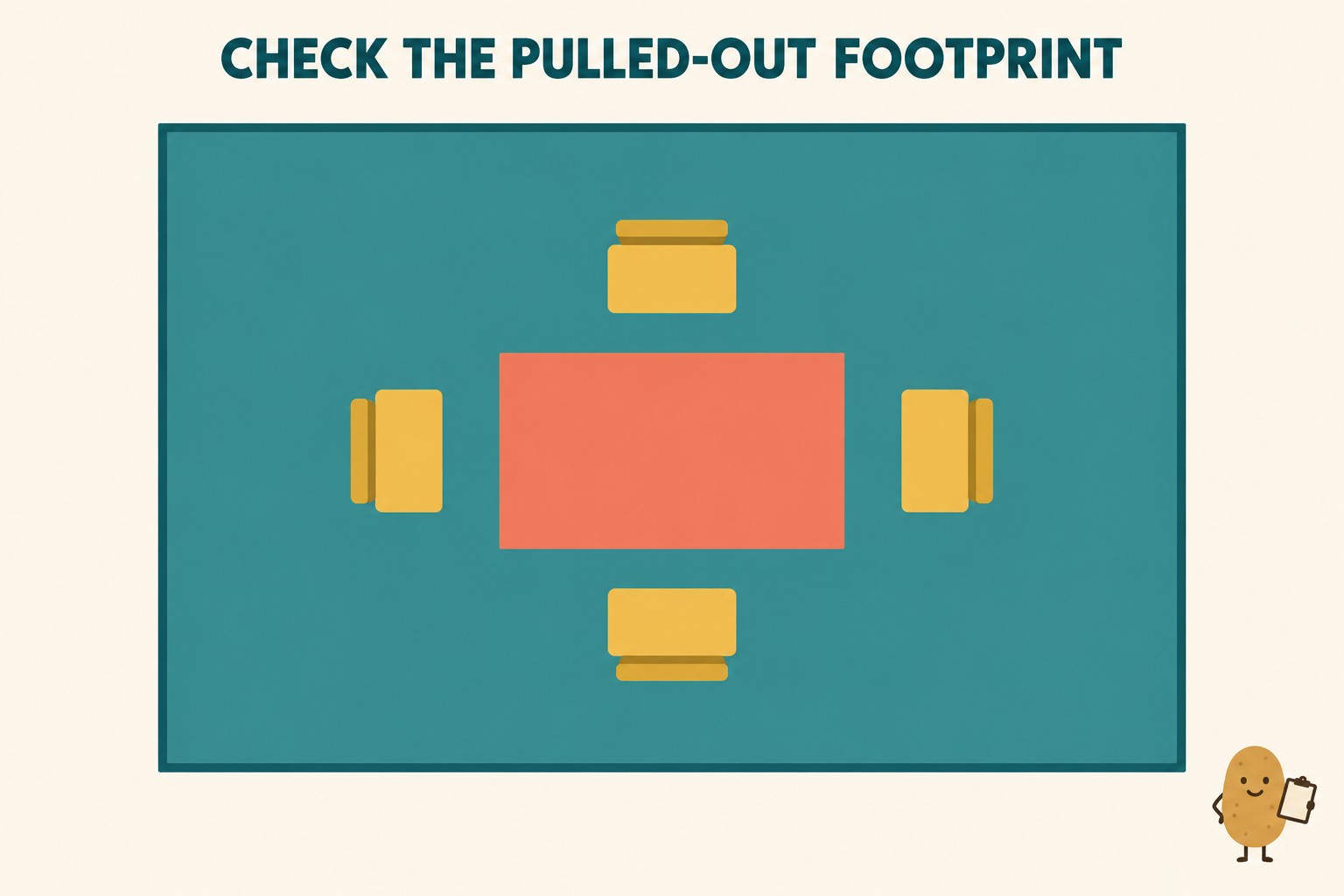
For dining, pull each chair out to the position used to sit down and stand up. Observe the outermost chair feet, not just the seat or table edge. Repeat at the ends of the table, where space may be different. If the table extends, either test that arrangement too or write clearly that the rug is being selected only for its everyday configuration.
Hypothetical arithmetic, not a recommended rug size: a table is 160 × 90 cm. Your observed chair-foot envelope reaches 60 cm beyond each end and 55 cm beyond each side. The envelope is 160 + 60 + 60 = 280 cm long and 90 + 55 + 55 = 200 cm wide. A 200 × 300 cm candidate could contain that measured rectangle when oriented correctly, but one dimension sits exactly at the envelope boundary. It still needs a physical placement check and whatever extra room your actual chair movement requires. A calculation is not a comfort or clearance guarantee.
If the required footprint conflicts with a doorway or the room’s usable space, do not quietly erase that conflict by buying the smaller size. Change the furniture arrangement, reconsider the rug’s job, or skip the rug there. A recorded “does not fit this layout” is a useful result.
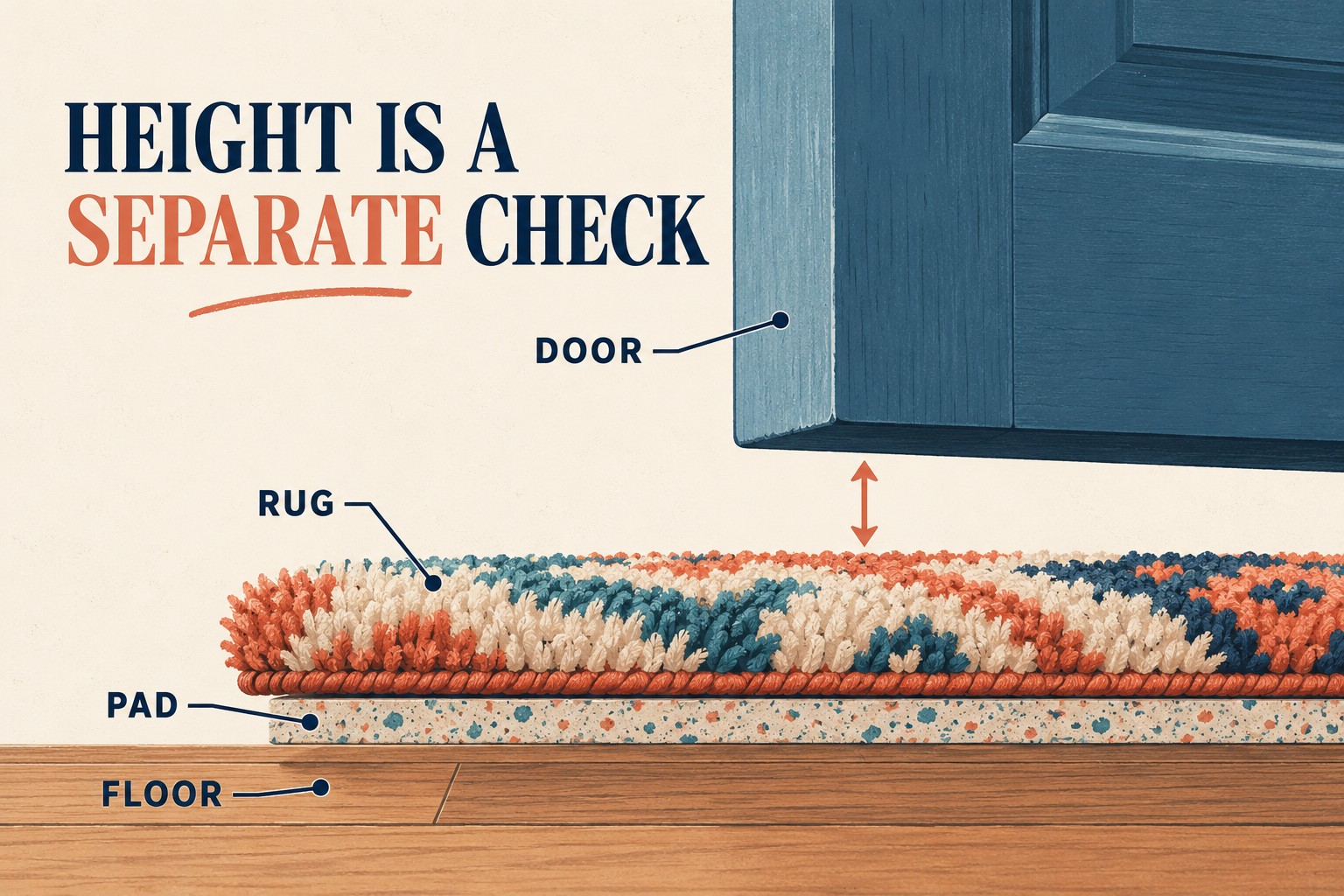
Open nearby doors and drawers through the range you use. A paper outline only tests floor area: it cannot prove clearance over a real rug. Look up the selected rug and underlay specifications together. If clearance is close, ask the seller about the exact combination or inspect a suitable sample before treating it as solved. Do not force a door across a rug that rubs or bunches.
Copy this two-candidate fit record

This is an original comparison worksheet. Fill it with your measurements and the seller’s product details, not the dimensions pictured in an inspiration photo.
| Check | Candidate A | Candidate B |
|---|---|---|
| Product and specification link | _____ | _____ |
| Listed dimensions and unit | _____ | _____ |
| Orientation in the room | _____ | _____ |
| Furniture feet intended on the rug | _____ | _____ |
| Observed footprint / edge conflicts | _____ | _____ |
| Chairs tested in intended configuration | _____ / not applicable | _____ / not applicable |
| Rug plus pad height; door/drawer check | _____ / still unknown | _____ / still unknown |
| Floor-compatible backing or pad confirmed | _____ / ask seller | _____ / ask seller |
| Total price including required pad and delivery | _____ | _____ |
| Return window, costs and packaging requirements checked | _____ | _____ |
| Decision and unresolved question | Keep / remeasure / skip: _____ | Keep / remeasure / skip: _____ |
“Unknown” is not a failed product, but it is unfinished shopping. Resolve the unknown that could change your choice before comparing colors for the seventh time.
Finish with an arrival check
Before ordering, save the product specifications and your completed record. After arrival, compare the received dimensions and intended placement with that record, following the seller’s unpacking and care instructions. Recheck moving furniture and doors with the actual rug and any specified pad. Retain packaging as required by the seller’s return instructions until you have decided to keep it. This guide does not establish any particular seller’s return entitlement or deadline.
If a furniture change is part of the same room refresh, use the furniture delivery route checklist separately: a rug footprint and a sofa’s route through the doorway answer different questions.
Bottom line: buy against a written use condition and a checked footprint. The best candidate is the one that works with your furniture and moving parts, not the one whose size label sounds most familiar.