Before packing a museum day bag, check three separate rules: what may enter the building, what may go into the galleries, and what the cloakroom will accept. Pack for the strictest stop on your itinerary, and arrange another place for luggage if storage is uncertain. A cloakroom sign is not a promise that your suitcase can come inside.
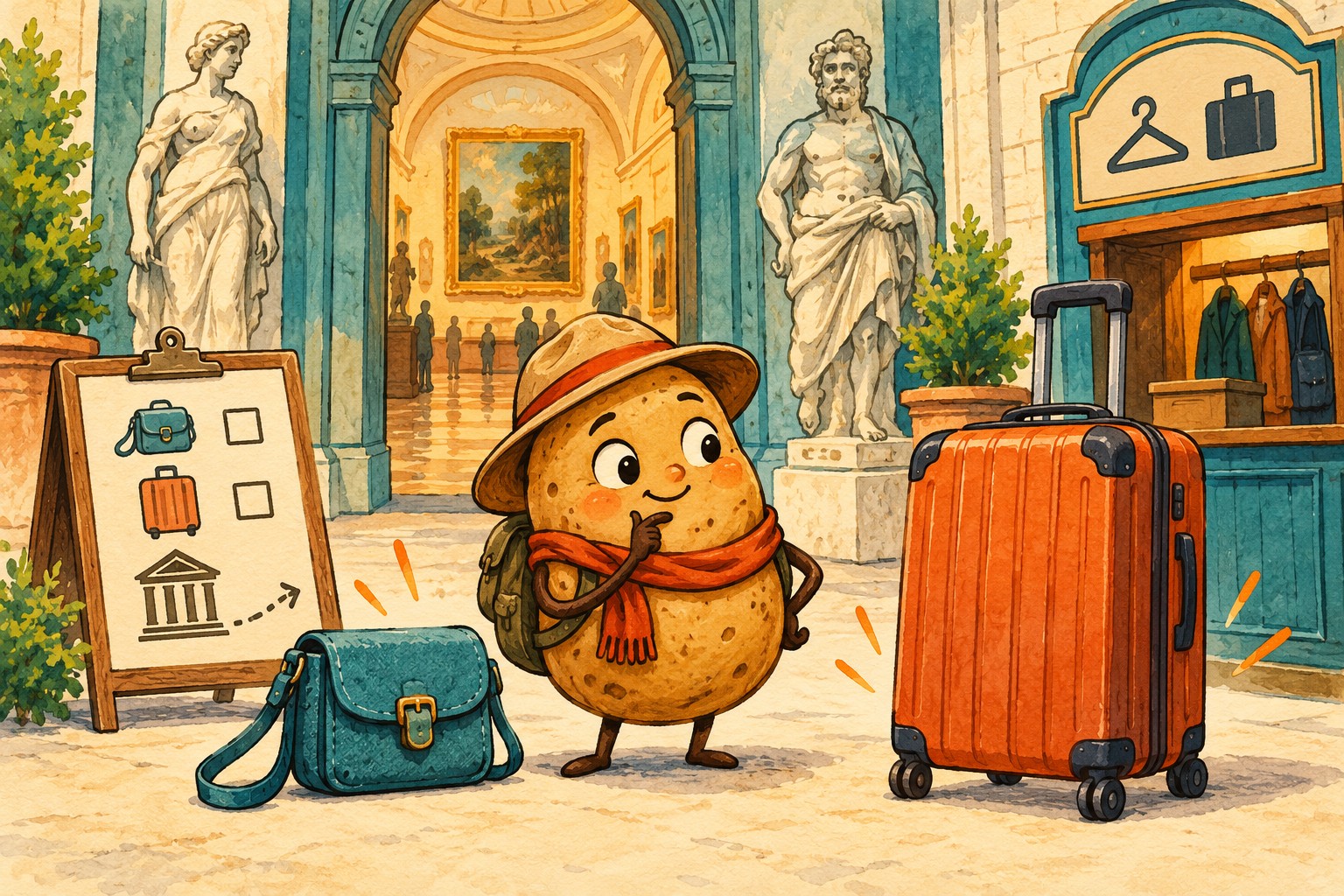
The awkward moment is discovering a bag rule with your ticket in one hand and your entire weekend in the other. This guide turns the official policy into a small packing decision, rather than a longer shopping list. It is a planning method, not a guarantee of admission or storage.
Separate entry, gallery access and storage
Use the museum’s own visitor and facilities pages for the exact location and exhibition you plan to visit. Search results can send you to a different branch, a study room or an unofficial guide. A bag that fits a locker may still be prohibited at the entrance; a bag allowed through security may need to be checked before an exhibition.
For example, London’s National Gallery lists a building bag limit of 56 × 25 × 45 cm, excludes wheeled luggage and suitcases, and says backpacks and large bags must be left in a cloakroom before paid exhibitions. Its cloakroom has the same published size limit and may refuse items. These are distinct checks, not one universal “museum bag size.” See the official National Gallery bag and cloakroom policy, checked October 11, 2026.
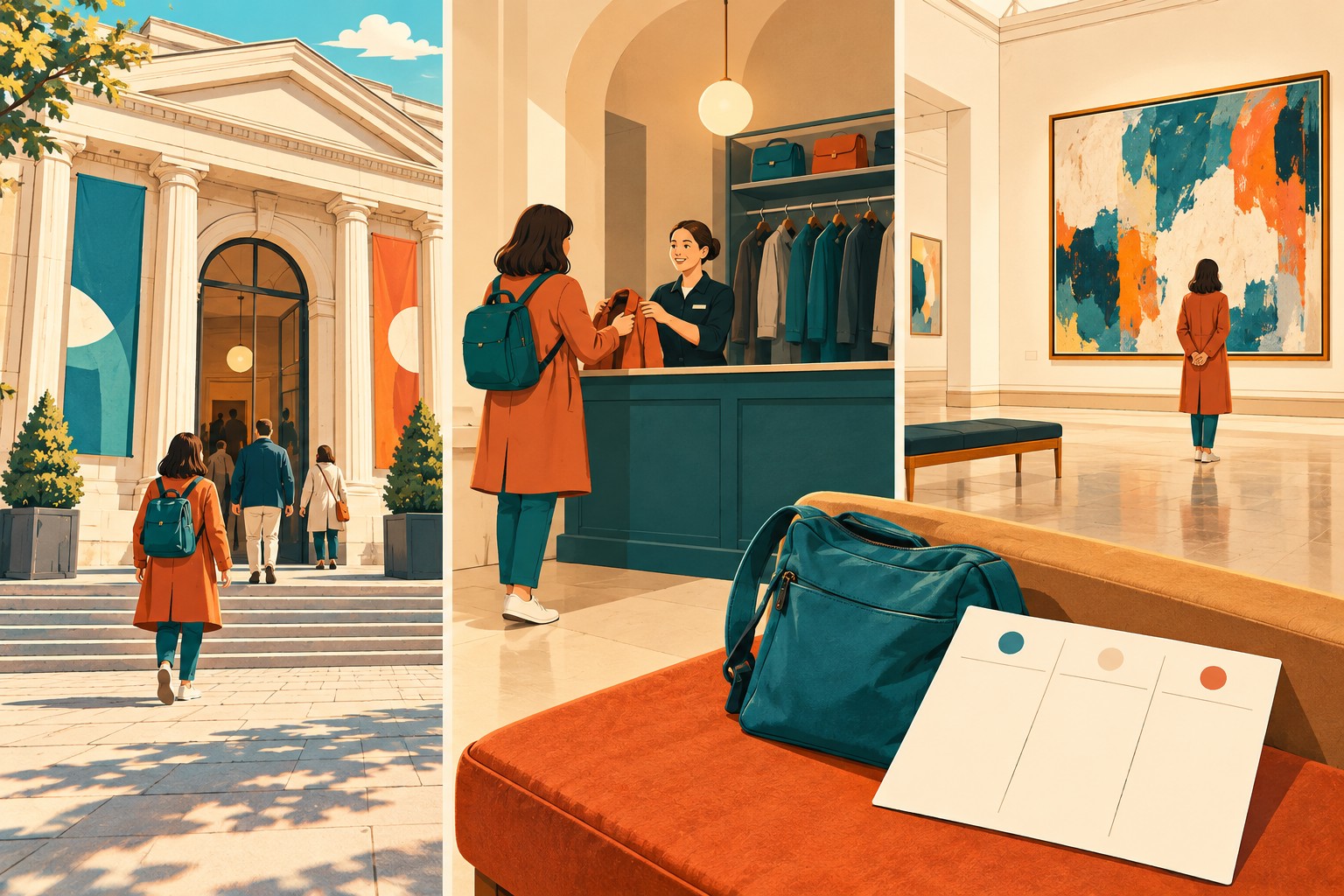
At V&A South Kensington, the published gallery restriction sends wheeled luggage and bags larger than 56 × 45 × 21 cm to the cloakroom. The same FAQ says Young V&A has very limited locker availability. Those statements concern different venues: do not transfer one location’s storage arrangement to another. Check the V&A visiting FAQ and the linked facilities page again before travel. These examples were checked October 11, 2026; policies can change.
Measure the bag you will actually carry
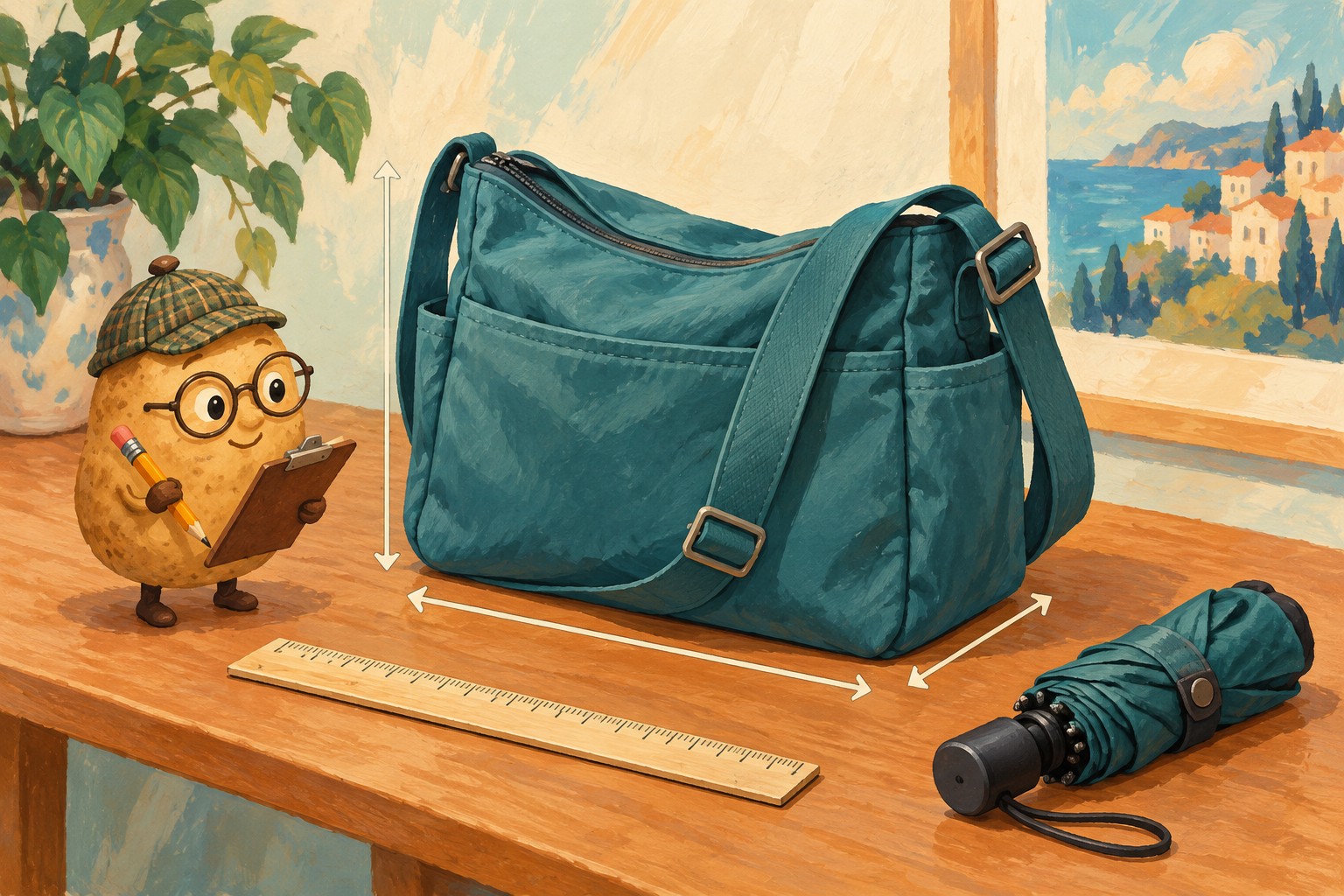
- Put the intended contents in the bag and close it normally. An empty soft bag is a poor stand-in for a stuffed one.
- Record its three outside dimensions, plus wheels or other protrusions where relevant. Keep the venue’s dimension labels and order; ask the venue if its wording is unclear.
- Check prohibited bag types separately. A small wheeled case does not become acceptable merely because its dimensions fit a stated limit.
- Check each booked exhibition as well as the general building policy. Mark unanswered questions as unknown rather than assuming yes.
This measurement routine is an organizing aid. Staff inspection, specific item restrictions and accessibility arrangements remain separate. For essential medical or baby-care equipment, consult the venue’s stated exceptions or contact its access team before reducing what you need.
Copy this one-stop bag record
Make one record per museum or branch. Record what the policy actually says, including “not stated”; do not fill gaps with another museum’s rules.
| Field | Your note |
|---|---|
| Exact venue and exhibition | Location, visit date and ticket time: ____ |
| Packed bag | Type and outside dimensions: ____ |
| Building entry | Size, prohibited types and relevant exceptions: ____ |
| Gallery access | Carry method, check-in requirements and special exhibition rules: ____ |
| Storage | Accepted items, limits, cost, availability and collection deadline: ____ |
| Keep with you | Permitted essentials you need while the main bag is stored: ____ |
| If storage is unavailable | Confirmed alternative and return route: ____ |
| Evidence | Official page, date checked and unresolved question: ____ |
For a multi-stop day, underline any row where one stop differs. Do not assume you can leave a bag at one museum while visiting another; ask about permitted use and collection timing. Allow time to retrieve it before the next journey.
Keep the handover small and deliberate
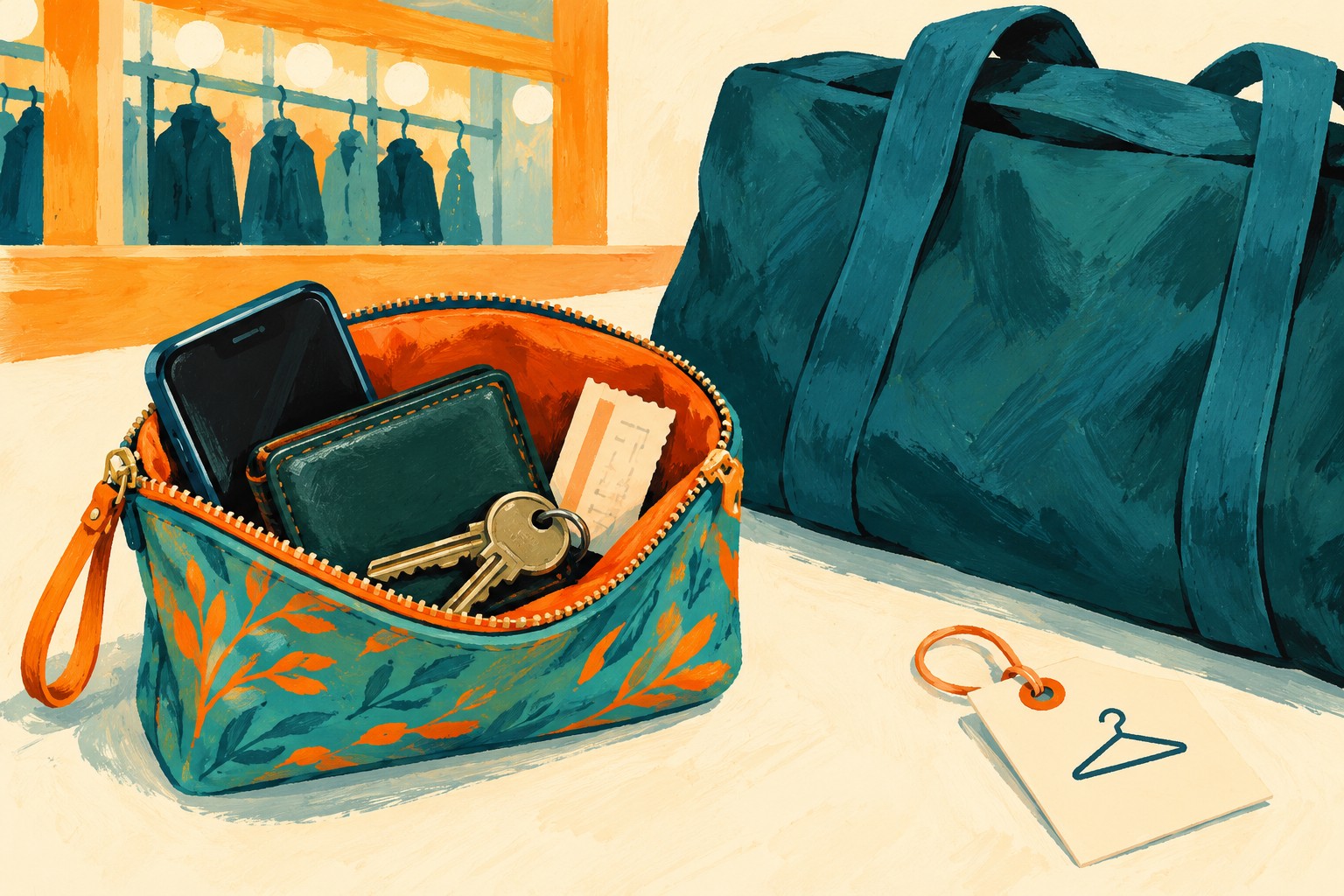
Before handing over a bag, check that you have the permitted items you need: ticket or booking details, phone, payment method, keys and the eventual claim token. A small inner pouch can make this less fiddly, but it still has to comply with the venue’s rules. Do not leave valuables in storage when the museum tells you not to; follow its specific guidance.
Carrying style can matter too. Washington, DC’s National Gallery of Art says bags must be carried at the side or front, with stated exceptions for baby bags and medical devices or supplies. Its policy also distinguishes items that must be checked from items that are not permitted. Read the official guidelines and policies rather than treating a backpack worn on the front as universal permission.
A departure-day example
Hypothetical plan: you check out of your accommodation, visit a gallery and then catch a train. You have a rolling suitcase and a small shoulder bag. The gallery excludes suitcases. Your decision is already made at the entry row: finding its cloakroom opening time will not solve that restriction.
Ask the accommodation whether it can hold your suitcase, or investigate another luggage-storage option. Confirm that it accepts your bag, its opening and collection times, price and location before building the route around it. Then pack the permitted day bag, keep the collection details accessible and allow for the return trip. If no workable option is confirmed, change the visit order or leave that museum for another day.
For a second stop with limited lockers, plan as though a locker might be unavailable. That means carrying a bag permitted in the relevant spaces, using a confirmed alternative, or changing the plan. It does not mean leaving luggage unattended outside.
The final doorway check
- Is this the right museum branch and exhibition policy?
- Does the packed bag meet both the size and bag-type rules?
- Can you explain where each item will go during the visit?
- Have you kept necessary permitted essentials with you?
- Do you know when and where to collect stored items?
- If storage is full or refused, is there a workable alternative?
If this is also your checkout day, use the hotel checkout room sweep and bag-count checklist before leaving. The museum plan begins with knowing which bags are actually coming with you.