A suitcase can be easy to recognize and still be difficult to describe. At home, you know which black roller is yours. At a baggage desk, you may need its brand, a clear photo, a contact number and the receipt belonging to that exact bag.
This luggage identification checklist creates a small record before airport handoff: contact details on and inside the bag, a recognizable mark, a useful photo and a matching airline tag number. It takes ordinary stationery and your phone. It cannot guarantee that a bag will arrive, but it gives you specific information to use if you need help.
Your reusable personal tag carries contact details; the airline’s current routing label identifies the bag for its journey; the claim receipt is the matching record you keep with you.
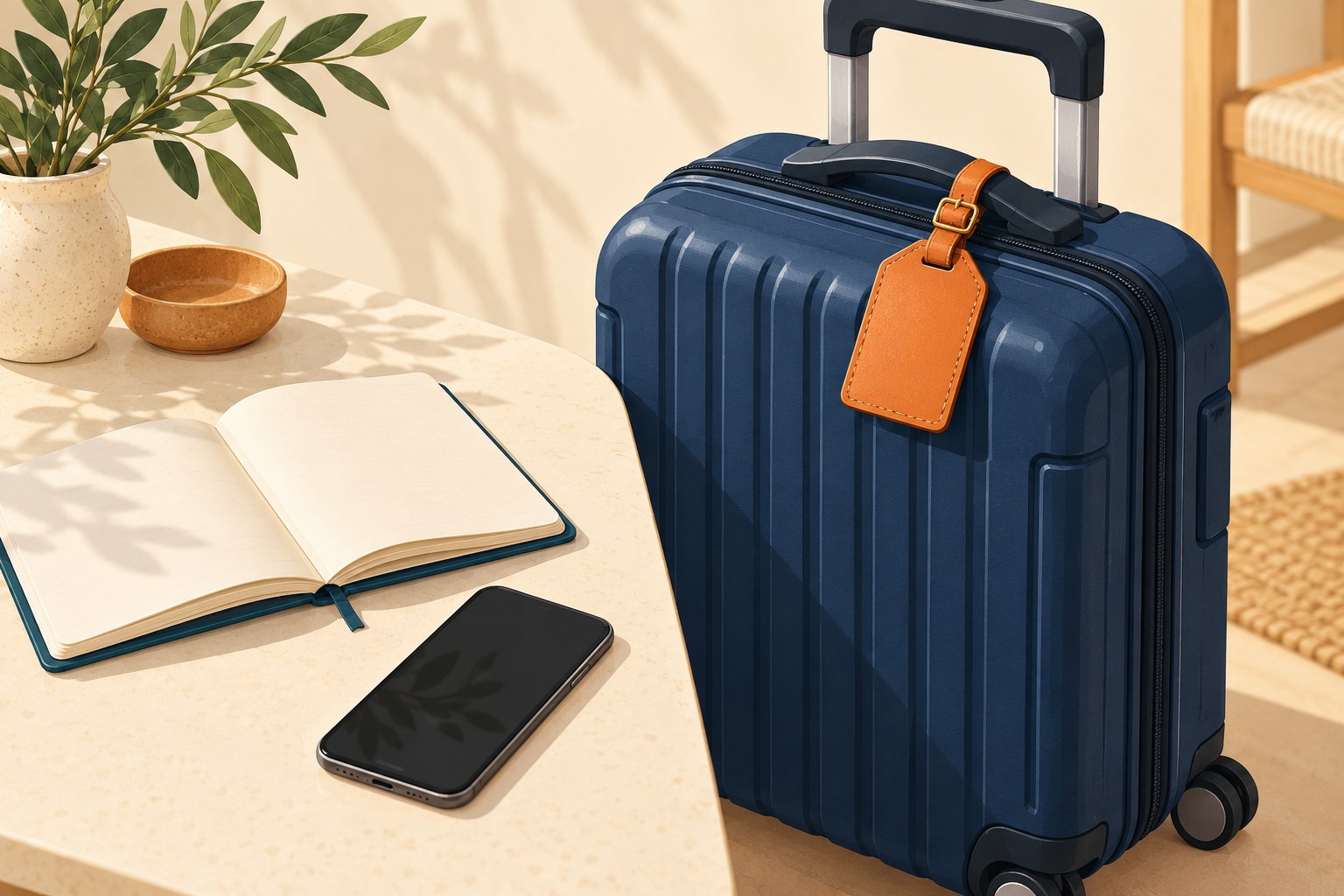
Give each bag its own record
Start a private phone note for the trip. Give every bag a short working name such as “navy roller” or “green duffel.” Add a separate entry for each one, even if they belong to the same traveler.
Leave a space for the airline tag number, which you will receive at check-in. That blank is important: a photograph of two bags beside two loose receipts does not tell you which receipt belongs to which bag. You will complete the pairing while the bags are still identifiable.
Write contact details that work during the trip
Check an existing luggage tag rather than assuming it is current. A practical starting point is your name, a mobile number with country code and an email address you can access while away. Follow your airline’s instructions if it requests additional information. Delta requires outside personal identification on checked bags and recommends identification inside as a backup.
Write legibly, check the fastening and make sure the insert is still readable. If your tag has a cover, check underneath it too. A cover limits casual visibility; it does not make the information private.
For this basic contact card, leave out passport numbers, identification-document copies and other unnecessary details. You can provide an appropriate delivery address directly to the airline if needed. Avoid turning the exterior tag into a display of your full travel schedule.
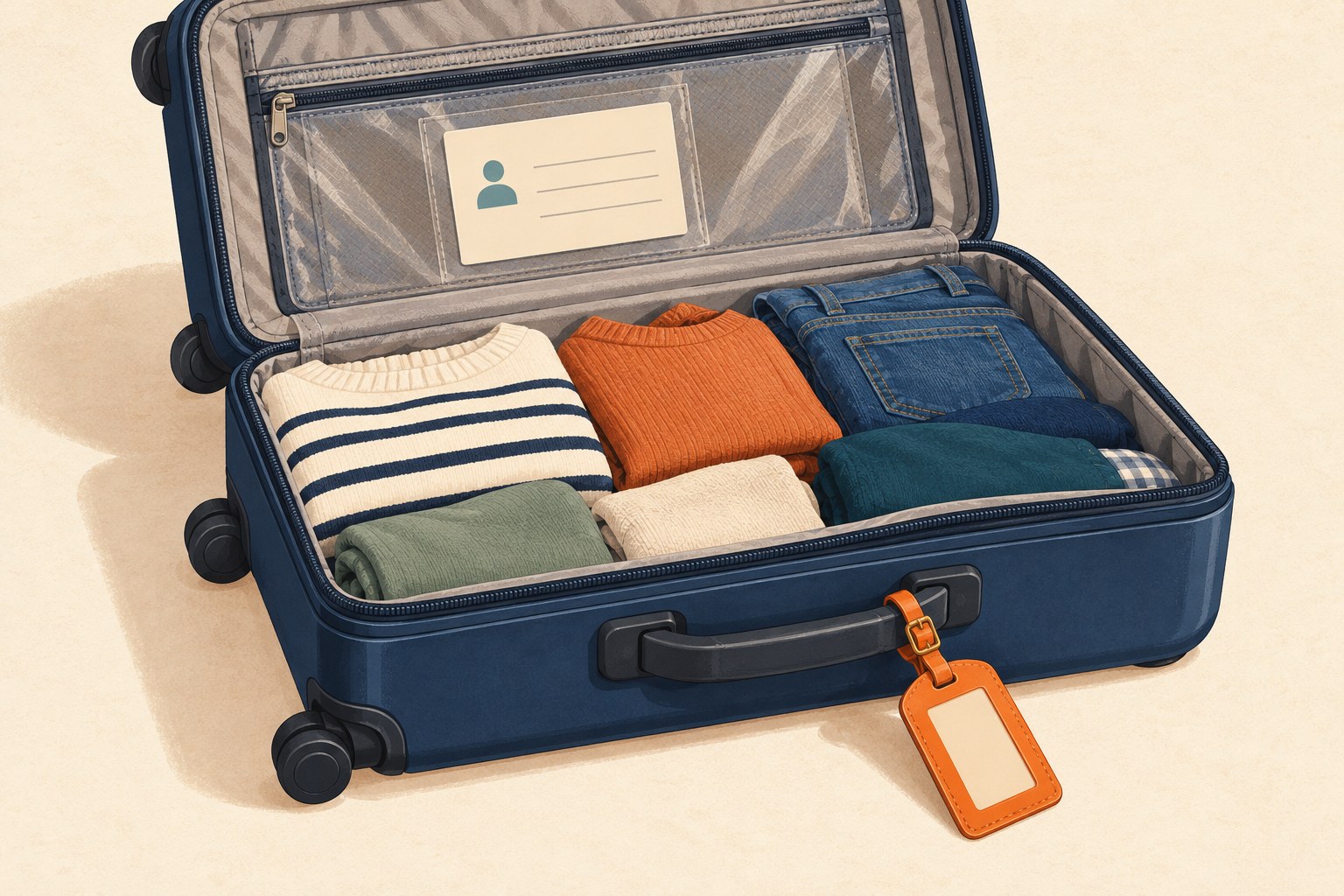
Put the same contact card inside
Place a second card where someone opening the main compartment can find it without unpacking everything, such as a clear interior pocket. Keep it separate from the detachable exterior tag. Check that both copies agree, particularly after changing phone numbers or borrowing a suitcase.
Copy this simple card and fill in the brackets:
Luggage contact card
Name: [traveler name]
Mobile, including country code: [number]
Email checked during this trip: [address]
Please contact me if this bag is found.
The inside card helps identify the owner if outside identification is missing. Keep the bag record and original claim receipt with you.
Choose a mark you can describe in one sentence
Use an existing feature or add a simple, securely attached distinguishing mark that suits the bag: a flat orange patch, a contrasting handle wrap or a recognizable sticker. Keep airline labels and barcodes clear.
Be specific about placement. “Orange triangle beside the side handle” is more useful than “orange sticker.” If two companions have matching cases, give them different marks. Check the bag itself before adding anything: a striped pocket or contrasting zipper may already provide a clear description.
The mark is a recognition aid. At collection, still check the identification label before leaving with a similar-looking bag.
Photograph the bag you are actually checking
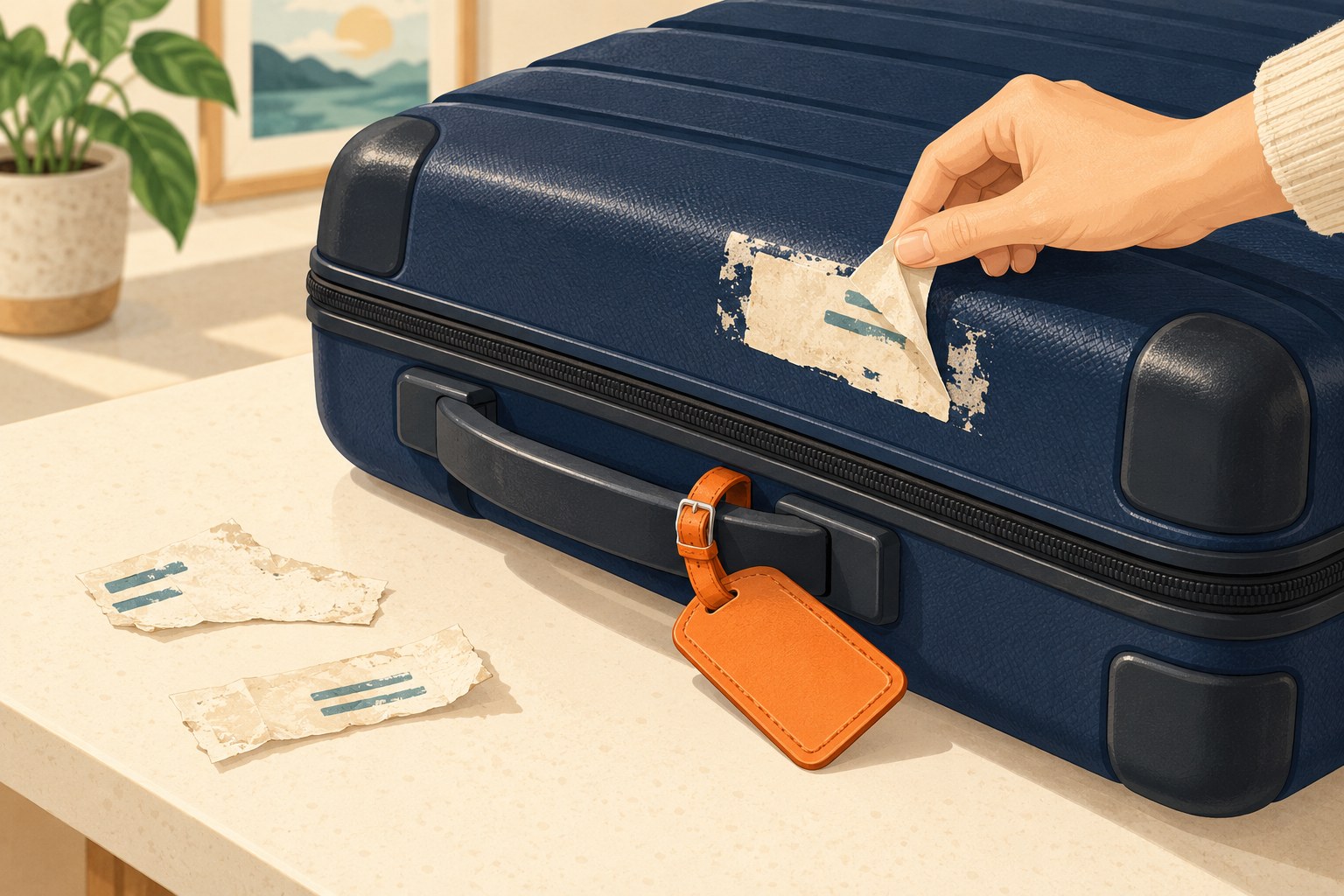
First, clear away obsolete airline labels from completed trips. London Gatwick recommends removing old baggage tags, previous airline stickers and old barcode labels. Keep your current personal contact tag. Once the airline adds the labels for this journey, leave those in place; ask staff if you are unsure which labels are current.
Take a clear photo after fitting the tag and identifying mark. Include the whole bag, its handles and wheels, then add a second view if the useful feature is hidden. Review the image immediately; a blurred picture is easy to replace while the suitcase is beside you.
Singapore Airlines recommends photographing baggage to help identify it at the carousel and assist its team if it is misplaced. Keep the image in your trip note or an easy-to-find album, and check that it opens without a connection.
Add a short written description. Heathrow asks travelers reporting missing bags for details including size, shape, color, brand and luggage-tag information. Use those categories to describe what you can actually see. “Brand unknown” is better than a guess.
Private bag record
Bag nickname: [one name per bag]
Type, color and approximate size: [description]
Brand, if known: [name]
Distinctive feature and location: [description]
Current photos: [saved here]
Airline tag number: [add at handoff]
Claim receipt: [photo plus where the original is kept]
Complete the pairing at airport handoff
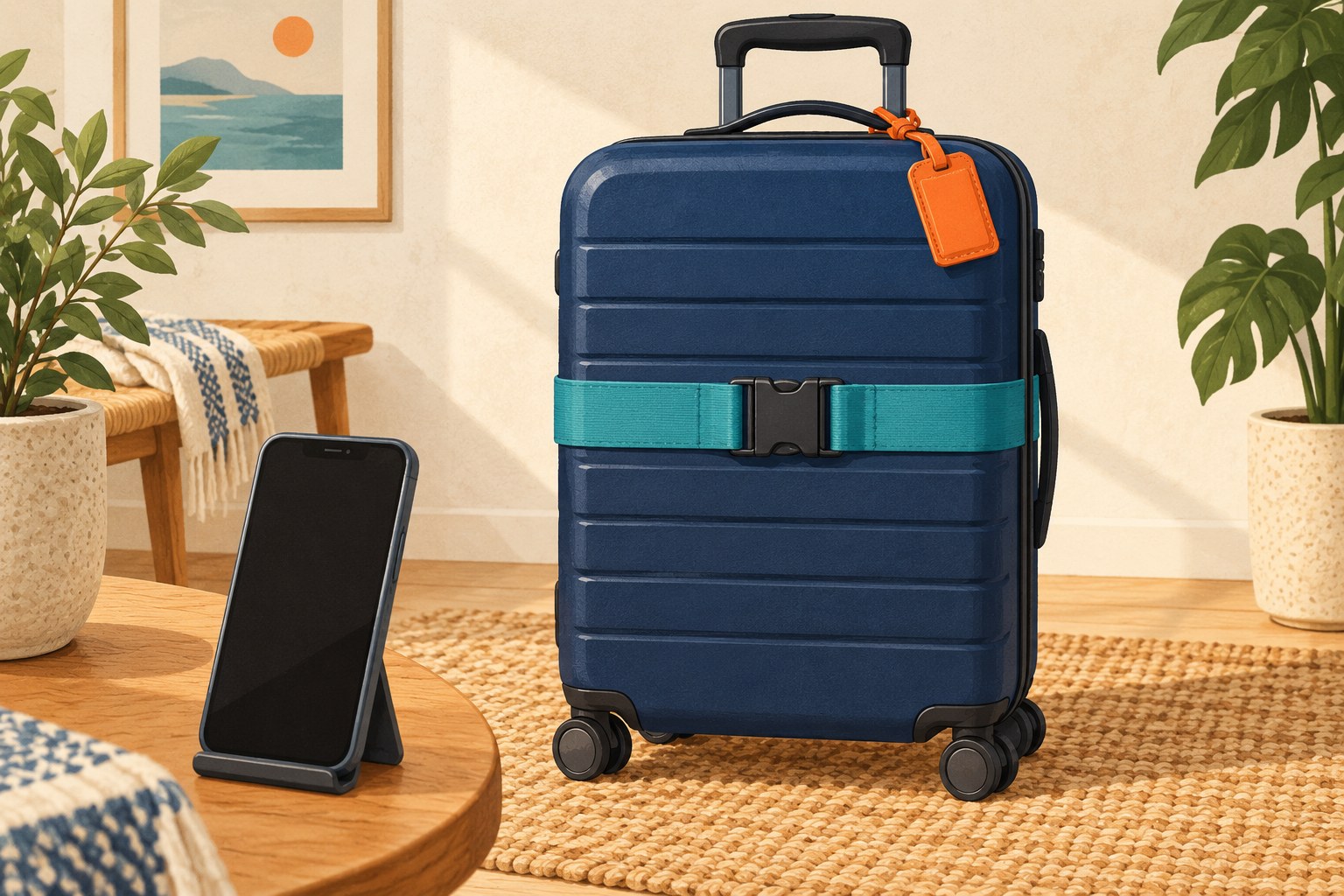
When the airline label is attached, check the destination and any passenger name printed on it. Air New Zealand advises checking the printed destination, because that shows where the bag has been checked through to. If your trip has a connection, ask where you must next collect the bag; do not infer the collection instructions from the airport code alone.
Match the tag number on each bag with its corresponding claim receipt while you can still see them. If the printing or process is unclear, ask the agent to help. Record the number beside that bag’s description and photograph the receipt legibly. Keep the original with your travel documents.
This bag-by-bag check is a practical organization step, not a replacement for the airline’s procedure. If a carry-on is collected at the gate, ask what receipt or identification you should keep and where you will collect it.
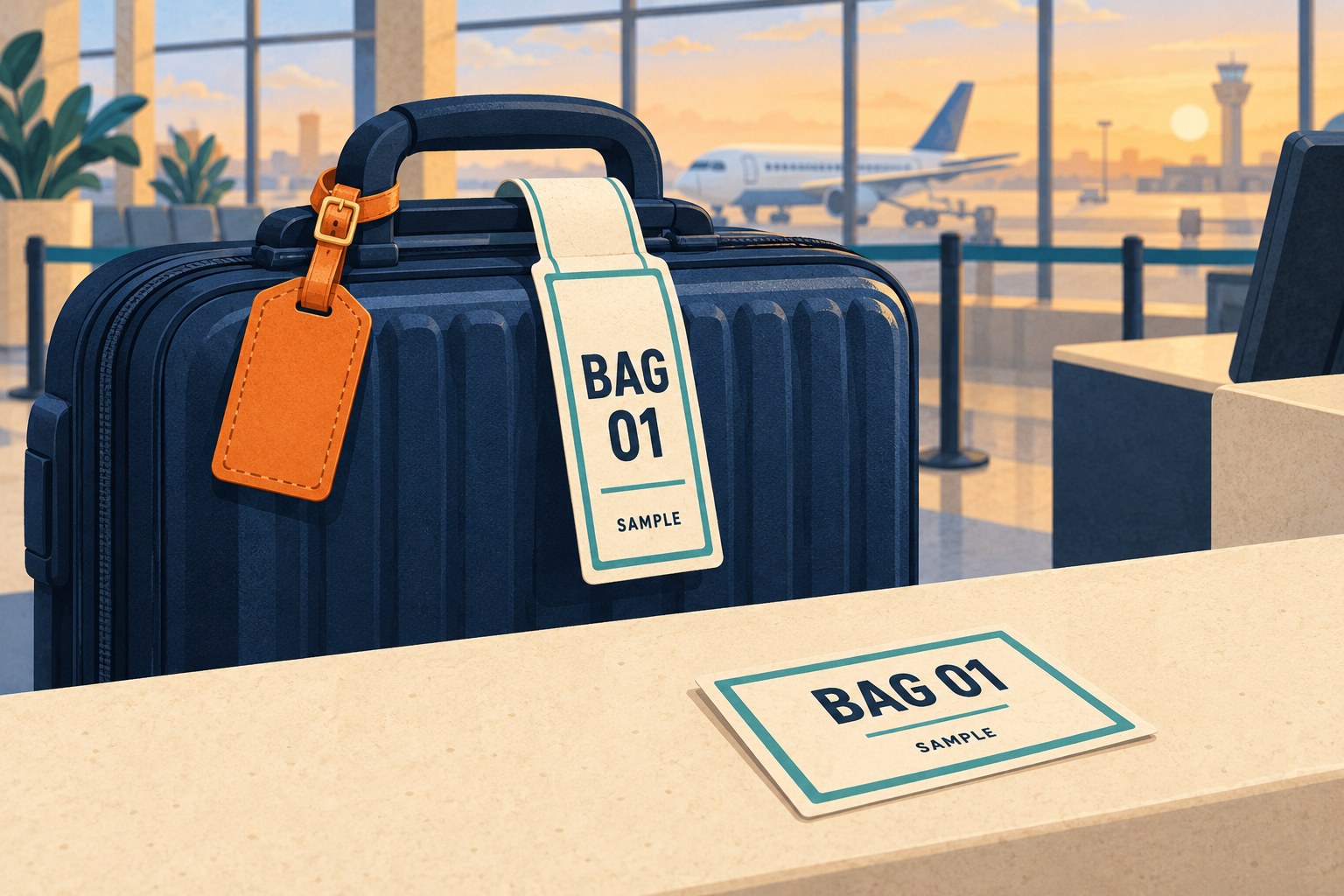
A worked example: two similar rollers
Imagine Alex and Morgan checking two navy suitcases. This is a fictional example. Alex’s bag has a flat orange triangle beside the side handle; Morgan’s has a gray front pocket. Each bag contains its owner’s current contact card.
Their private note has two entries: “Alex, navy hard-shell roller, four wheels, orange triangle” and “Morgan, navy fabric roller, two wheels, gray front pocket.” They photograph each separately.
At check-in, they read each attached tag and save its full number beside the correct entry. Later, if only Morgan’s bag appears, they can open Alex’s record immediately. They have a description, photo and matching receipt without guessing which number belongs to the absent suitcase.
The final luggage identification checklist
- Outside contact details are current, readable and securely attached.
- The same contact card is easy to find inside.
- Each bag has a describable distinguishing feature.
- Obsolete routing labels are removed; current photos and a description open on your phone.
- The airline label’s destination and any printed passenger name have been checked.
- Each claim receipt is paired with the correct bag record.
- Original receipts stay with you, and collection instructions are clear.
If a checked bag does not arrive, use the airline’s official baggage-help channel and have the record ready. Heathrow recommends reporting the issue before leaving baggage reclaim when possible. The useful outcome of this preparation is simple: you can explain exactly which bag you need help finding.