Before cleaning a baseball cap, answer three separate questions: can this cap get wet, can it be immersed, and can it go in a washing machine? Permission for one does not establish the others.
Use the cap's label and exact product instructions to choose a route, then keep a short record of its construction, dirty areas and drying plan. This guide offers a decision card, not a universal soak recipe.
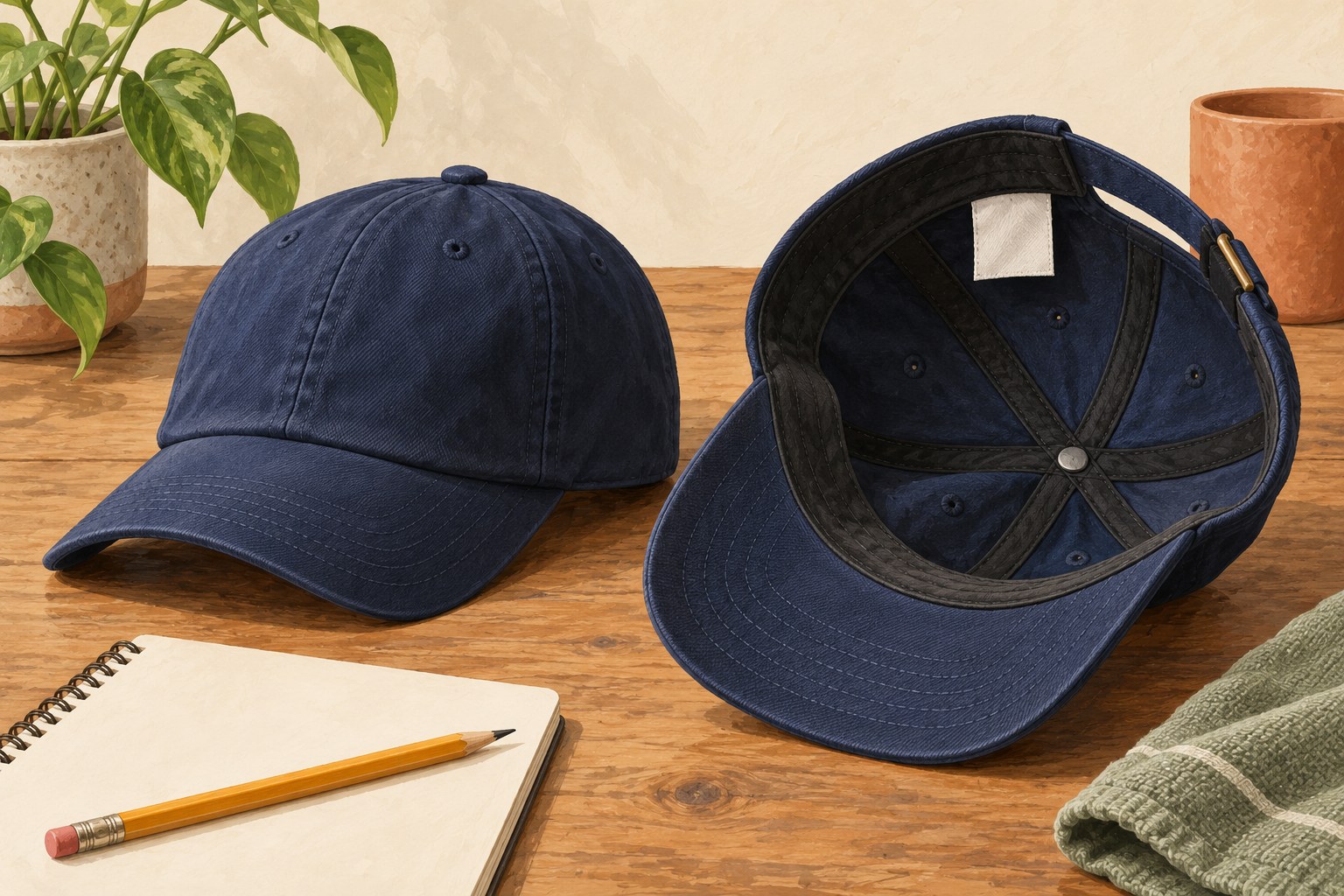
Start with this cap, not just its fabric
Find the brand, model or style number and readable care label. Check your order history if necessary. Photograph the label, the crown from the side and the brim's existing curve. Those photos make a useful reference; they do not prove the cap will keep its shape.
Manufacturer directions differ. These examples were checked on October 8, 2026:
| Source and scope | Published direction | What to record |
|---|---|---|
| Carhartt's general caps guidance | Cold hand washing; no bleach. The page says to check the item's care label first. | The label's method and any model-specific exceptions. |
| Patagonia P-6 Logo Trucker Hat, style 38289 | Cold gentle machine wash, line dry, no bleach or ironing. | This named model permits machine washing; that is not permission for every trucker hat. |
| New Era EU cap-care guide | Localized cleaning; avoid full soaking, especially for structured crowns or cardboard brims; avoid machine washing. | A structured shape can require a different route from a washable fabric alone. |
These are documentation examples, not products tested for this article. Match your version and market. If the label and the current webpage disagree, ask the manufacturer before using the disputed treatment.
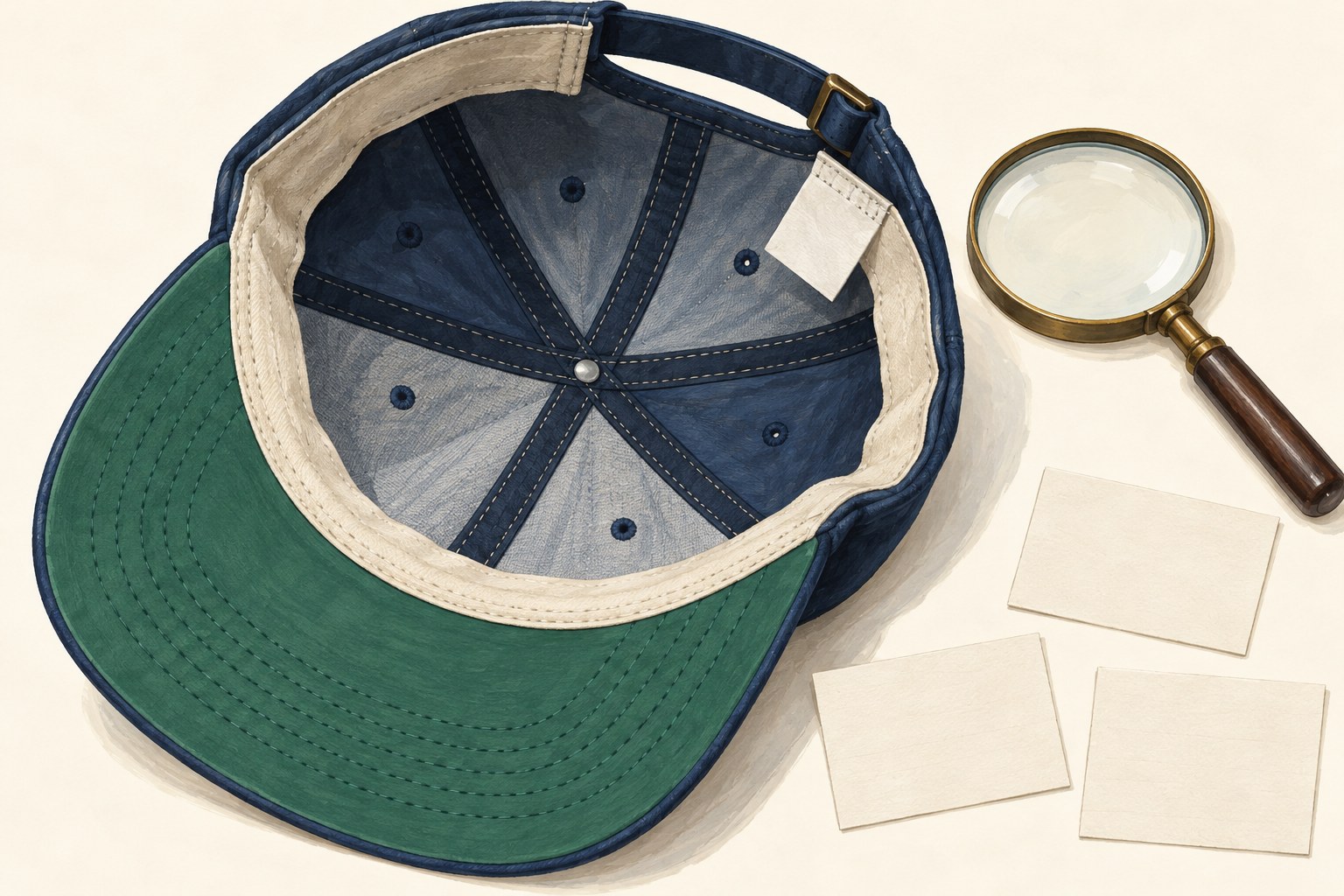
Make a wetting-permission card
Copy this original template into a note. Write “unknown” where evidence is missing instead of silently turning it into a yes.
- Cap brand / model / identifying photo: ______
- Care label photo / exact source link: ______
- Allowed route: surface care / spot clean / hand wash / machine wash / specialist care / unknown
- Full immersion explicitly covered? ______
- Water temperature / cleaner / cycle, if applicable: ______
- Brim insert documented as / source: ______
- Structured crown, mesh, patches or special trim: ______
- Dirty area: loose dust / sweatband / one mark / widespread dirt
- Existing wear and shape reference: ______
- Permitted drying method / support / location: ______
- Unanswered question before starting: ______
- After drying: inside checked / shape checked / next action: ______
The brim insert deserves its own line. Nike's cap-cleaning guide distinguishes cardboard bills, which should not be submerged, from washable cloth-covered caps with plastic inserts. A cotton label describes fabric; it does not identify everything inside the bill. Treat an undocumented insert as unresolved rather than diagnosing it from the cap's age or a tapping sound.
Choose the smallest permitted cleaning job
Locate the dirt before choosing equipment. A dusty crown, a soiled sweatband and a single mark need separate observations even when they belong to one cap.
| What you know | Next step | Do not assume |
|---|---|---|
| Only local cleaning is permitted. | Work on the identified area using the maker's local-cleaning directions. | That a longer soak will improve the result safely. |
| Hand washing is permitted. | Follow that cap's temperature, cleaner and wetting instructions. | That hand washing authorizes overnight immersion. |
| The exact model permits machine washing. | Copy its cycle and drying instructions onto the card. | That a protective cap cage overrides any restrictions. |
| The label is missing or construction is unresolved. | Our conservative recommendation: gently remove loose surface dust, then ask the maker before wet cleaning. | That every unknown cap contains cardboard, or that every newer cap is washable. |
| Specialist care is specified. | Use that route and disclose the trim or construction concern. | That a general cotton-cap tutorial covers it. |
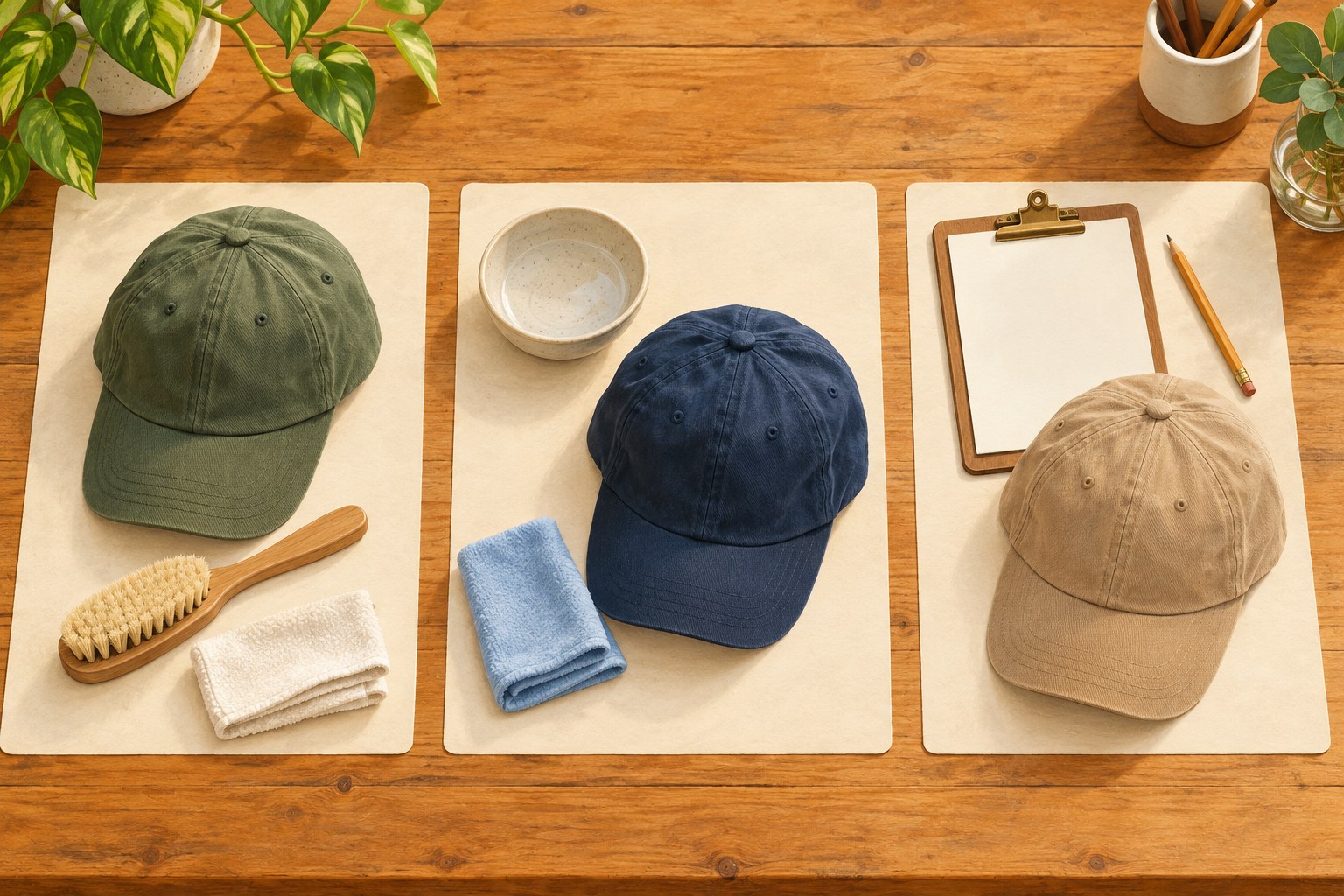
Do not choose a method by counting how many tutorials recommend it. The useful question is whether the instructions actually cover your cap. A remaining mark is a reason to reassess the permitted treatment, not automatically increase heat, scrubbing or soaking time.
Give the sweatband its own check
New Era Australia's cloth-and-sponge guidance focuses on the sweatband after removing superficial dust. Its route uses diluted mild detergent on a soft sponge, followed by wiping or patting with a cloth and air drying. Follow the relevant instructions for your cap rather than combining that method with an unrelated stain-removal recipe.
Before starting, note whether the inner band or the outer crown is the actual problem. Keep decorative patches, embroidery and mesh visible while working. As a practical precaution, stop if color transfers, trim loosens or fabric visibly changes; record what happened before trying anything stronger.
Prepare the drying place before adding water
Nike describes blotting excess water with a towel and supporting a washable cap's crown with a balled towel for air drying. It warns that dryer heat can affect shape and cause shrinkage. New Era EU describes natural drying over a bowl or cap shaper. Use support only when appropriate to your cap, without forcing it over an oversized object.
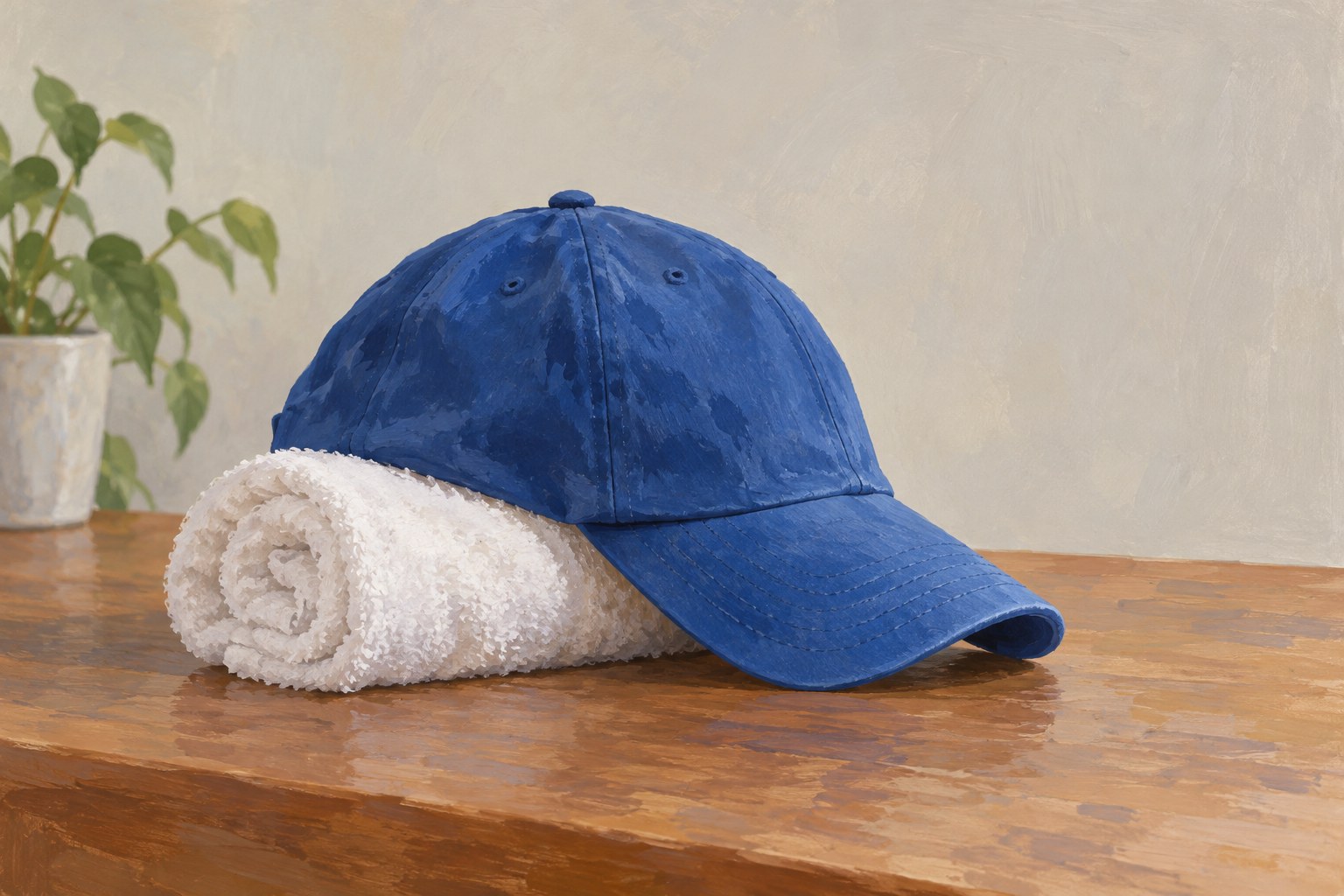
Record drying permission separately from washing permission. The Patagonia model above specifies line drying. New Era Australia's guide says to dry away from sunlight and heat and check that the interior and exterior are free of moisture. Do not add an improvised hot-air finish to hurry the job.
Close the card after it is dry
Check the crown interior and sweatband as well as the visible outside. Compare the profile with your starting photo without claiming a precise shrinkage measurement. Look for a persistent mark, changed brim curve, lifted trim or a seam needing attention.
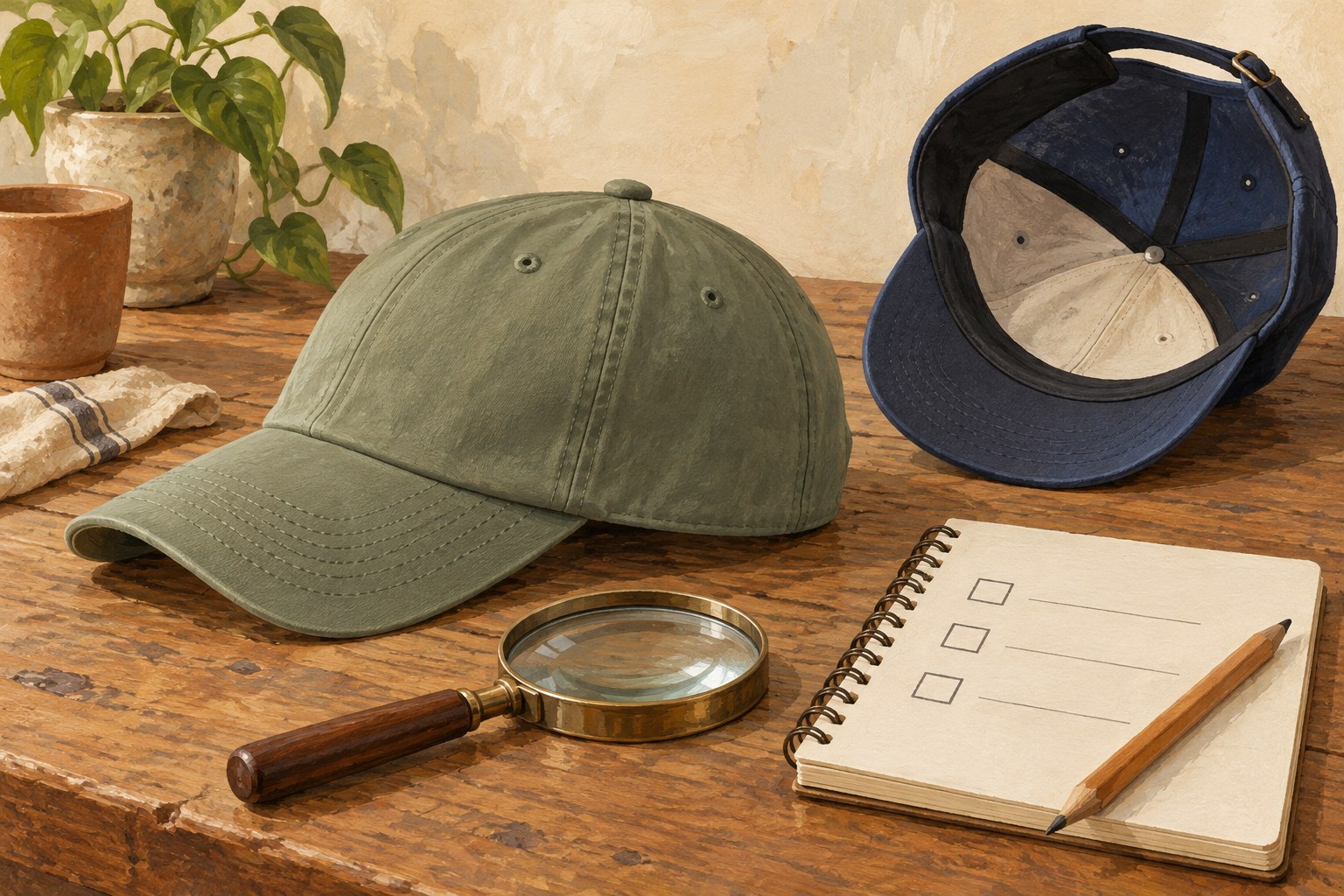
Finish the note with an observation and a next action: “sweatband still damp; continue permitted drying,” “mark remains; ask about this stain,” or “drying and condition checks complete; store.” These are example entries, not results from a physical cleaning test.
Keep the care link with the cap's identity. The next cleaning starts with a known route and an honest record of what remains uncertain.