A shower curtain and its liner share a rod, but they may need completely different cleaning. Before taking them down, identify each piece and decide how it will be cleaned, dried and returned to its hooks.
This guide covers an ordinary bathtub setup with a decorative outer curtain, a separate liner and removable hooks or rings. The worksheet also has a place for parts you must leave fitted. Follow the exact product instructions for built-in rings, snap-in liners and other designs.
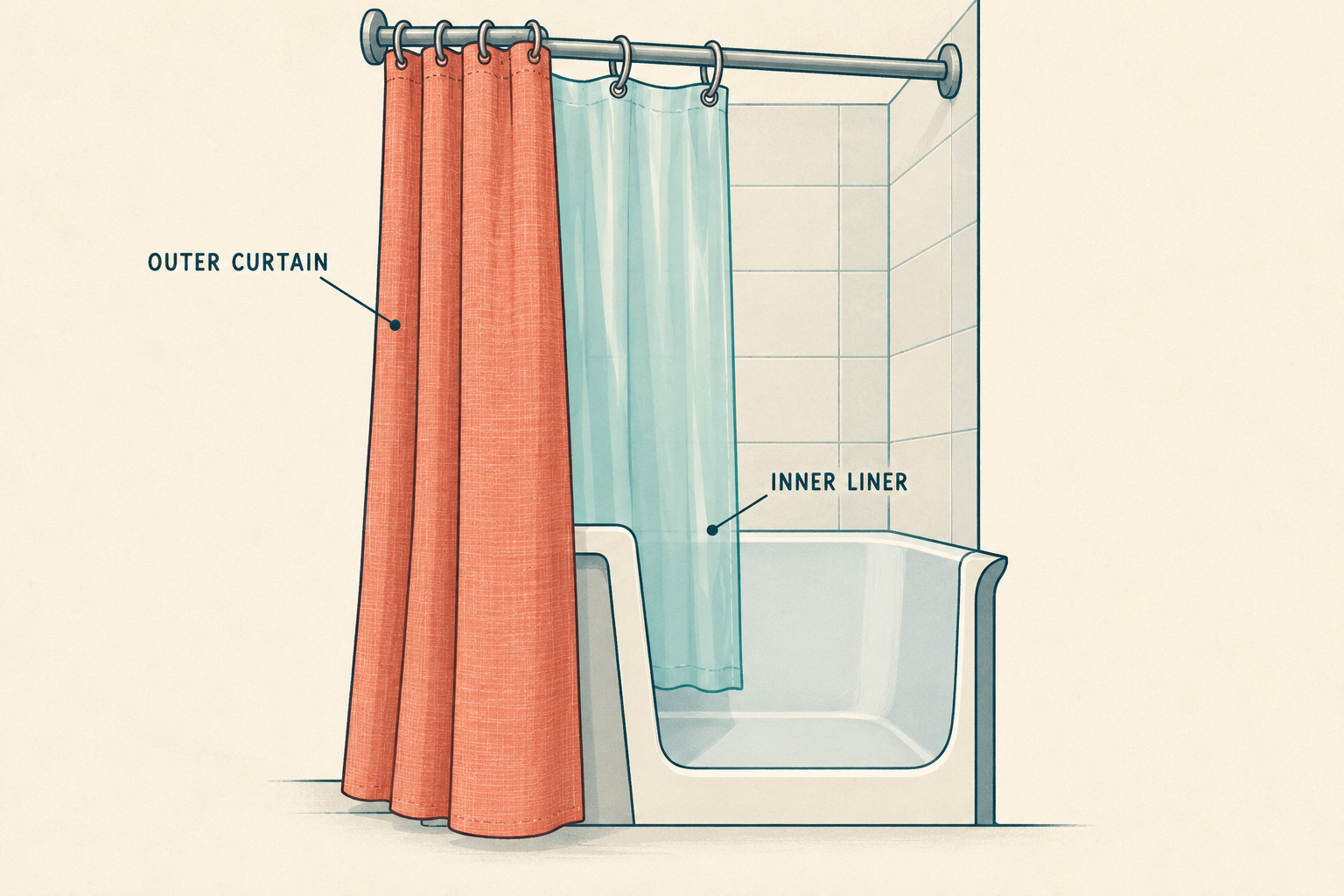
Identify both layers before choosing a method
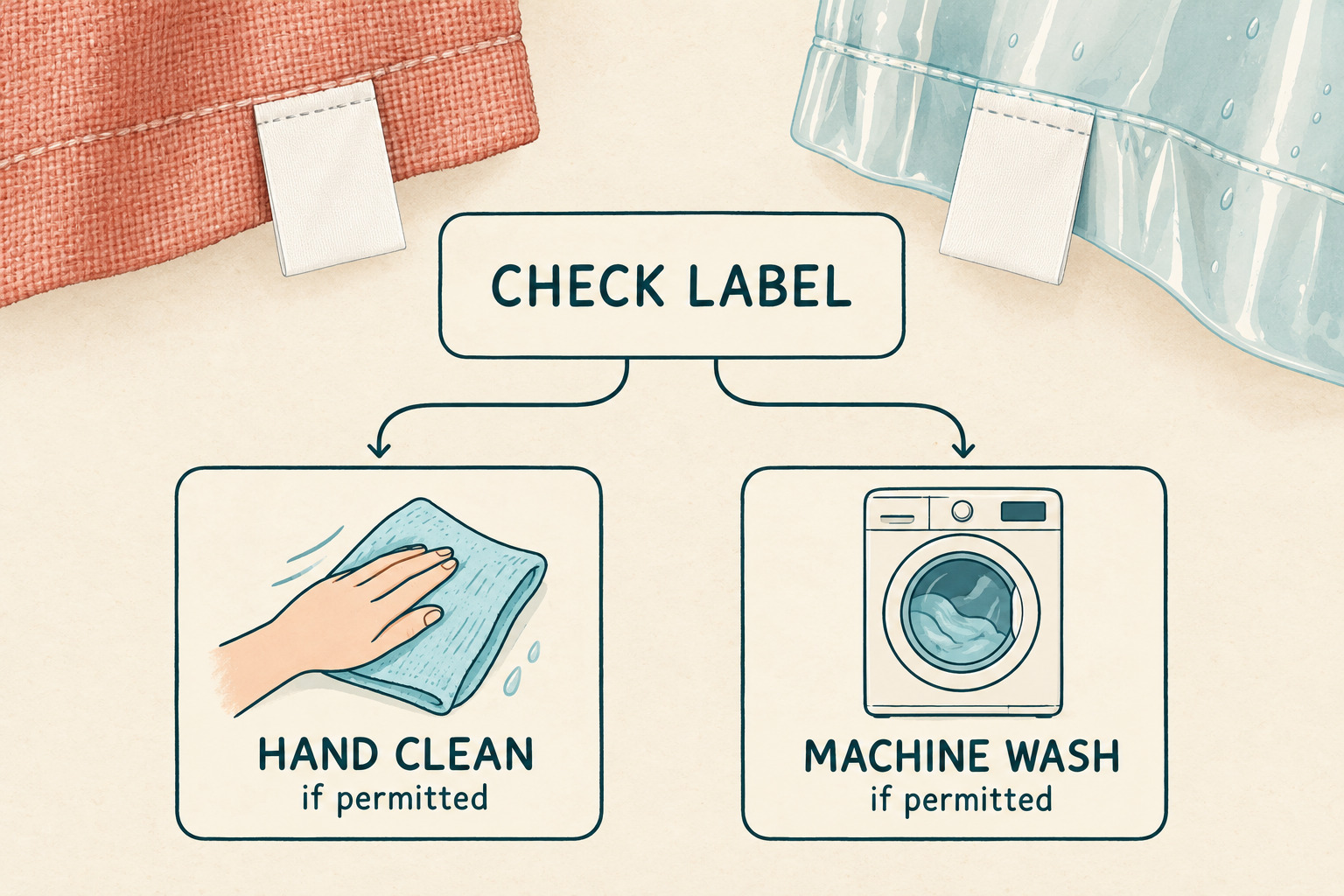
Find the brand, product name or code and care label for the curtain and liner separately. A receipt or order history can help identify an unlabelled piece. Photograph readable labels before they get wet, and keep the photos with the product links.
Material names help with identification, but they do not settle the treatment. These manufacturer examples show why:
| Exact product | Published care example | Decision it supports |
|---|---|---|
| IKEA BORSTALOE, 106.055.65 | Polyester; warm machine wash on durable press; line dry; no bleach or tumble drying. | Record the wash and drying instructions separately. |
| IKEA NÄCKTEN, 900.995.01 | PEVA; washing, bleaching and tumble drying are prohibited. | Do not turn a generic plastic-liner tutorial into permission to wash this product. |
| AmazerBath 3G lightweight PEVA liner | Wipe with a damp cloth; let it dry fully between uses. | Use the stated surface-care route rather than assuming a washer cycle. |
These are documentation examples checked October 8, 2026, not product tests. Match the version you own. If its label and current product page disagree, ask the maker before using the disputed treatment. An unreadable label belongs in the “check first” group.
Make a care and rehang worksheet
Copy this original worksheet into a note. Fill each component's line independently; leave unresolved fields visible.
- Curtain identity and care source: ______
- Curtain cleaning method, settings and restrictions: ______
- Curtain drying method and location: ______
- Liner identity and care source: ______
- Liner cleaning method, settings and restrictions: ______
- Liner drying method and location: ______
- Washer model and load permission, if needed: ______
- Removable hook count / parts to leave fitted: ______ / ______
- Hook care instructions and holding tray: ______
- Starting orientation photo / attachment order: ______
- Condition issue or unanswered question: ______
- Rehang checked / drying complete / next action: ______ / ______ / ______
For example, the two IKEA products above can hang together while having different care instructions. The useful household note is “curtain follows its wash instructions; liner needs its own permitted care,” rather than “wash the bathroom set.” That distinction remains important even when both pieces look equally dirty.
Take down removable parts without losing the setup
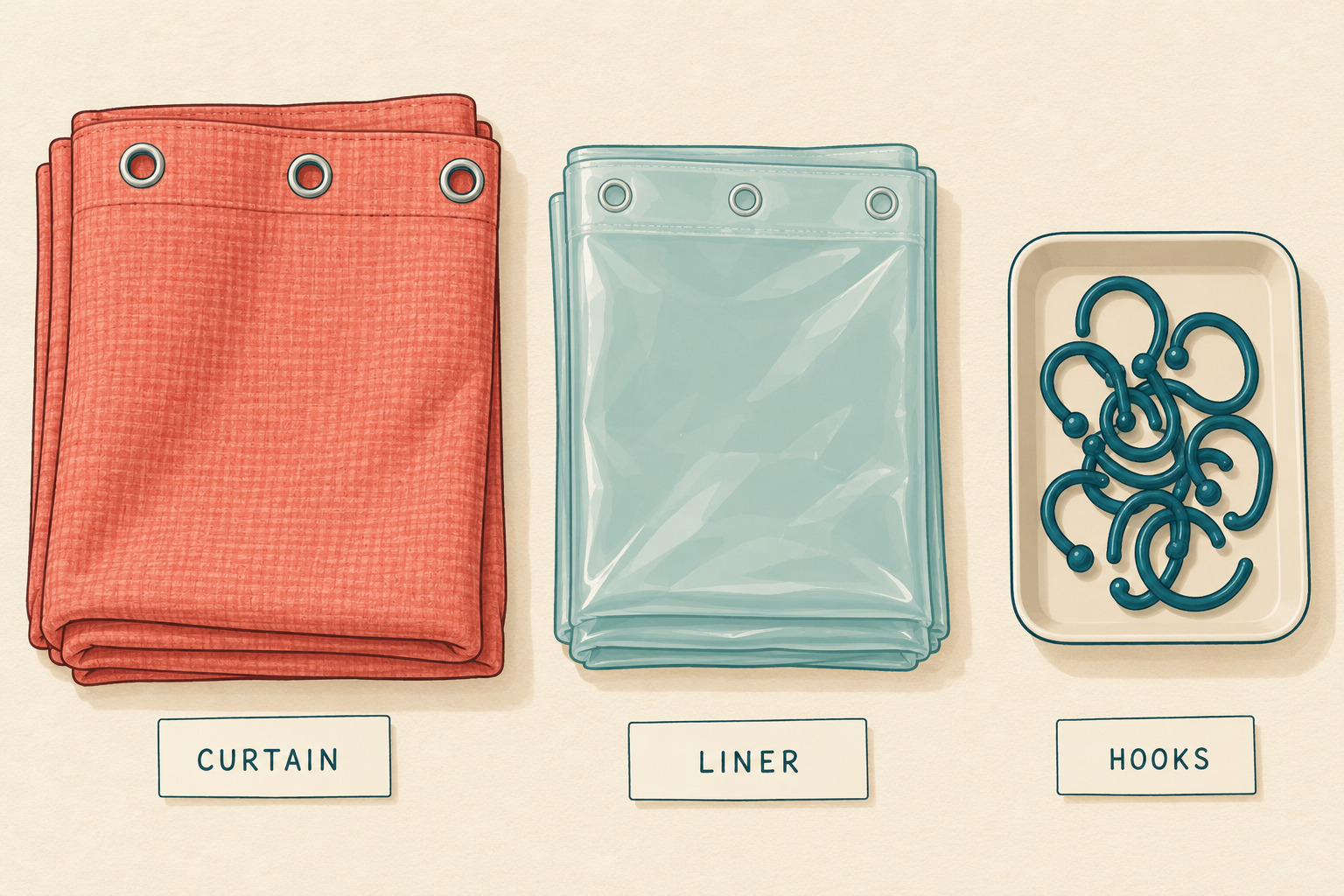
Prepare a clear surface, a suitable container for carrying wet material and a small tray for loose hooks. Keep the floor dry and accessible. If you cannot reach the attachments safely, get help rather than standing on the tub edge.
Take a photo showing which layer faces the shower and how the hooks hold it. Whirlpool's cleaning guide starts by detaching the curtain or liner and removing its rings. Apply that step to removable hardware; do not pry apart integrated rings or pull weights from a sealed hem.
- Support the panel while releasing its attachments, instead of letting its weight hang from the last hole.
- Keep the outer curtain and liner identifiable on the work surface.
- Count the removed hooks into the tray. Record the actual number, without assuming every setup uses twelve.
- Give the hardware its own permitted cleaning method. Do not automatically include it in the textile wash.
Clean only by the confirmed route
Machine-wash route: both the item and the appliance must permit the load. Samsung's Hong Kong support warning includes shower curtains among waterproof items that should not be washed in the machines it covers because abnormal vibration can cause damage. It explicitly limits its guidance to Hong Kong products. Check your own model and market's manual.
Where machine washing is permitted, use the product's specified cycle, temperature and detergent directions. Check any instructions about companion items and loading. Neither spare drum space nor a gentle setting establishes compatibility.
Wipe or hand-clean route: follow the exact method given for that piece. For the named AmazerBath liner, the published route is a damp-cloth wipe. Work over a suitable surface and inspect the lower edge and folds as well as the center. Do not extend a wipe instruction into an unapproved soak.
Unresolved route: stop before adding a treatment. Missing instructions do not make bleach, vinegar, abrasive scrubbing or a hotter wash a sensible default. If the permitted method leaves a mark, ask about that remaining problem rather than layering on products.
Inspect the attachment points before rehanging
Follow each piece's drying instructions, including whether it can return to the rod while damp. Washing permission is not dryer permission. Have its drying place ready before starting.
Look along the top edge for torn holes, loose grommets or stretched attachment points. Check the lower hem and any enclosed weights without opening the stitching. Inspect removable hooks for damage or closures that no longer work. Keep questionable pieces out of the ready set until you have a repair or replacement decision.
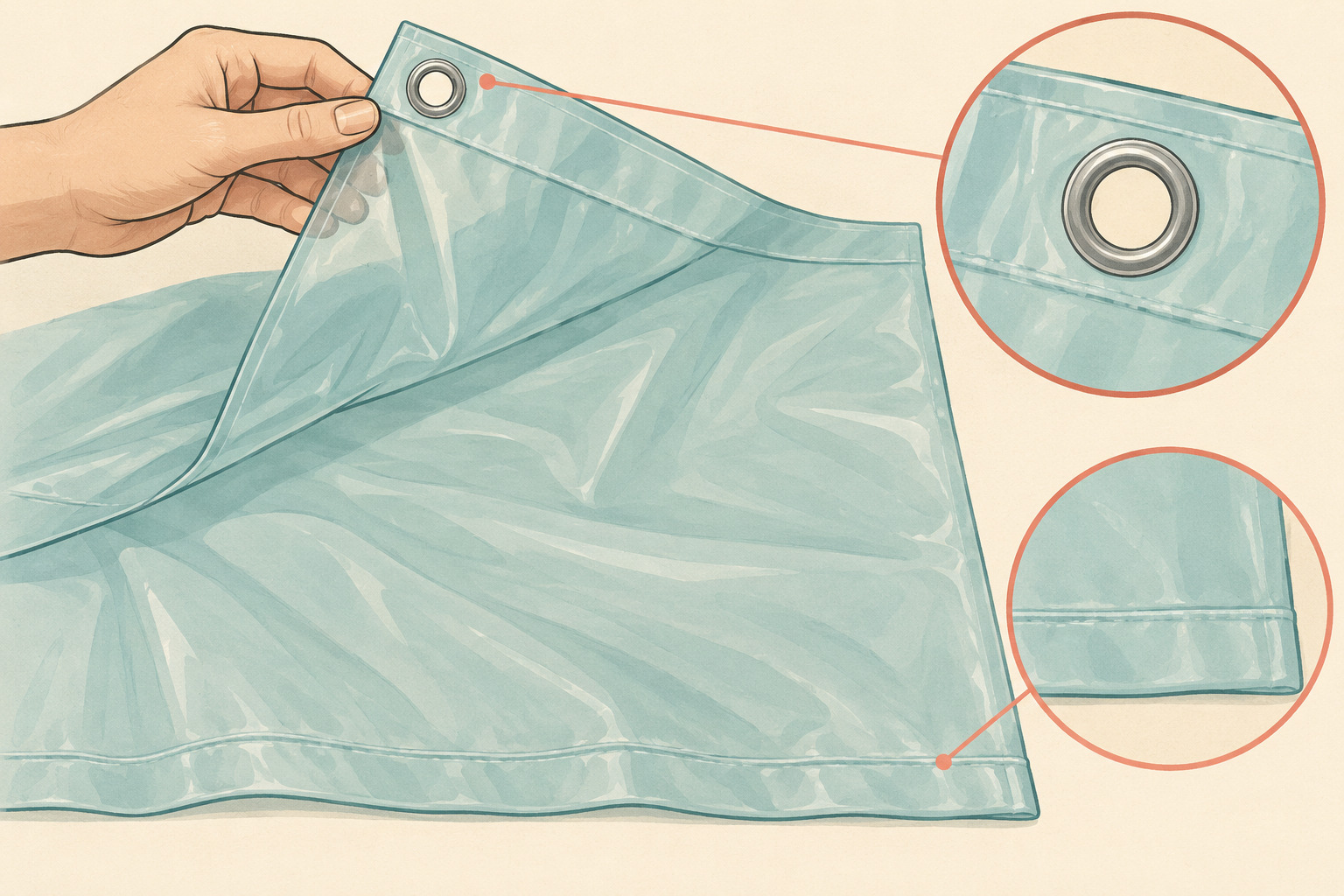
Finish the rehang and drying checks separately
Refit the layers in their intended orientation and account for every removed hook. Check each attachment from one end to the other, then move the panels gently through their normal travel. Stop if a hook catches or an attachment pulls.
For this bathtub arrangement, put the water-containing liner inside the tub during showers. IKEA's sizing guidance distinguishes this inside-the-tub position from other setups. Check your own installation rather than applying a generic floor-gap measurement.
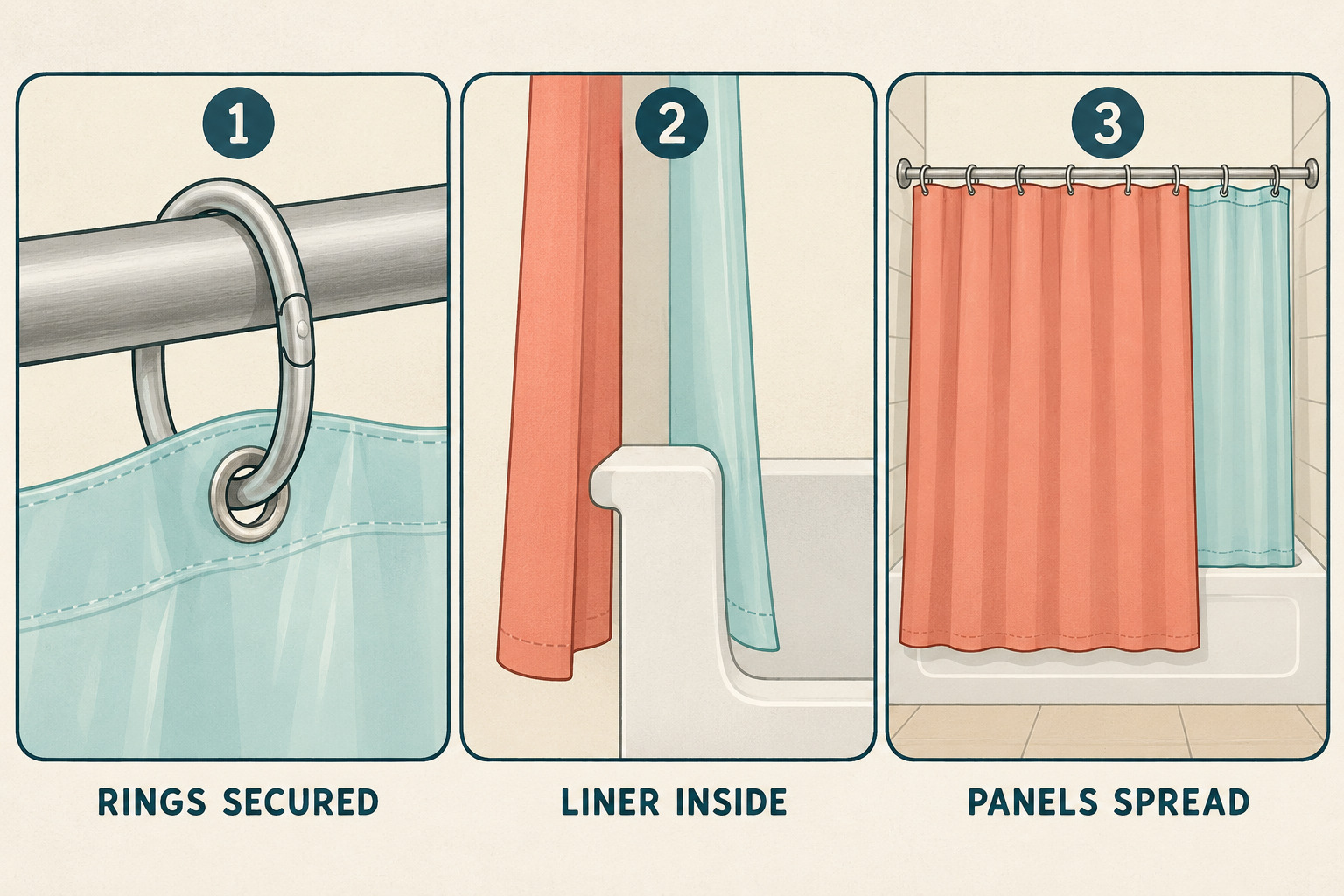
Spread the panels across the rod so folds are not tightly bunched. IKEA's care guide recommends opening out the curtain after use, ventilating the bathroom and keeping the bottom hem out of persistent dampness. Follow your home's ventilation arrangements.
Mark “rehung” when the attachments and position are checked. Mark “dry” only after checking the material, folds and hem. Save any unfinished action beside the worksheet. The job ends with a usable setup and clear care instructions for next time.