A glass cloth, a fluffy duster and an all-purpose cleaning cloth can end up in the same basket. The word “microfiber” does not tell you whether they belong in the same wash or dryer. Start with the exact product’s care instructions, then keep a small card with the cloth so the next person doing laundry does not have to guess.
This guide provides an original household care-card template and a load-check routine. It covers ordinary cleaning-cloth organization and manufacturer care instructions, not disinfection or cleanup of hazardous materials.
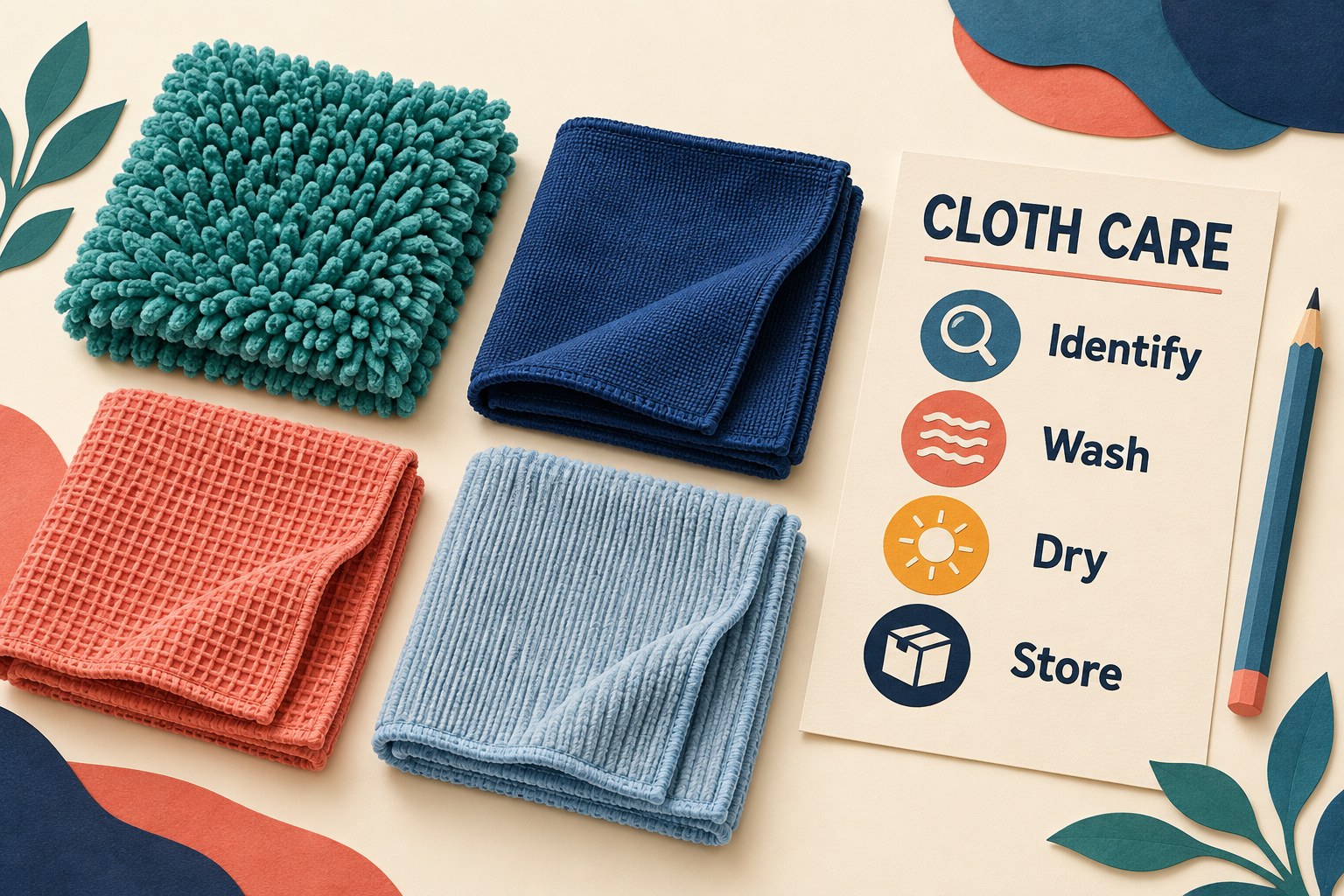
Why one microfiber setting is not enough
Two current E-Cloth product pages make the difference tangible. The General Purpose Cloth page permits washing up to 90°C and tumble or hang drying. The High Performance Dusting Cloth page specifies up to 30°C and hang drying. Both list an 80% polyester, 20% polyamide composition. Matching fiber percentages are therefore insufficient to choose a care routine.
There is also a source conflict worth noticing: E-Cloth’s general US wash guide gives a 140°F upper wash temperature, while the named General Purpose product page gives 90°C. These are observations from pages checked on October 7, 2026, not an instruction to select the hotter figure. If your label, packaging and current model page disagree, ask the manufacturer to clarify before using the disputed treatment.
Make one card for each identifiable cloth type
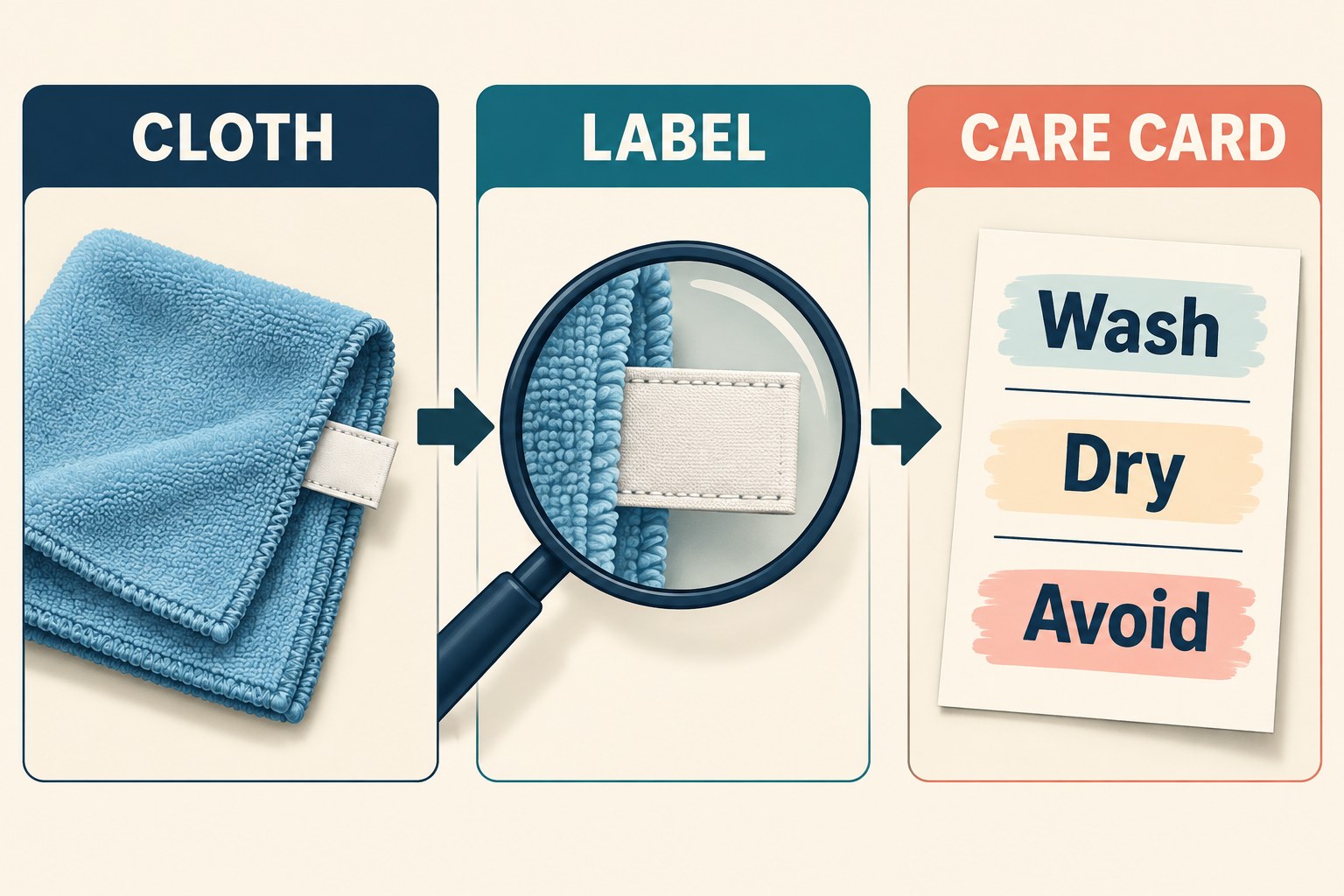
Lay out the collection and group only cloths you can identify as the same product with the same instructions. Give each group a simple name such as “smooth blue glass cloth.” Photograph its label and packaging if available. Keep the product identity separate from the job you assign: “bathroom” describes your use, not its washing limit.
| Care-card field | What to record |
|---|---|
| Identity | Brand, exact product/model, distinguishing texture or trim, and label-photo location. |
| Assigned job | Your written task name, plus any color cue you choose. |
| Wash | Permitted method, cycle instructions and stated temperature limit, keeping the original unit. |
| Routine versus maximum | Record a recommended routine separately if the manufacturer provides one. A maximum is not a target. |
| Additives | Detergent guidance and exclusions such as softener or bleach. |
| Dry | Permitted method and any stated heat limit. An empty field means “check,” not “any dryer setting.” |
| Separation | First-wash, color, lint or other load restrictions given for this product. |
| Evidence | Label/package details, exact manufacturer URL, date checked and any unresolved conflict. |
Use paper beside the laundry area or a shared note. Keep the card out of the machine. A receipt or old order confirmation may help identify an unlabelled cloth, but appearance alone is weak evidence. Put unidentified items in an “identify first” group rather than borrowing another cloth’s settings.
A filled-in example, with a real boundary
For the E-Cloth High Performance Dusting Cloth linked above, the card would read: machine wash up to 30°C; use a small amount of detergent; avoid bleach, fabric softener and dryer sheets; hang dry; wash new cloths separately because color may run. Write your own assigned job alongside those manufacturer instructions. This is a documentation example, not a report of a wash test.
For a contrasting gap, the Australian Vileda Actifibre Soft Universal Cleaning Cloth, article 171814, permits washing up to 60°C with similar colors and excludes softener and chlorine bleach. Its care paragraph does not state a drying method. Record “check package or care label” in that field. Do not turn missing guidance into dryer permission.
Check the load before pressing Start
- Read every included card. Check method, cycle, temperature and additive restrictions together. The lowest temperature maximum alone does not establish that all other conditions match.
- Check first-wash and color instructions. A new cloth may need a separate first wash even when an older one of the same type can join a later compatible load.
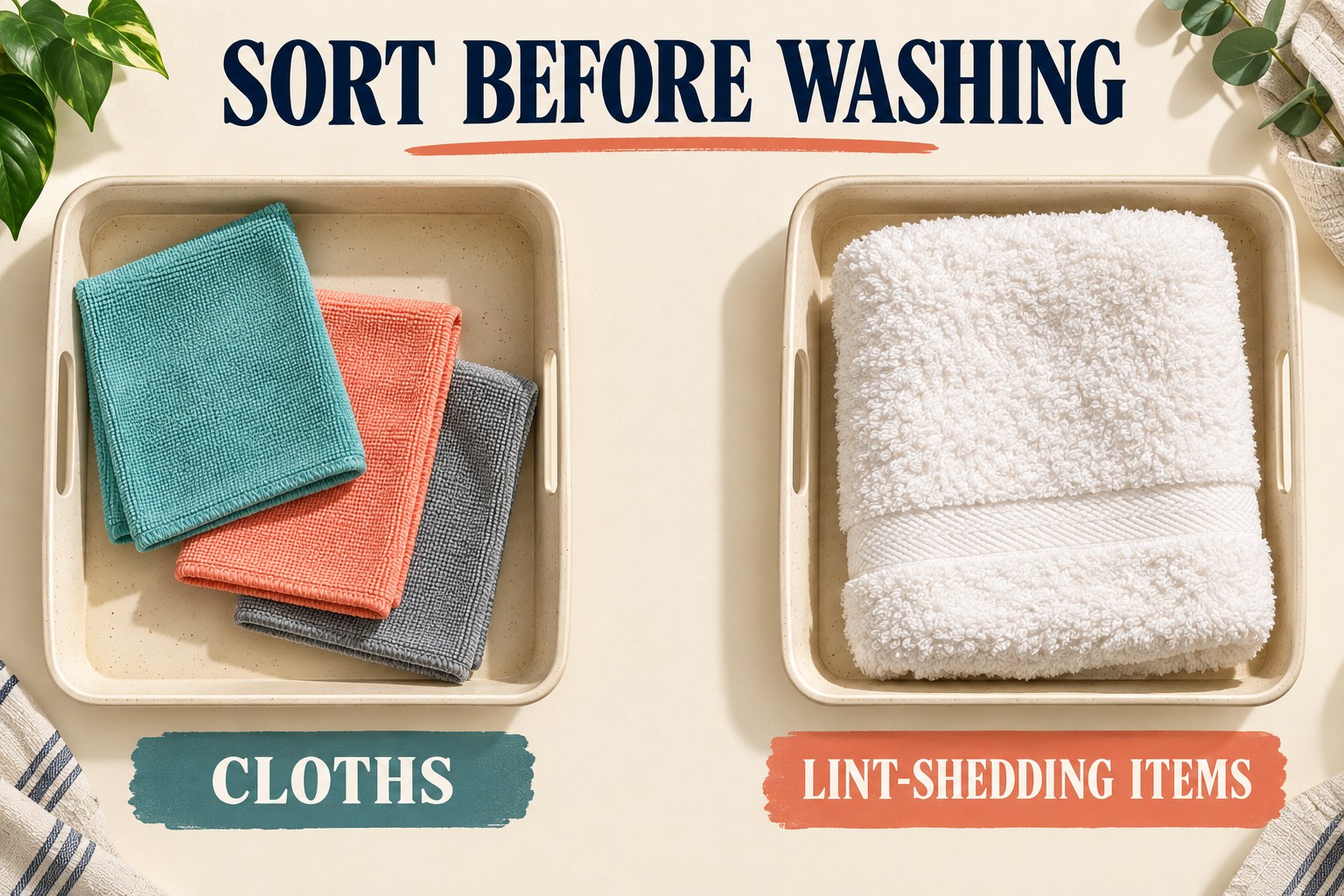
- Check the other textiles. Put fluffy, lint-shedding items aside while deciding what belongs together. Our care-label laundry sorting guide explains the broader lint and fabric checks. Avoid a blanket “all cloths always wash alone” rule: the named Vileda page expressly permits washing its product alongside daily garments, subject to its care directions.
- Check what is in the load. This routine is for ordinary household cloth care. If a cloth carries material requiring special handling, follow the relevant product and appliance instructions rather than assuming this card makes normal laundering appropriate.
- Write the dry-stage split now. If one cloth must hang dry, make that visible before transferring the washed load.
Choose a compatible load only when the instructions actually line up. When a field is unknown or contradictory, leave that item out until you resolve it. This is more useful than remembering a single number for an entire basket.
Drying is a second decision
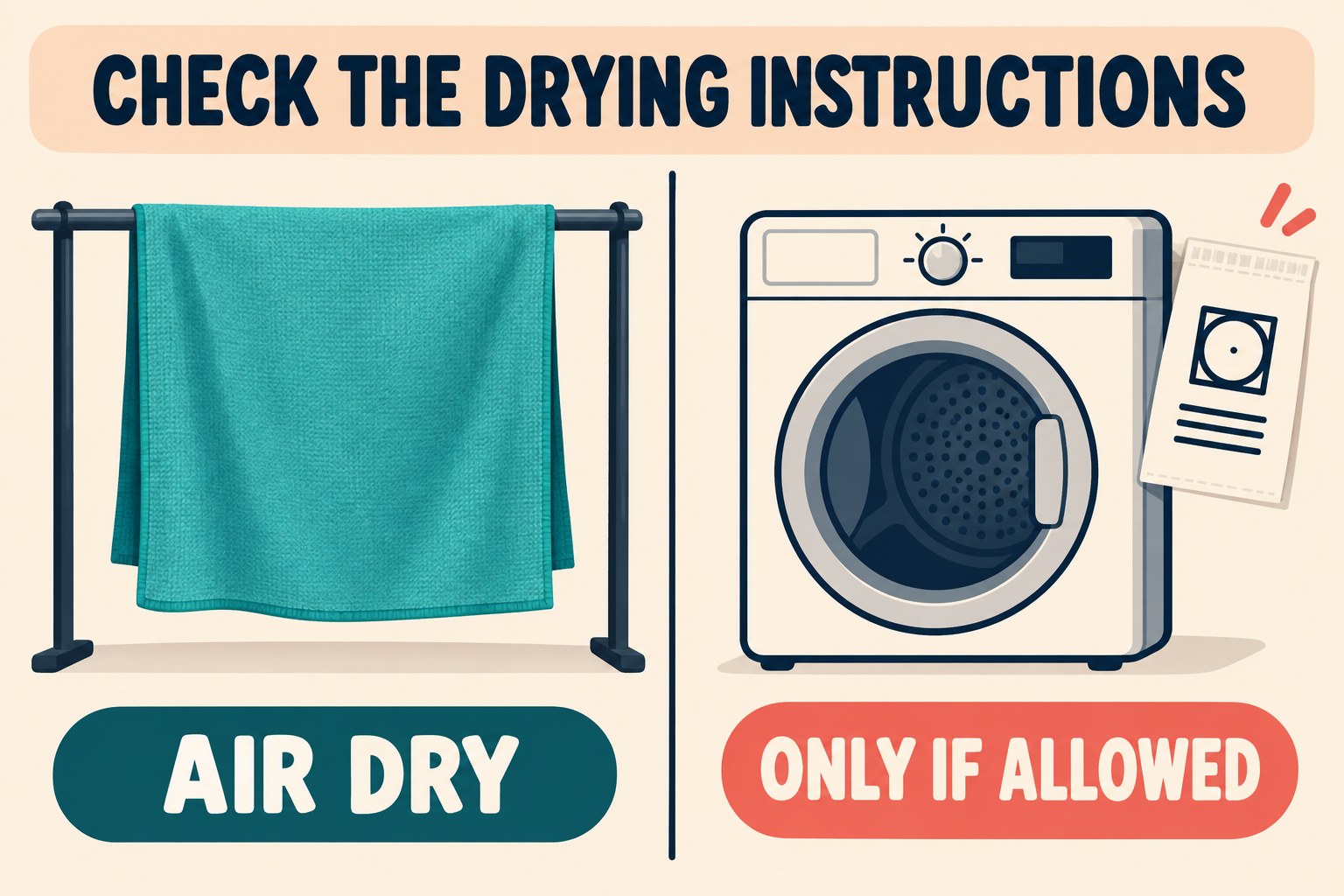
The manufacturer’s Unger MicroWipe care page permits low tumble drying with a maximum of 135°F. That does not override the hang-dry instruction for the E-Cloth dusting product. Permission for one product is not permission for another.
At the washer-to-dryer handoff, read the drying field again. Route hang-dry items to an appropriate drying space, and check any permitted tumble setting against the cloth’s instructions and your appliance controls. Do not interpret a generic dryer icon in this article as a setting. Return cloths to their storage places once fully dry.
Store by job without losing the care information
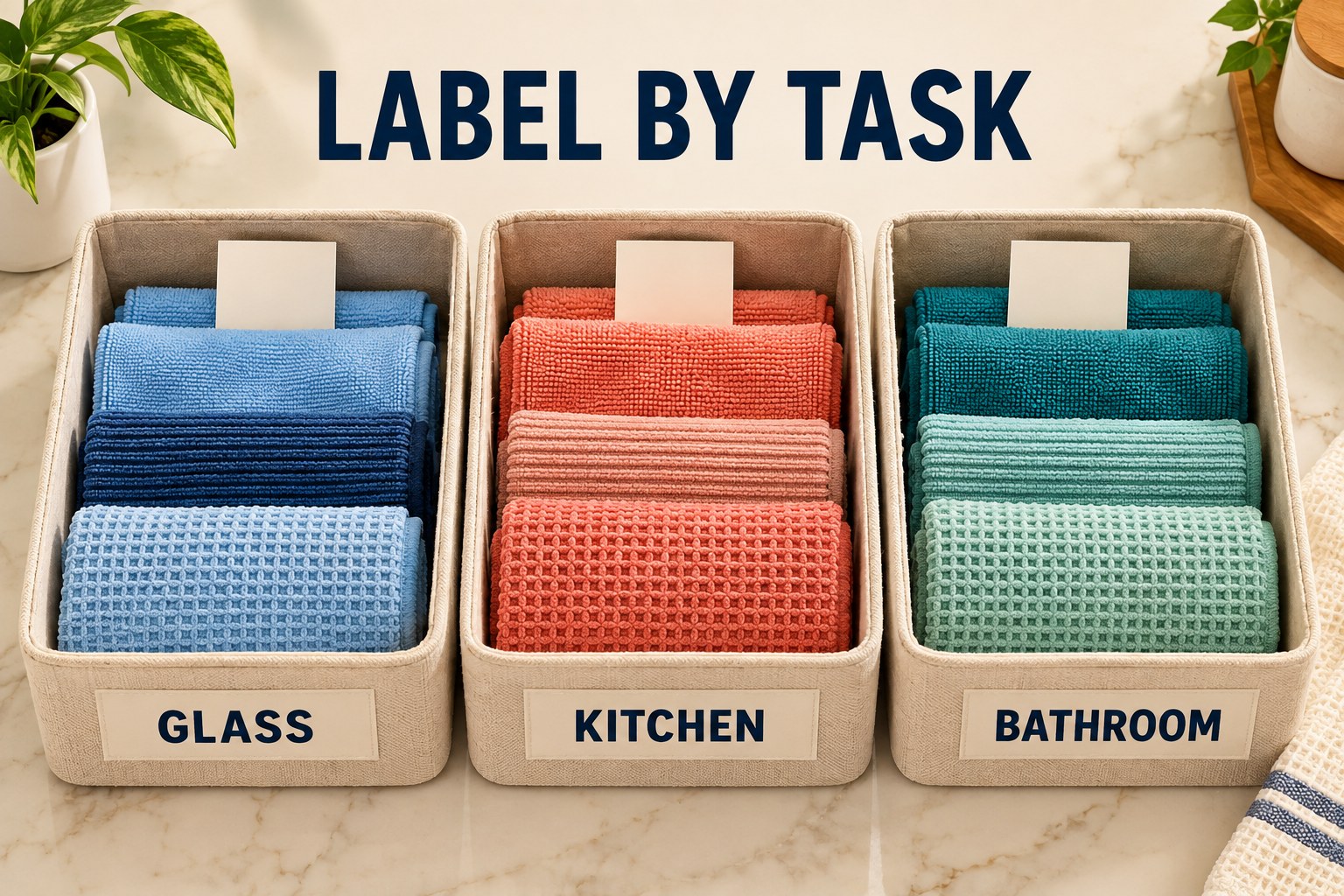
Choose a small number of useful task names, such as glass, kitchen and bathroom. Put the words on the storage compartments so the system still works when colors look similar. A shared task bin can contain more than one cloth model, so keep the separate care cards available.
Task assignment and laundering compatibility answer different questions. Color coding is an organizational aid; it does not certify that a cloth is clean or that a cleaning task has been disinfected. If a cloth becomes hard to identify, fix its record before it slips back into the normal routine.
The next-load handoff
- I can identify each included cloth type.
- The wash, additive and separation instructions are compatible.
- I have marked which items need a different drying route.
- Any missing or conflicting instruction is still marked unresolved.
- The dry cloths have a named storage place and their care information remains accessible.
The useful result is a repeatable decision, not a universal microfiber recipe. Start with the cloths you already own, preserve the instructions that differ, and make the wash-to-dry handoff easy to follow.