An umbrella can stop dripping and still be too damp to put away. The useful question is not “Has it been an hour?” but “Is this umbrella, including its folded areas and cover, ready for storage?”
This guide is for handheld rain umbrellas. Use your model’s instructions first, especially for coated fabrics, decorative materials and automatic mechanisms. The checklist below is an original household workflow, not a manufacturer’s drying-time guarantee.
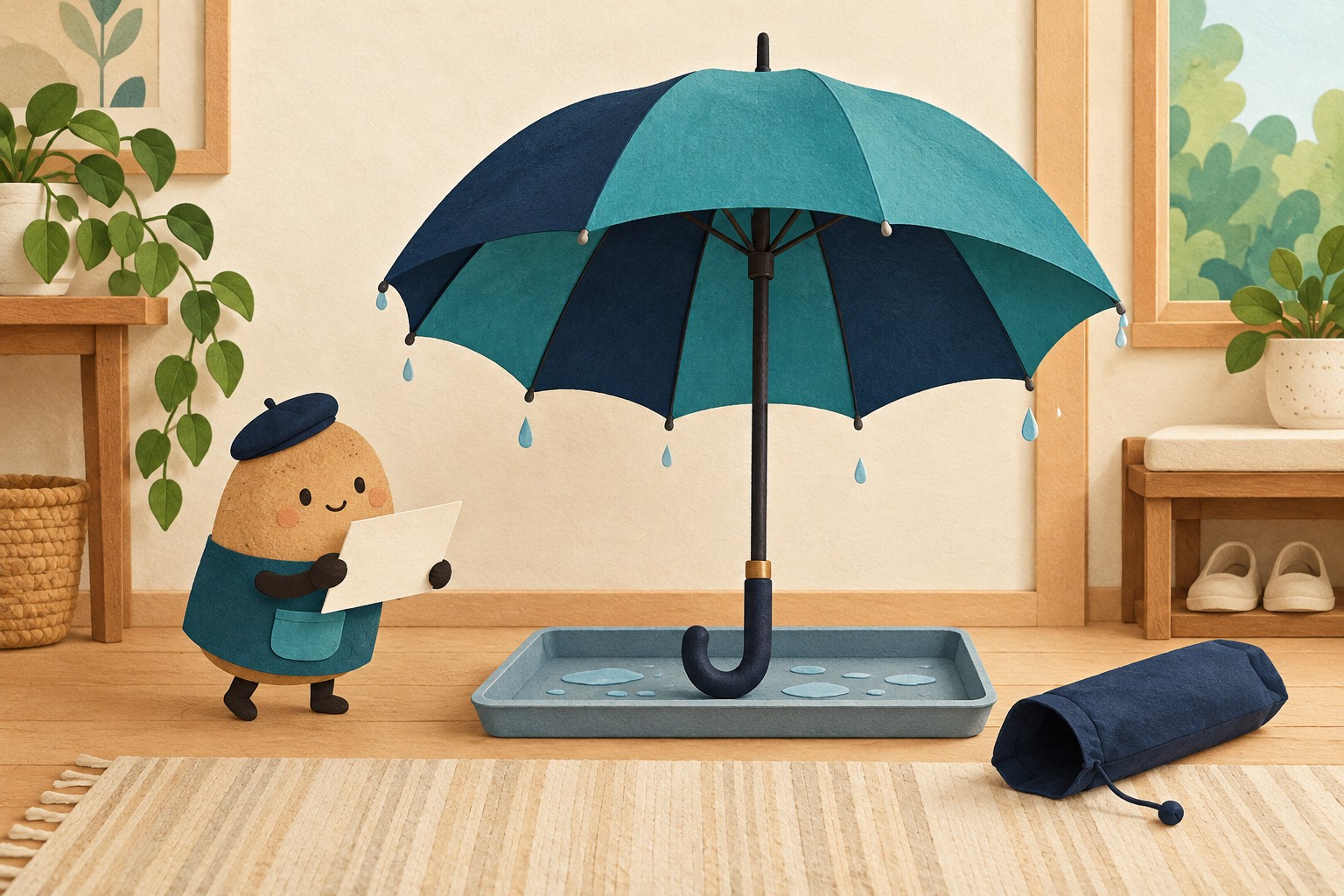
Make two places: drying and ready
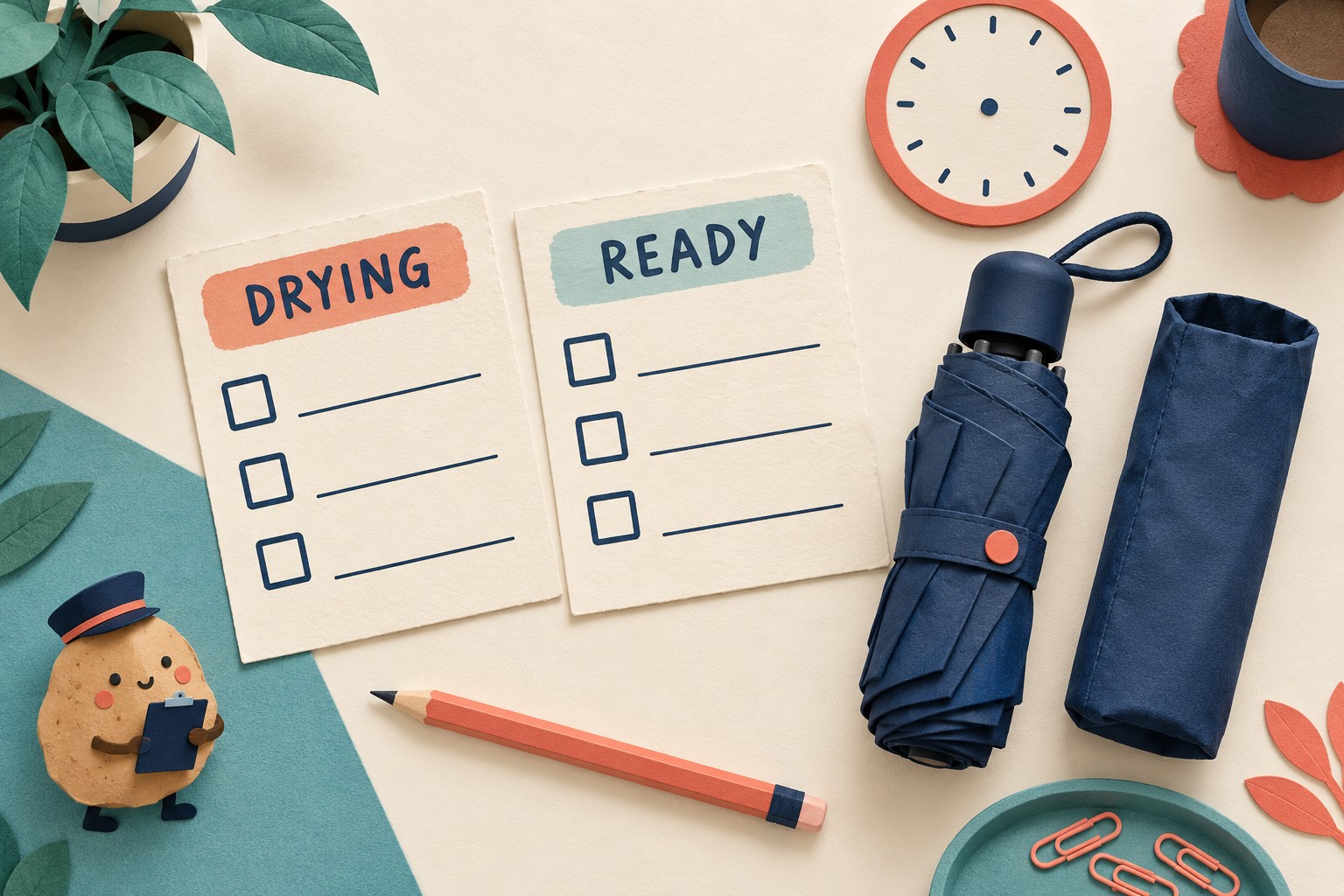
Give the umbrella a temporary drying place and a separate normal storage place. A small label or note is enough: DRYING means do not sleeve it yet; READY means you have checked it and put it away. The distinction is particularly useful when several umbrellas share a doorway.
Choose a spot with room for the open canopy that does not obstruct a walkway or door. Catch drips appropriately for your floor and keep the umbrella stable. A drip tray is a housekeeping aid, not a stand that makes an unstable umbrella safe. If the space cannot accommodate the open umbrella, find a suitable location rather than wedging the ribs between furniture.
Read the care instructions before choosing a method
Record the brand and model, the opening mechanism and where its care instructions live. Knirps, for example, recommends a soft sponge and lukewarm water for dirt, followed by open drying, and says to return an umbrella to its protective cover after it has dried. That is guidance for its products, not permission to wash every umbrella in the same way. See Knirps care and use instructions.
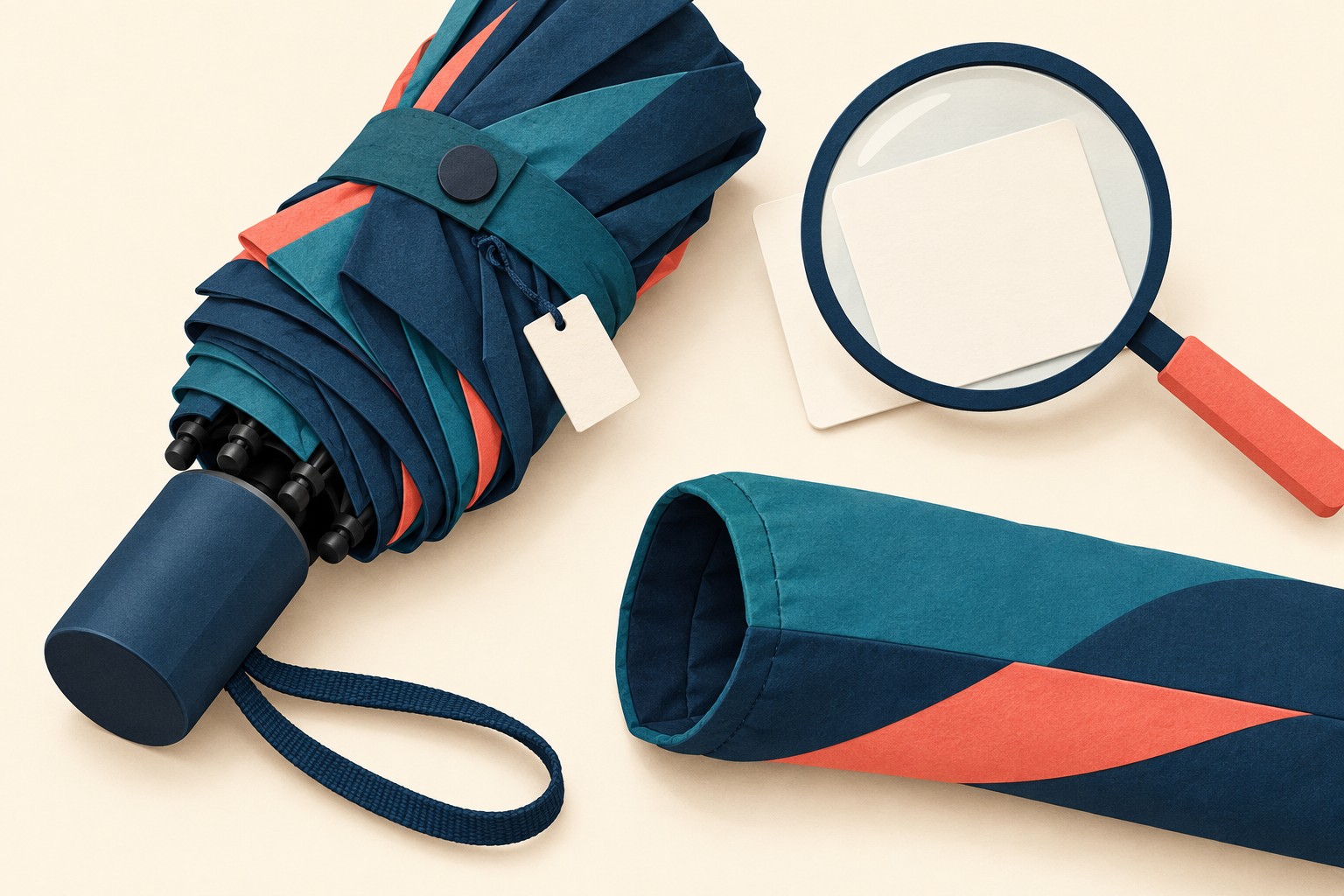
Water-repellent treatments are also model-specific. Fukui Yougasa’s care page expressly says not to apply waterproofing spray to its Nurenza fabric and notes a possible appearance change for Natsume parasols. Do not add spray to a routine just because a generic guide mentions it. This checklist deliberately contains no chemical-treatment recipe.
After rain: drain gently, then open correctly
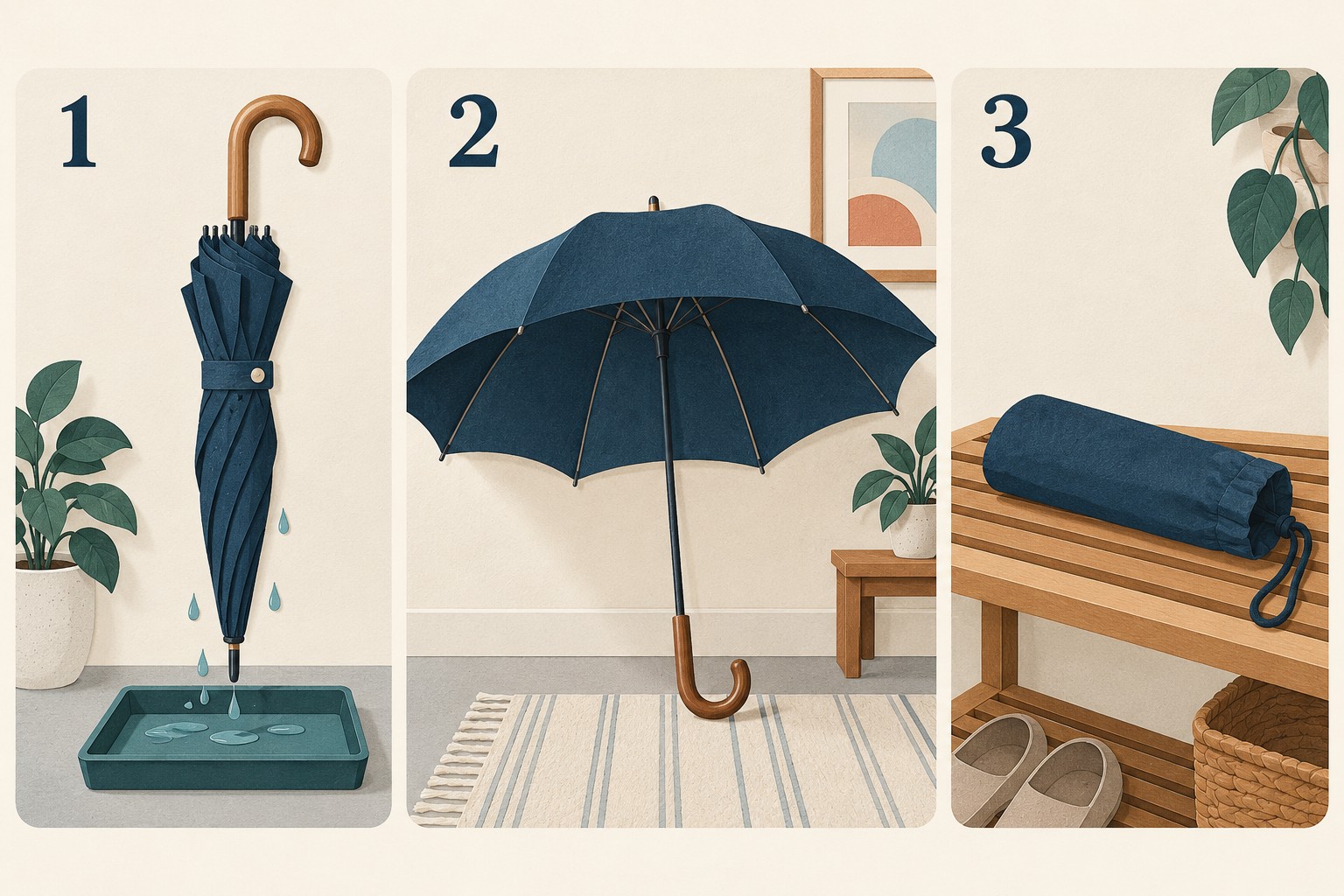
- Remove the sleeve. Keep it separately so it does not disappear into a bag while still wet.
- Let excess water drain gently. Avoid whipping or aggressively shaking the umbrella.
- Check the folded canopy is free. Before opening, make sure fabric is not caught around the ribs. Follow the model’s normal opening sequence; stop if it resists.
- Open for drying in a suitable indoor, shaded location. Follow any different positioning requirement in the product instructions.
- Keep the storage decision open. Do not mark it ready merely because the visible surface no longer has droplets.
The Tokyo Umbrella Cooperative advises gentle draining, checking for tangled fabric before opening, and drying unfolded indoors in the shade before bundling. It also warns against forceful draining and rubbing the canopy tightly when folding.
Check the parts you will hide when you fold it
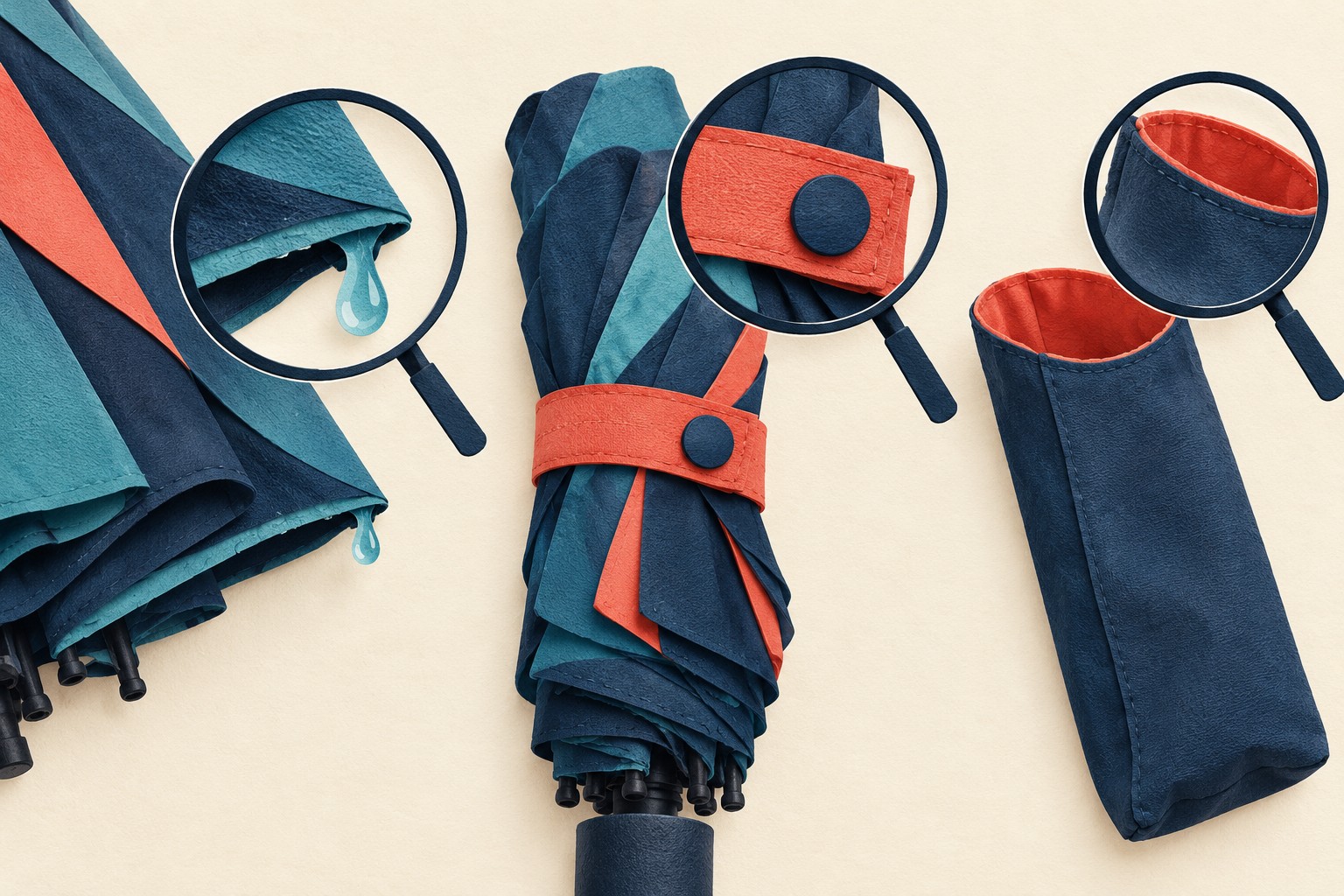
Before storage, inspect the canopy’s outside and underside, the areas that gather into folds, and the fastening strap. Check the sleeve separately. If you can see or feel remaining moisture in an accessible area, keep drying; do not force your fingers into the frame or closing mechanism.
This is a practical inspection prompt, not a moisture measurement. There is no universal number of minutes in this workflow. Fabric, the amount of water and the drying environment differ. If the care instructions specify a process, follow it; if uncertain whether the umbrella is dry, leave it in the drying stage and check again.
Once dry, close and fold it using its intended mechanism and fasten it without an unnecessarily tight squeeze. Return it to a dry cover if appropriate for that model. A compact umbrella with unusual fabric may have different long-term storage advice: Fukui Yougasa, for example, cautions that long-term folded storage can damage fabric along its creases, especially in silk. Ask the maker when care guidance is missing rather than treating one storage method as universal.
Copy this wet-to-ready card
| Field | Your note |
|---|---|
| Umbrella | Brand/model, owner or identifying color: ______ |
| Care source | Label or manufacturer page: ______ |
| Drying location | Clear space and suitable drip protection: ______ |
| Started | Date/time placed to dry: ______ |
| Canopy check | Outside, underside and accessible folds: dry / keep drying |
| Strap and sleeve | Checked separately: dry / keep drying |
| Condition | No visible problem / needs attention: ______ |
| Ready | Checked by ______ at ______; stored at ______ |
Example, not a measured drying result: “Blue compact umbrella; manufacturer page bookmarked; drying by the utility-room tray; canopy dry but sleeve damp; leave sleeve separate and recheck.” The important part is the unresolved item. The start time alone is not a finish signal.
When the routine needs a different next step
- You must leave before it is dry: mark the check unfinished. If you need to close it temporarily for transport, reopen it at the next suitable opportunity rather than treating temporary containment as completed storage.
- Several umbrellas look alike: record one simple identifier on the card and keep each sleeve paired with its umbrella. Do not add a tag that interferes with the mechanism.
- A rib is bent, fabric is trapped or the mechanism sticks: stop forcing it and check the maker’s repair instructions. Drying is not a repair.
- You find an unknown stain or odor: consult model-specific cleaning guidance. Do not improvise a mixture of household cleaners or automatically apply a waterproofing spray.
- The doorway remains wet: improve the drip-catching arrangement and drying location, rather than sealing the wet umbrella away to make the puddle disappear.
The goal is small: let the umbrella finish drying, then deliberately put it away. The rain has already done enough improvising.