Which of your tablecloths works when the extension leaf is in? Put the cloths down one side of a page and the table arrangements across the top. Each intersection needs its own answer. This guide turns that simple inventory into a buying worksheet, so you can identify the arrangement that needs a different cloth before ordering another one.
This worksheet is for rectangular cloths on rectangular tables, with a short round-table alternative. It compares dimensions and helps you plan a fit check; it does not predict the exact drape of a fabric or replace a product’s care instructions.
1. Give each table configuration its own row
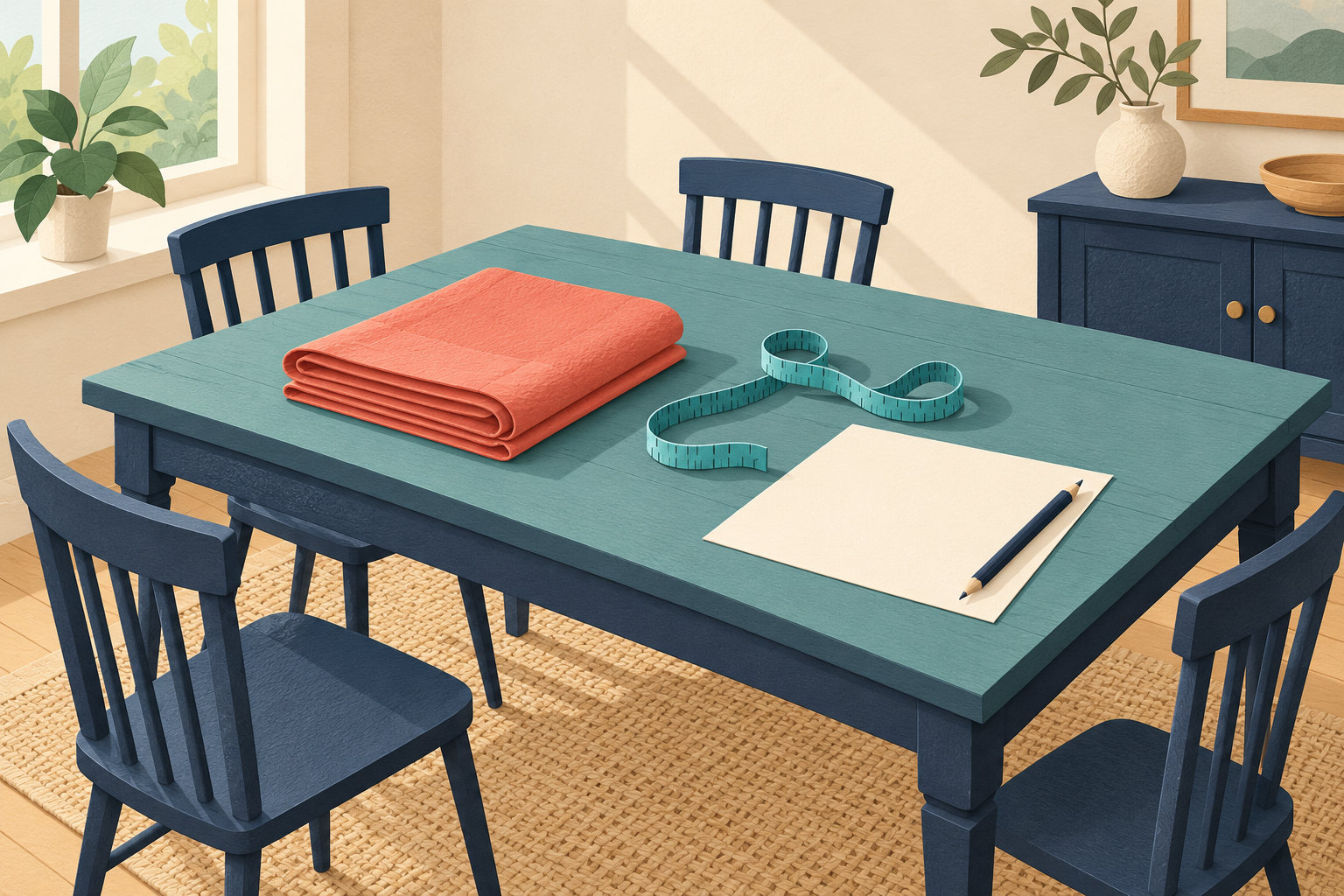
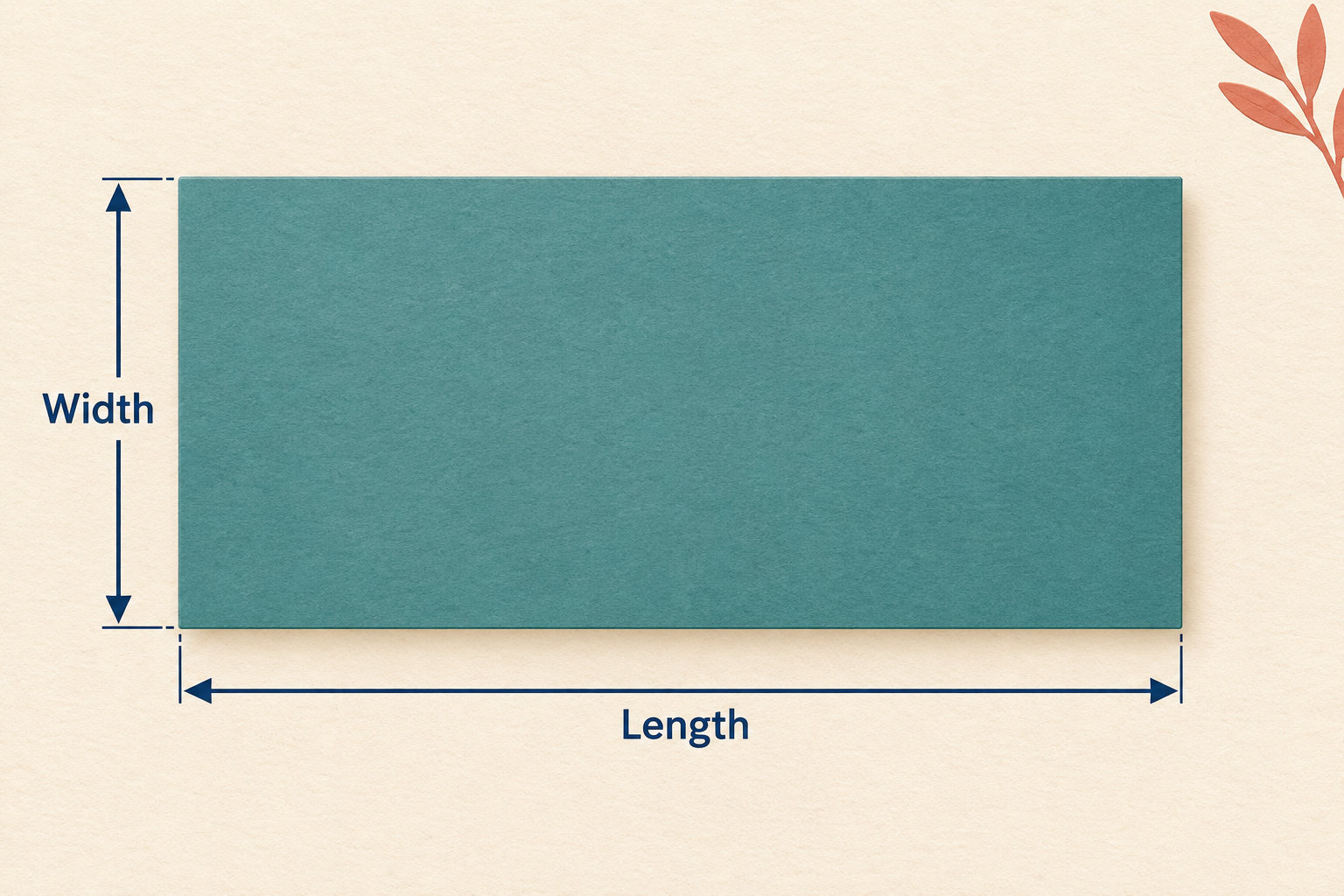
Clear the tabletop and measure edge to edge. Keep all measurements in one unit. Write width first and length second, and use that order for both the table and the cloth. If the table extends, record the closed and extended arrangements separately. SFERRA’s measuring guide likewise advises setting the extension leaves for the intended arrangement before measuring.
Do not copy the package dimensions of a folded cloth. Find the product’s finished width and length. For a cloth you already own, lay it flat without stretching it and measure the actual piece. Keep a label measurement and a measured dimension in separate fields if they differ.
- Table: shape, width, length and which leaves are fitted.
- Cloth: shape, width, length and whether those figures came from a label, a listing or your own measurement.
- Use: the arrangement you need it to fit today, plus any second arrangement you want to check.
2. Calculate the side and end drops separately
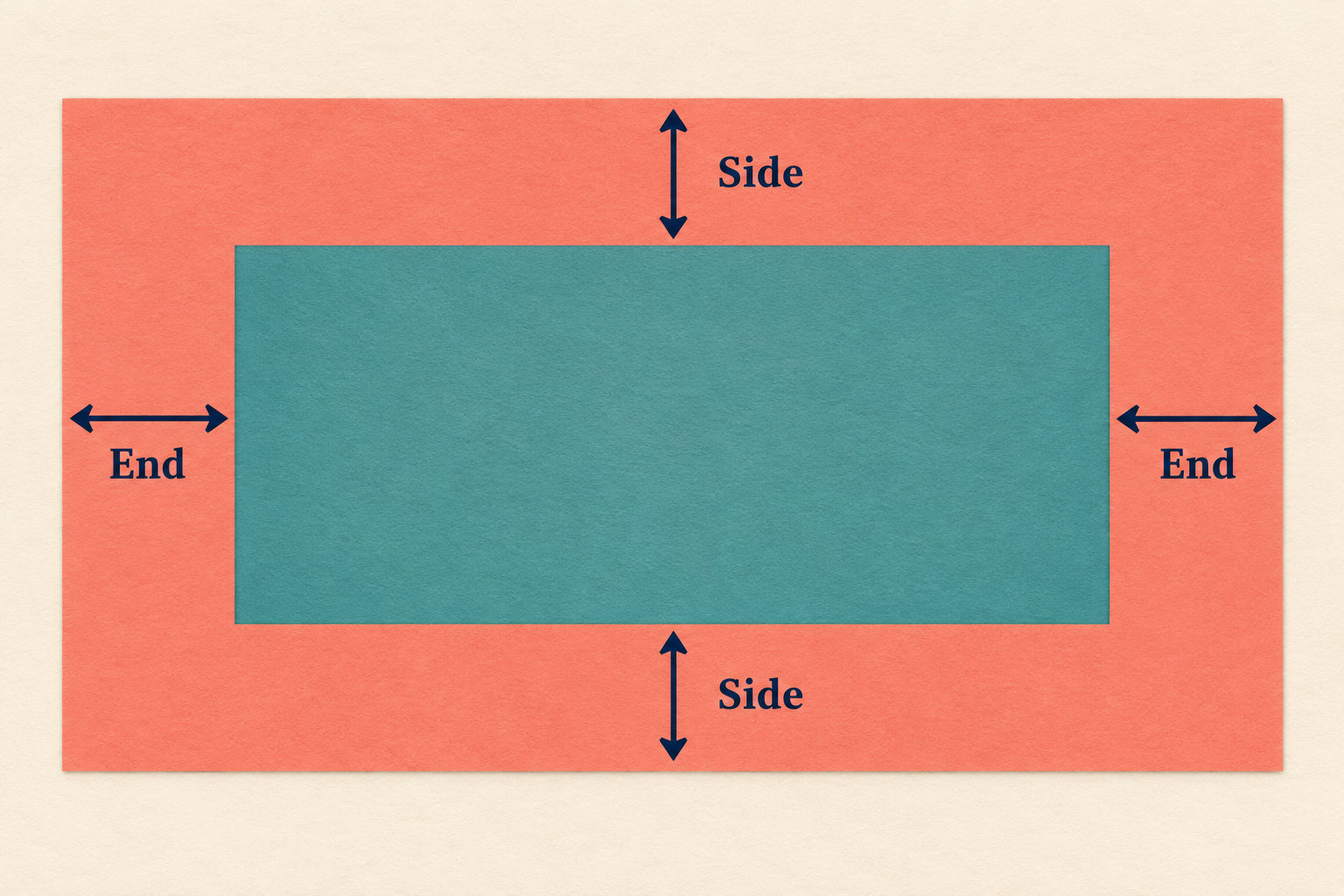
For a centered rectangular cloth with its edges aligned to a rectangular tabletop, the spare fabric is shared between two opposite edges. Here, “side” means an edge running along the table’s length; “end” means a short edge.
- Side drop: (cloth width − table width) ÷ 2.
- End drop: (cloth length − table length) ÷ 2.
A negative result means the cloth is too small to cover the tabletop in that direction. Zero means it reaches the edge with no allowance for overhang. Positive results are the nominal straight-edge drops, assuming a centered, flat cloth; hems, corners and the way the fabric falls still need a physical check.
To work the other way, choose the drop you want at the sides and at the ends. Add twice the side drop to the table width, and twice the end drop to its length. Crate & Barrel’s sizing guide explains the same add-the-drop-twice principle. A larger ready-made size needs another calculation, rather than an automatic “fits” label.
3. Compare one cloth across two arrangements
The following numbers are a fictional arithmetic example, not product sizes we tested or a recommended overhang. Suppose a rectangular table measures 90 × 150 cm closed and 90 × 200 cm extended. Compare three imaginary cloths:
| Cloth, width × length | Side drop in either arrangement | End drop, closed | End drop, extended |
|---|---|---|---|
| 130 × 190 cm | 20 cm | 20 cm | −5 cm: too short |
| 140 × 240 cm | 25 cm | 45 cm | 20 cm |
| 150 × 250 cm | 30 cm | 50 cm | 25 cm |
The first cloth has a 10 cm total length shortfall on the extended table. The second covers both arrangements, but its closed-table end drop is much longer than its side drop. That is a reason to rehearse the closed arrangement, not evidence that it will be comfortable. The third has still more fabric; this alone does not make it a better choice.
Give each cloth-and-arrangement pair a status: too small, dimensions work; fit check needed, fit checked and acceptable for this arrangement, or fit checked; choose another size. If you lack a measurement, use unknown. Avoid giving a cloth one overall “fits” verdict when you have checked only one table setup.

4. Try the edge before choosing a size
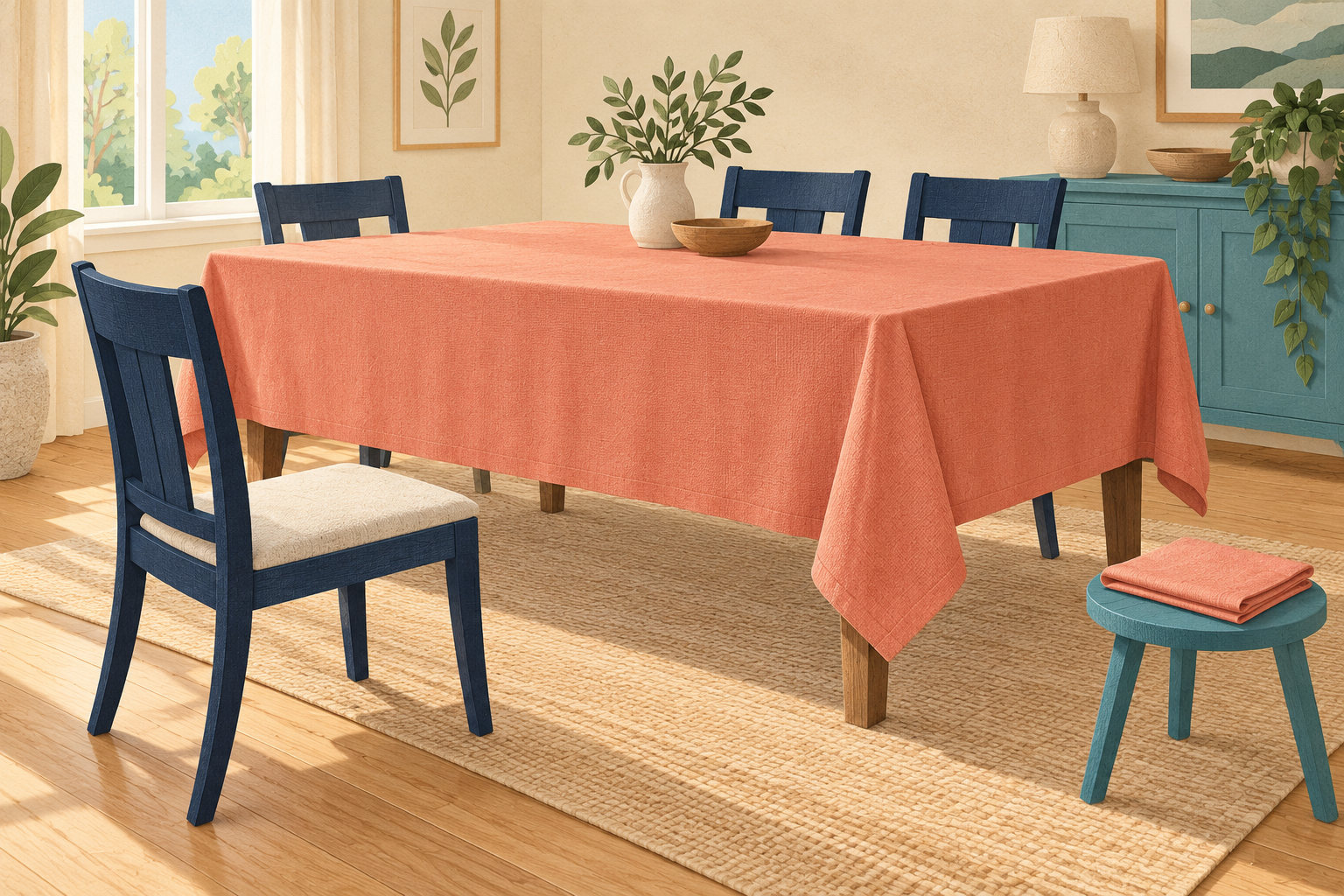
SFERRA suggests using a flat sheet to visualize different drops. Use that as a rough rehearsal with something you already have, then check the actual cloth when available. A sheet is a stand-in; its thickness and drape may differ from the intended fabric.
- Match the record: use the table configuration and approximate side/end drops from one comparison row. Center the fabric rather than compensating for a short end by moving it off-center.
- Check the seats you use: move each relevant chair through its normal pull-out, sitting and return positions. Include a bench if that is part of this arrangement.
- Write an observation: identify the seat and edge involved, any bunching or catching, and whether you accept that result. Keep an unsatisfactory result visible.
- Close that one row: mark the arrangement checked, choose another size, or leave a named check outstanding. A different table configuration keeps its own status.
Keep the comparison focused: “end edge gathers on this chair” is more useful than “too big.” You can then look for a shorter length without accidentally choosing a width that no longer works.
5. Keep the care allowance explicit
Check the exact cloth’s care label and any size-change information before making a tight fit decision. As one product-specific example, IKEA’s VINTERFINT tablecloth, article 206.364.77, lists maximum shrinkage of 4% and says not to tumble dry. Those details apply to that product; they are not a shrinkage rule for all cotton or linen cloths.
If the seller does not state how its measurements relate to laundering, mark that point as unknown. Do not invent a percentage to subtract. For an owned cloth, measuring it again after cleaning and drying according to its label gives you a current size for the next comparison.
Copy this tablecloth fit record
Make a separate comparison row for every cloth and table arrangement you want to use. The blank fields below can be copied into a note or printed.
| Field | Your record |
|---|---|
| Date and unit | _____ / cm or inches: _____ |
| Table shape and configuration | _____ / leaves fitted: _____ |
| Table width × length | _____ × _____ |
| Cloth identity and shape | _____ |
| Cloth width × length | _____ × _____ |
| Dimension source | Listing / label / measured on _____ |
| Calculated side / end drop | _____ / _____ |
| Care or size-change information | Source: _____ / unknown: _____ |
| Fit rehearsal | Sample or actual cloth: _____ / seats checked: _____ |
| Observed problem and next change | Seat / edge: _____ / change to try: _____ |
| Status and next step | Too small / unknown / check needed / checked-acceptable / checked-reject: _____ |
What changes for round or oval tables?
For a round cloth centered on a round table, use (cloth diameter − table diameter) ÷ 2. For example, a fictional 170 cm cloth over a 120 cm table gives a nominal 25 cm drop. Crate & Barrel’s guide also covers the diameter-based method.
For oval tables, shaped cloths or a square cloth on a round table, the rectangular worksheet cannot establish an even drop around the whole edge. Record the shape as well as the dimensions, use the seller’s matching shape guide, and check the perimeter physically where possible. A bounding width and length are not a complete description of the outline.
Before buying: confirm the shape, units, table arrangement, both cloth dimensions, both calculated drops and the unresolved care questions. Then choose based on the arrangement you actually need.
Sources checked October 7, 2026. This is a documentation-based measuring workflow with fictional worked examples, not hands-on testing of the named product.