Pack ordinary books in small, sturdy boxes, with closed books lying flat and gaps cushioned so they cannot slide around. Stop adding books before the box becomes difficult to handle or the lid needs force to close. Give each box an ID and a shelf-group record before sealing it; fragile or valuable books need a separate packing decision.
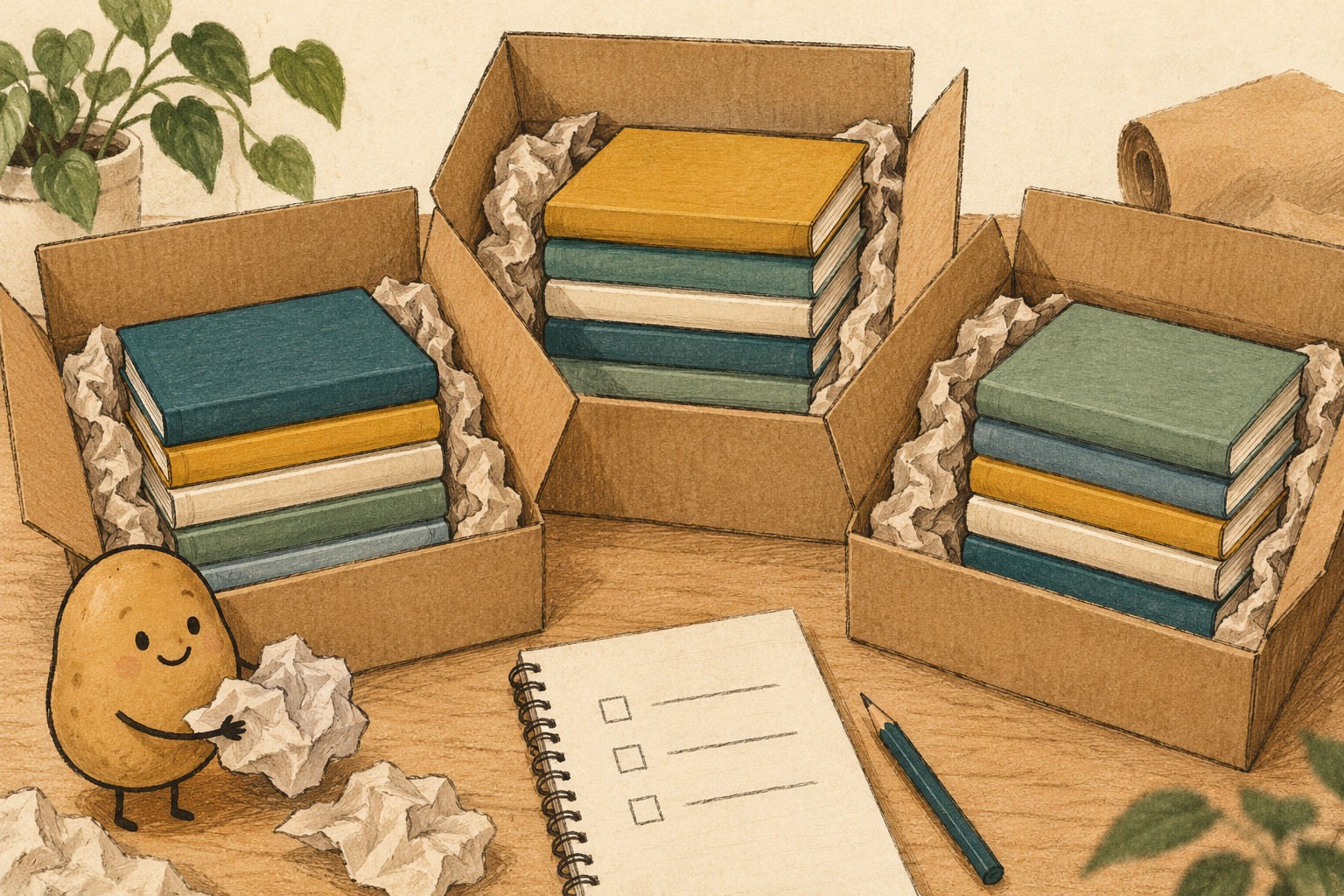
A shelf looks light until it becomes one cardboard cube. The useful question is not “How many books fit?” It is “Can this particular box protect these books and be moved as planned?” This guide pairs a simple flat-packing method with a record that makes unpacking less of a mystery novel.
Choose a small batch before choosing a bigger box
Use a sound, dry carton intended for moving dense contents. Assemble and tape it according to its supplier’s instructions; reject a weakened bottom or damaged seams. A printed box capacity is a packaging specification, not a personal lifting target. For example, U-Haul’s book box is a compact 12-inch cube with a stated 65-pound capacity. That does not mean you should fill it to that weight.
Decide who or what will move each carton, including any stairs, before filling it. Agree any handling limit with your mover. Split a batch that is awkward or too heavy for the planned handling; do not attempt a difficult lift just to prove a box is ready. This is a packing guide, not a lifting assessment.
Sort into three destinations

- Pack: ordinary books you will not need during the move. Make small groups by approximate size, then note which shelf group they came from.
- Keep close: the book you are reading, a work reference you still need, or a notebook containing moving information. Put these in your own clearly identified bag.
- Set aside: books with loose covers, delicate bindings, dampness, or unusual value. Do not treat them as filler in a general carton. Seek item-specific conservation or packing guidance before proceeding.
“Set aside” is a decision queue, not a donation instruction. You do not need to make a permanent collection decision while the packing tape is stuck to your sleeve.
Use one easy-to-check arrangement: closed and flat
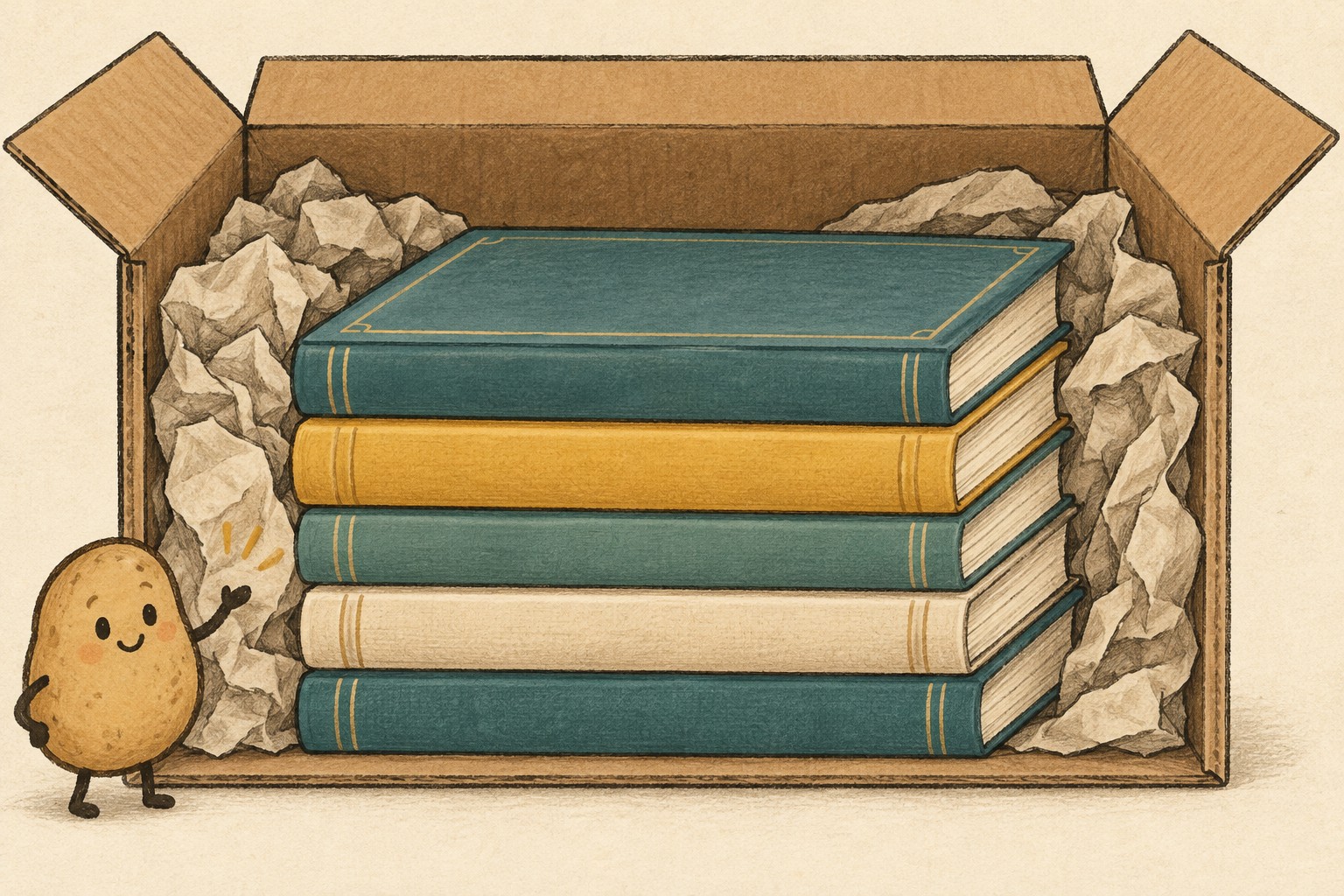
For ordinary books, start with a cushioned base and stack them flat without bending covers or page edges. Fill unused gaps with clean packing paper, rather than wedging another book into a space that is too narrow. Moving Help’s packing guide describes flat packing as an option and recommends cushioning spaces. Keep the lid area clear enough to close normally.
Group similarly sized books and put larger, heavier volumes below smaller ones. Use unprinted paper rather than printed newspaper against books; U-Haul’s storage guidance warns that newspaper ink can transfer. Its advice also says to avoid introducing moisture when dusting. Do not wet books as a pre-packing “clean.”
There are other packing orientations, and supplier guidance differs on placing books on their spines. This workflow deliberately uses a flat arrangement for ordinary volumes. It is not a preservation method for rare books and does not promise damage-free transit.
Make a book-box record before you seal it
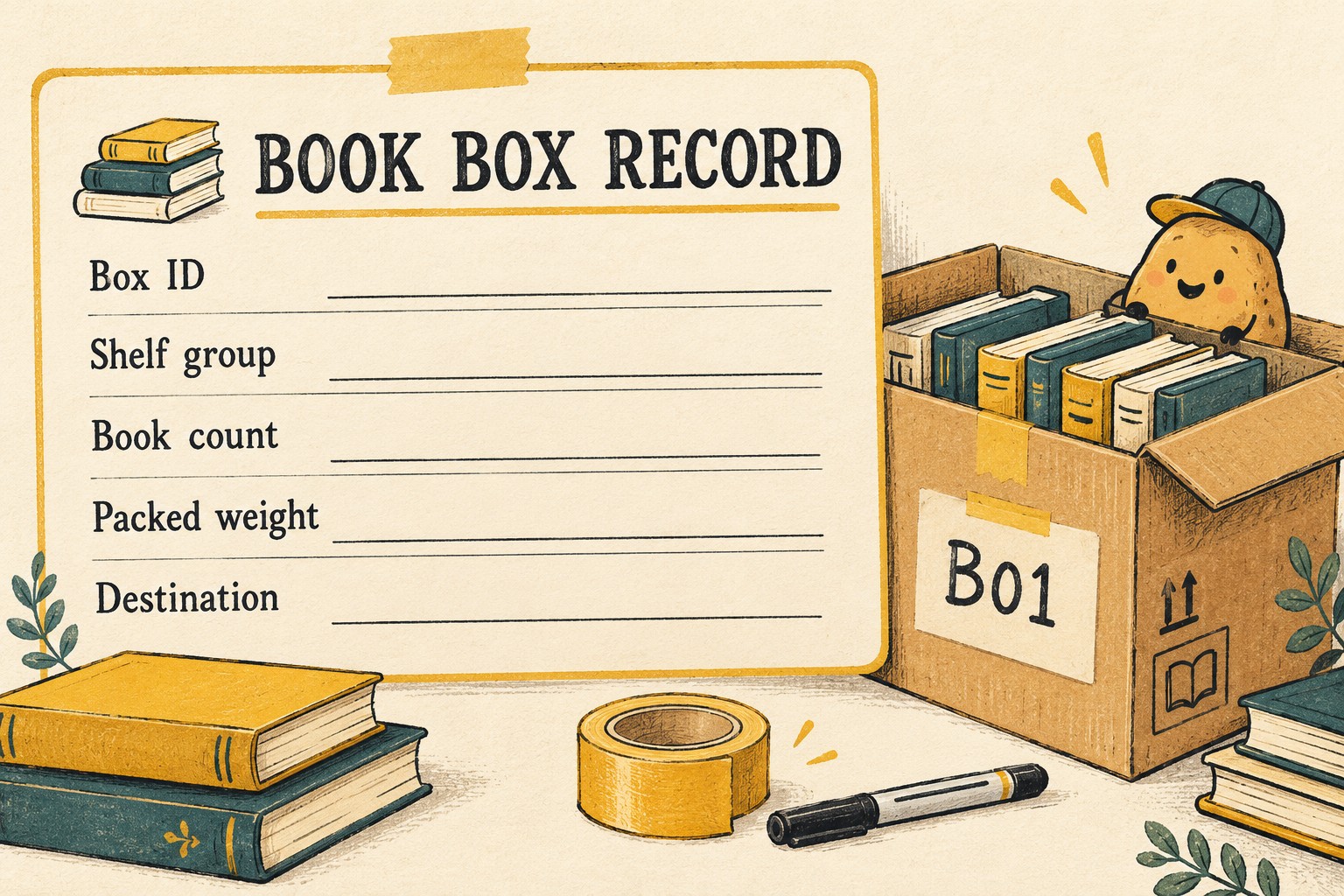
Copy this table into a note or write one card per box. The ID connects the carton to its contents; the shelf group is enough for most everyday collections. List individual titles only when you need that level of detail.
| Field | What to write | Fictional example |
|---|---|---|
| Box ID | A unique short identifier, repeated on the carton | B01 |
| Shelf group | The shelf or collection segment packed together | Living room, travel shelf |
| Book count | Count after packing, not an estimate from the shelf | 9 books |
| Packed weight | Measured carton weight, if available; otherwise write “not measured” | Not measured |
| Destination | The room or shelf where this batch belongs | Study, lower shelf |
| Exceptions | Items removed, held separately, or needing special care | Atlas in separate carton B02 |
| Arrival check | Mark only after opening and comparing contents | Pending |
The example count is not a recommended capacity. A carton of nine thin novels and a carton of nine large art books are different loads. If you photograph the open box, include the ID card in the frame so the photograph has an unambiguous home.
Close, split or hold: the last decision
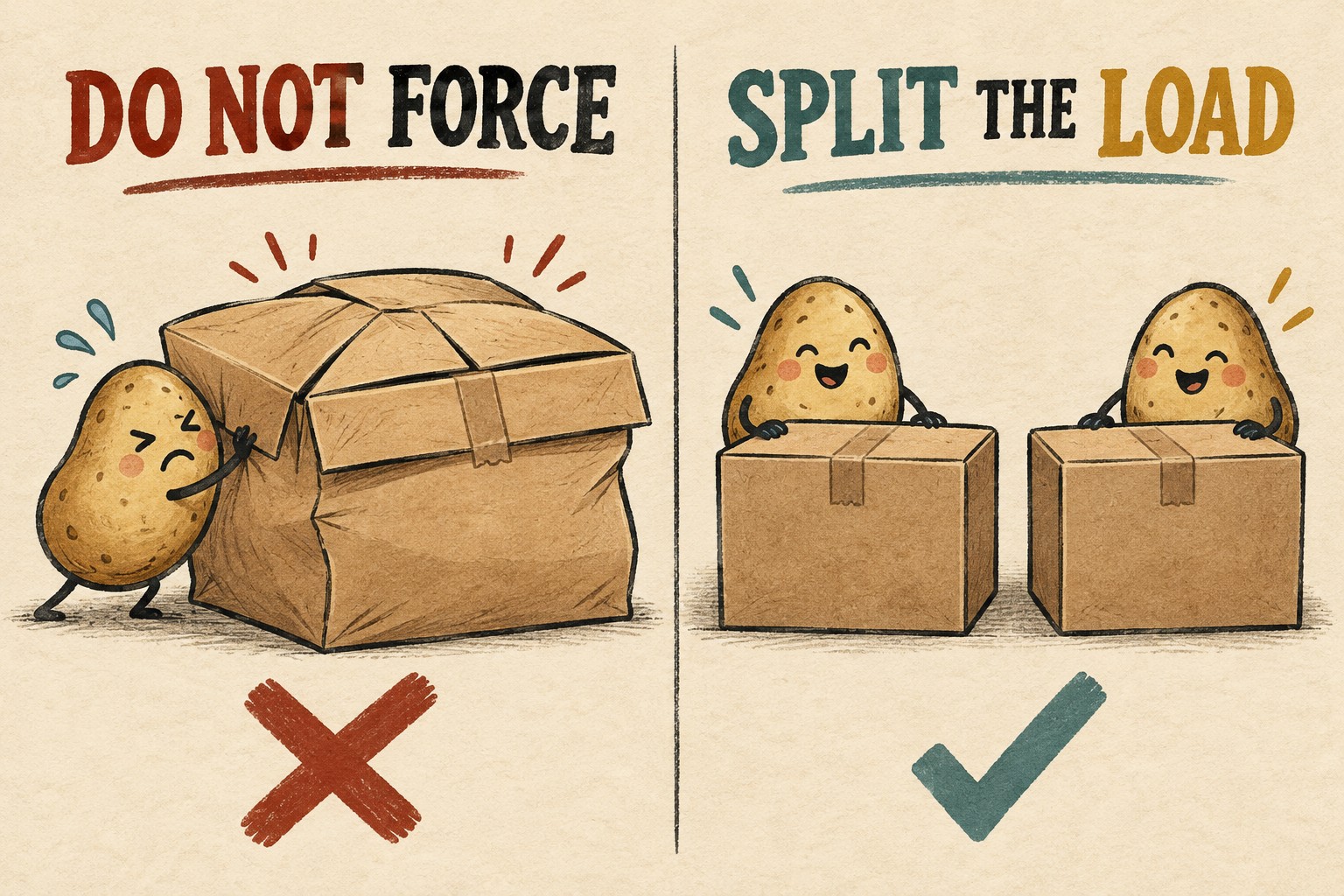
- Close: the lid sits normally, books are supported, the carton is sound, and the planned handling is appropriate.
- Split: the lid bulges, books are forced into gaps, or the packed load is unsuitable for the move. Remove books into a second small carton and update both counts.
- Hold: damage, moisture or an unusual binding raises a question you have not resolved. Keep the item out of the general batch until you have suitable guidance.
Write the ID on the top and an exposed side, then include it in your moving-box label plan. At arrival, compare the contents with the record before discarding it. If B01 is missing the atlas, the exception field should tell you whether it is in B02 before you open every box in the house.
Before sealing: flat books, supported gaps, no forced lid, workable handling plan, recorded count, readable ID. The goal is a box you can account for, not a new personal record for books per cubic inch.
Source pages checked October 10, 2026. The record and decision checklist are original organizing aids; no move or packing trial was performed for this article.