Before lending a board game, match the box to its edition-specific contents list, count components by type, and record spares separately from the pieces used in play. Put a dated check sheet inside the box. If a count is unresolved, label it unknown rather than calling the game complete.
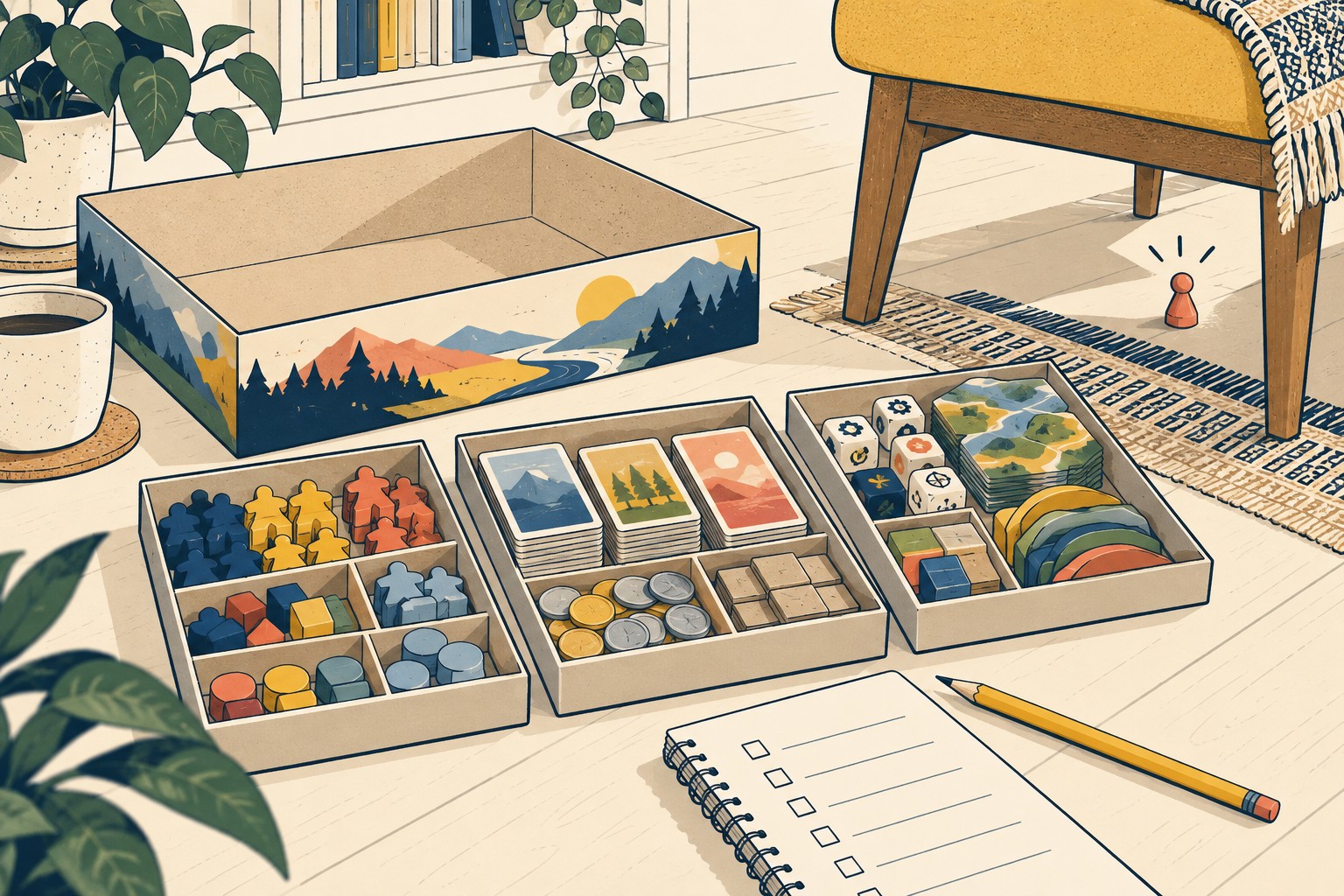
A closed lid is excellent at hiding a missing pawn. It is less good at telling the next player whether that pawn matters. A small component record gives both the lender and borrower something better than “it was probably all there.”
This guide is an original household workflow for checking one ordinary, resettable board game before a loan and again on return. It is not a universal inventory for every edition. Campaign and legacy games may deliberately retain progress or remove components: follow their own instructions instead of resetting them to a new-box state.
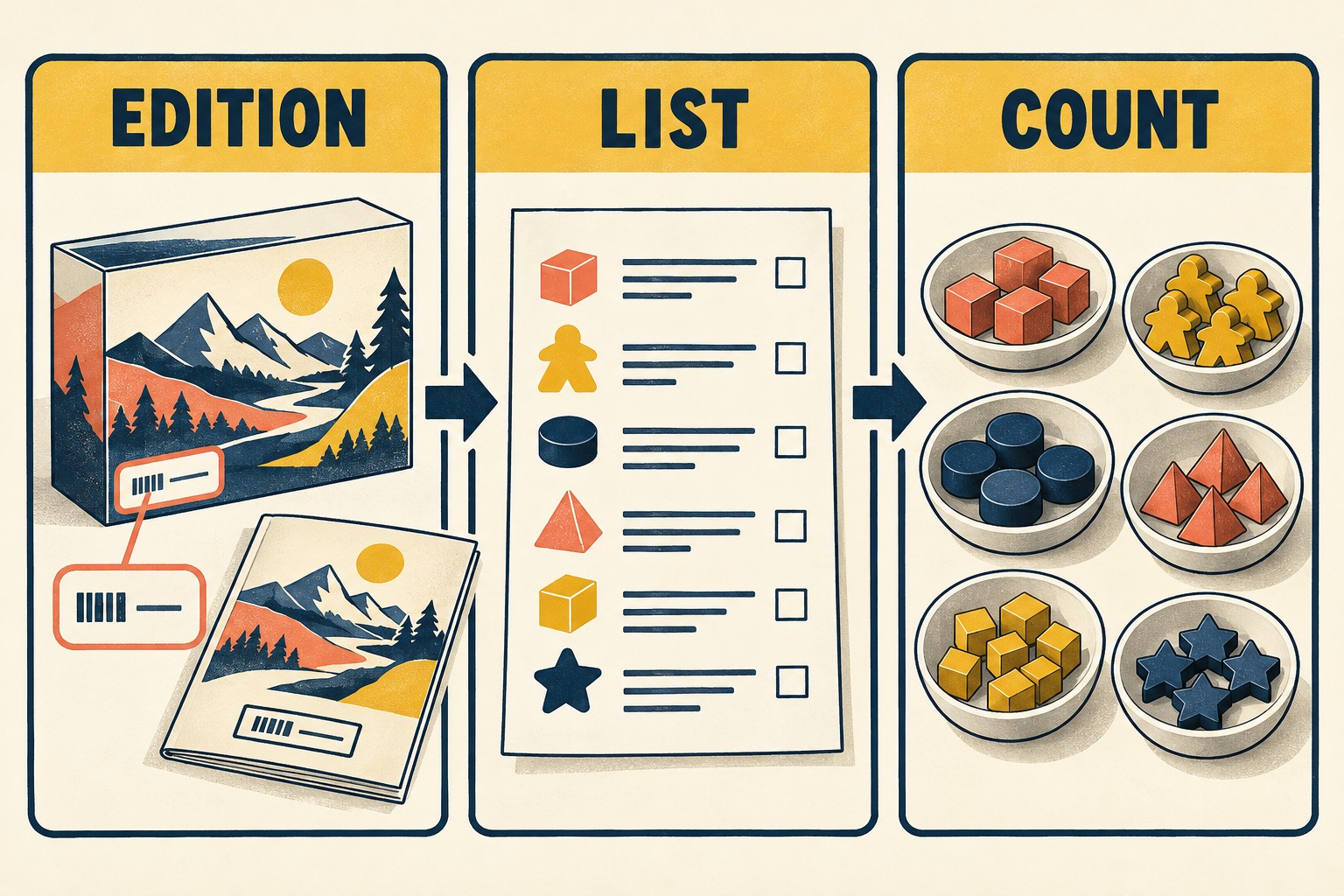
Find the right list before counting anything
Write down the exact game name, publisher, edition or product number, and any expansion stored in the same box. Match the rulebook to those details. Similar box art or a familiar title is not enough to establish that an online component list belongs to your copy.
Hasbro's official instruction finder supports searches by brand, product name and product number. Use the equivalent official instruction page for your publisher. If the list you find does not identify the edition clearly, keep that uncertainty in the record rather than borrowing a total from a shopping listing.
- Open only one game at a time on a clear surface.
- Keep the box, rulebook and component list together.
- Separate any expansion or unofficial accessory before counting the base game.
- Read both the contents list and setup instructions. They answer different questions: what belongs in the box, and what gets used at the table.
Separate a complete box from a complete play set
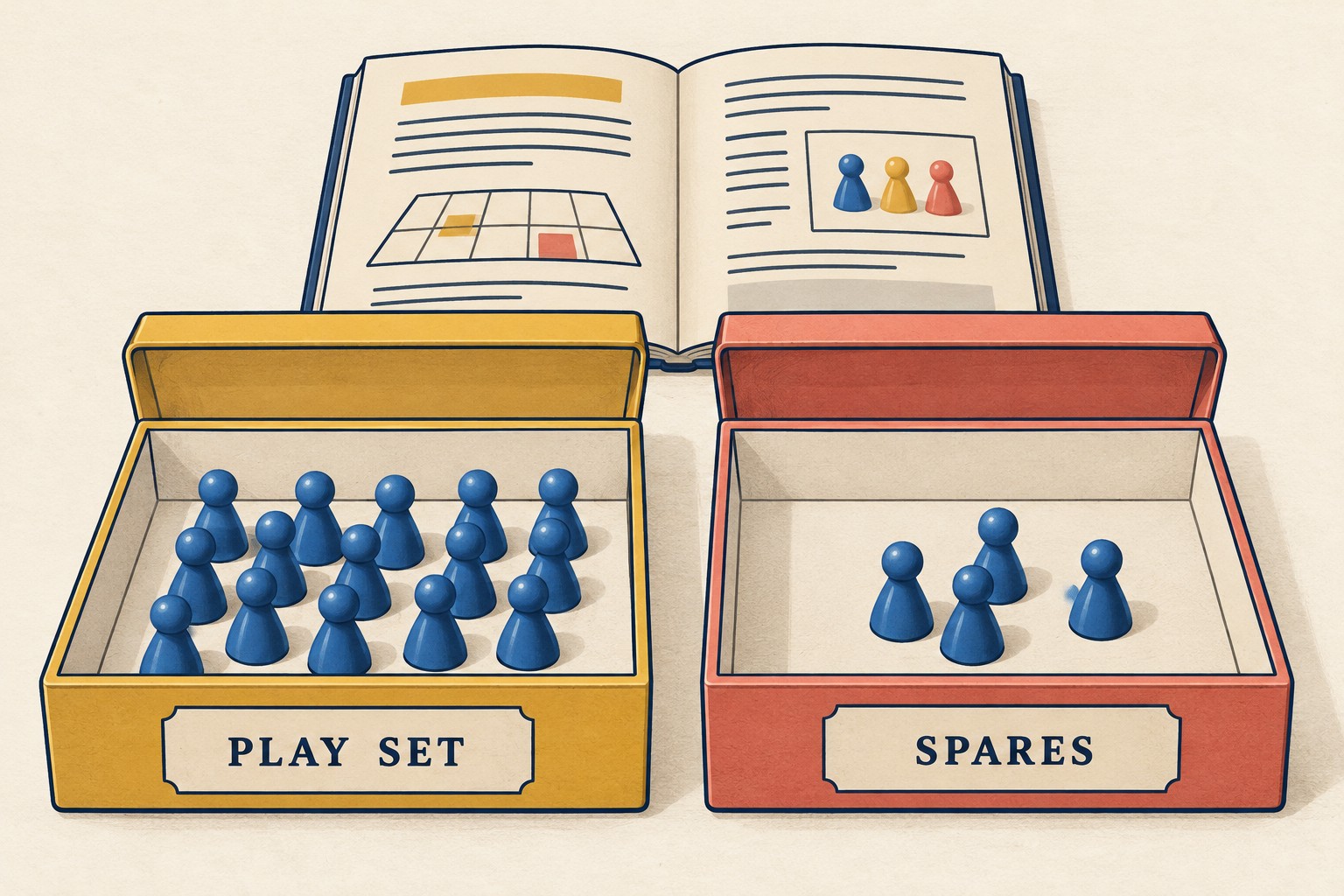
Extra pieces can make an honest count look wrong. For example, the official 2015 English Ticket to Ride rulebook lists 240 colored train cars, including replacement extras, while setup gives each player 45 cars. Those figures serve different purposes. Do not divide a box total into player supplies and assume that is the rule.
Use that as a reason to check your own edition, not as a count for every Ticket to Ride product. A spare can remain in the box while being recorded separately. Keep the required play quantity, observed spare quantity and total contents distinct wherever the rules distinguish them.
Likewise, a deck count can match while the wrong cards are present. When the contents list distinguishes card types or named items, check those groups individually. Do not open sealed campaign material or reveal hidden content merely to fill every row of a generic checklist.
Count into groups you can check again
Use the component names from the rulebook as row labels. Sort by type first, then by color or symbol if the game distinguishes them. Keep counted and uncounted pieces apart. If you lose your place, restart that group; guessing the last few pieces defeats the purpose.
For many identical tokens, arrange small rows or groups and write the group count before moving them. Choose a grouping you can see clearly. For a printed card deck, compare its categories with the official list as well as counting the stack. These are suggested counting methods, not manufacturer instructions.
Record a discrepancy while the game is still spread out. Check the insert, folded board, empty bags and the area where the last session happened before assuming a component was never supplied. A loose piece that cannot be identified should get its own “unidentified” note, not be silently assigned to the nearest matching color.
Copy this box-check record
Keep the worksheet inside the box or in your own household notes. It records observations, not a warranty claim or a promise that the game is playable under every variant.
| Field | What to enter |
|---|---|
| Game identity | Name, publisher, edition or product number, language if relevant |
| Reference | Rulebook title or official URL, plus page or section |
| Included extras | Expansion name, accessories and known spare groups; keep them distinct |
| Component row | Name / expected count from reference / found count / discrepancy or action |
| Check details | Date checked, person checking, and any sections intentionally not opened |
| Loan and return | Date out, agreed return date, return check date and changes since the first check |
| Result | Checked against named list / known missing item / unknown count or edition |
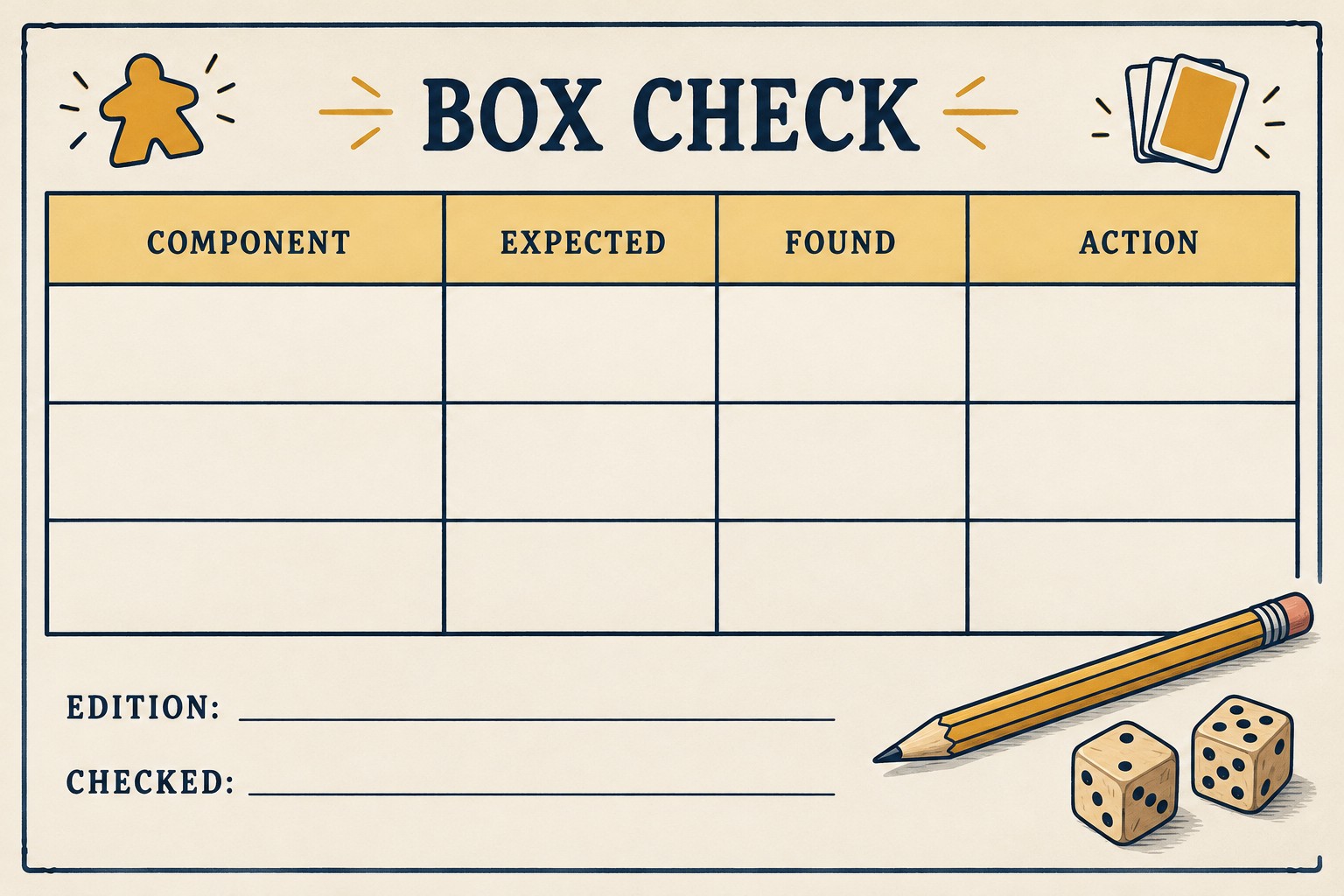
Hypothetical row: “Blue player markers / expected 8 / found 7 / one missing; lender and borrower told before handoff.” The number is invented to demonstrate the form. Do not copy it as a real game's inventory. If the rules allow a substitute and the players agree, record that separately; a substitute does not make the original box complete.
Pack for the next setup, then make the handoff honest
Return pieces to the intended insert where it works. If you use separate containers, label them with the same component names as the worksheet and check that the box closes without pressing on the board or bending cards. Keep small pieces and packaging appropriately stored away from young children and pets; follow the product's age and safety warnings.
Add a short note the borrower will actually read: “Checked against the English edition rulebook on [date]. Expansion kept separate. One blue marker missing; see sheet.” A quick photo of the packed open box can help show where groups belong, but cannot prove every card or token is present.
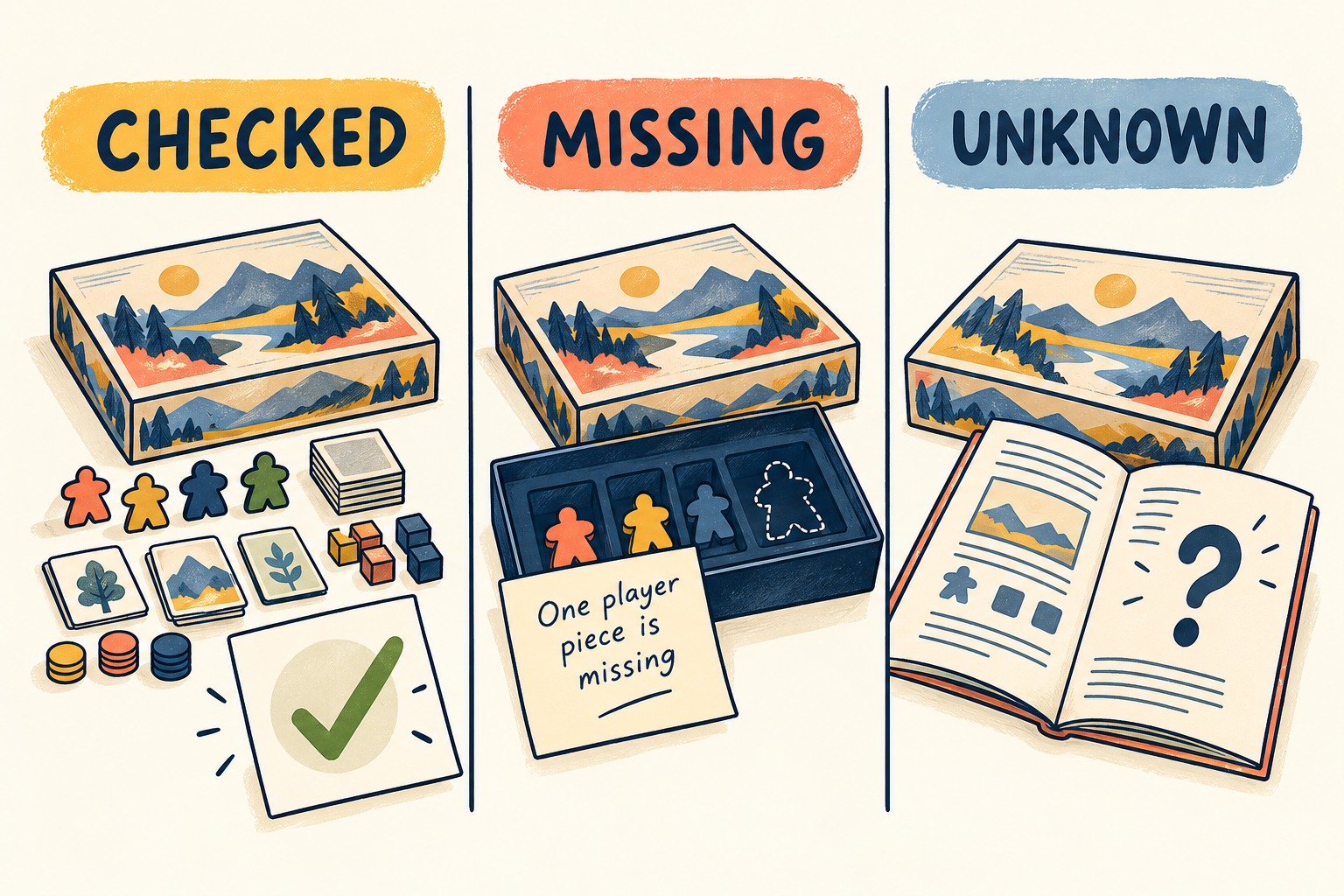
When the game comes back, compare it with the same sheet before mixing in anything from another box. Record new findings without rewriting the original check as if you knew them then. If no reliable list was available, “unknown” remains an acceptable result until one is found.
If a piece really is missing
Use the publisher's current support page for your region and product. Gather the exact edition, missing component description and any requested purchase details privately. Do not assume every publisher supplies individual spare parts or that a second-hand copy has the same replacement options as a new purchase.
As one region-specific example, Ravensburger's US Care Commitment, checked October 10, 2026, includes purchase-source and original-purchaser conditions and directs retail buyers to review the retailer's policy first. That is a reason to check eligibility, not a guarantee of a replacement for your game.
Finish with one clear outcome: the contents match the named reference, a known gap is written down, or the check is still unresolved. A box does not need an elaborate filing system. It needs a truthful note that survives until the next game night.