A gift bag can look wide enough on a shop page and still refuse to take the box you planned to put inside it. The missing check is often depth, but a narrow opening, a raised bottom insert or an awkward handle position can also change the result.
Choose with the gift already boxed or bundled as you will present it. Then use the comparison card below to check the bag’s labeled dimensions, its loading opening, the space at the base and the room near the handles. This guide is for ordinary paper gift bags used for hand-giving; it is not a shipping-packaging specification or a load test.
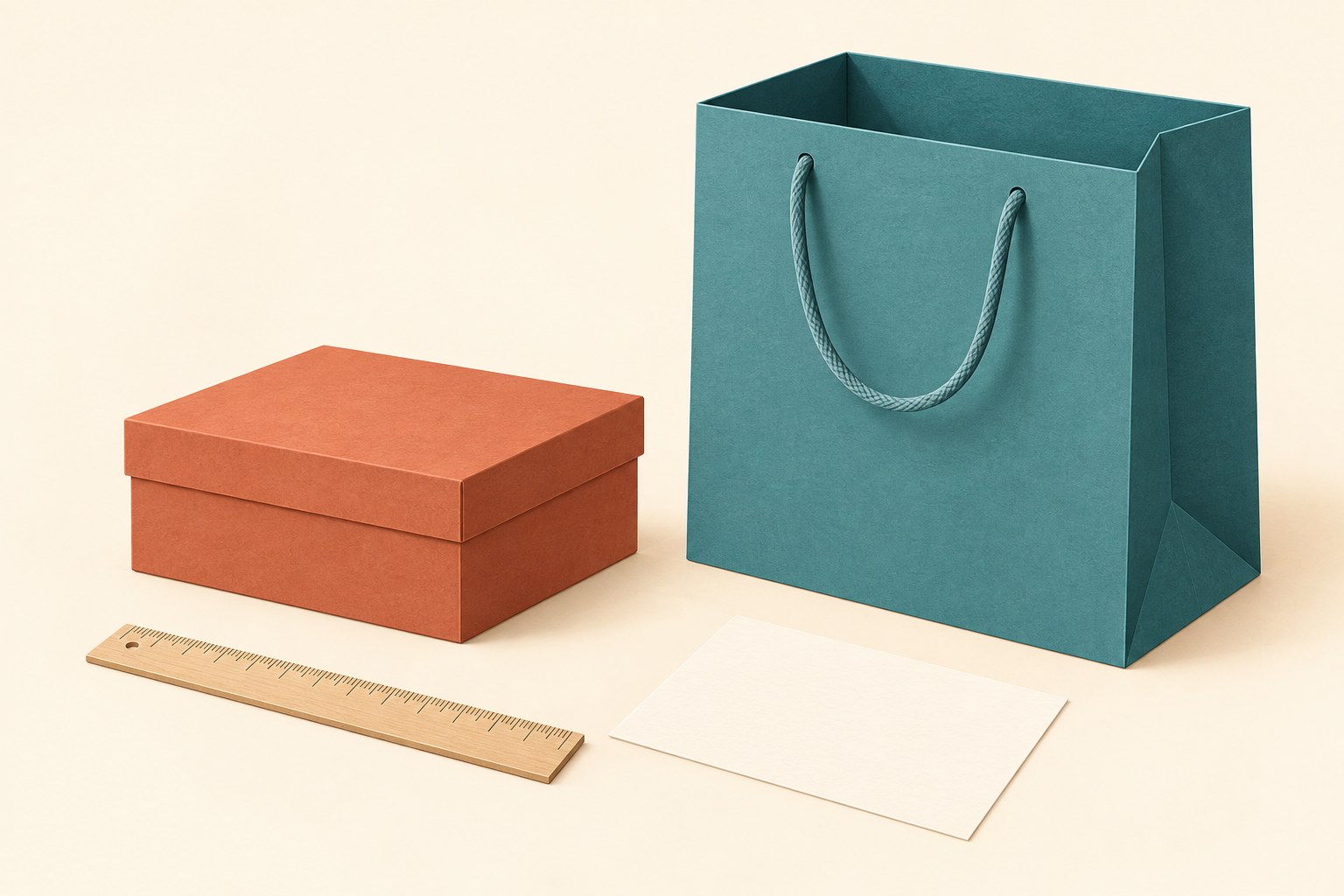
Start with the gift in its finished shape
ZiiBoxes recommends measuring the finished pack, including components that change its size. Put the gift in its presentation box, include decorations that will be attached before loading, and arrange multiple items as a complete group.
Write down the intended orientation and the three largest outside measurements. Use one unit throughout. A simple note might read: “Upright box; front 6 inches; depth 4.5 inches; height 5 inches.” Those are invented example measurements, not a recommended gift or bag size.
- Must stay upright? Write that first, so turning the object sideways does not become an accidental solution.
- Soft bundle? Measure the folded shape you are willing to give, rather than the smallest shape you can force it into.
- Several pieces? Decide whether they will sit beside one another or in separate bags before comparing candidates.
- Decoration still to add? Keep that as an unresolved field until the complete package is ready.
Copy the dimension labels, not just the numbers
The Packaging Source’s retail-bag guide describes width across the front, gusset depth when opened and body height from the base to the top edge. Its gusseted shopping-bag notation is width × gusset × height. Its flat merchandise bags can instead have only width and height. That distinction matters: a flat bag’s two-number listing does not establish the box-shaped space shown in a shopping-bag diagram.
Do not assume the next seller uses the same order. Hallmark’s white assorted eight-pack, for example, lists its medium bag as approximately 7 inches wide, 8.8 inches high and 4 inches deep. The height is the middle number in that listing. Read the letters beside each number before transferring the measurements to your card.
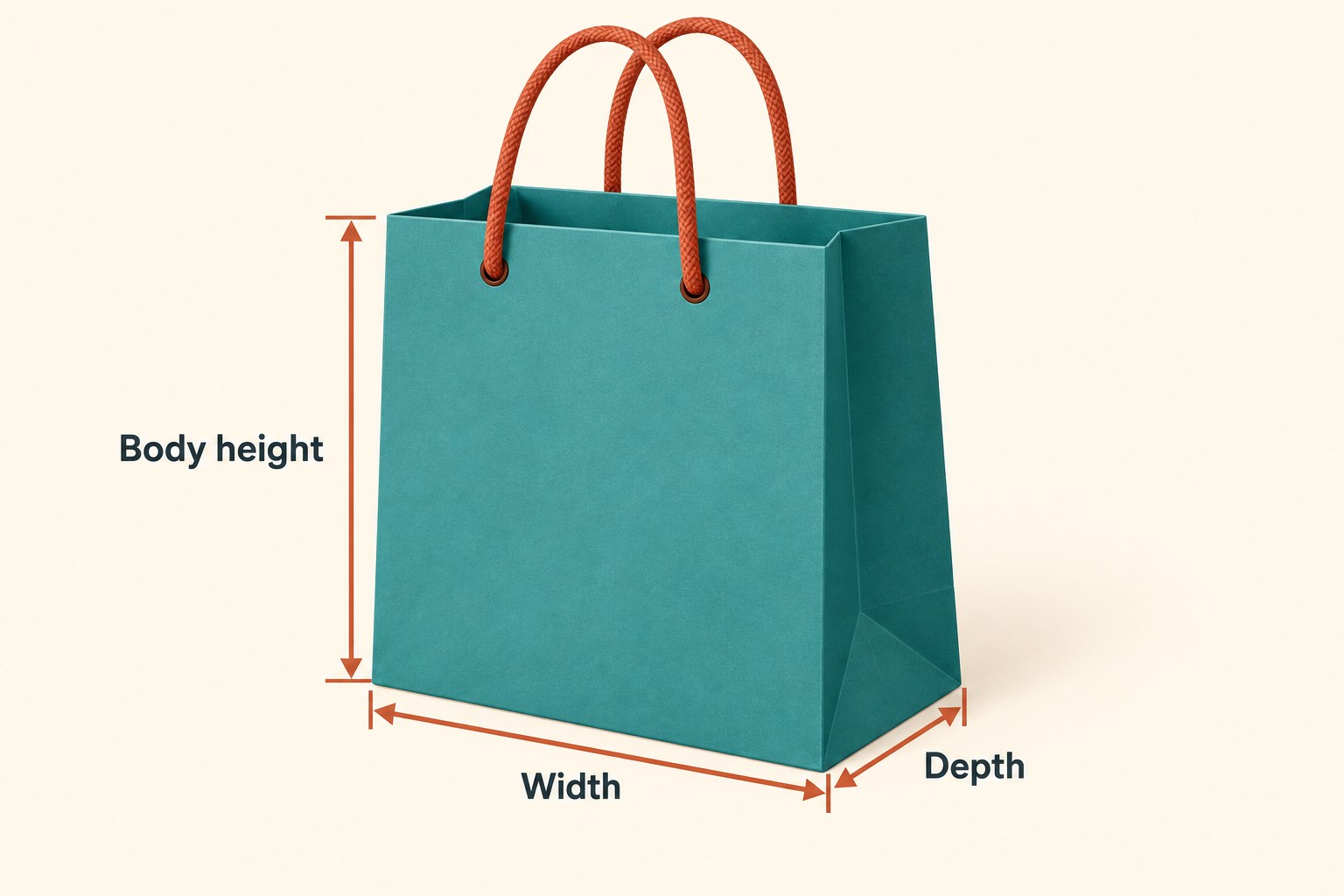
Use three named fields, even if the product page compresses everything into one line:
| Field | What to record | Question left open |
|---|---|---|
| Width | The seller’s front-width measurement and unit | Does the packed gift also clear the actual opening? |
| Depth | The expanded depth or gusset measurement | Can the gift sit at the base without forcing the folds? |
| Body height | The bag-body measurement, with the seller’s definition | Is there room for the gift, finishing paper and access to the handles? |
If a listing gives three unlabeled numbers, mark the interpretation “unknown.” A photo, a size name such as medium, or a guess about the usual order is not a replacement for the missing labels.
Check the opening and the base separately
HS PACKFACTORY’s construction guide distinguishes listed dimensions from usable internal space. Folds, the bottom and top reinforcement can affect fit. Clearance depends on the combination, so a universal extra-inch rule cannot guarantee success.
Put two questions on your card: “Can it enter?” and “Can it rest?”
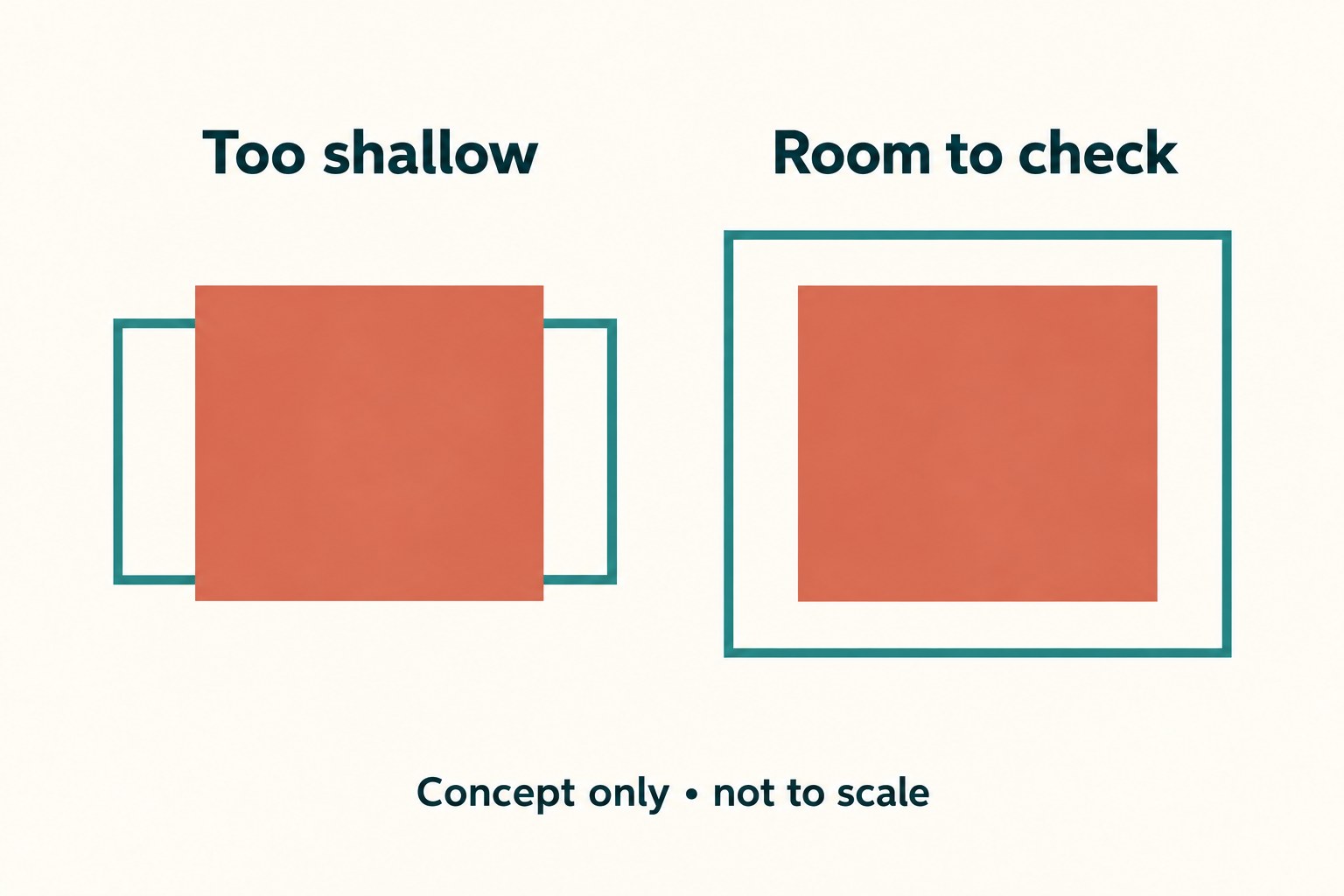
- Entry: Rest the bag on a table and open it normally. Can the gift pass through without stretching the paper?
- Resting: Lower the gift gently. Does it settle at the bottom in its intended orientation, without catching on folds?
- Removal: Leave the bag on the table and take the gift out. Reject a fit that requires scraping or tearing.
Online, keep physical fit marked “not yet checked.” Reject dimensions that are already too small. Ask the seller about unclear opening measurements rather than recording an estimate as a pass.
A short example: width passes, depth does not
Consider the invented upright gift box above: 6 inches wide, 4.5 inches deep and 5 inches high. Suppose a hypothetical bag listing says width 7 inches, depth 4 inches and body height 9 inches.
The width and height look larger than the gift, but the stated depth is half an inch smaller. That bag fails this first comparison for the intended orientation. Extra height does not repair missing depth, and a large total volume would not answer the fit question either.
A second hypothetical bag might list 8 inches wide, 6 inches deep and 9 inches high. It passes this initial numbers-only screen. It still needs the opening, base, finishing-space and weight checks. These examples demonstrate a decision method, not tested products or minimum-clearance rules.
Keep the top space and the weight check visible
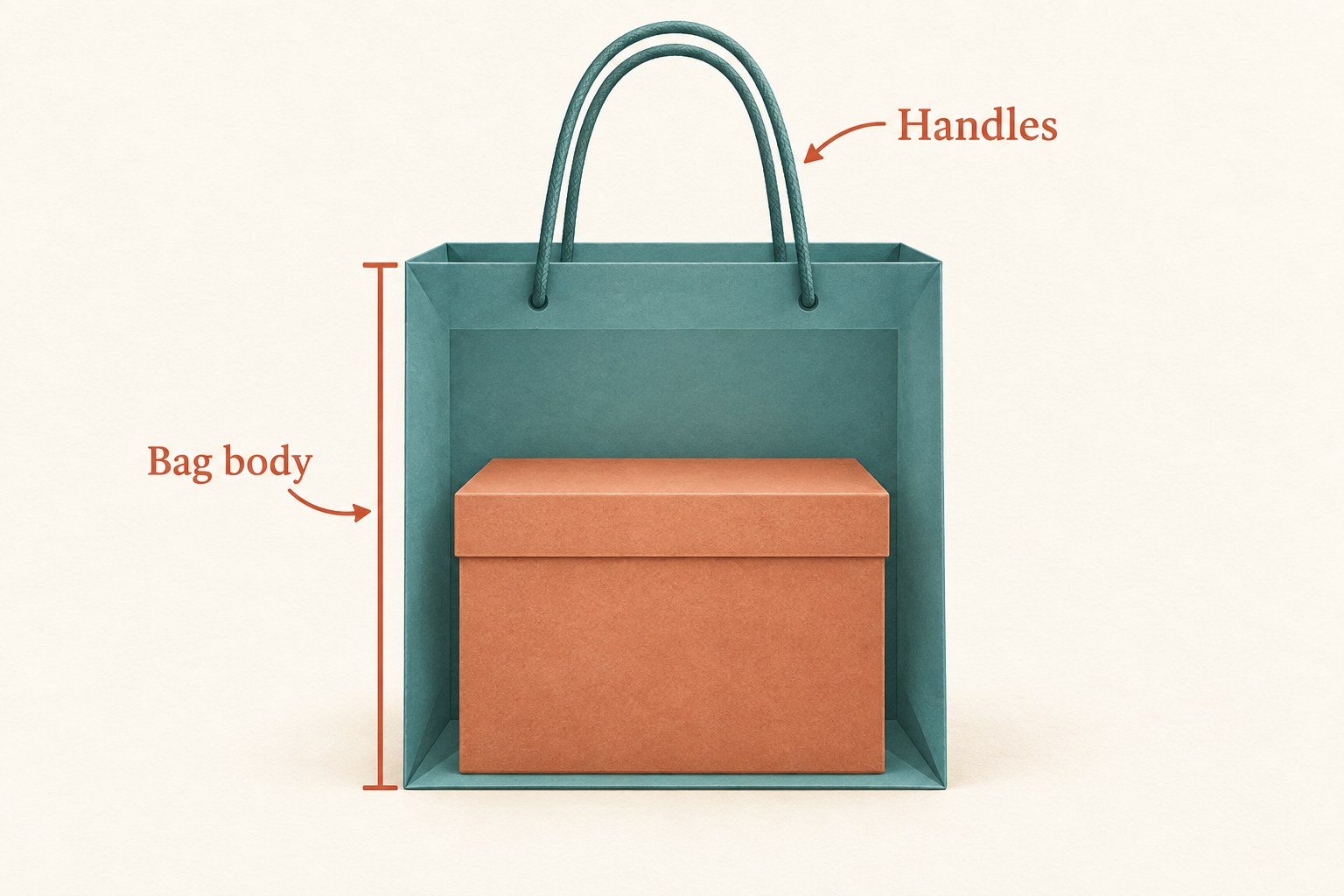
Lipack’s sizing guide identifies handle obstruction as a separate problem with tall gifts. After the gift rests properly, add the finishing paper you actually intend to use. Look at the completed arrangement from above: can the recipient find the handles, and can the gift come out without dismantling an overfilled top? Keep decoration out of the grip area rather than counting the handles as additional bag-body height.
Fit and carrying capacity are separate checks. The Hallmark assortment cited above publishes 5-pound limits for its small and medium bags and 10-pound limits for its large and XL bags. Those are specifications for that particular assortment, not ratings for other bags of similar size.
Record the exact product’s stated limit and the packed contents’ weight. If the limit is missing, do not invent one from the paper’s appearance. For a heavy, fragile or valuable gift, use a suitable protective container and carrying method rather than relying on decorative paper or a trial lift as proof of strength.
When reusing a bag, inspect the bottom seams, handle attachments and paper for tears, moisture damage or loose parts before putting the gift in it. A neat appearance does not restore a damaged bag’s original capacity. Replace it if you cannot trust its condition.
Copy this gift-bag comparison card
Keep one card per candidate so a dimension from one product does not get mixed with another product’s weight limit. The fields below are an original planning template; blank answers mean the check is still open.
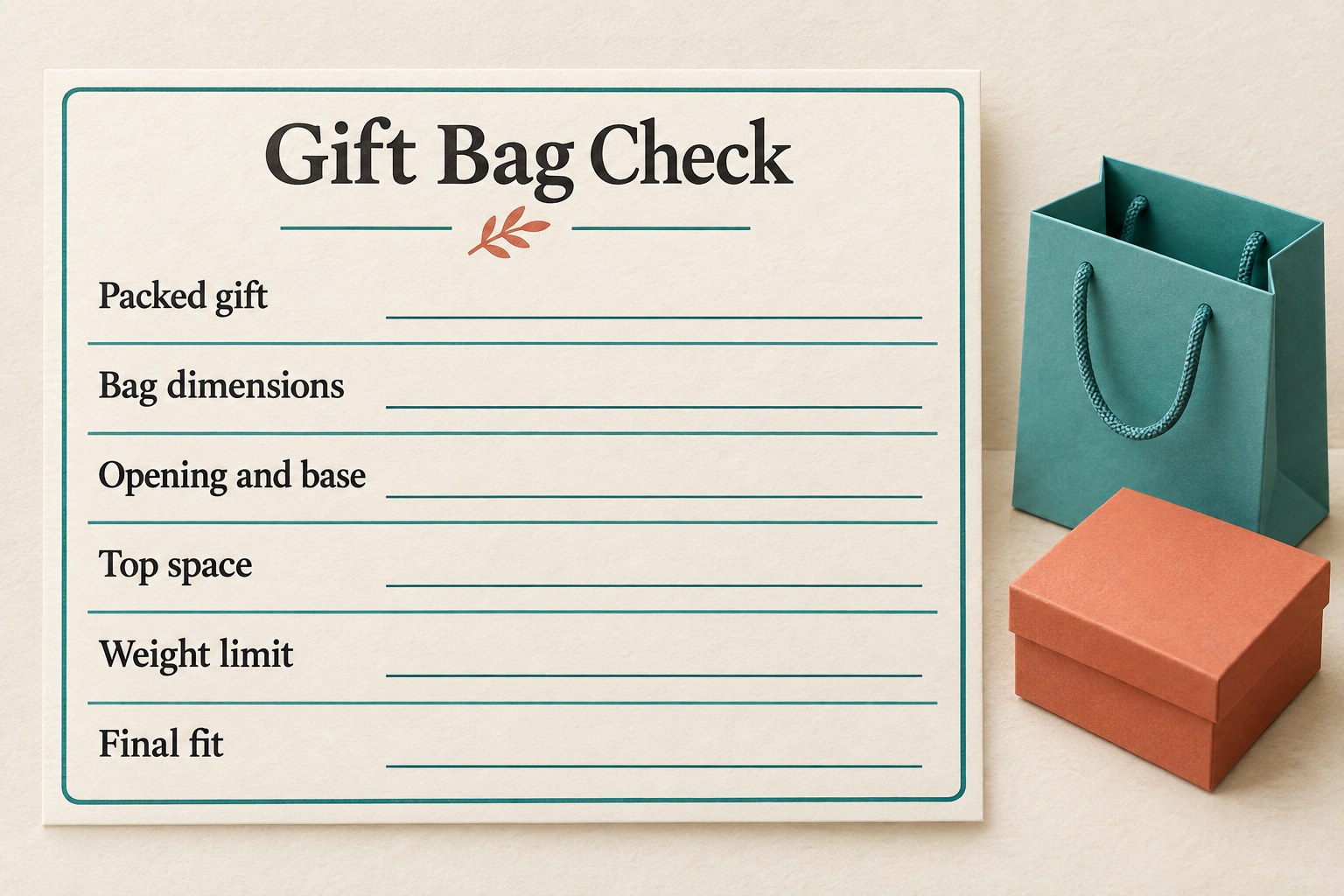
| Record | Your answer |
|---|---|
| Gift and orientation | Item or bundle: ____; must stay upright: ____ |
| Finished gift measurements | Width: ____; depth: ____; height: ____; unit: ____ |
| Candidate identity | Product name or saved-bag label: ____; source: ____ |
| Labeled bag dimensions | Width: ____; depth: ____; body height: ____; unit: ____ |
| Opening, base and removal | Enters: ____; rests: ____; comes out: ____; checked how: ____ |
| Finished top | Decoration fits: ____; handles accessible: ____ |
| Weight and condition | Stated limit: ____; packed contents: ____; bag condition: ____ |
| Decision | Use / reject / needs information: ____; next step: ____ |
Finish with a specific decision. “Use this bag for the boxed scarf” is more useful than “large bags should work.” If you keep the bag for another occasion, save its measurements with it, but redo the fit and condition checks for the next gift.
Using a wrapped box instead? The wrapping-paper box-fit worksheet covers measuring the paper around the box. For a gift that will travel by carrier, use the separate gift-shipping box checklist before treating presentation packaging as a shipping solution.