A cloth can cover a gift box and still leave too little fabric to tie. Before choosing a furoshiki by its printed size, try the actual wrap around the actual closed box. Check coverage, complete the knot, then decide where the cloth will go after the gift is opened.
This guide focuses on a hand-presented, boxed gift. The original fit record below helps you repeat a successful pairing without buying another cloth by guesswork. It is a planning checklist, not a tested sizing formula or a carrying-load rating.
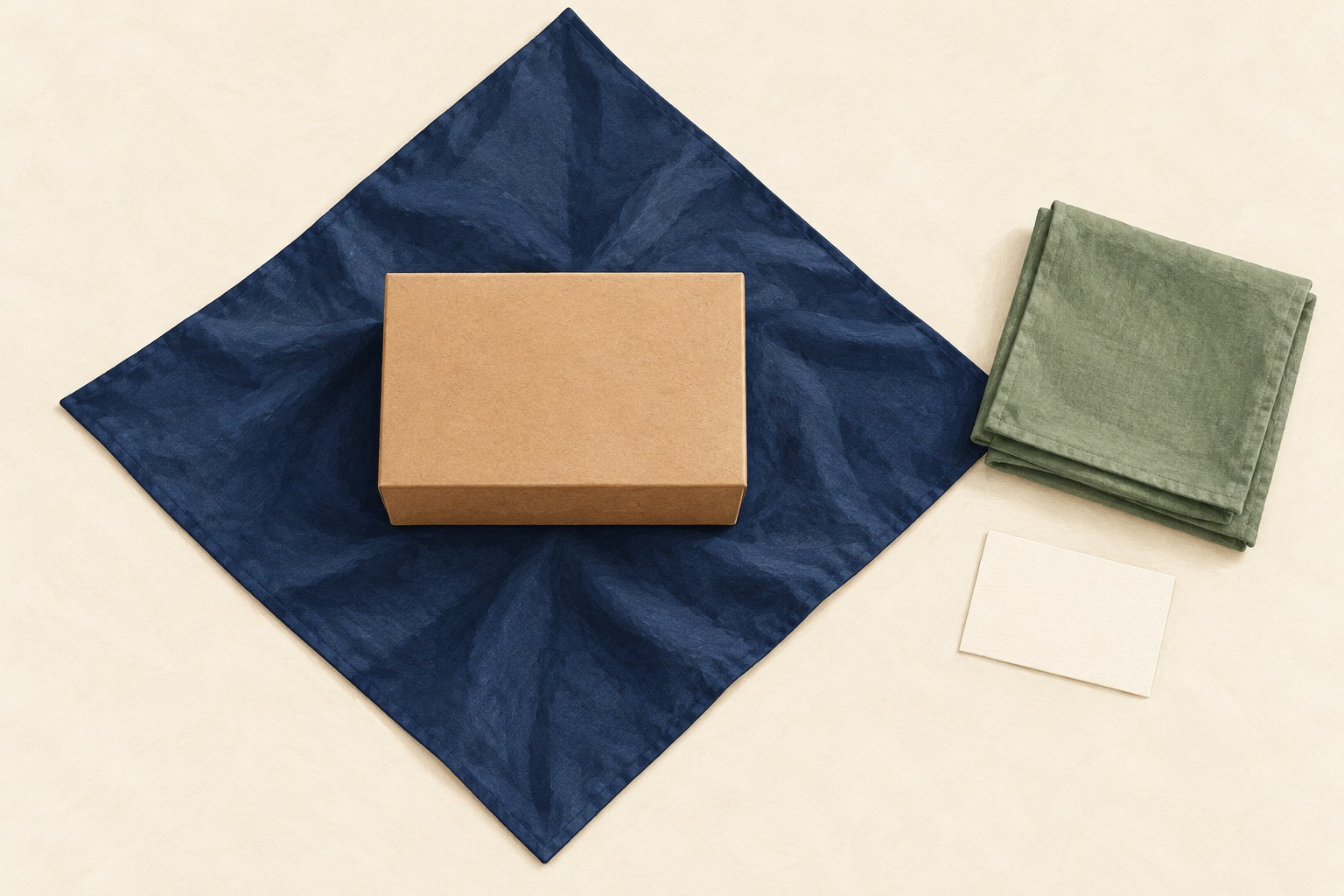
Choose a cloth you can actually use again
Start with a clean, intact square or nearly square wrapping cloth. A scarf or napkin you already own can be a candidate if its shape, condition and handling suit the gift. Check that you are comfortable folding and tying it; keep delicate or sentimental fabric out of the experiment if a pulled thread would matter.
Do not reject a purpose-made furoshiki just because its sides differ slightly. Musubi explains that its cloths are not always perfect geometric squares, partly because fabric behaves differently along its two directions. Record both finished dimensions when they differ.
Handle the cloth before committing to it. Does it gather easily, become bulky when folded, or slip back open? Can you see the gift through it? These observations are more useful for this box than choosing by color alone.
Musubi's material-specific care guide describes cotton as easy to tie and washable at home, while its silk and rayon instructions differ. Treat that as guidance for its products, not permission to wash every scarf the same way. Keep your own cloth's care label or instructions with the fit record.
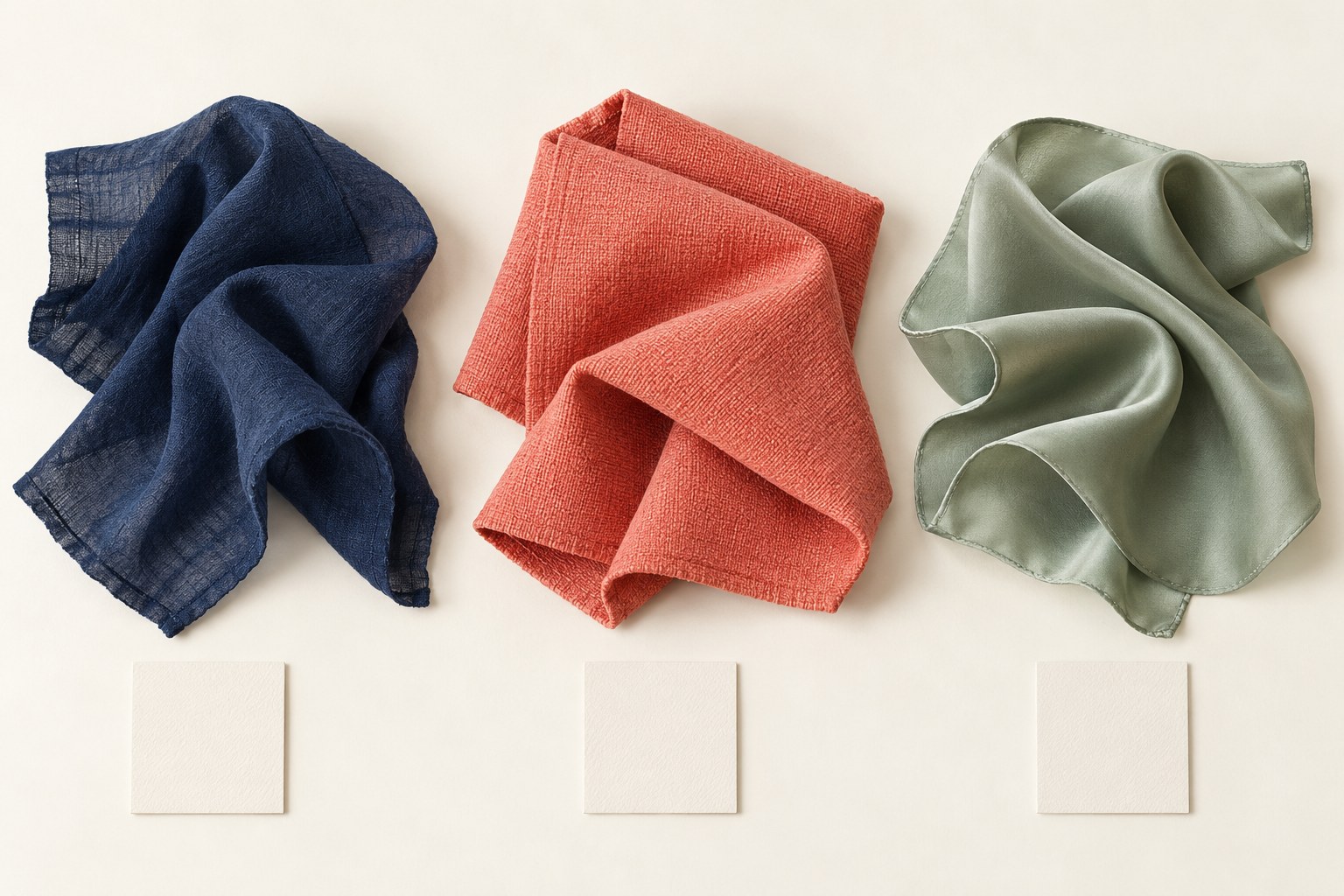
Record the box, then try the basic wrap
Measure the cloth's finished edges and the closed box's outside length, width and height in one unit. Include a projecting lid. Keep the contents in an orientation they can tolerate, and note which face rests on the cloth.
For a basic box wrap, Eirakuya's illustrated instructions provide the folding and square-knot sequence. In brief: lay the reverse side upward, set the box centrally on the diagonal, fold the near corner over it, then bring the far corner over and fold down excess. Bring up the two remaining corners and tie a square, or reef, knot. Its second crossing reverses the direction of the first. Follow the linked diagrams when learning the knot.
Japan's Ministry of the Environment also provides an official wrapping chart with several methods. Use a method suited to your object; a bottle or carrying-bag wrap is a different task from this boxed-gift check.
Use the real cloth for the trial. Paper cannot tell you how that fabric gathers or how bulky its knot will feel. Leave gift tags and decorative additions aside until the basic wrap works.
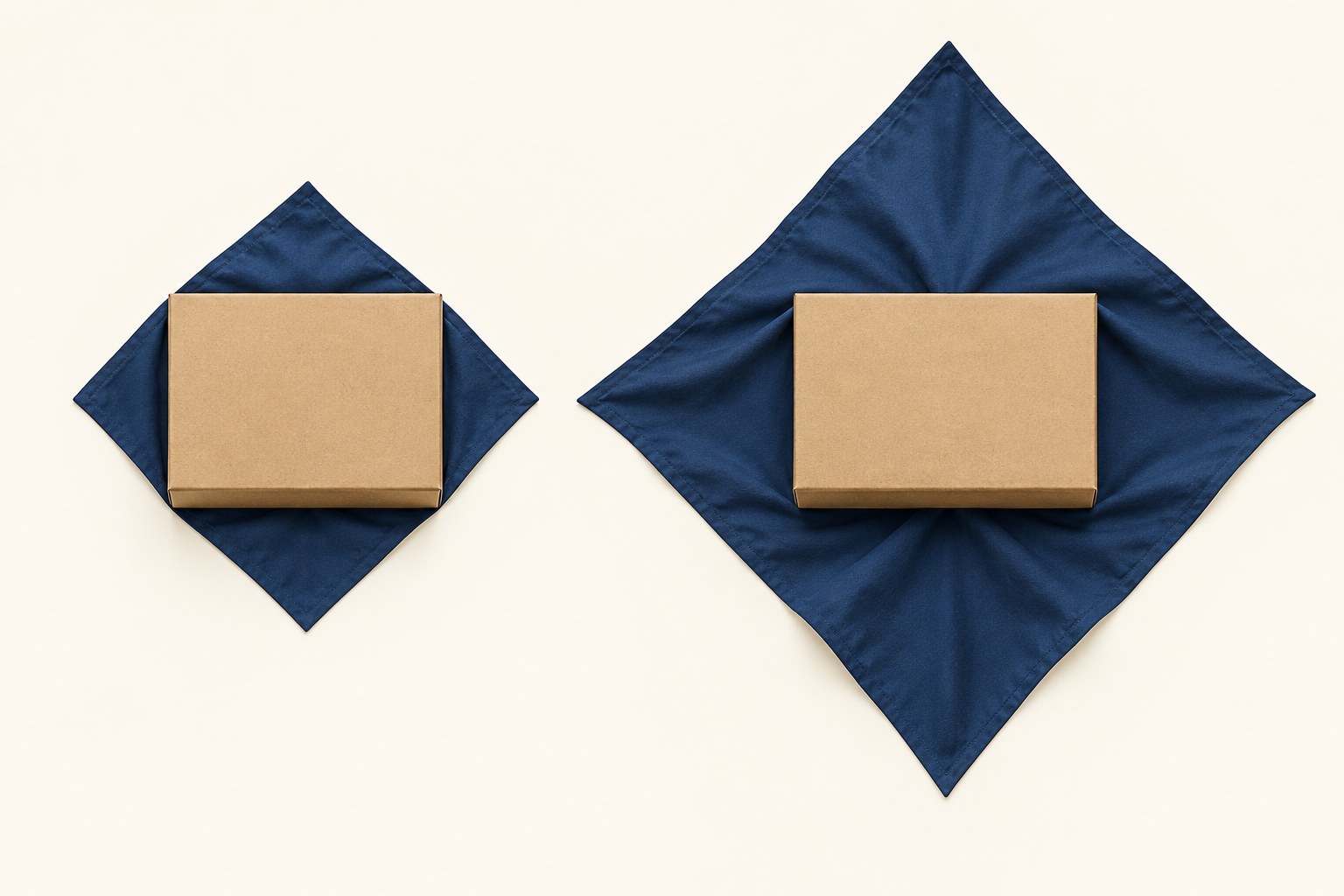
Check three things before calling it a fit
- Coverage: look around the top and sides. Does the wrap cover what you want concealed, without a corner being pulled away to close another gap?
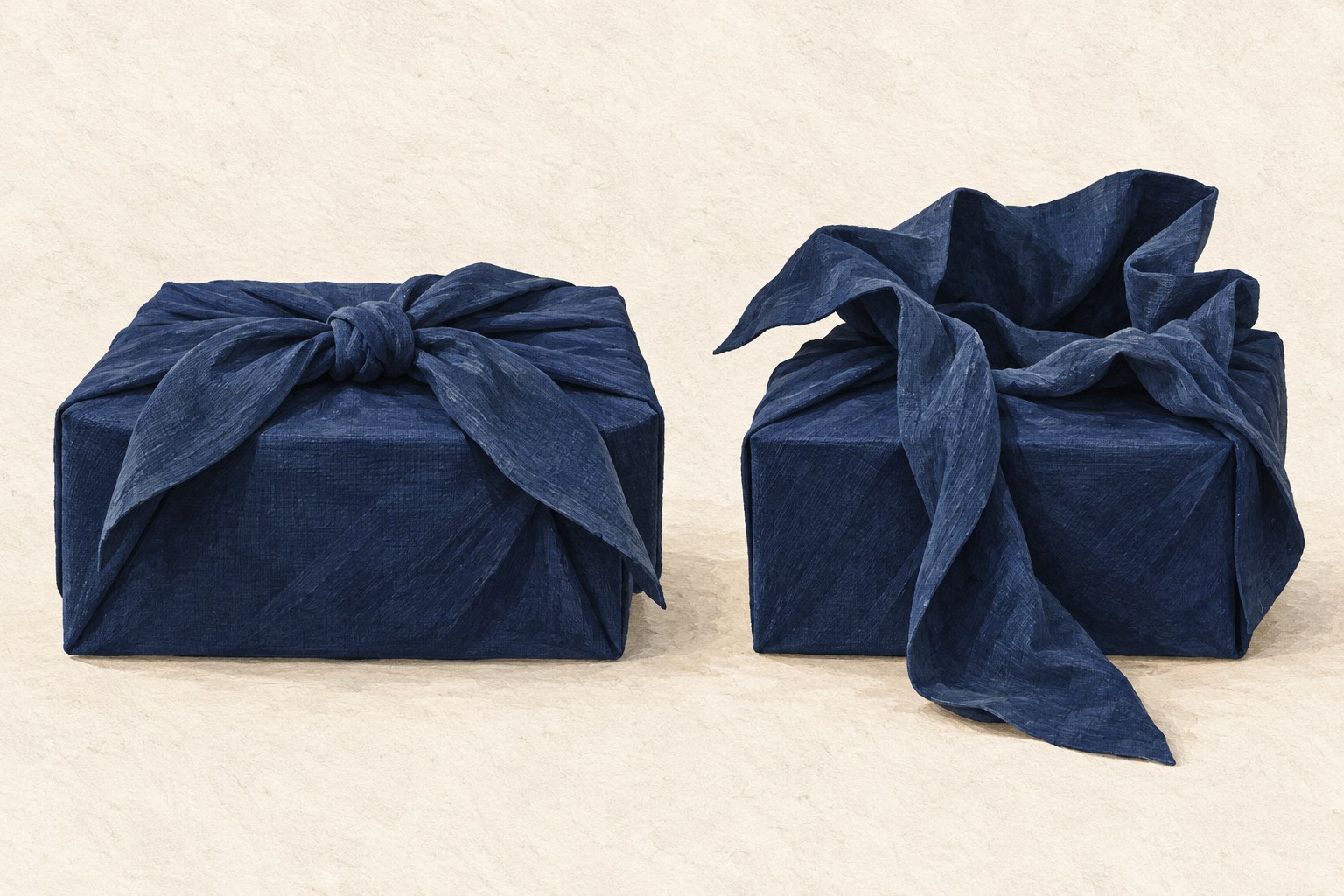
- A complete knot: finish the chosen knot rather than stopping when the corners touch. You need enough usable fabric to make the closure without straining it or crushing the box.
- Supported handling: keep a hand under the box while gently repositioning it. Do the folds and closure remain where you put them? If they shift, reopen and adjust before presentation.
This check does not certify the knot as a handle. Carry the gift with its base supported. A decorative cloth is not a substitute for protective packaging around fragile contents, nor is it a shipping carton.
Change the thing that failed
| Observation | Next trial | What to avoid |
|---|---|---|
| One tying corner is much shorter than the other | Reopen, recenter the box and repeat the same method. | Finishing the knot while the box is obviously off-center. |
| Both tying corners are too short | Try another allowed box orientation, then a larger suitable cloth if needed. | Assuming corners that merely meet are enough. |
| The cloth reaches, but the knot is awkwardly bulky | Try a more supple or less bulky cloth. | Buying a larger size as the automatic fix. |
| The closure repeatedly slips | Check the knot sequence against the instructions, then try another cloth. | Treating long decorative tails as proof of stability. |
| The gift shows through | Try a more opaque cloth or a suitable closed presentation box. | Expecting tighter pulling to change transparency. |
For a rectangular box, changing orientation changes which dimensions the folded corners and tying corners must span. Treat it as a fresh trial: a better knot position can still leave a coverage problem elsewhere. Stop if the fabric snags, the box distorts or the closure remains unreliable.
Copy the cloth-and-box fit record
Save the successful combination, including the method and orientation. Measurements alone do not capture fabric behavior.
- Cloth description or ID: __________
- Finished cloth dimensions and units: __________ × __________
- Material, care instructions and where they are saved: __________
- Closed box dimensions: length __________ × width __________ × height __________
- Face underneath and wrap method: __________
- Coverage: complete / adjust; full knot: works / too short / too bulky
- Supported handling: stays in place / adjust
- Final choice: use this pairing / retry orientation / change cloth
- Cloth after opening: goes with gift / agreed return / stays in household
- Storage place and next intended use: __________
Make the reuse plan clear
If the cloth is part of the gift, say so and pass along its care instructions. If you would like it returned, agree that before handing it over. These are practical choices between giver and recipient, not a universal etiquette rule.
After opening, check the cloth's condition, care for it as instructed and store it with the fit record. Before repeating a batch of gifts, compare the next box and recheck the first wrap. Similar-looking boxes can have different lid projections or heights.
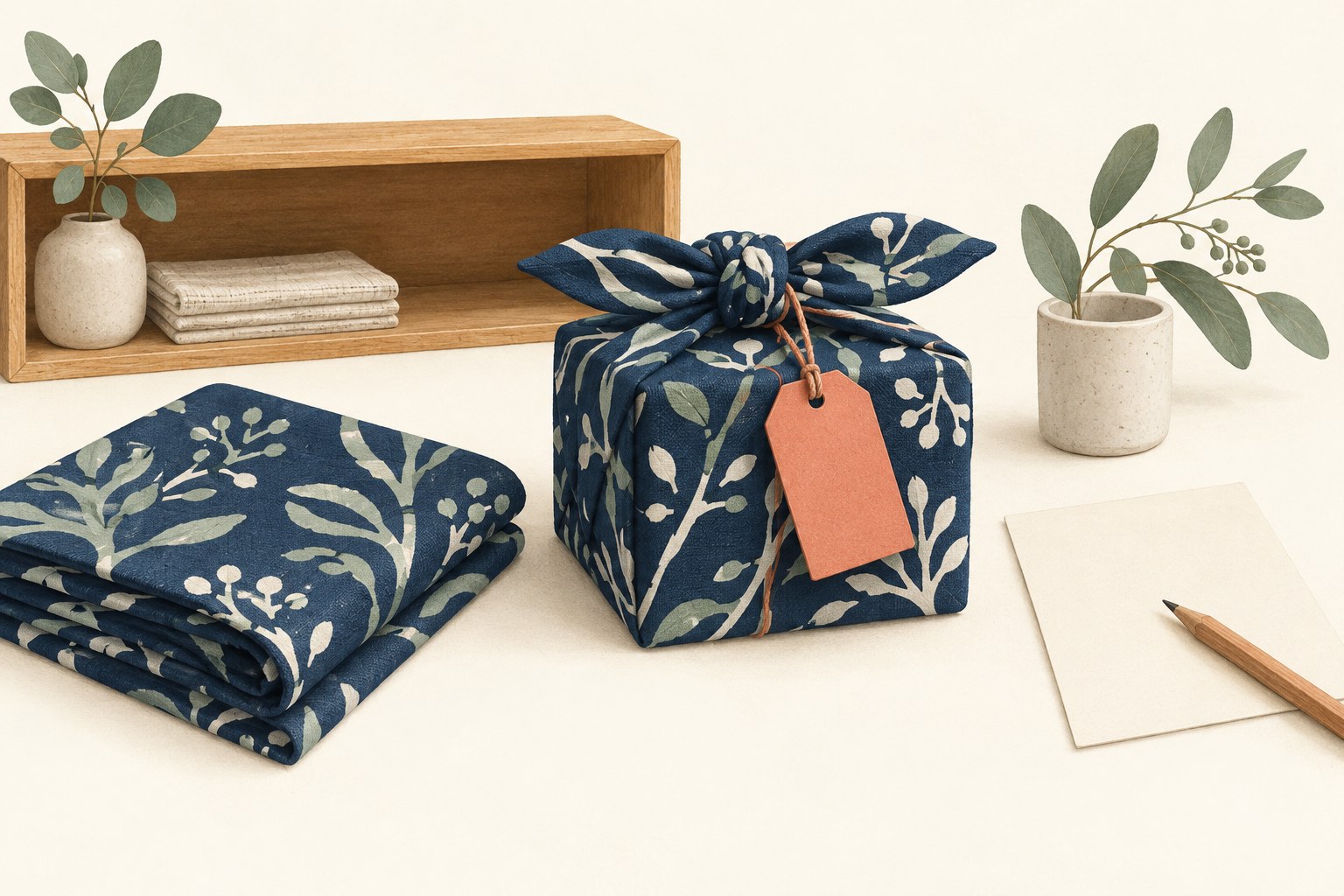
A reuse plan makes the next wrap easier to organize; it does not establish a particular carbon saving or environmental break-even point. If cloth is a poor match for this gift, use the gift-bag fit checklist. For a parcel, move on to the separate gift-shipping packing checklist before sending it.